









Table of contents
- Why a large living room is a design challenge, not a gift
- Defining functional zones without partitioning
- Choosing the sofa: the centrepiece of the large living room
- Dressing the walls and floor to structure the space
- Lighting in three layers: ambient, task, accent
- Traffic flow: the 90 cm rule
- Classic mistakes to avoid in a large living room
- Conclusion: a large living room that feels like you

A large living room is a luxury many people dream of — but also a trap that most buyers and amateur decorators fall into. Too much space means too much freedom: you no longer know where to put the sofa, you scatter the furniture, you lose the home's intimacy, and the living room ends up looking like a furnished warehouse. According to a 2024 Houzz France study, 62% of owners of a living room over 30 m² find their room 'hard to furnish'. The good news: there are proven methods to furnish a large living room with a warm, structured and functional result. That's what we'll go through step by step.
1. Why a large living room is a design challenge, not a gift
The most common mistake is believing that a large volume can be furnished like a small living room, just bigger. It's the opposite: a large living room follows different rules, because the distance between elements deeply changes perception. A sofa placed in the middle of a 40 m² room suddenly looks small and lost, even though it would have been perfect in 18 m². A single light source, enough in a standard living room, creates unsettling shadow zones in a large volume.
The real question is not 'how do we fill the space', but 'how do we structure the space'. Structuring means creating zones, defining paths, prioritising functions. A successful large living room is one where every corner has a reason to exist: a TV corner, a reading corner, a dining corner, a conversation corner. The sofa is the main tool for this structuring, because it naturally serves as a space divider without partitioning.
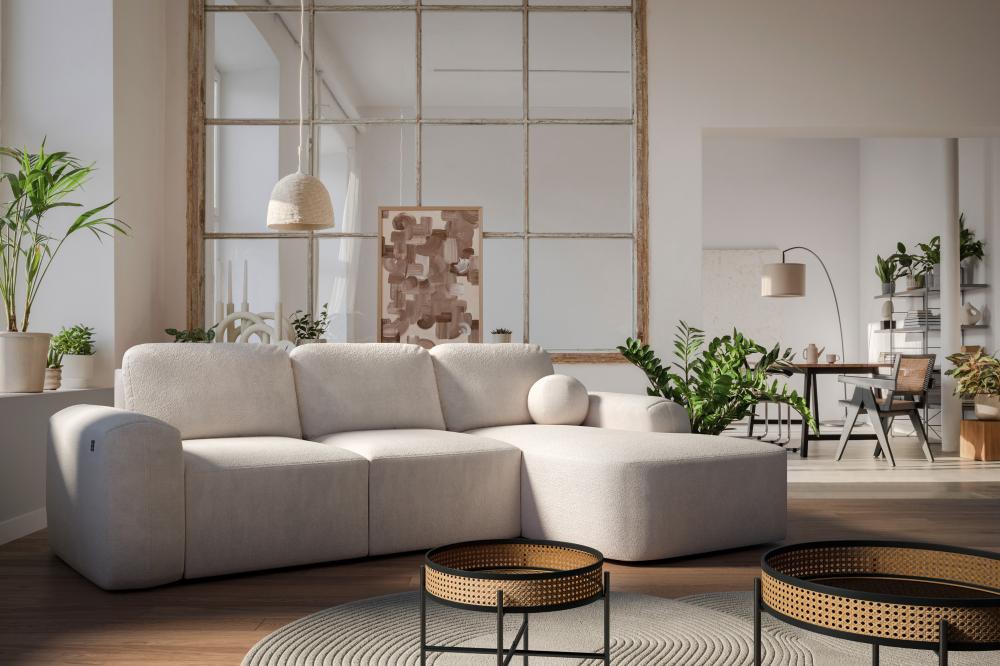
The other difficulty specific to large living rooms is acoustics. Voluminous rooms are often reverberant: voices echo, dishwashing noise amplifies, sonic intimacy disappears. To fix this, you play with absorbent materials (rugs, thick curtains, boucle fabric sofa, deep velvet) and with the layout of the furniture to break the echoes.
2. Defining functional zones without partitioning
The most effective method for furnishing a large living room is zoning. Each zone has a clear function, and the whole stays open and fluid. Here are the most useful zones in a 30 to 50 m² large living room, and how to materialise them without walls or partitions.
The TV / cinema zone
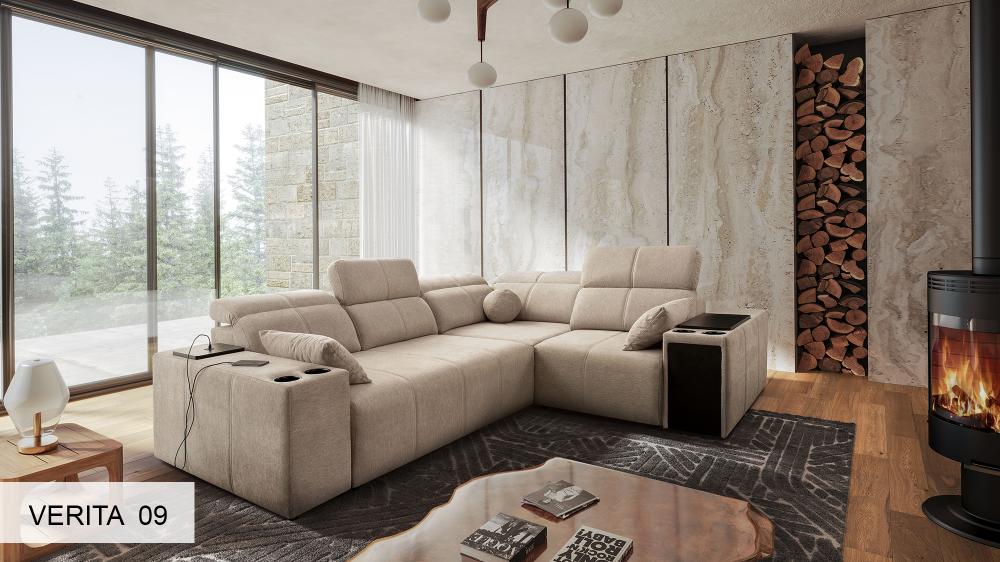
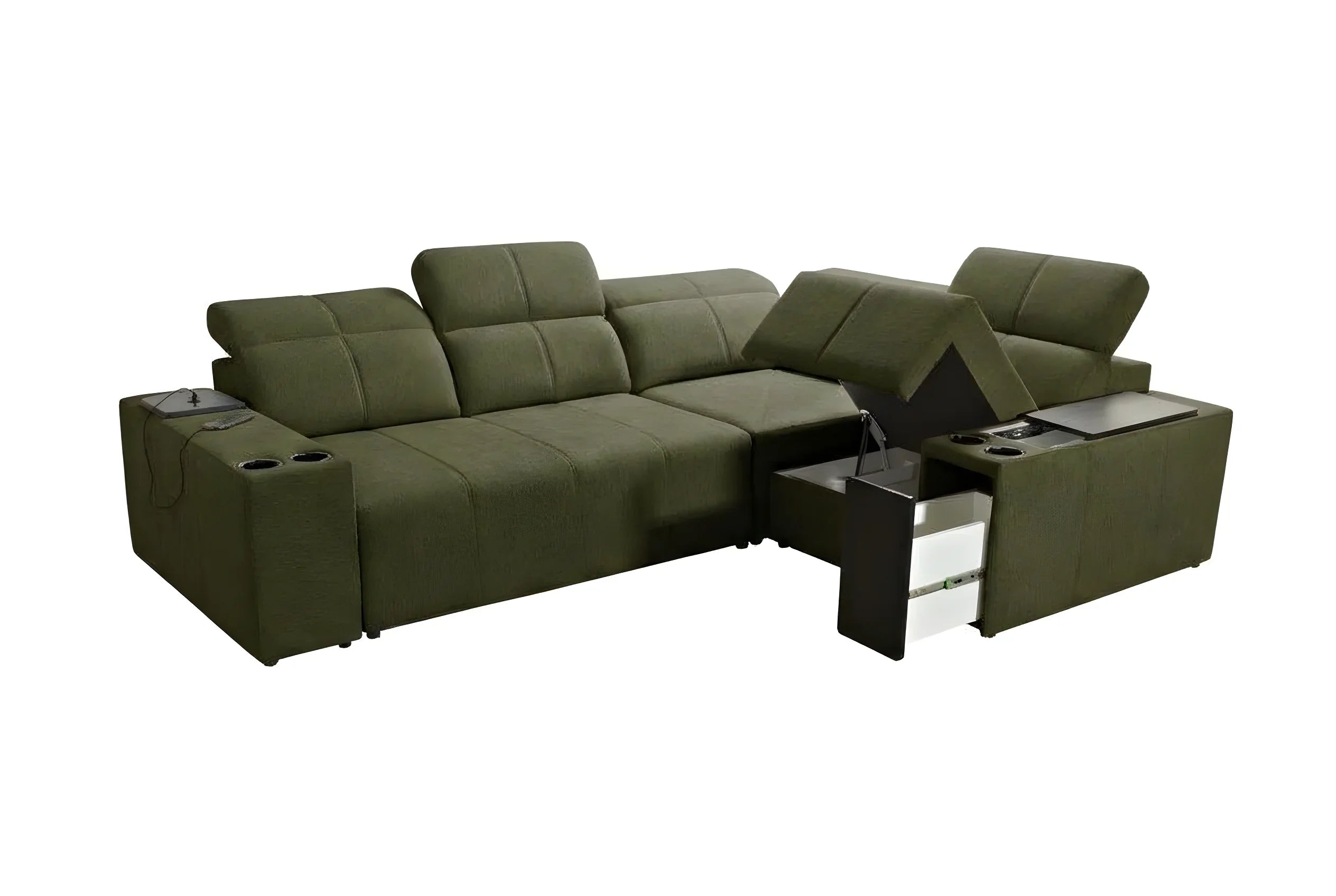
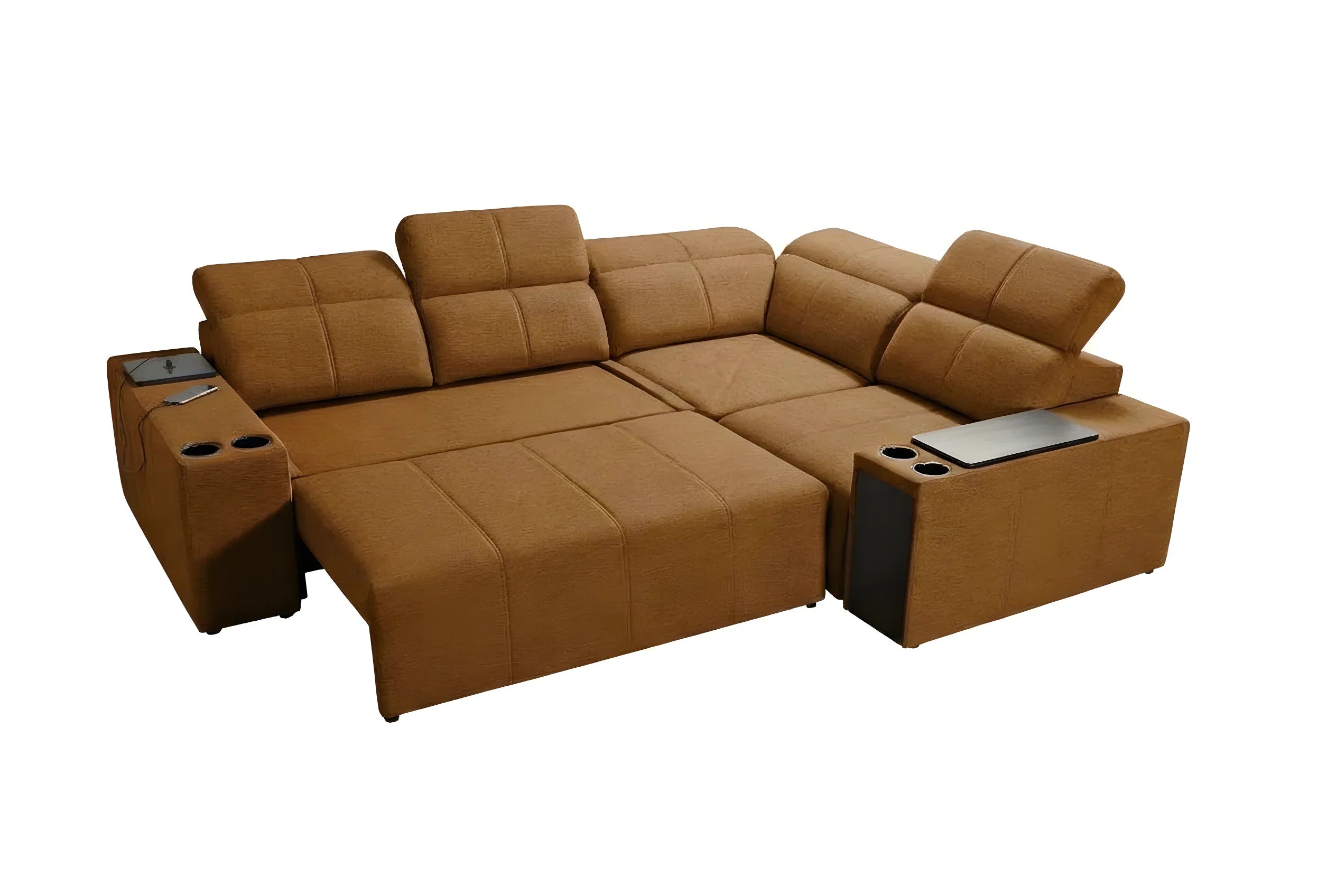
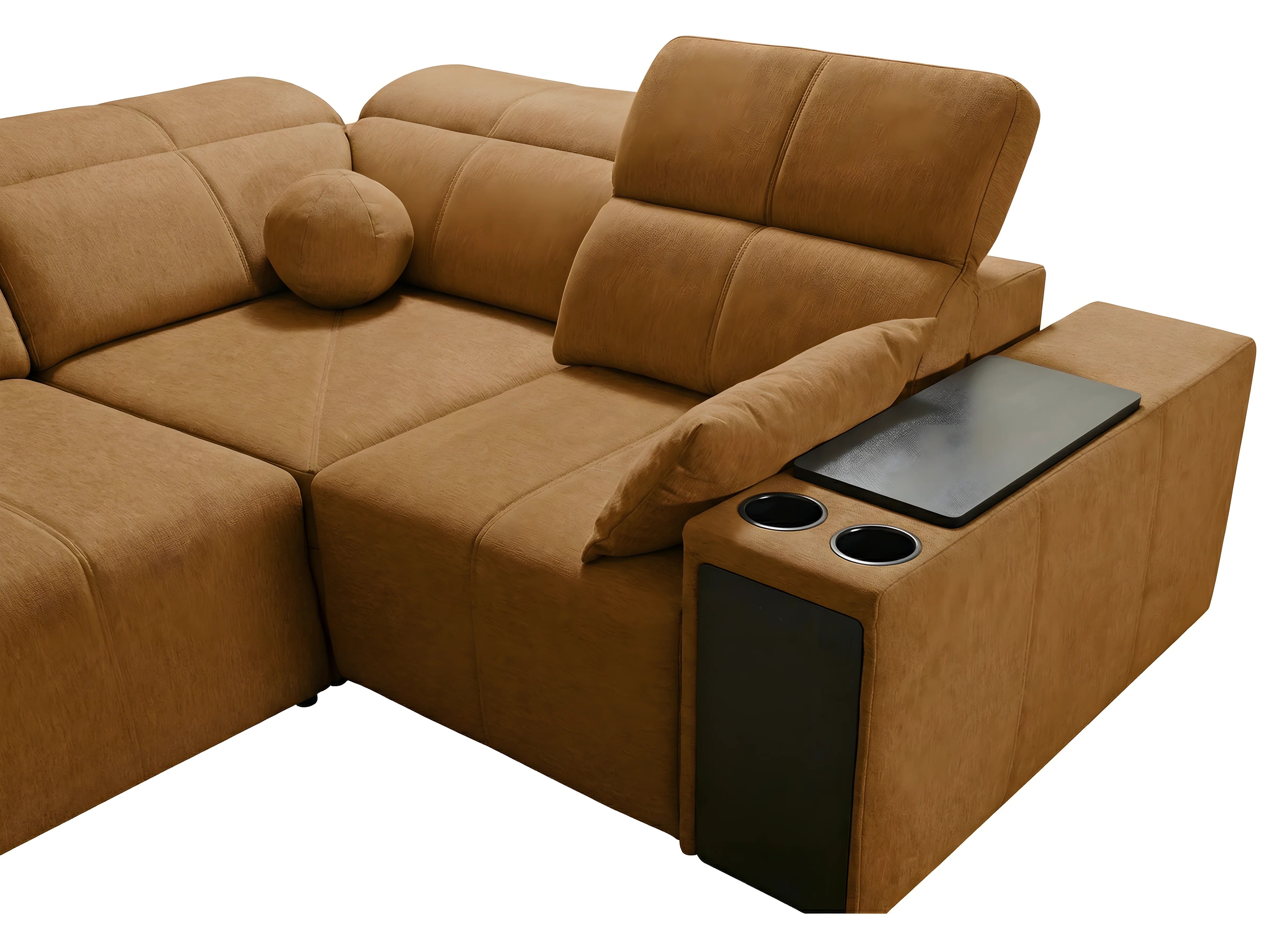
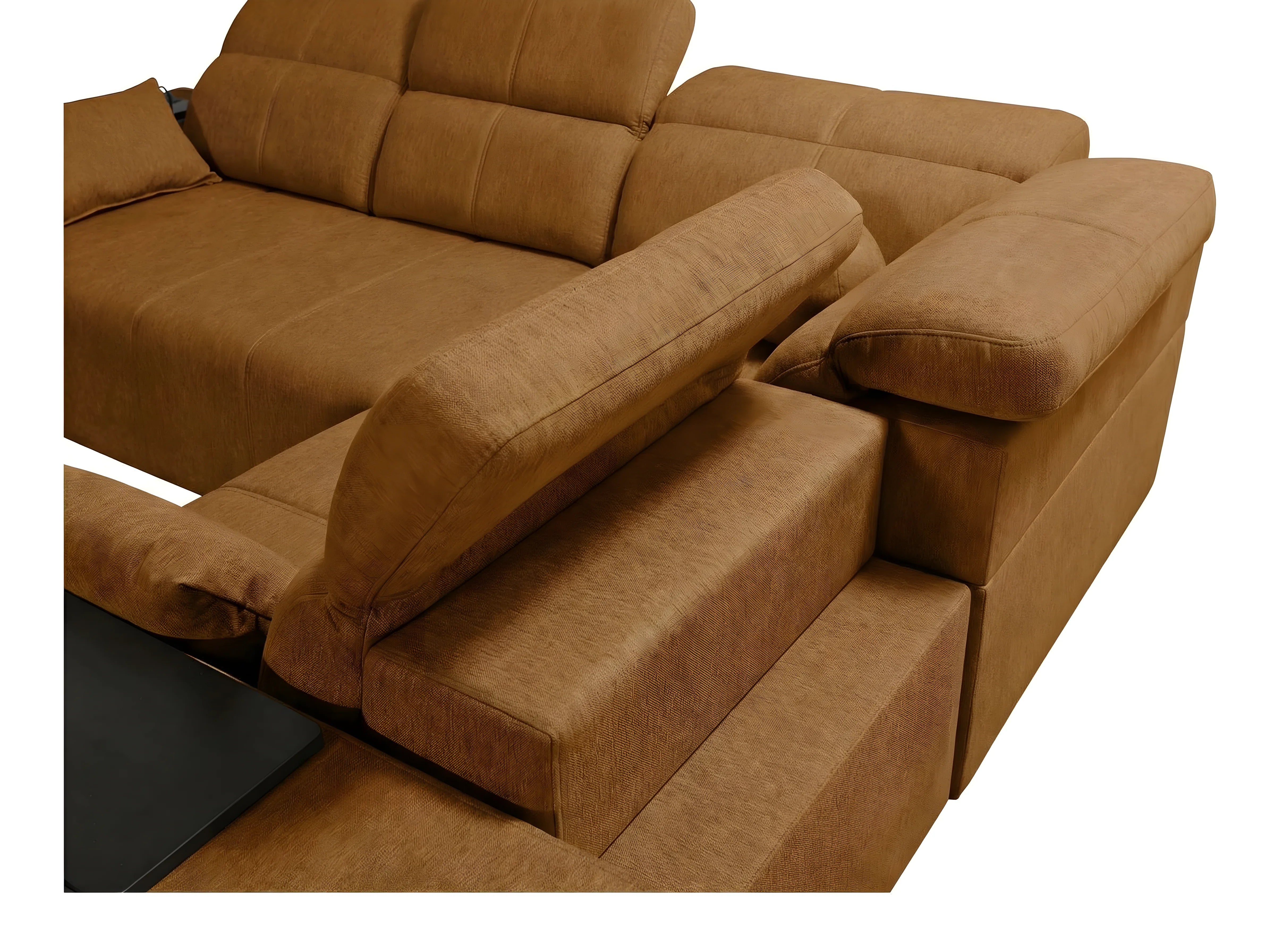
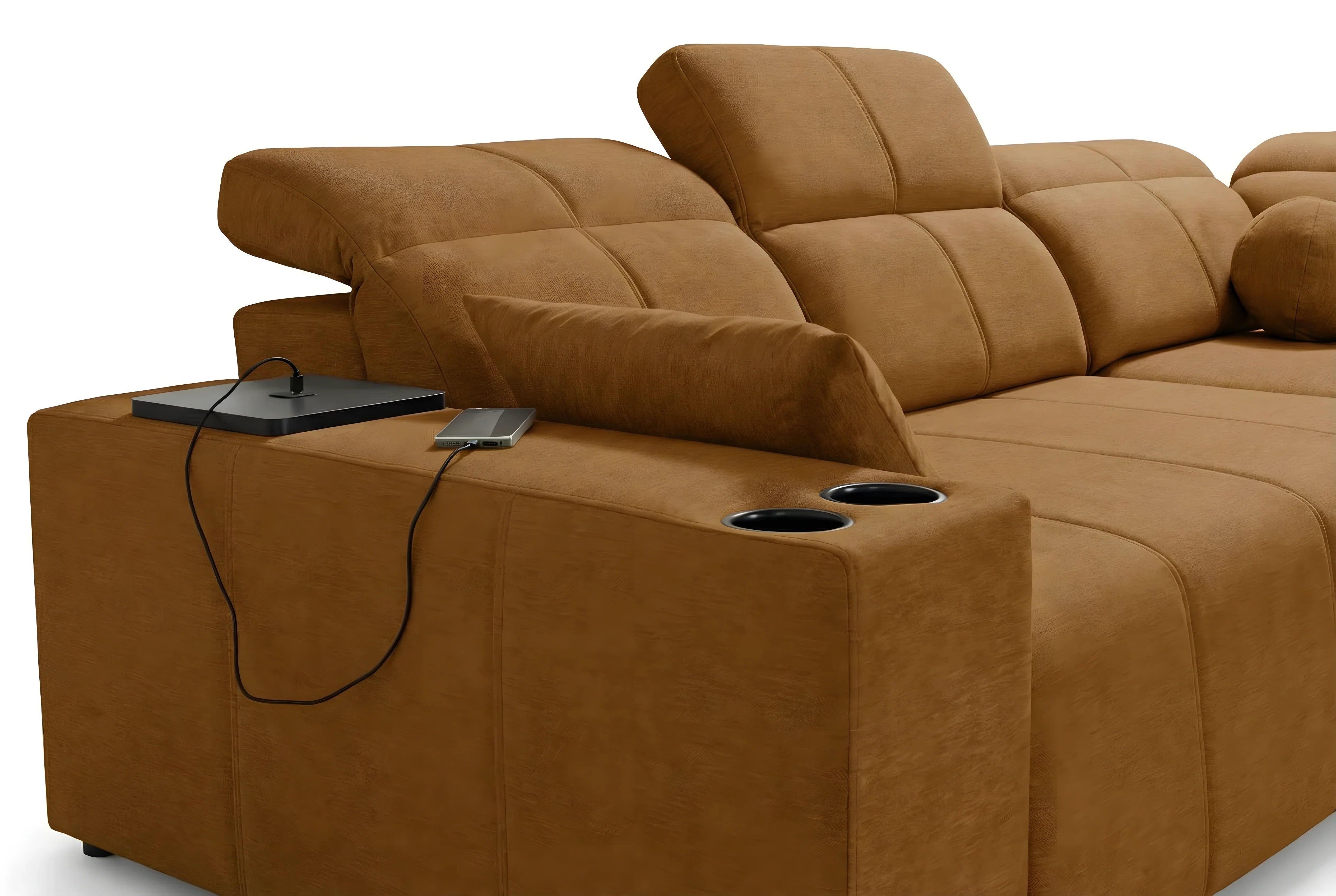
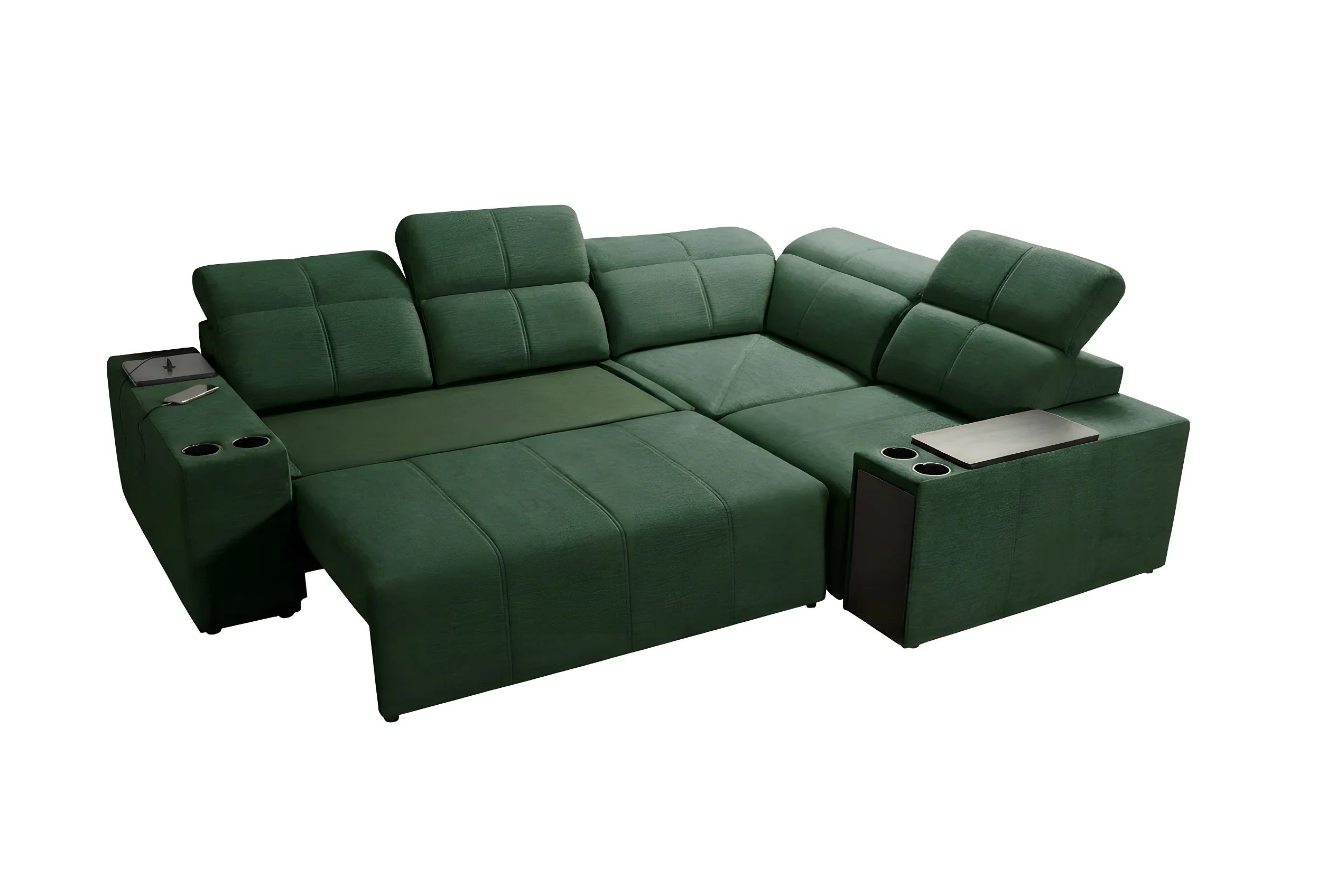
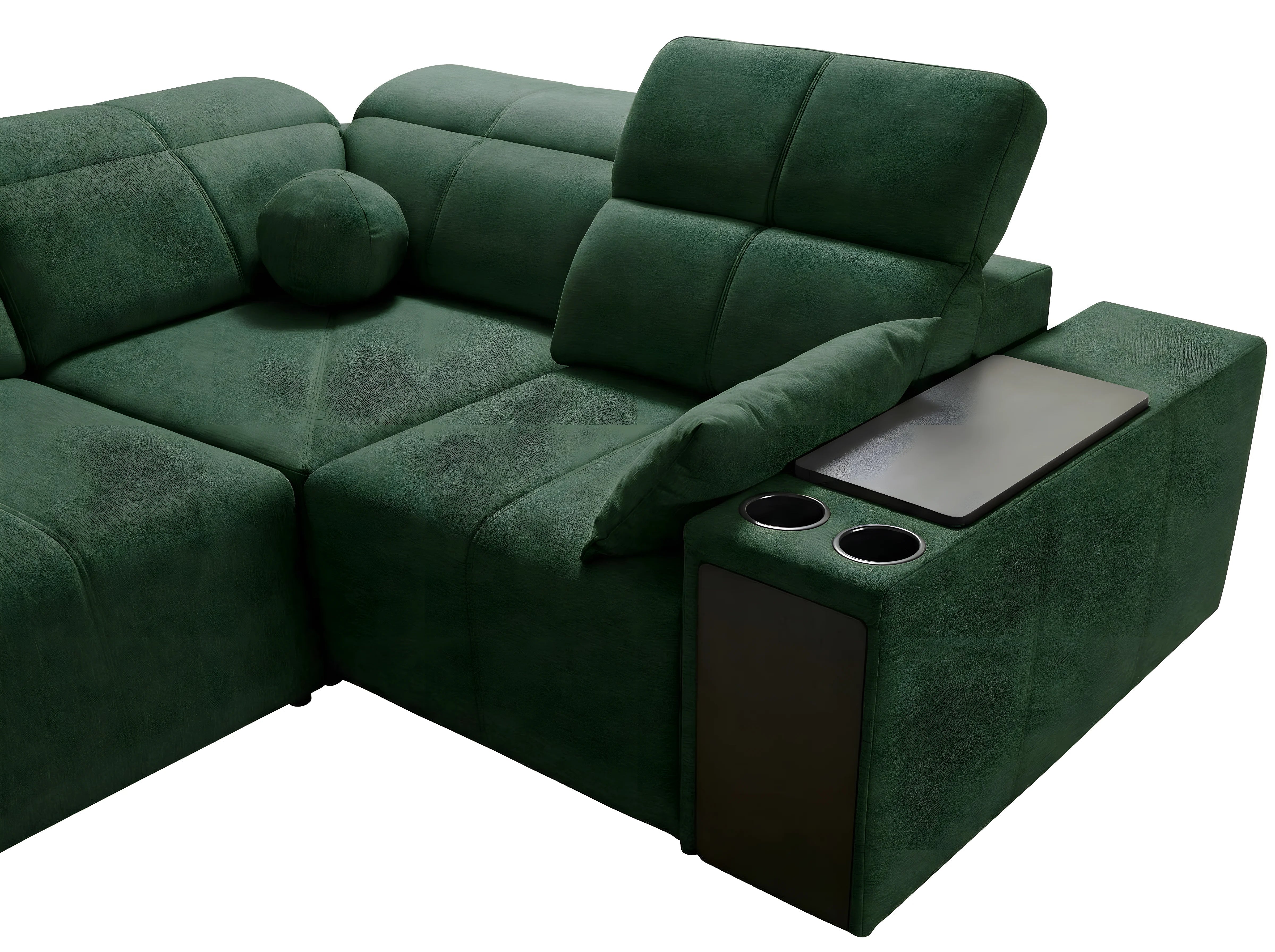
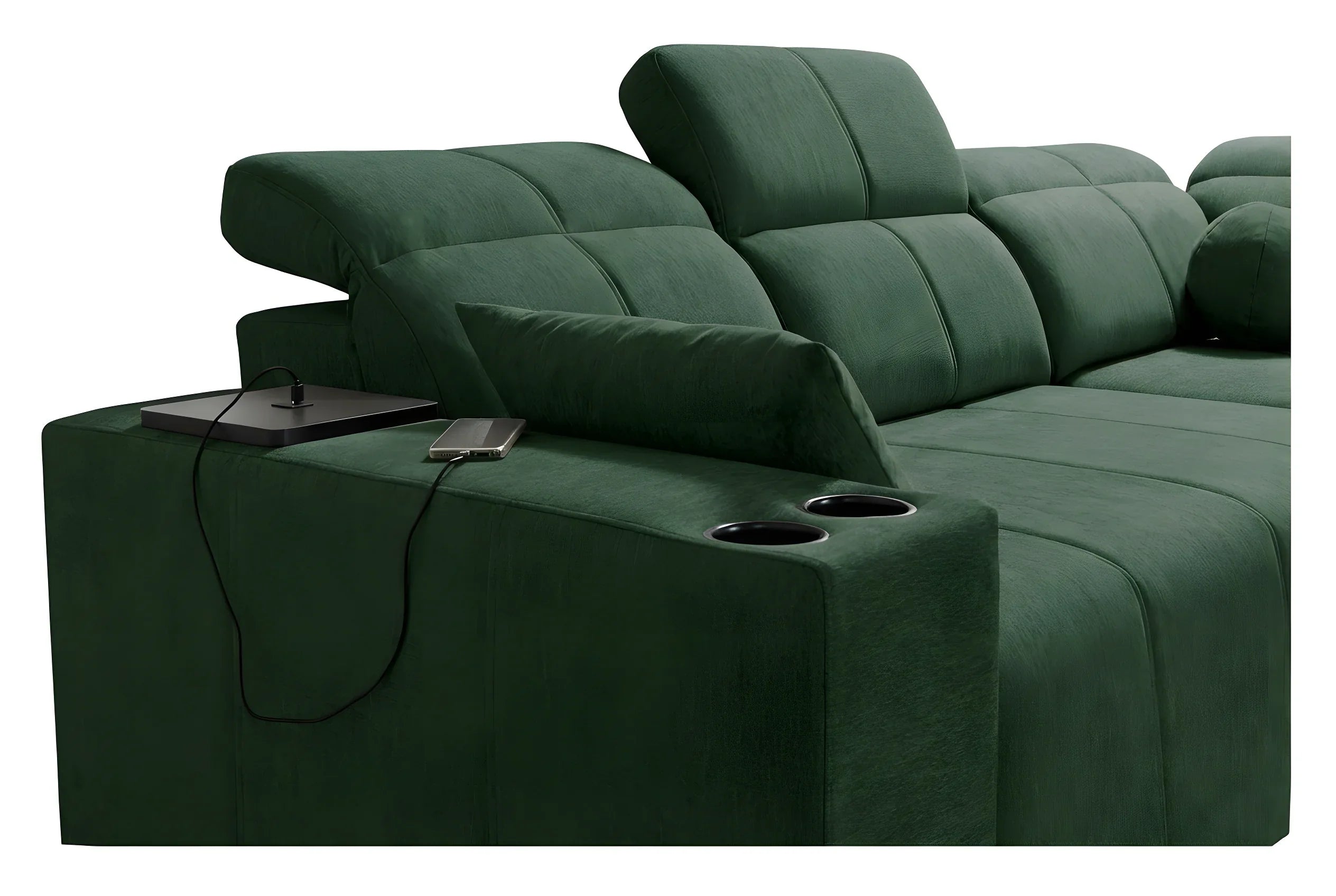
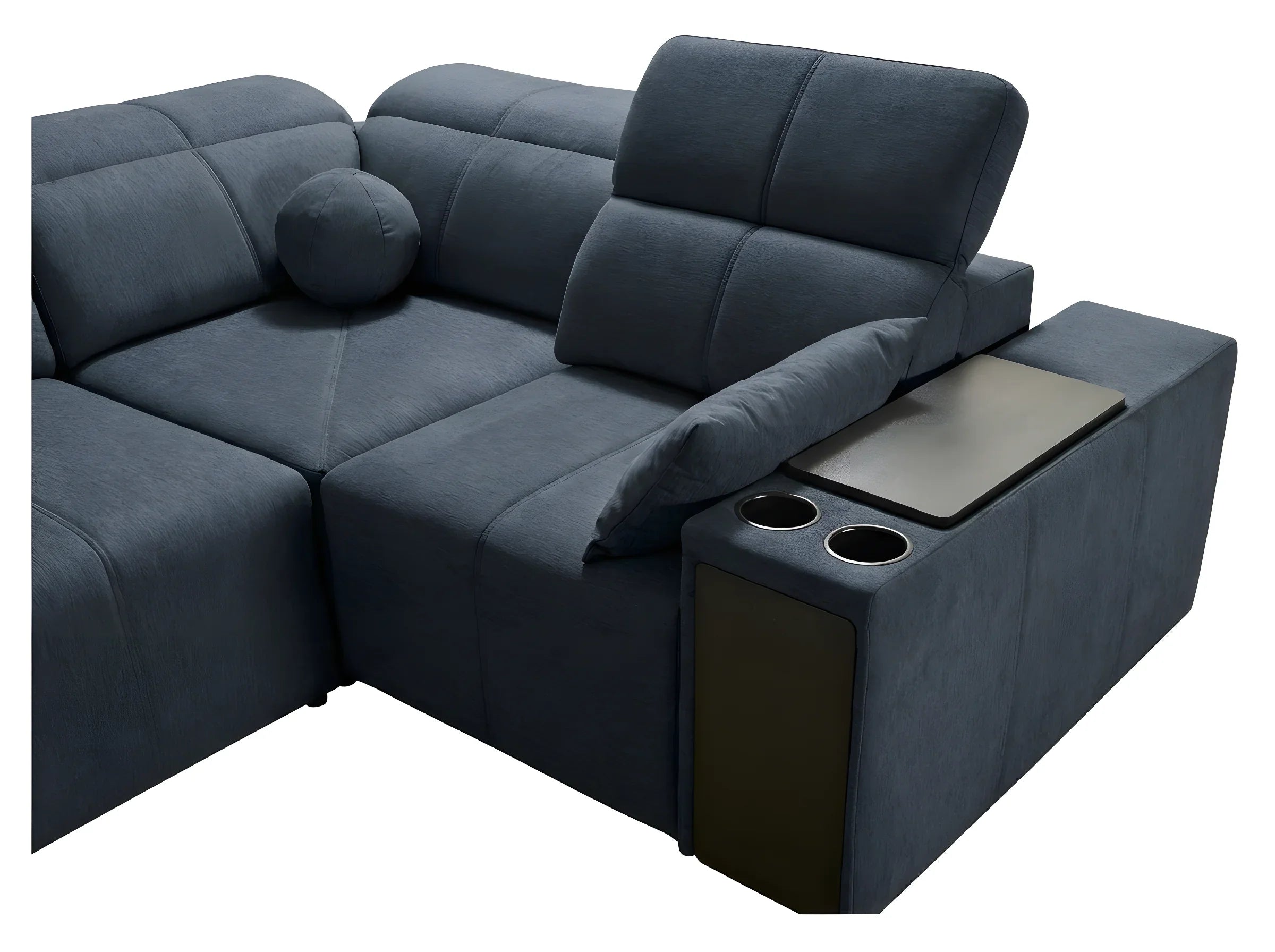
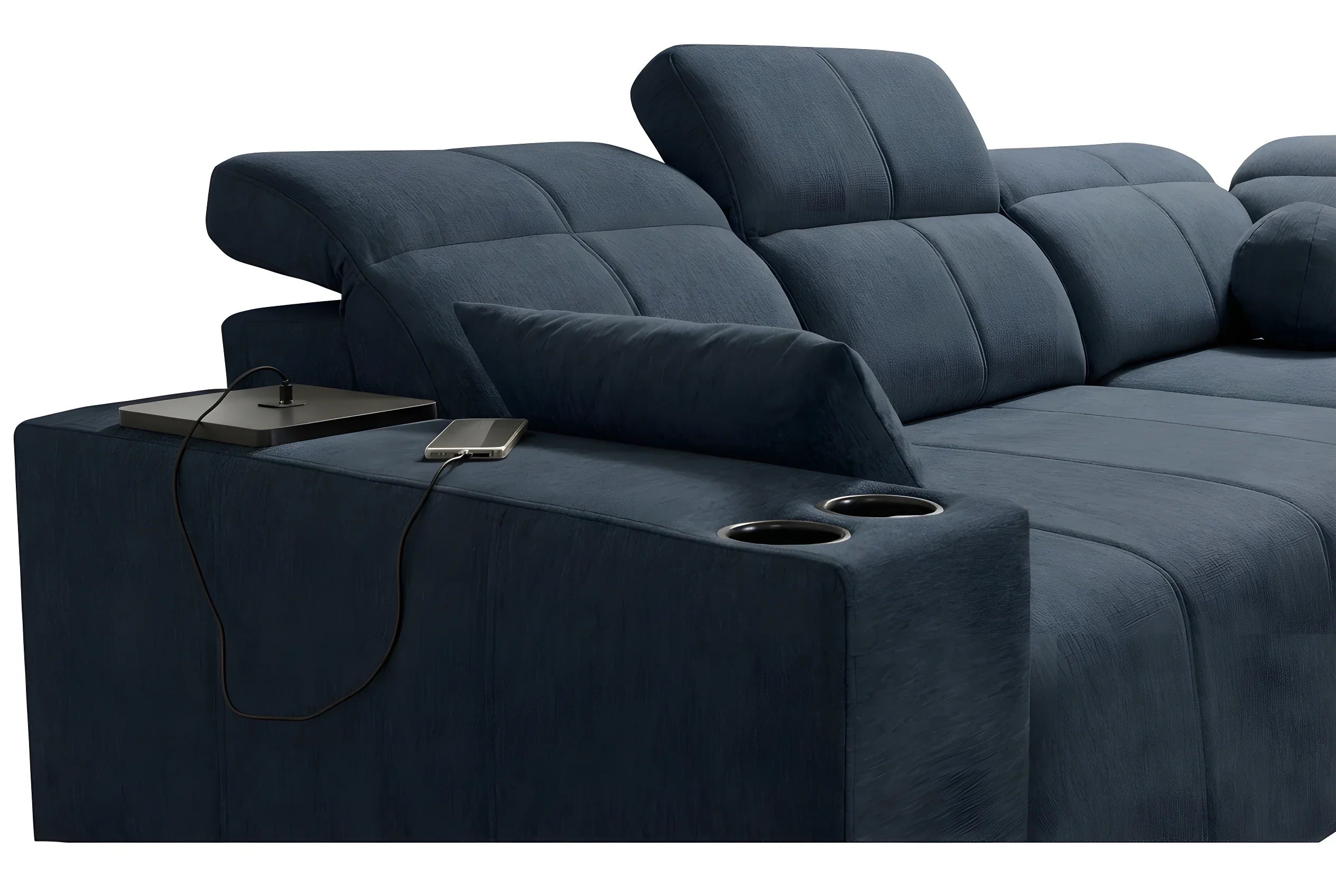
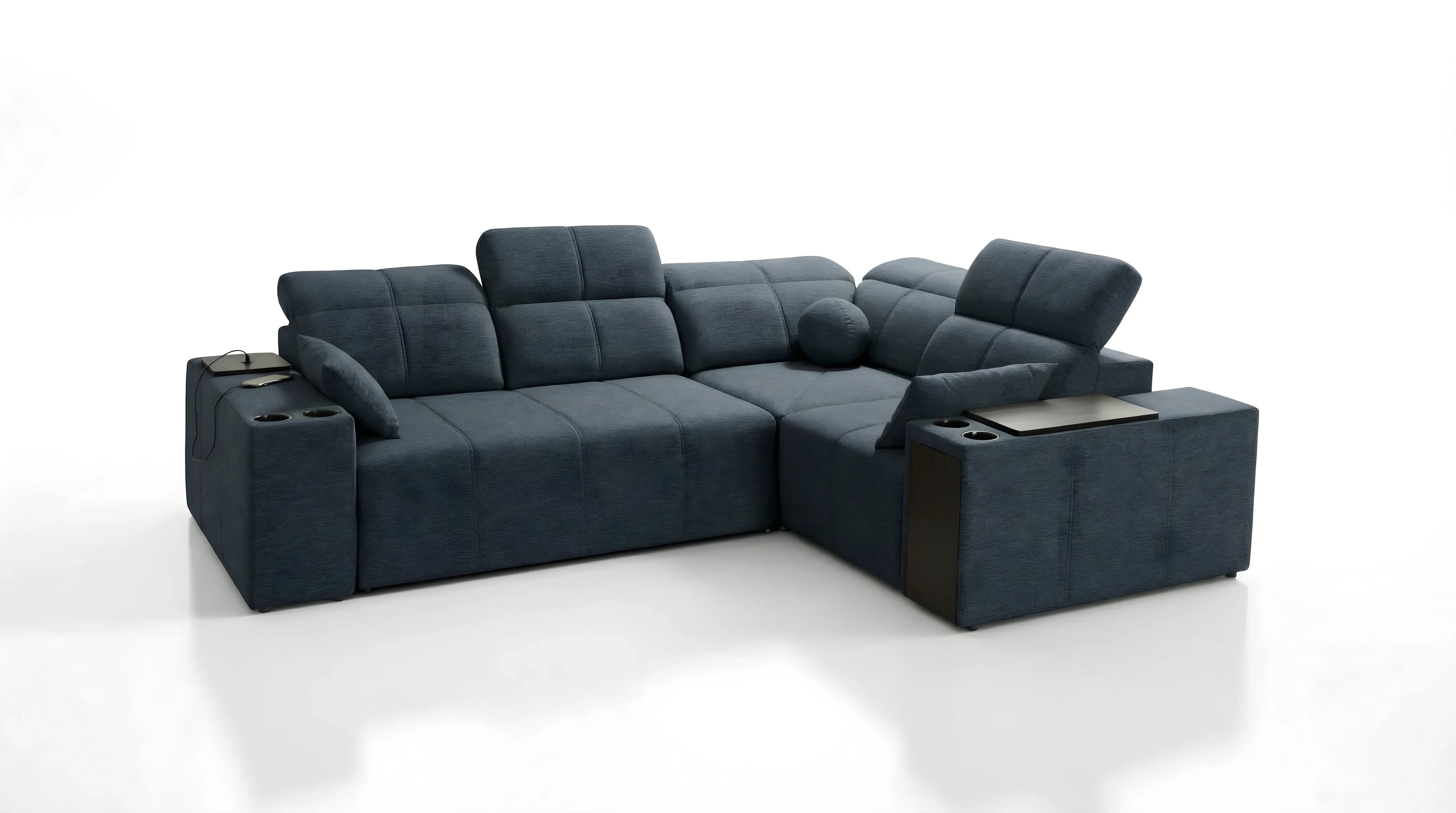
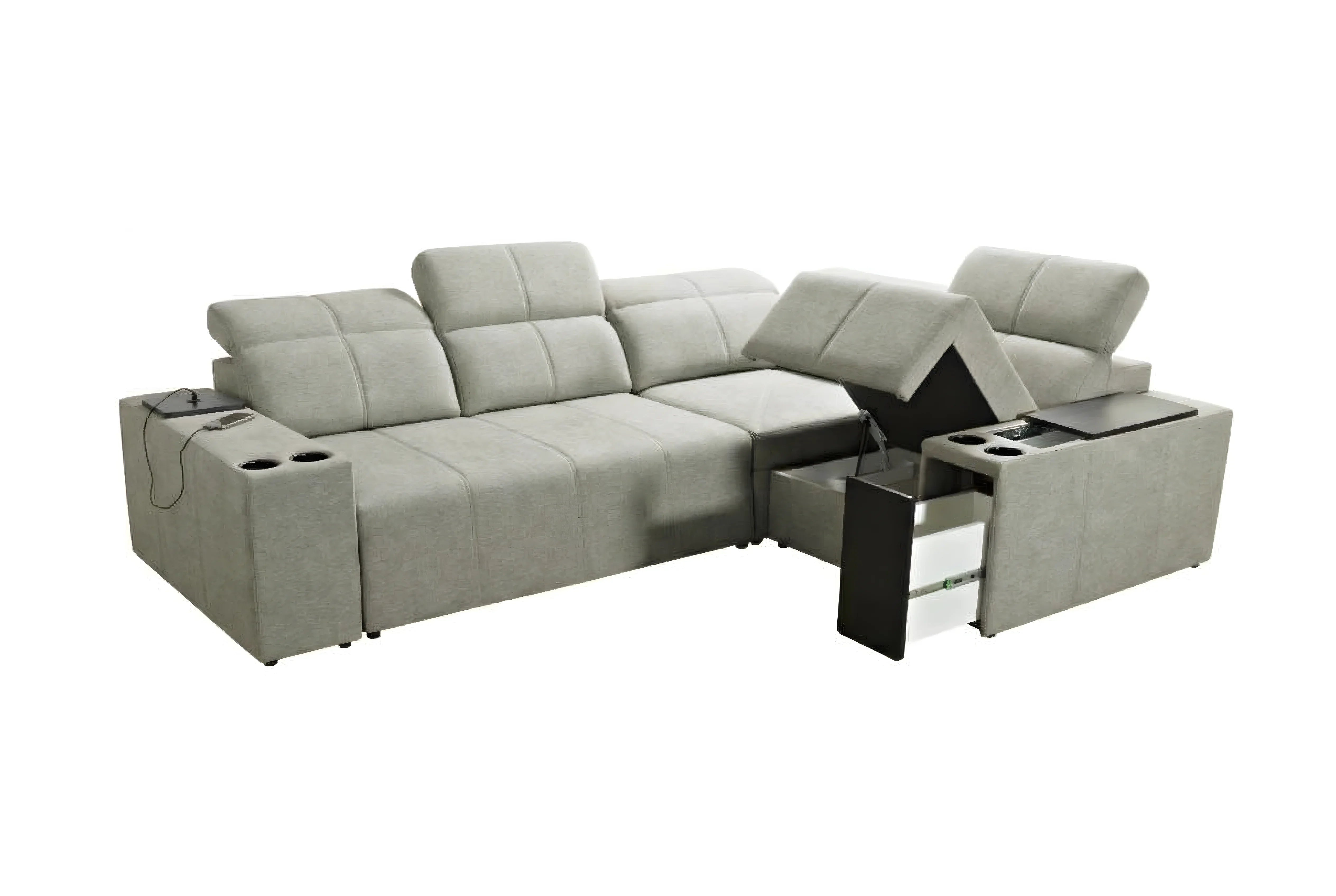
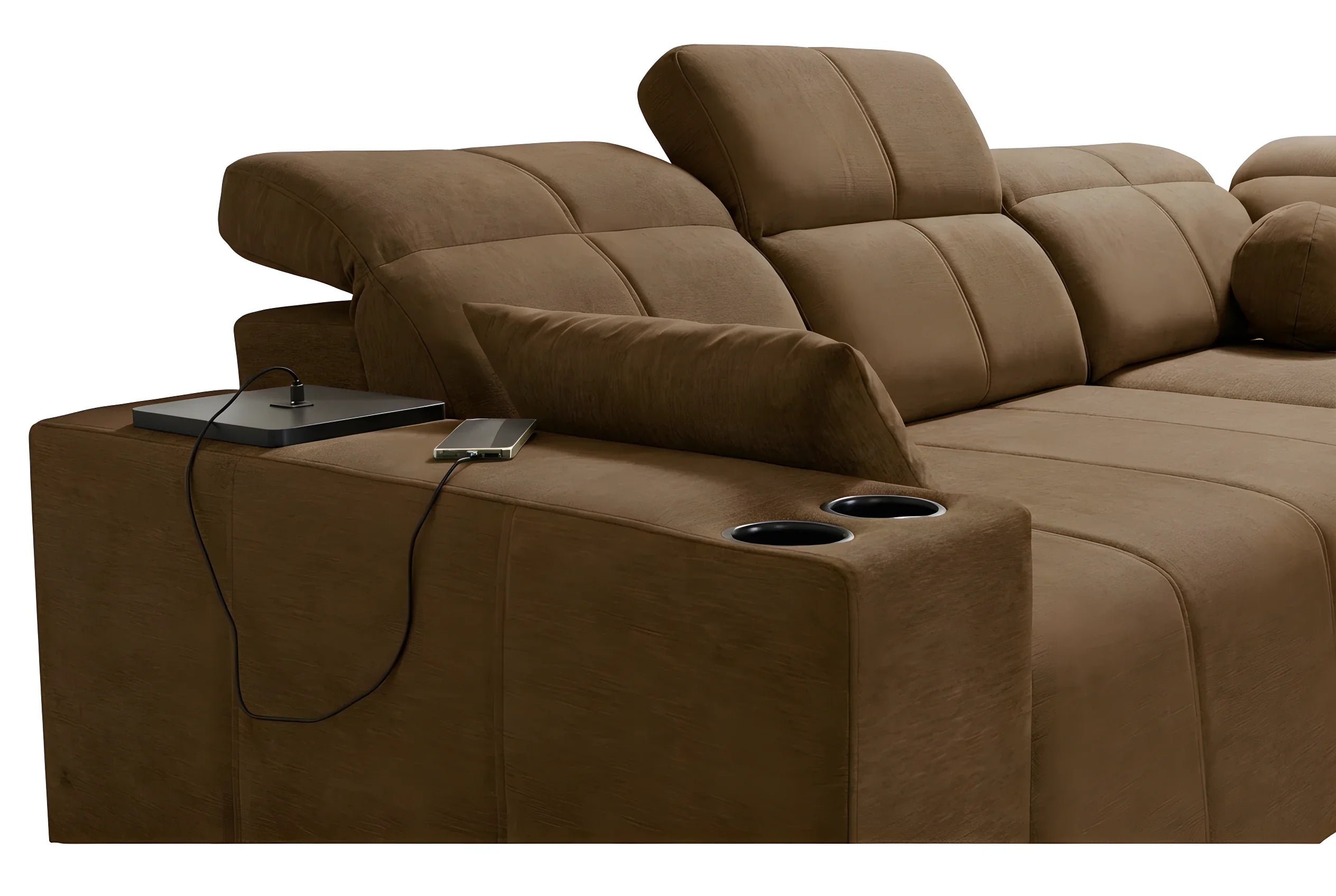
This is the central zone, where the home cinema sofa sits. For a large living room, favour a panoramic sofa or a large corner sofa, which visually structures the room and creates a natural 'screen-facing' zone. The sofa should be placed 1.5–2.5 times the diagonal of the screen away from the TV, never flush against the wall (otherwise it 'floats' in the middle of the room).
The conversation / reading zone
To balance the TV zone, add a conversation zone with two armchairs facing each other or perpendicular to the sofa. A pouf or a low side table can serve as an anchor point. This is the zone you use when you're not watching TV: to read, talk, have a coffee.
The dining zone
If your living room is open to the kitchen, the dining zone (table + chairs) can be placed near the kitchen to limit back and forth trips. If your living room is a closed room, integrate a small round or rectangular dining table in a corner, away from the sofa so the uses don't blur together.
The traffic zone
This is the zone that's often forgotten yet essential: the pathways between the zones. It must be thought through from the start, because a poorly placed route (walking between the TV and the sofa, for instance) quickly becomes a daily nightmare. Ideally, you avoid crossing a conversation zone or a TV zone to get from point A to point B.
3. Choosing the sofa: the centrepiece of the large living room
In a large living room, the sofa does 60% of the furnishing work. It structures the space, welcomes people, sets the mood. Here are the three configurations that work best, and how to choose them based on your room.
The panoramic sofa — the centrepiece for very large volumes
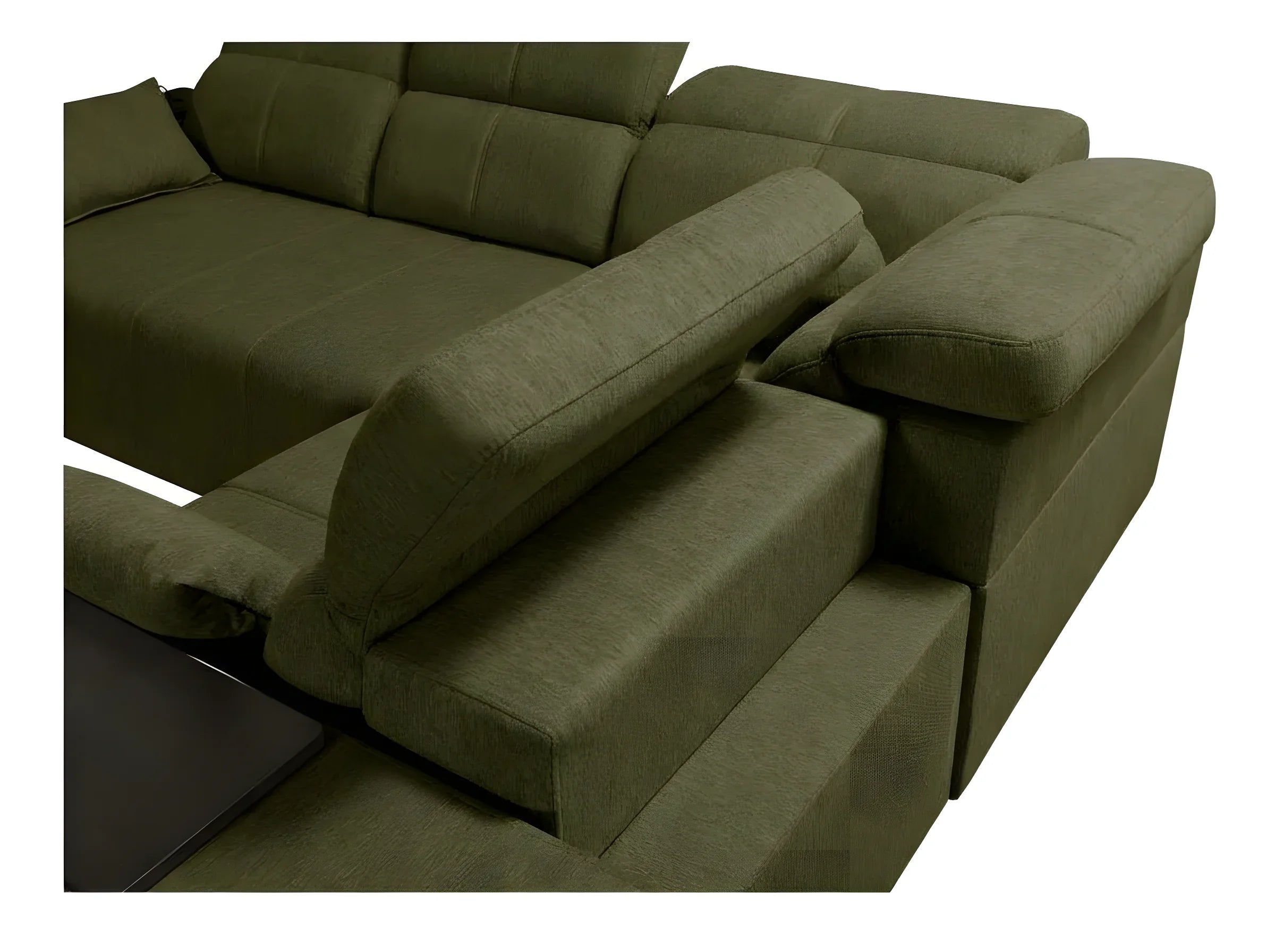
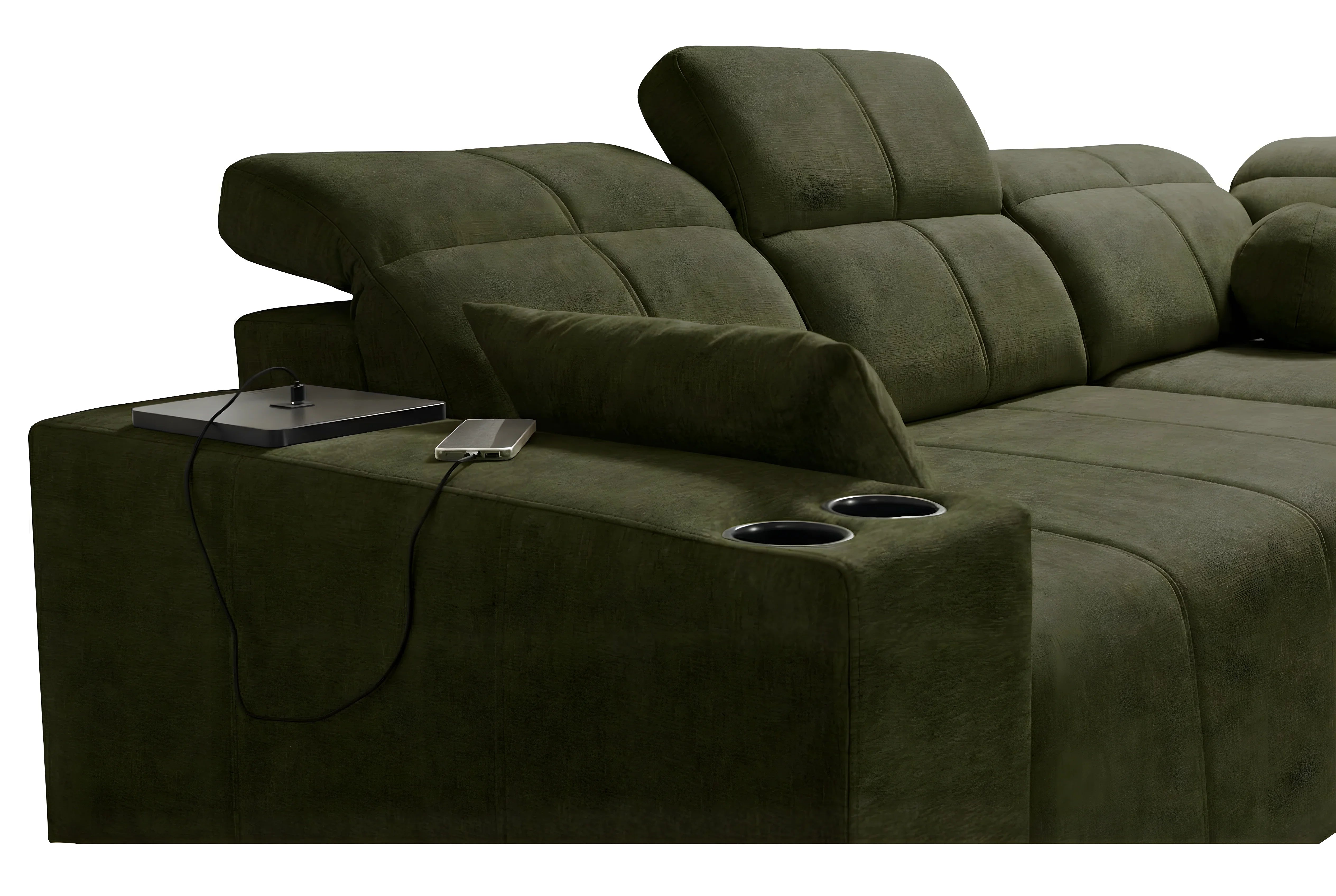
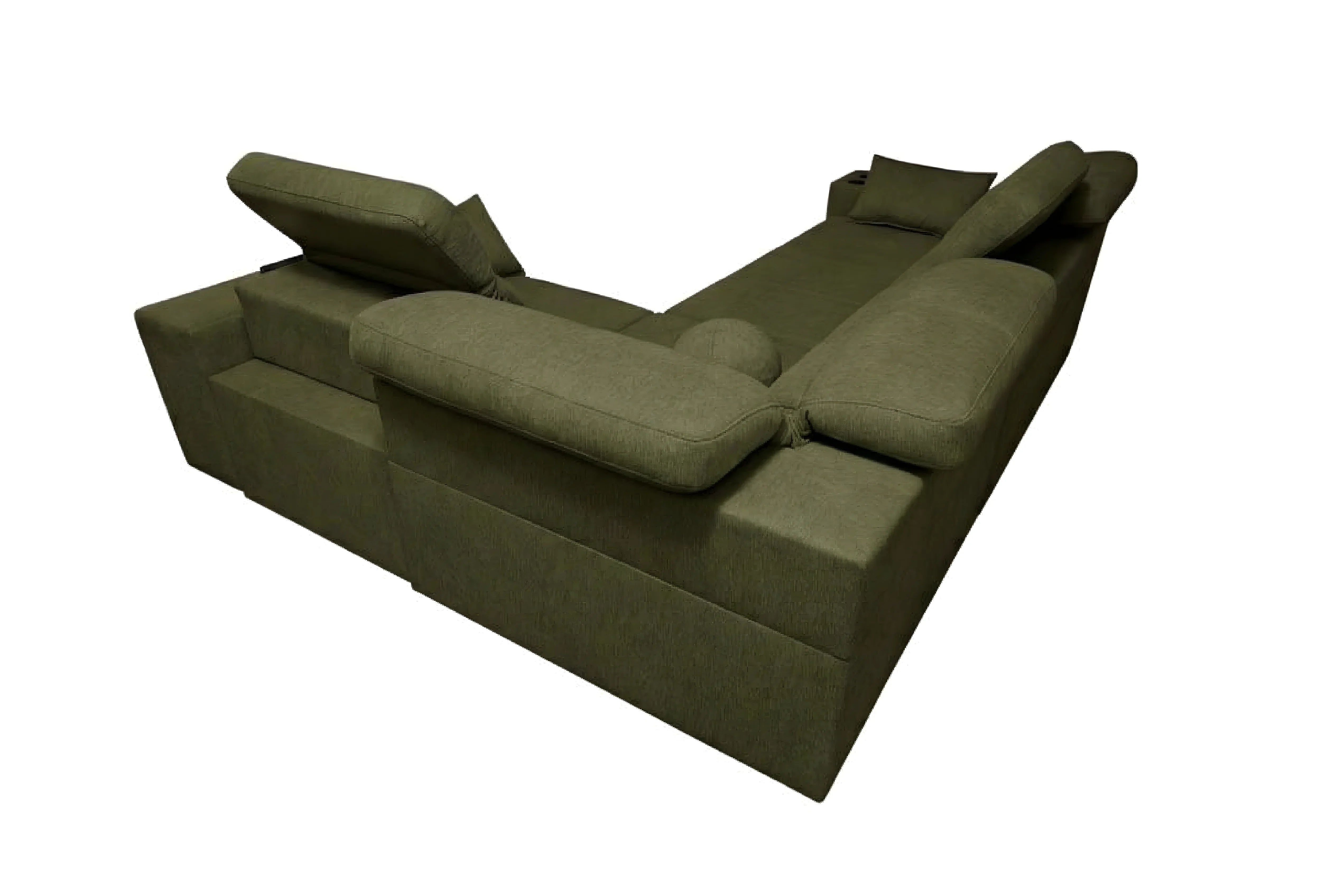
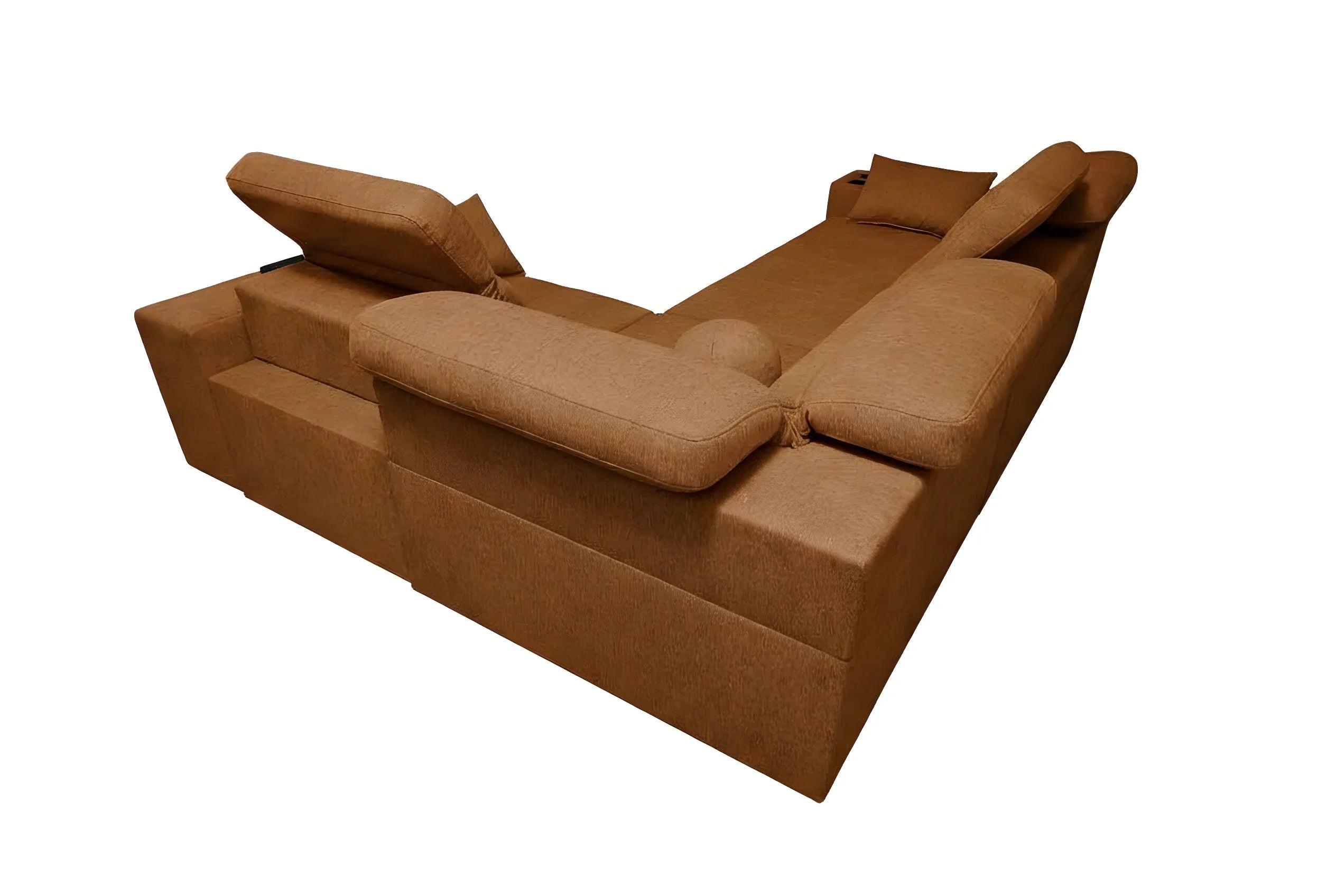
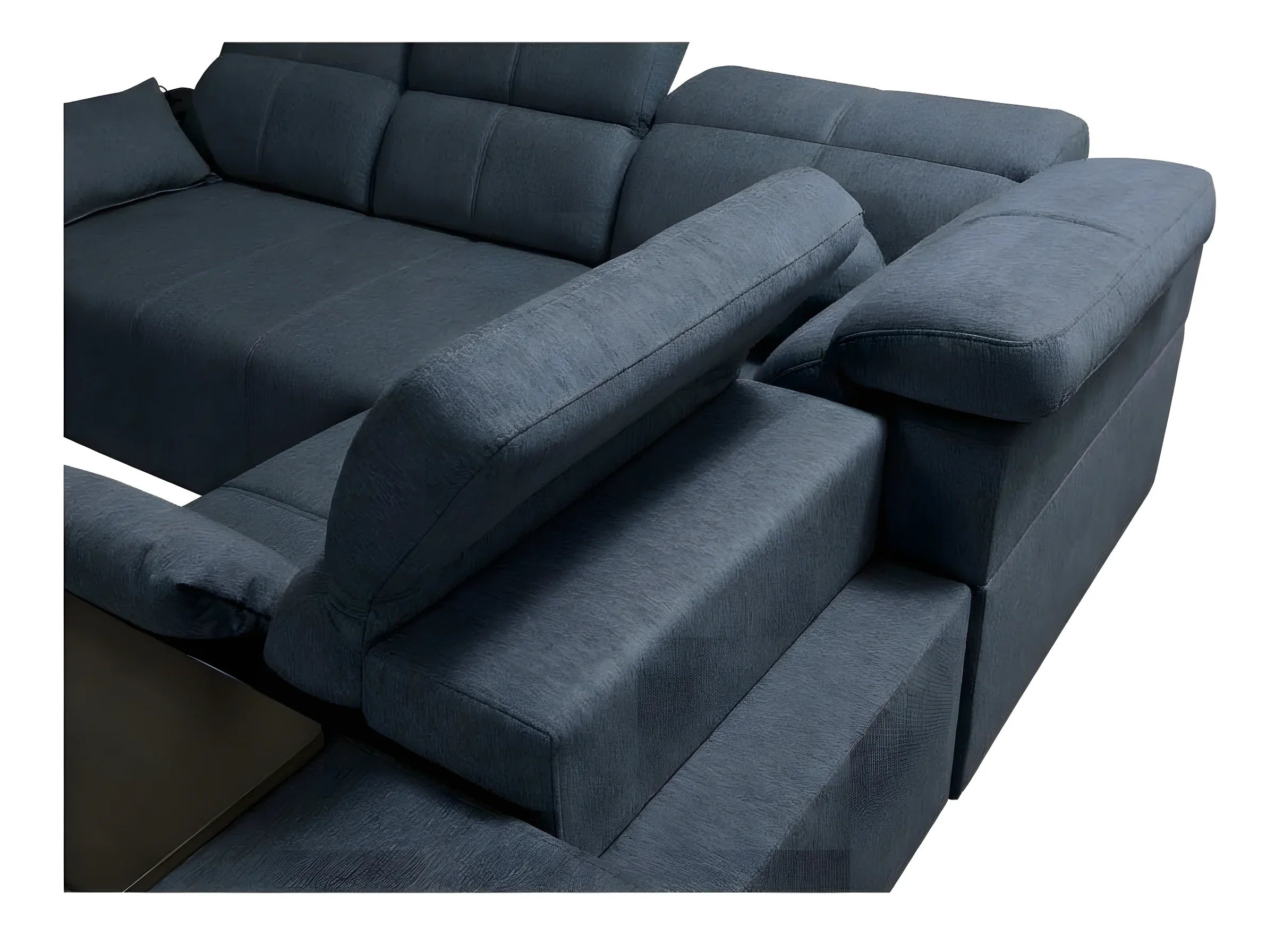
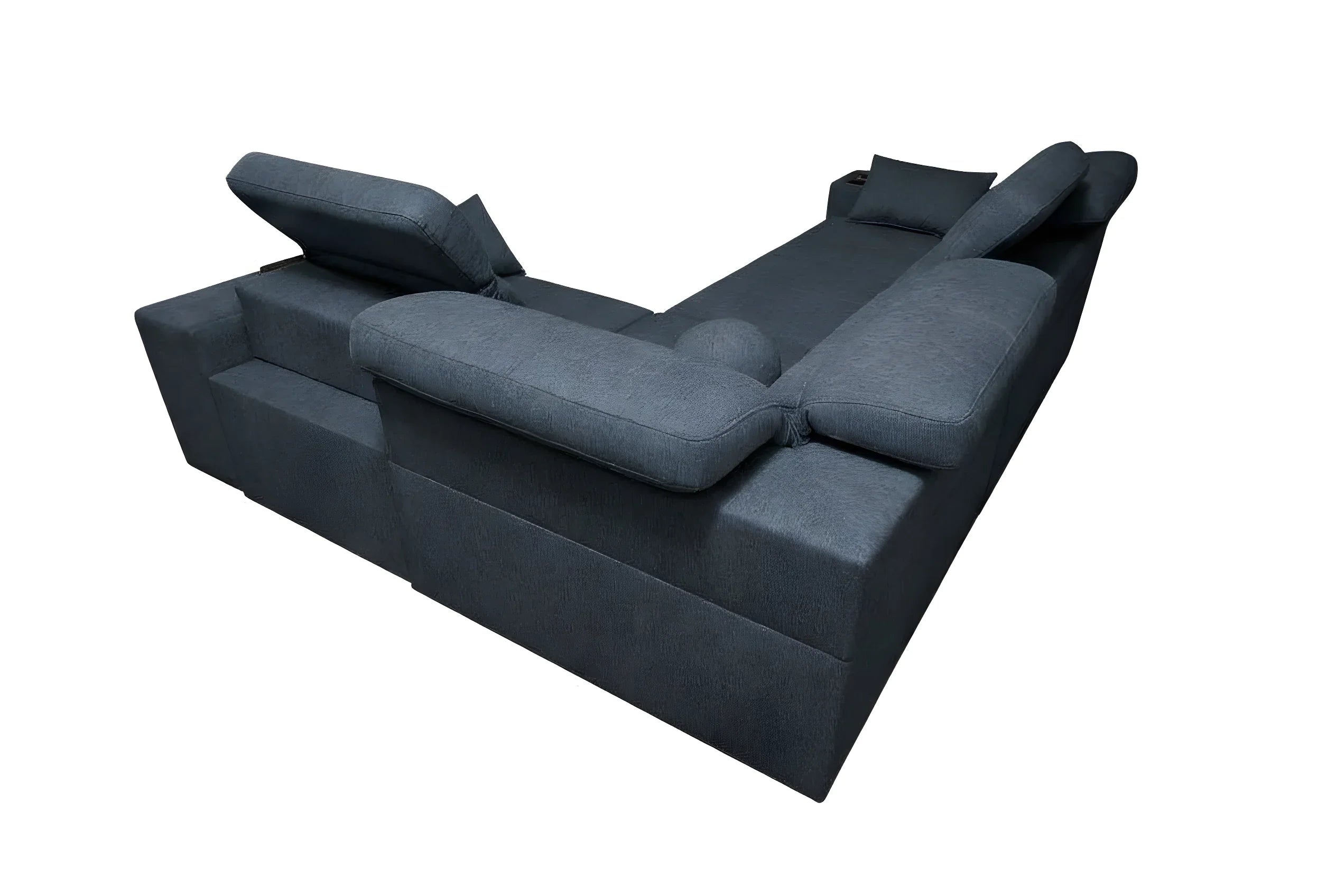
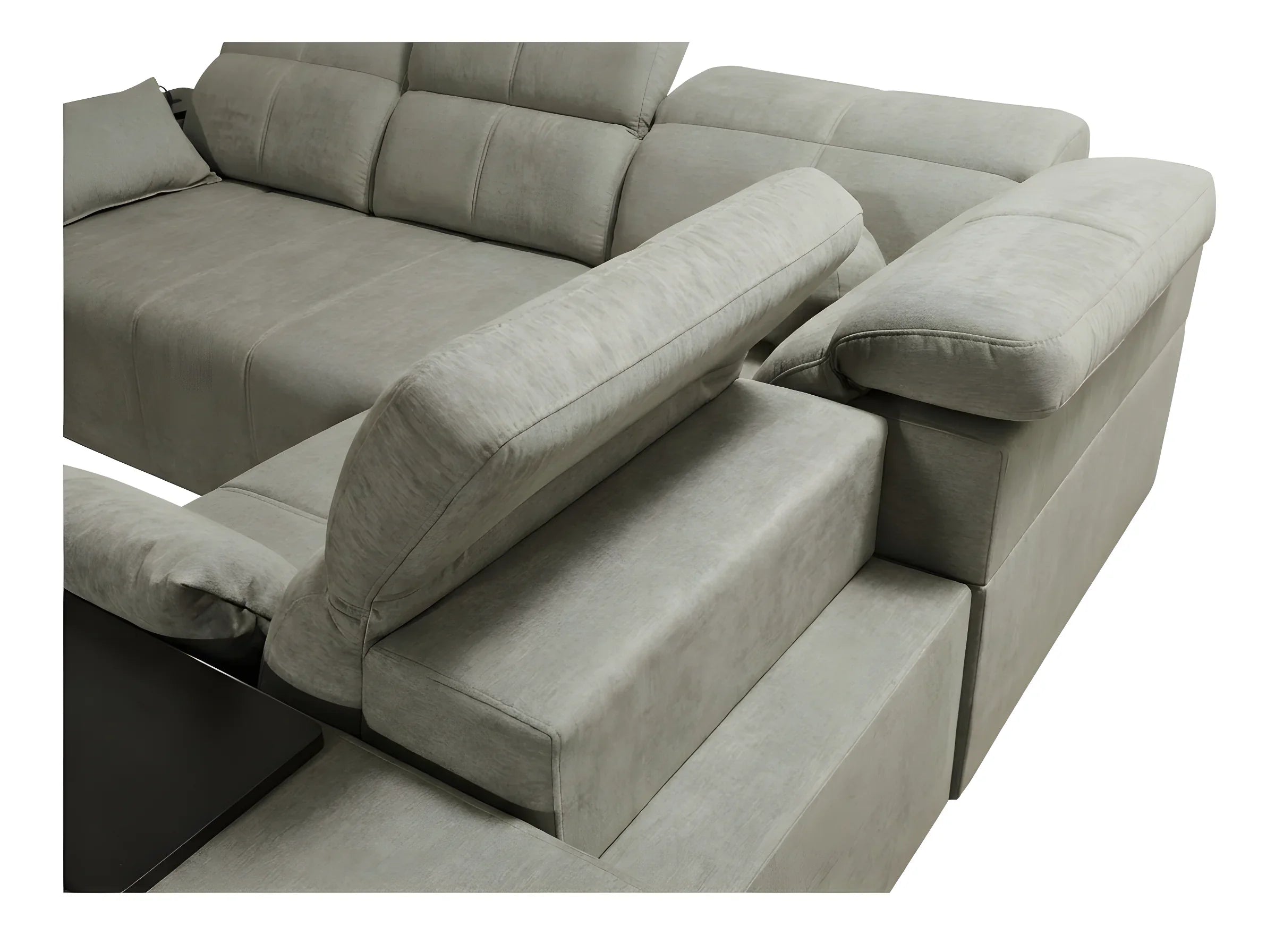
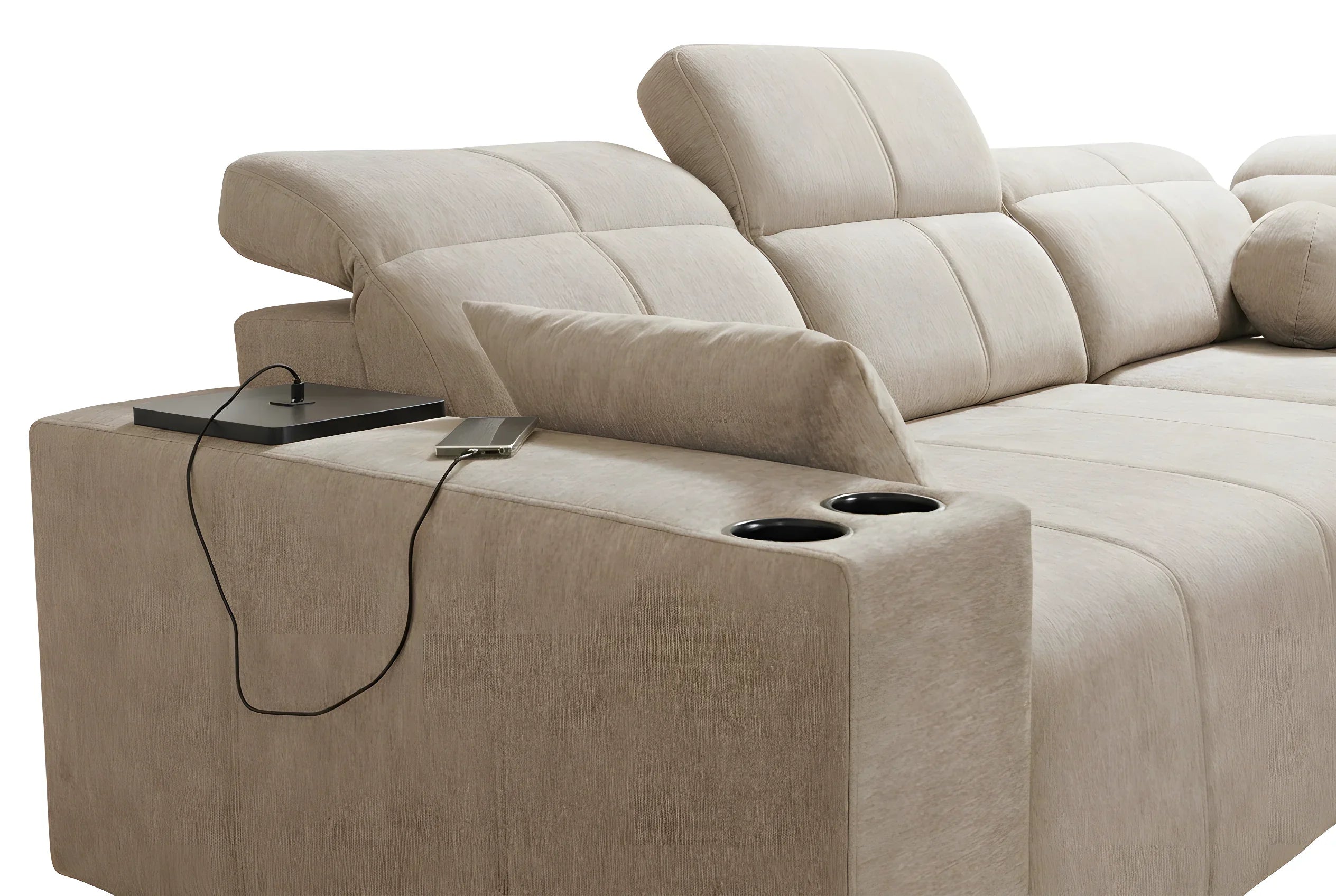
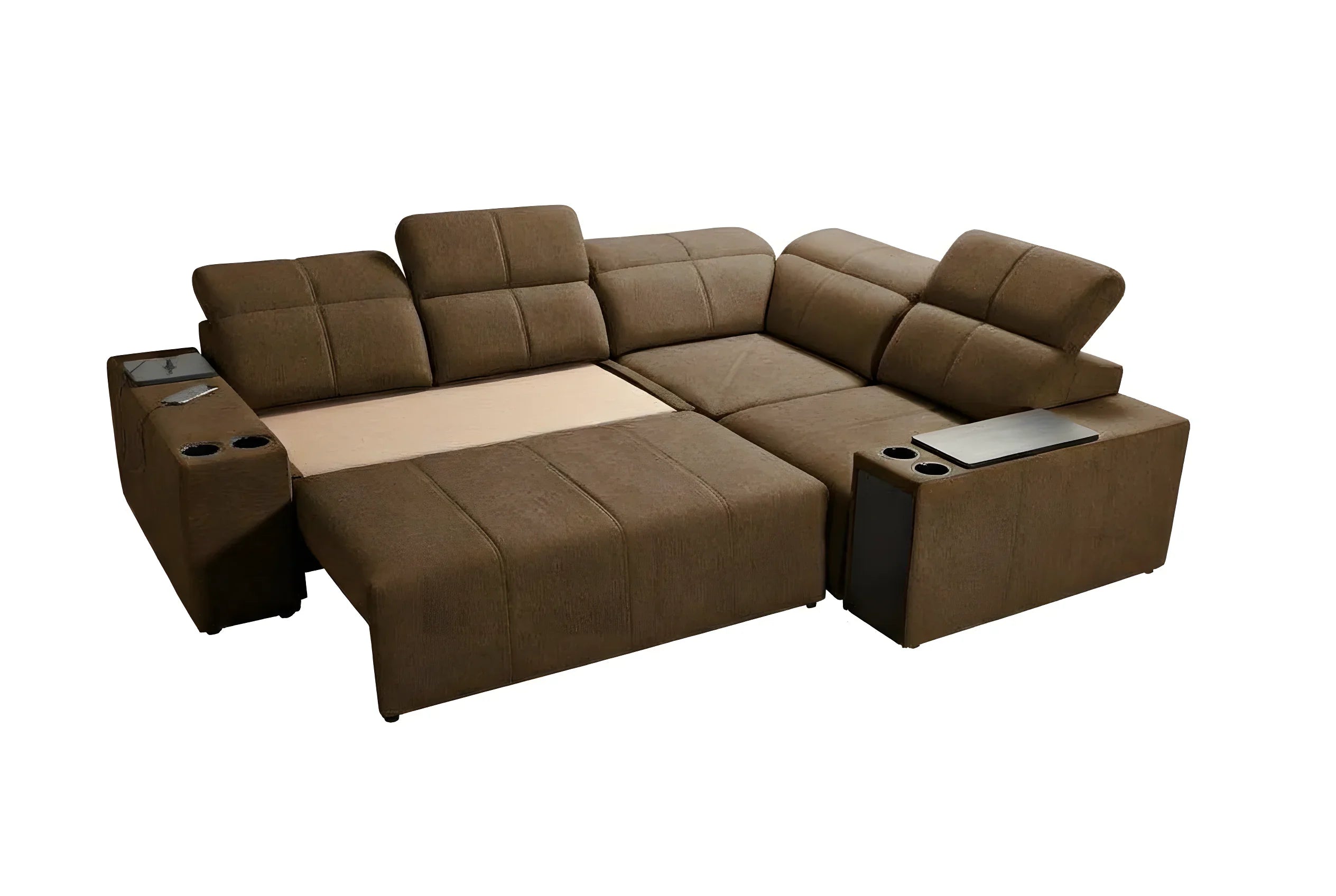
The panoramic sofa is the king tool for living rooms over 35 m². Its U-shape or extended L-shape structures the room, creates a centralised TV zone, and comfortably seats five to seven people. It comes in fixed, convertible or electric recliner versions. For an open-plan large living room, it's the most effective setup.
The corner sofa — the smart compromise
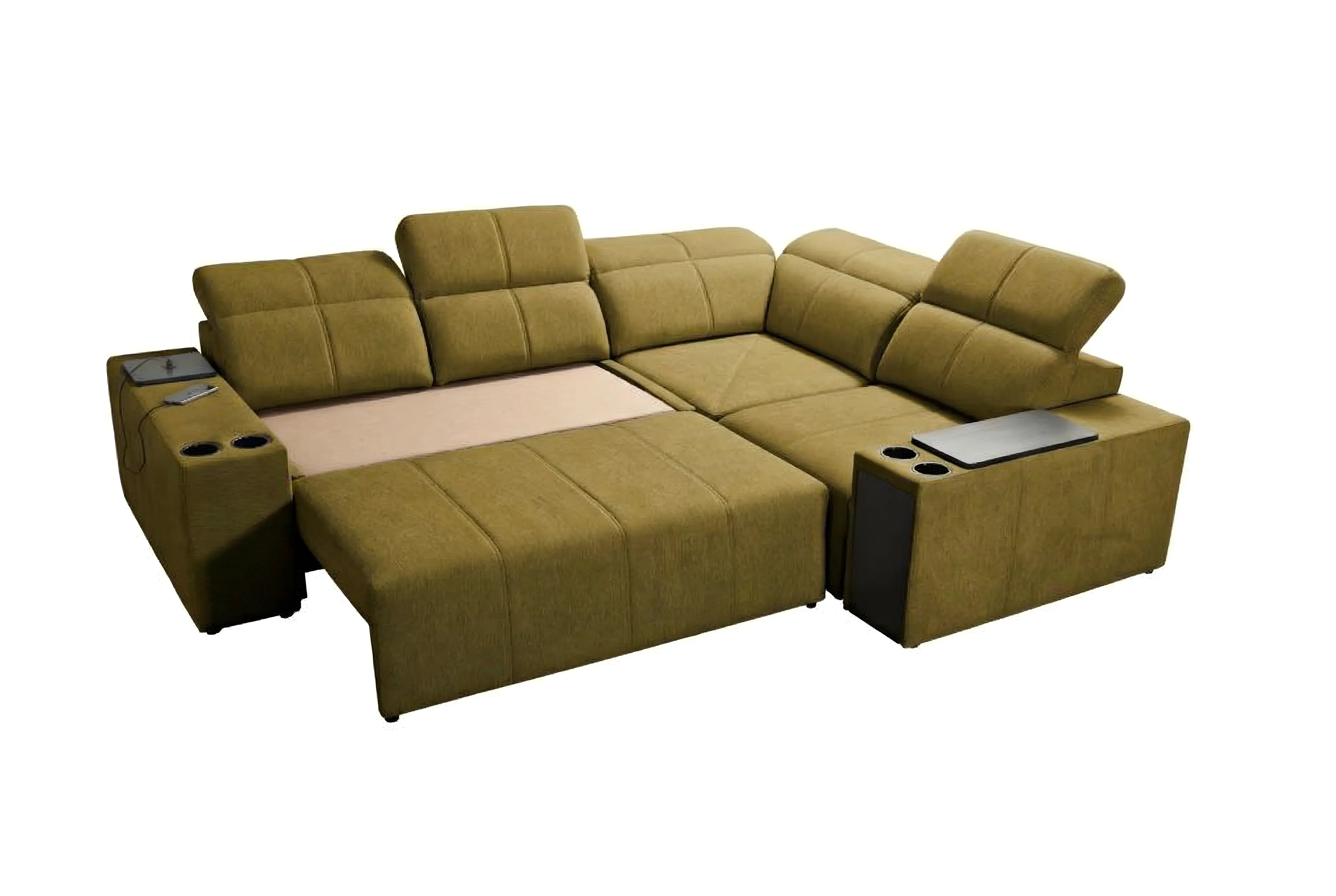
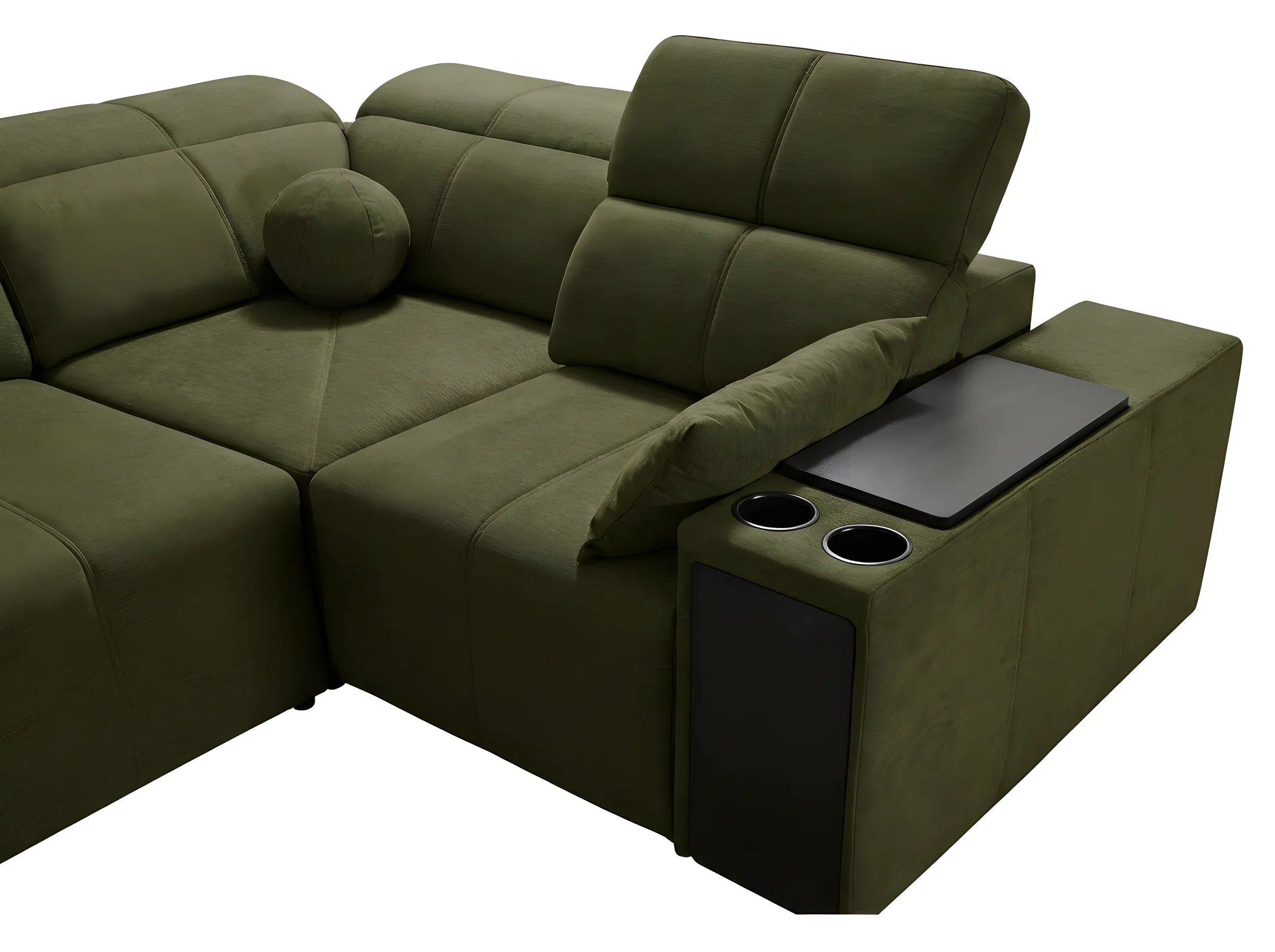
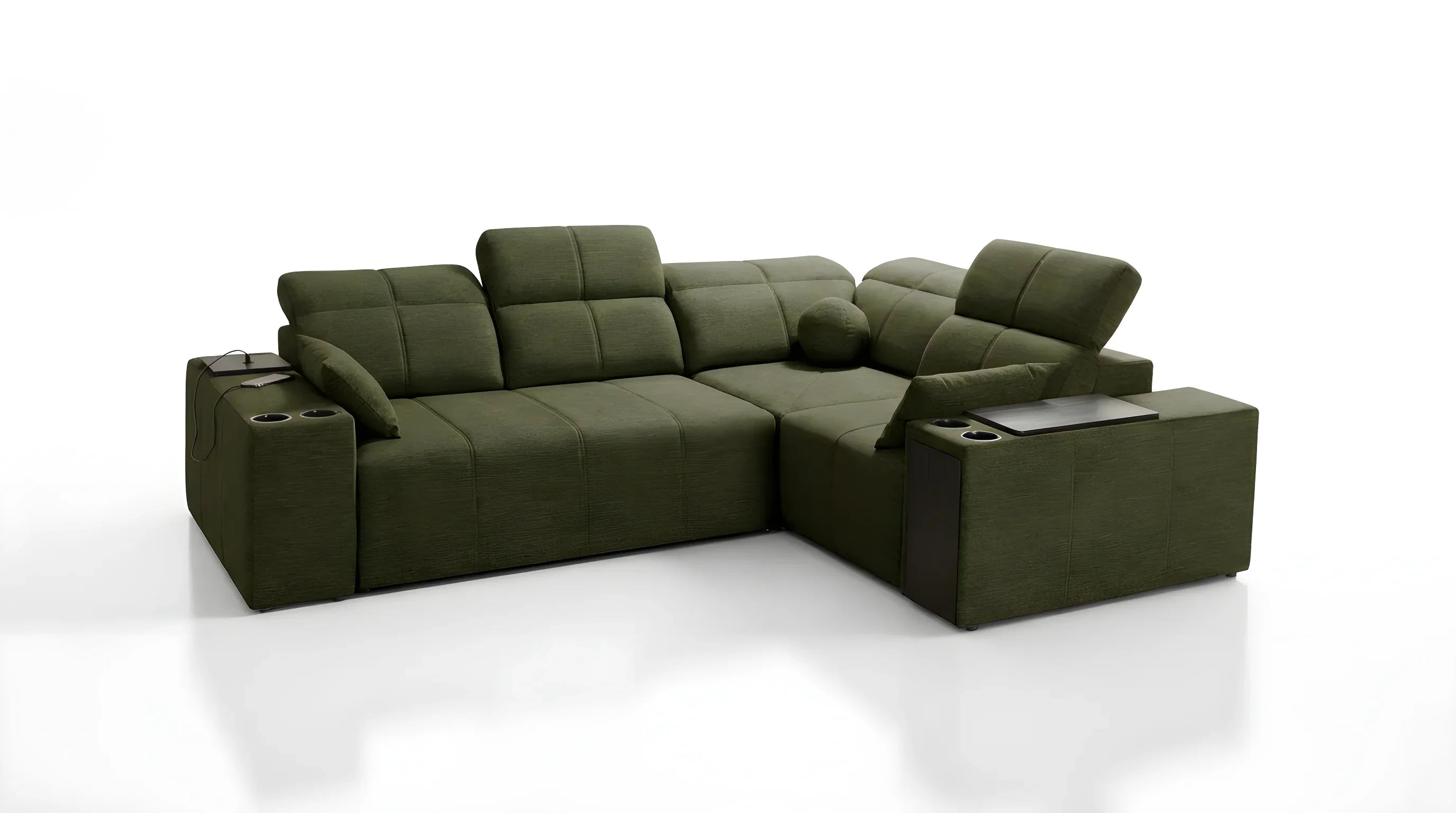
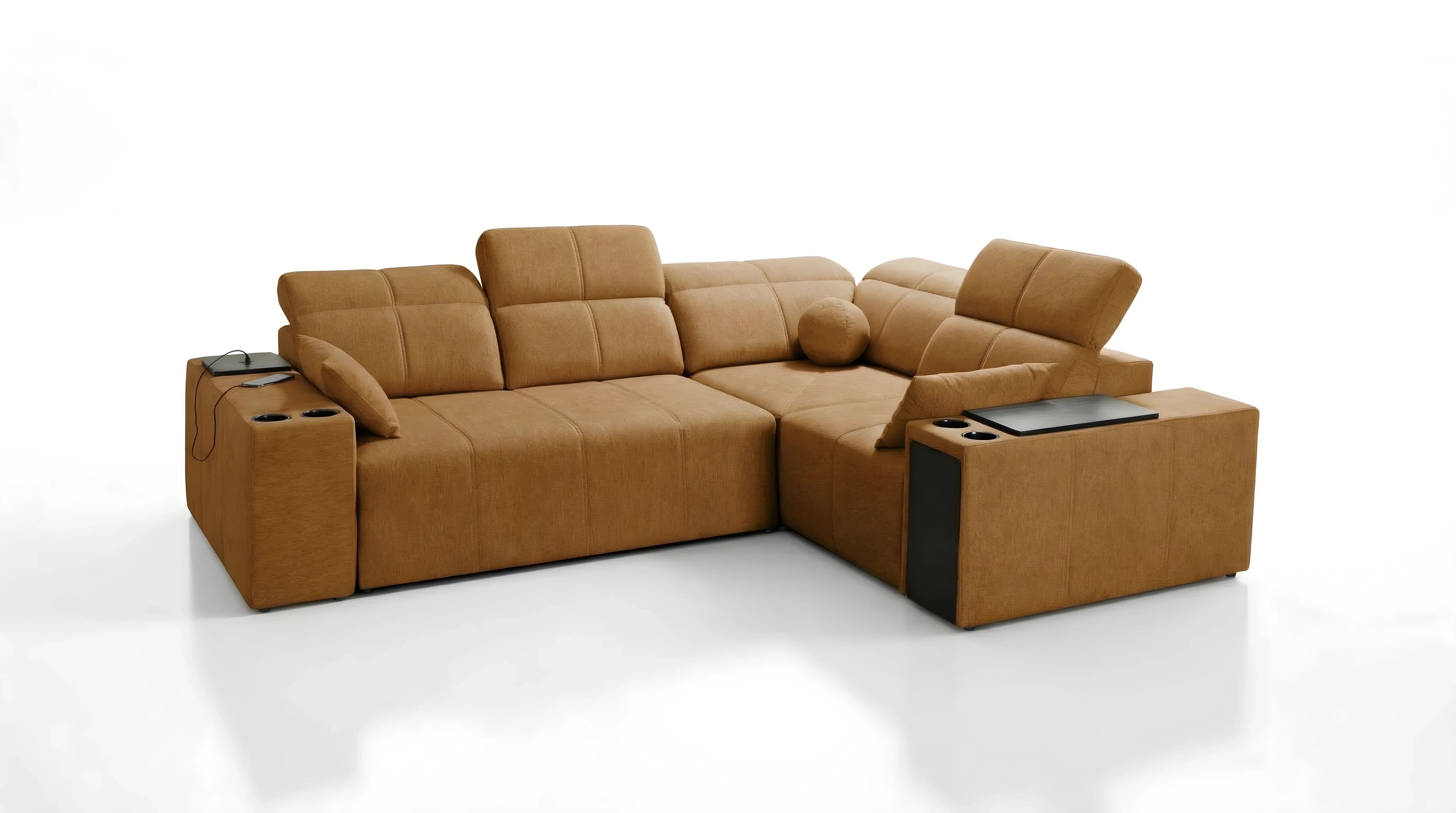
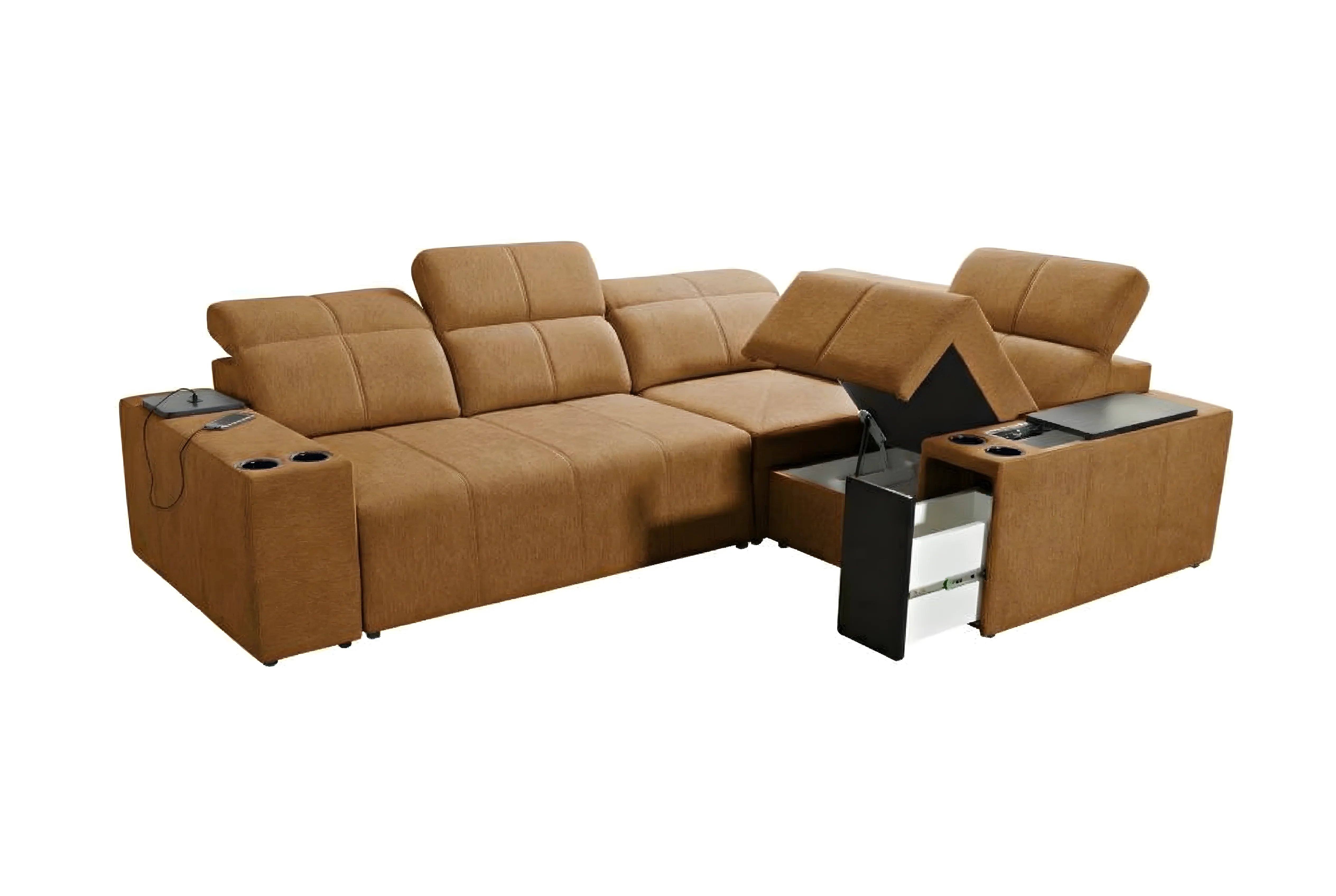
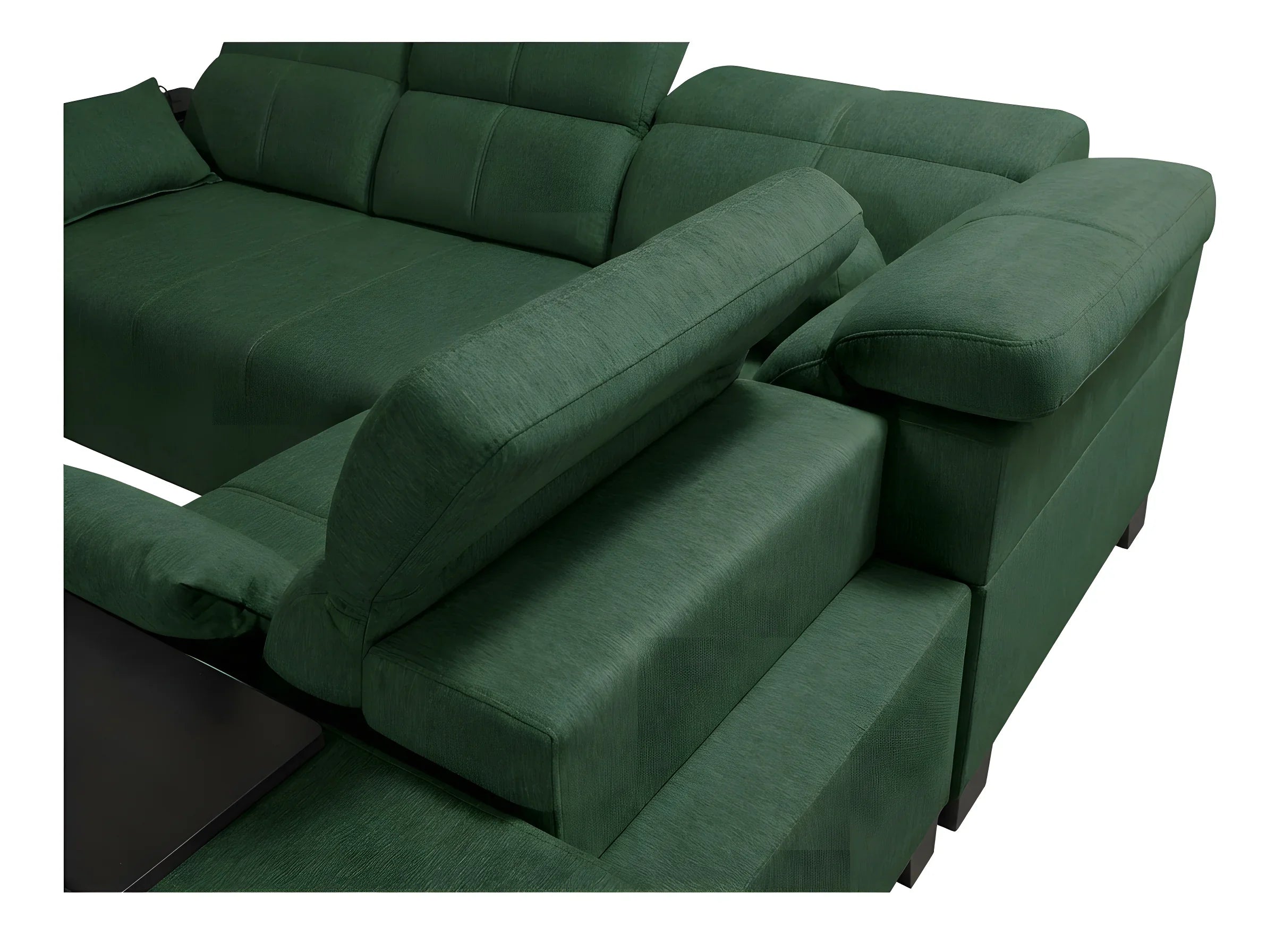
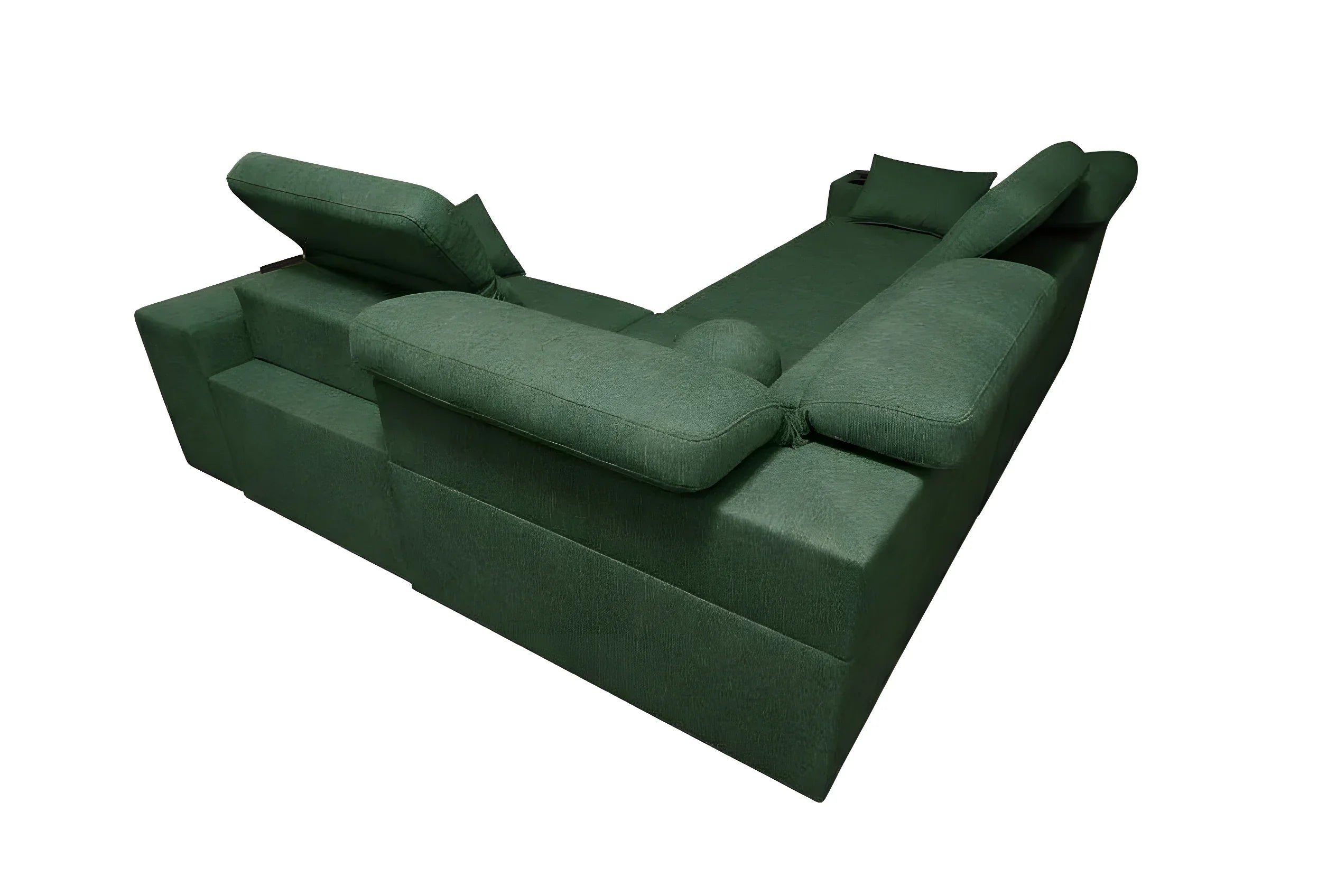
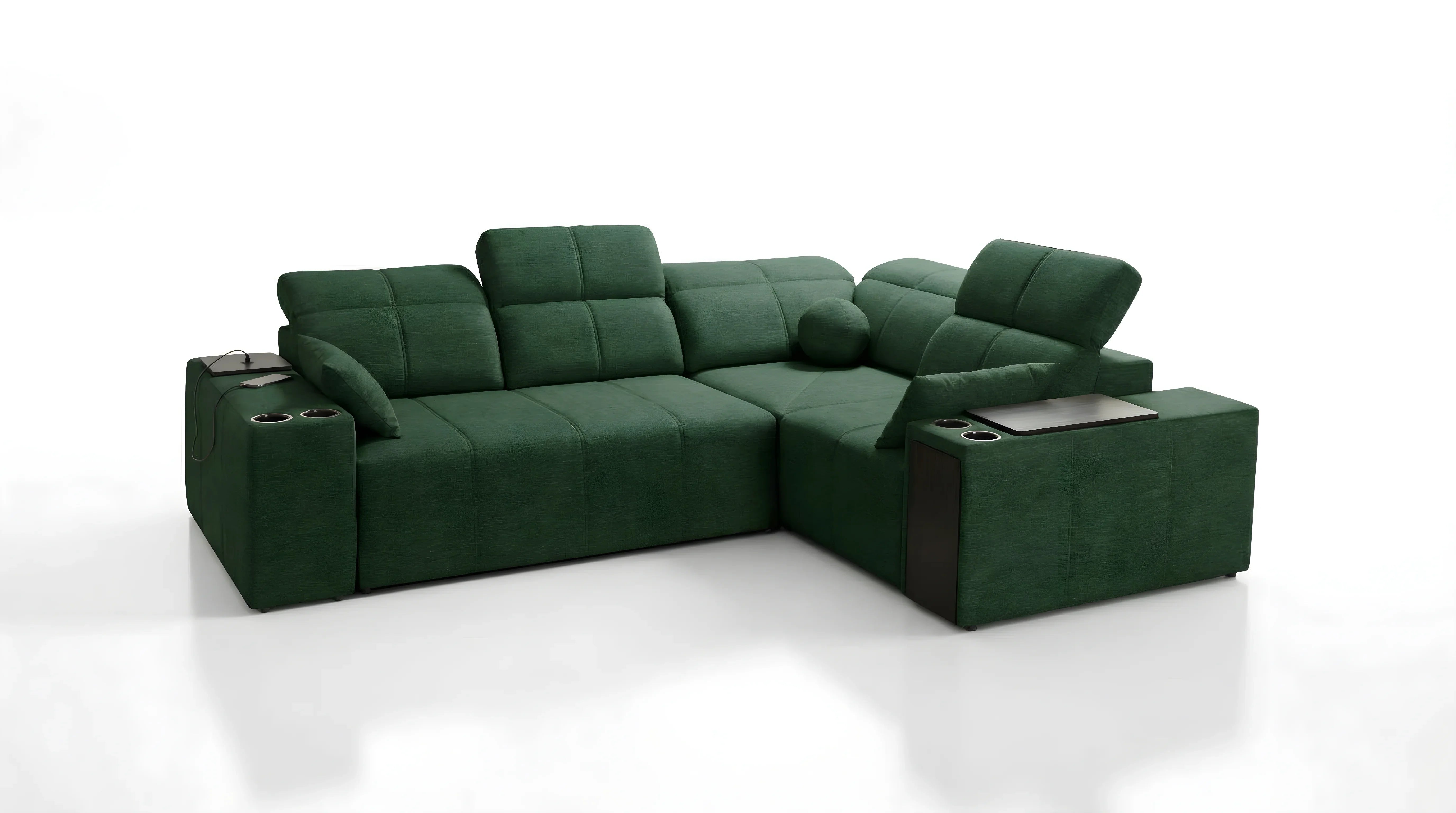
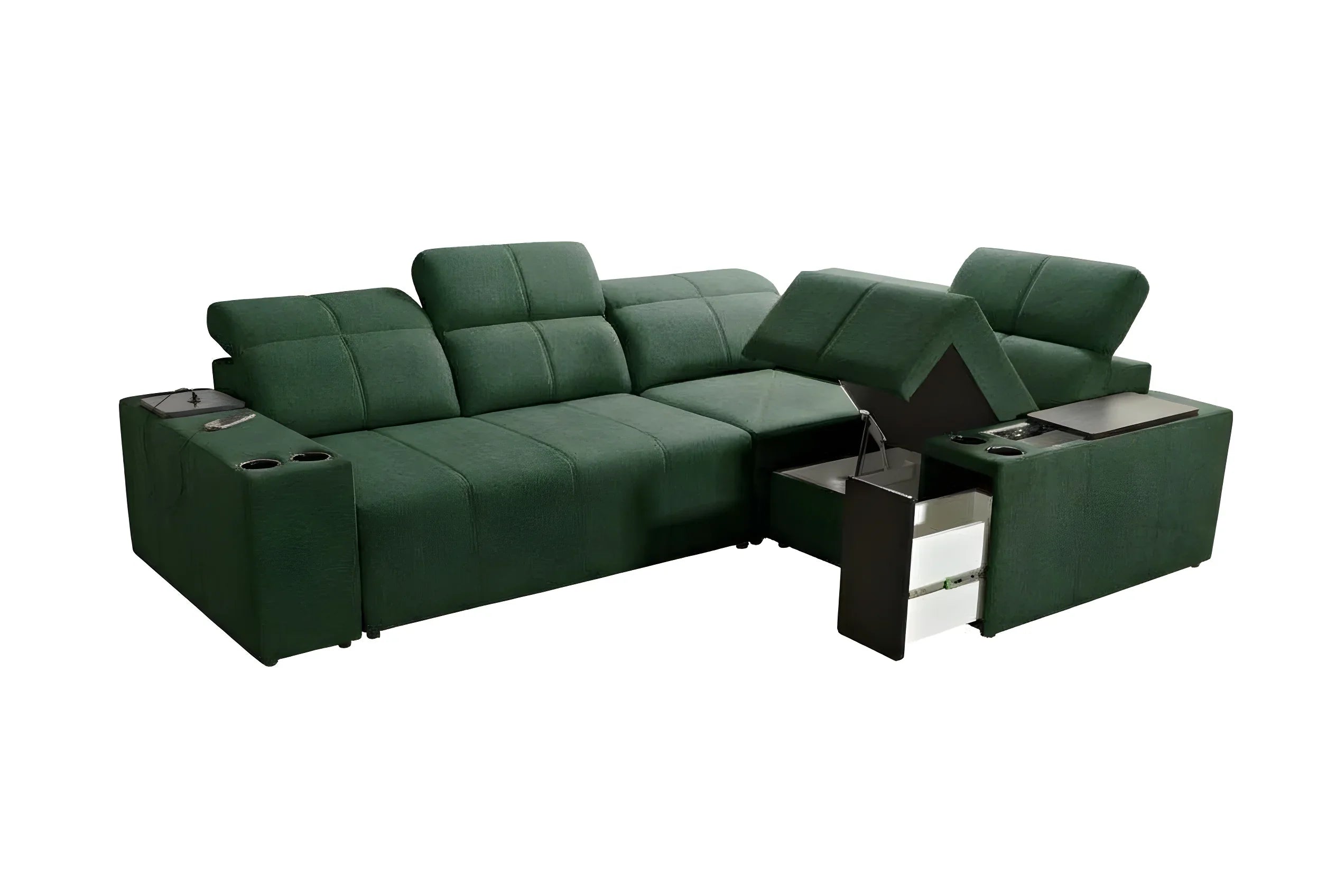
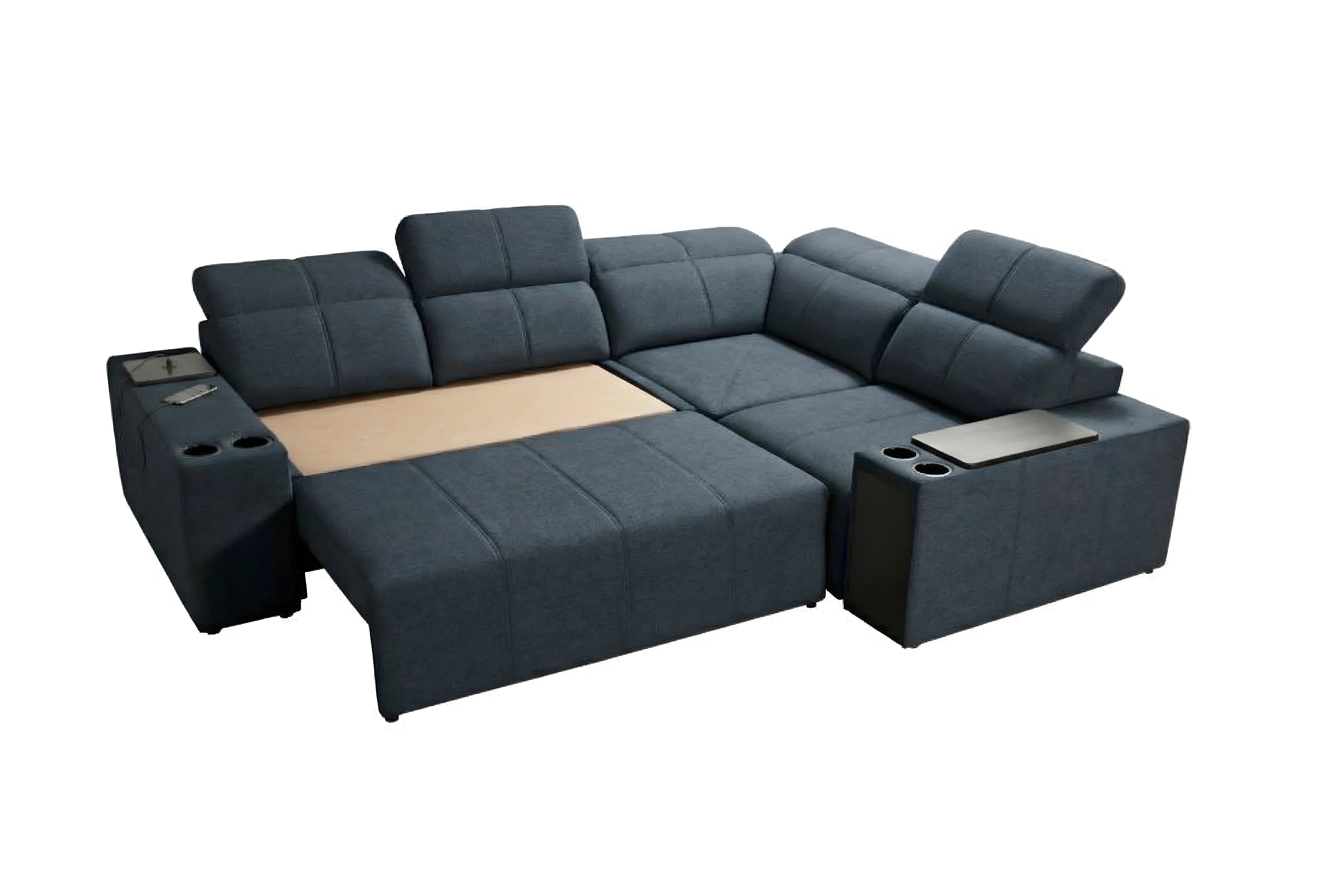
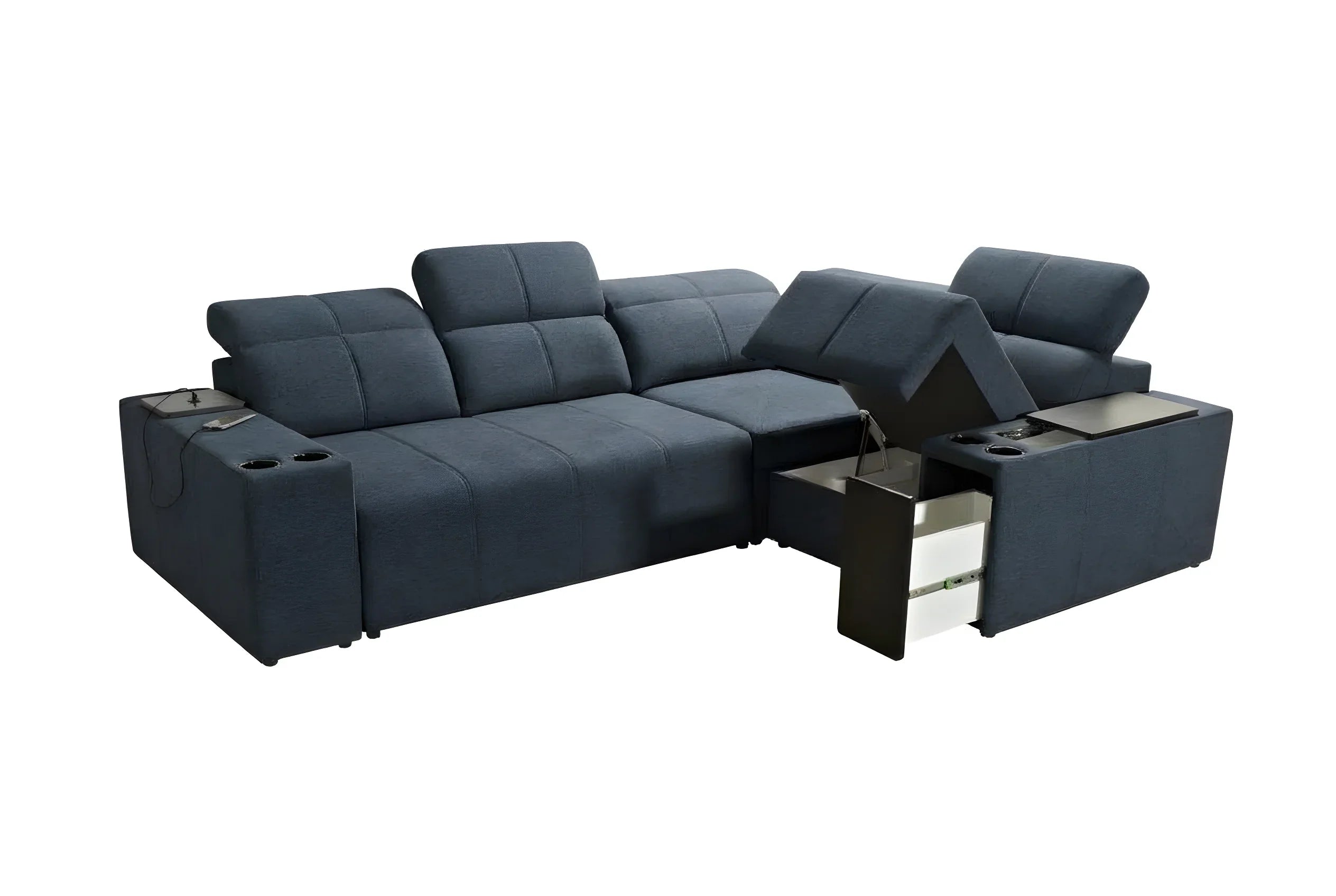
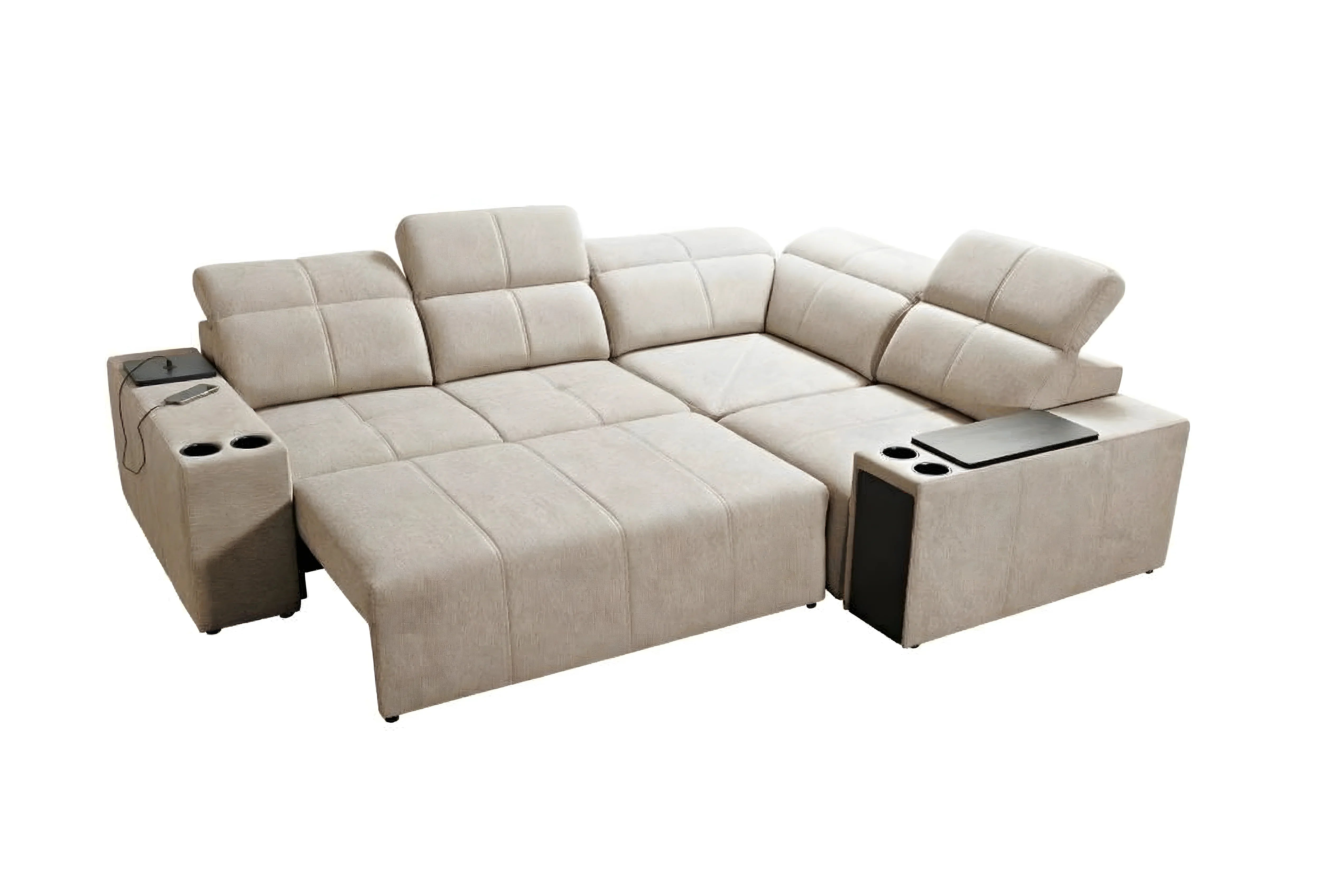
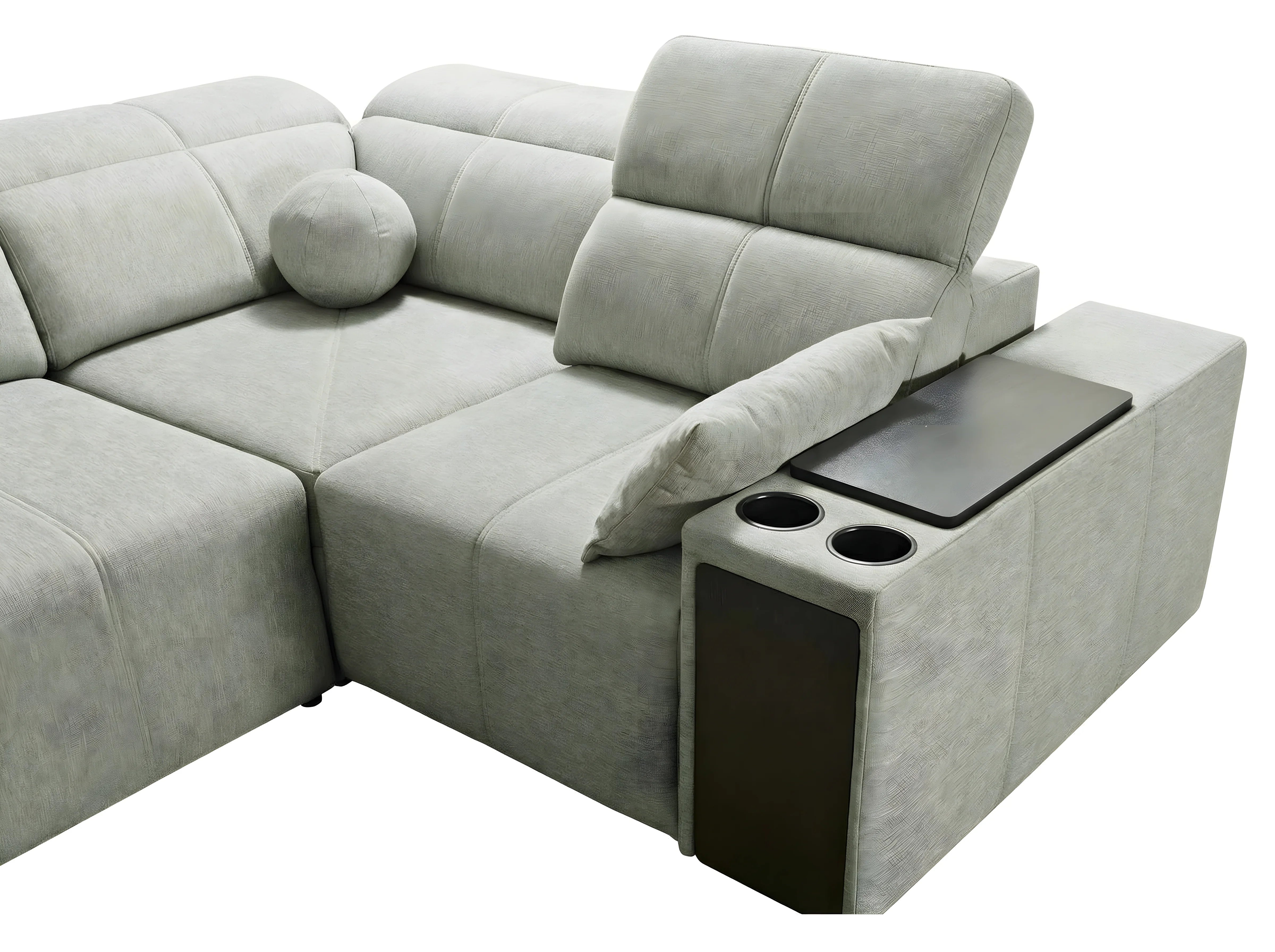
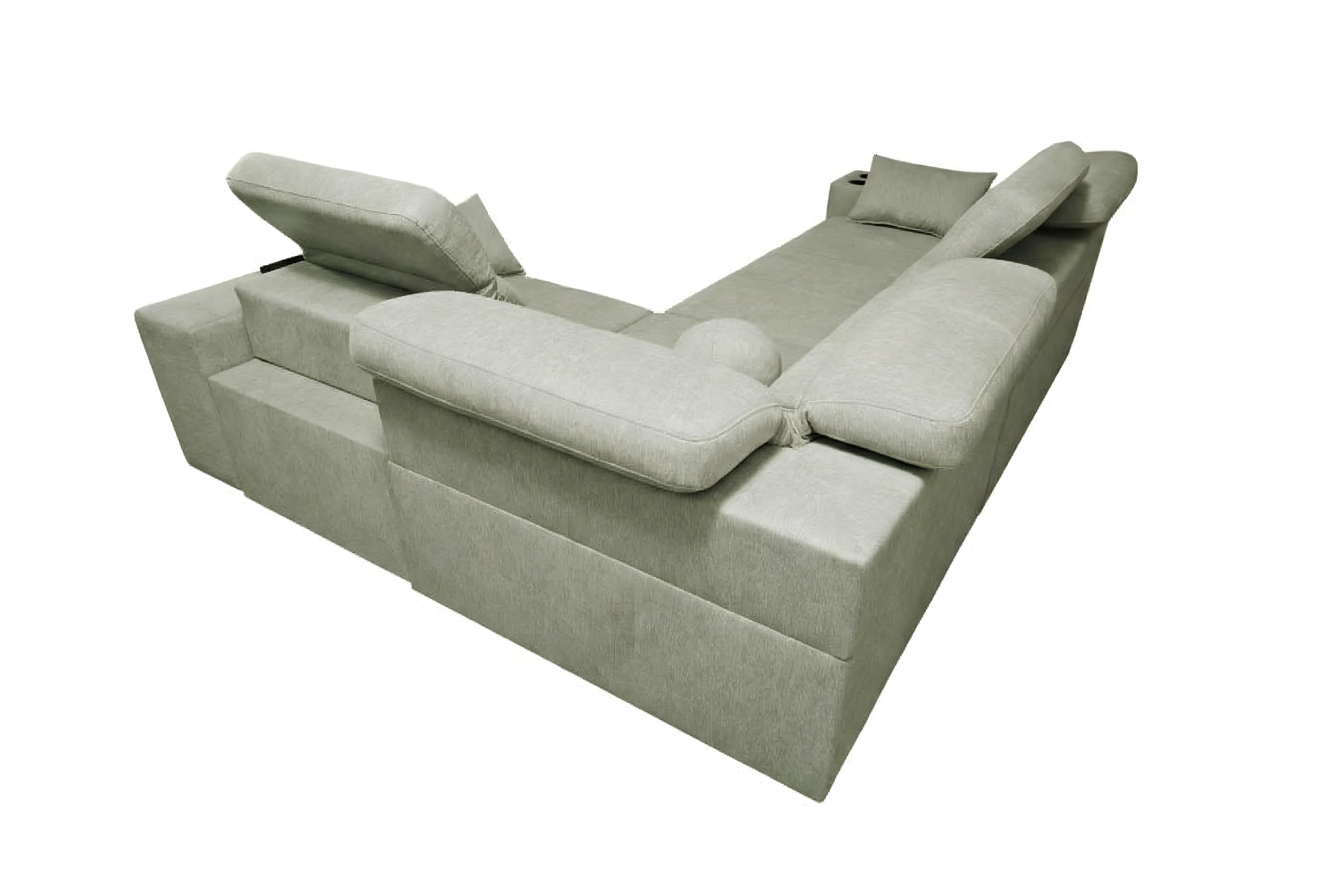
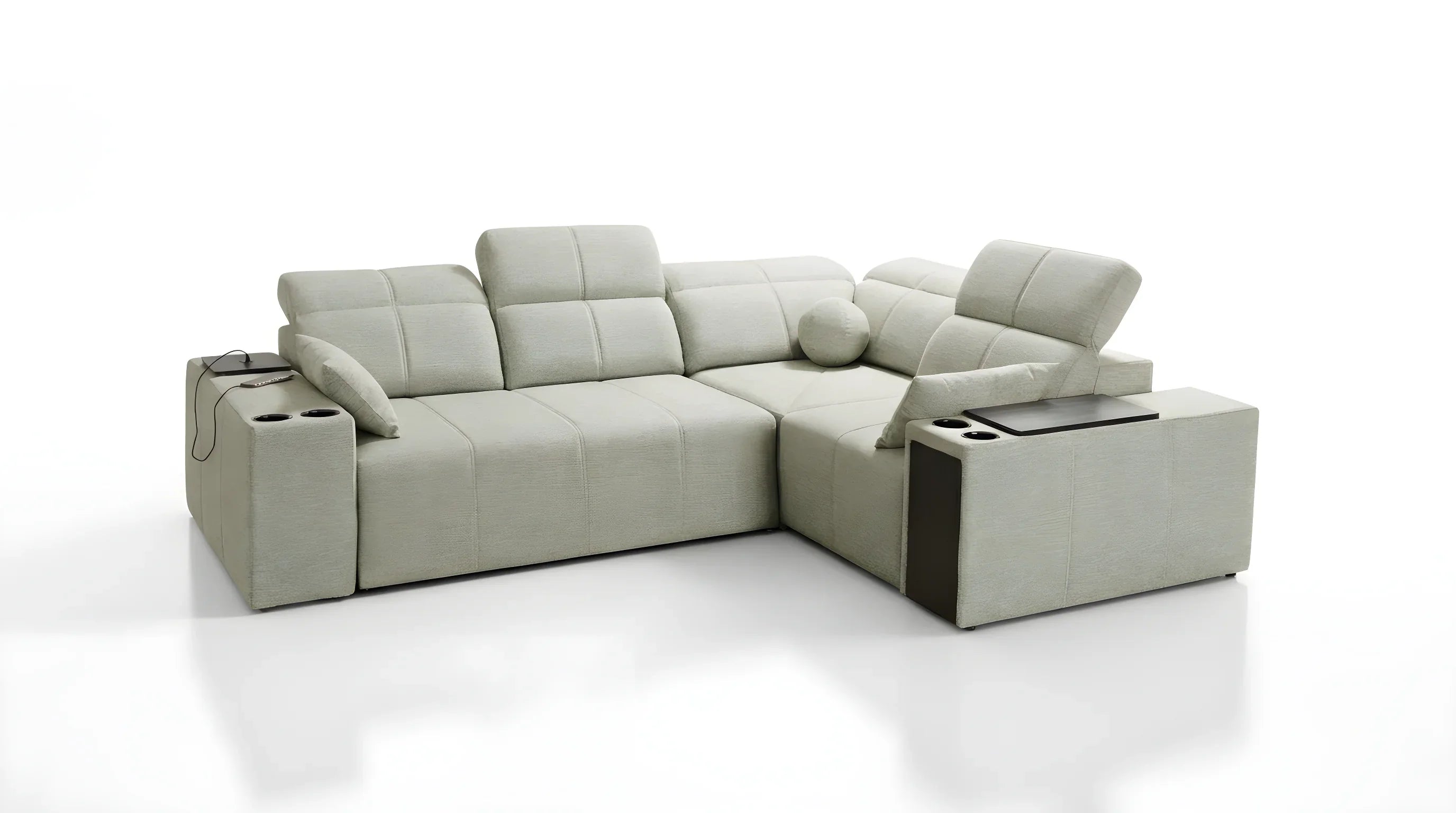
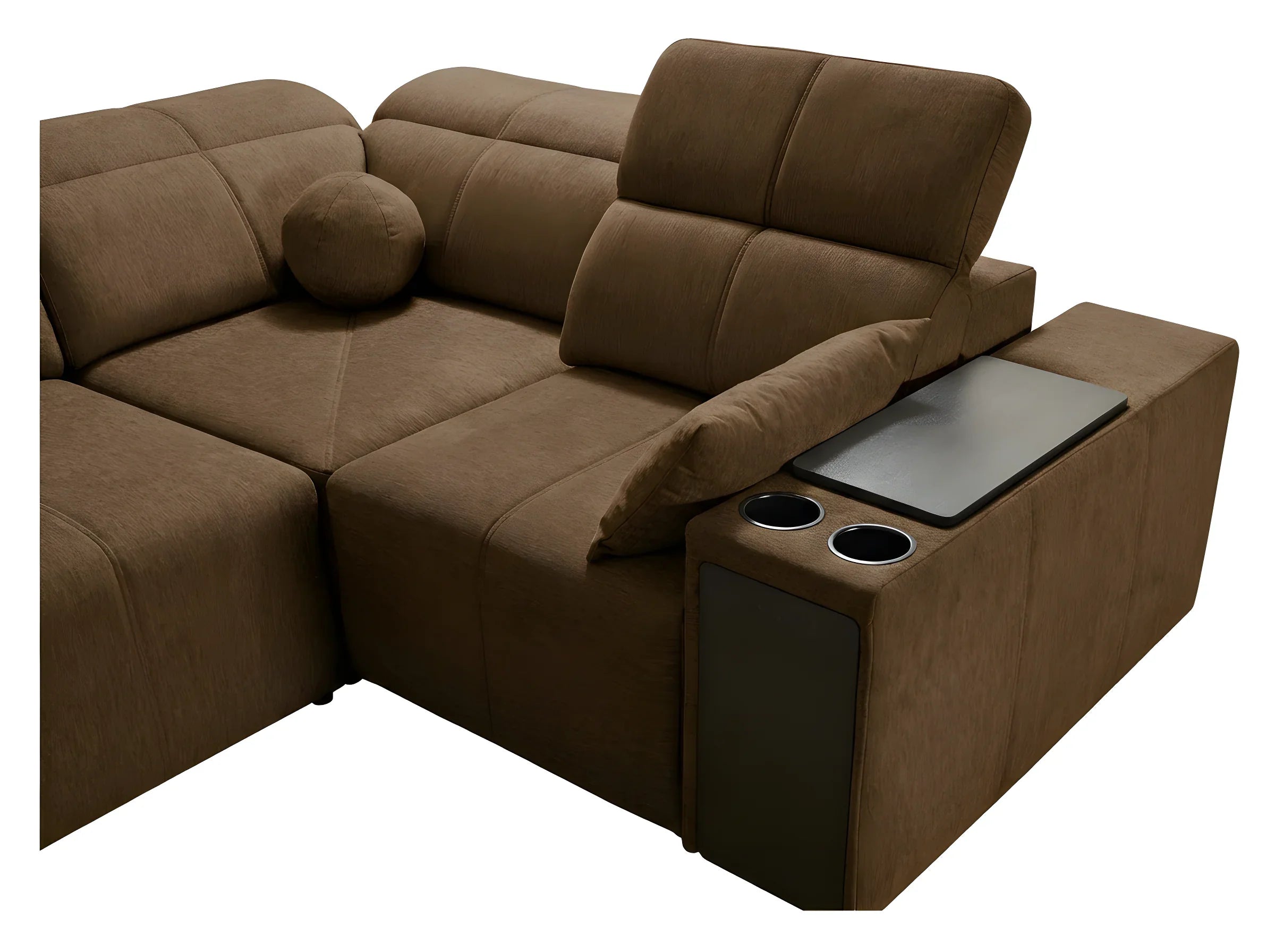
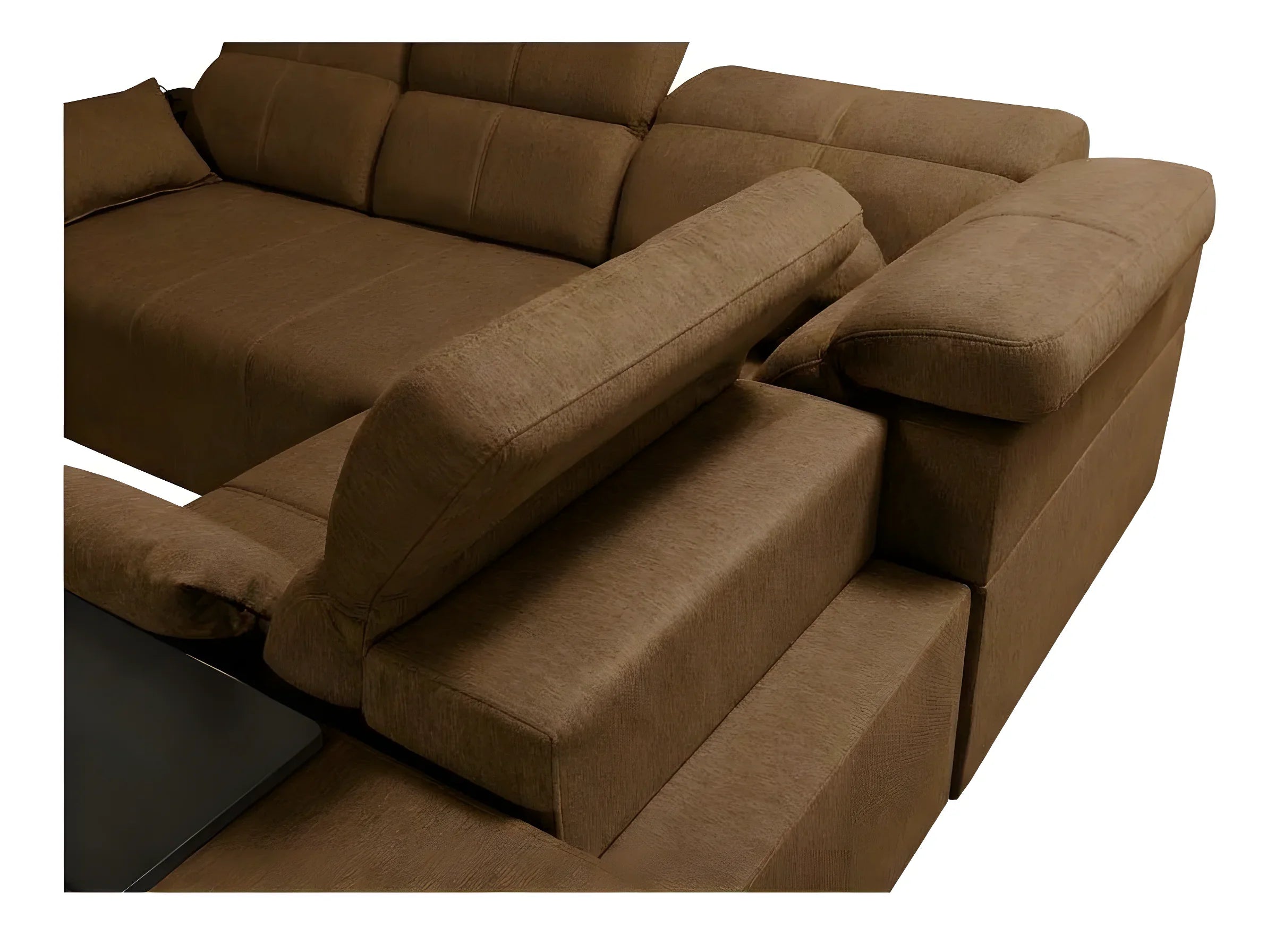
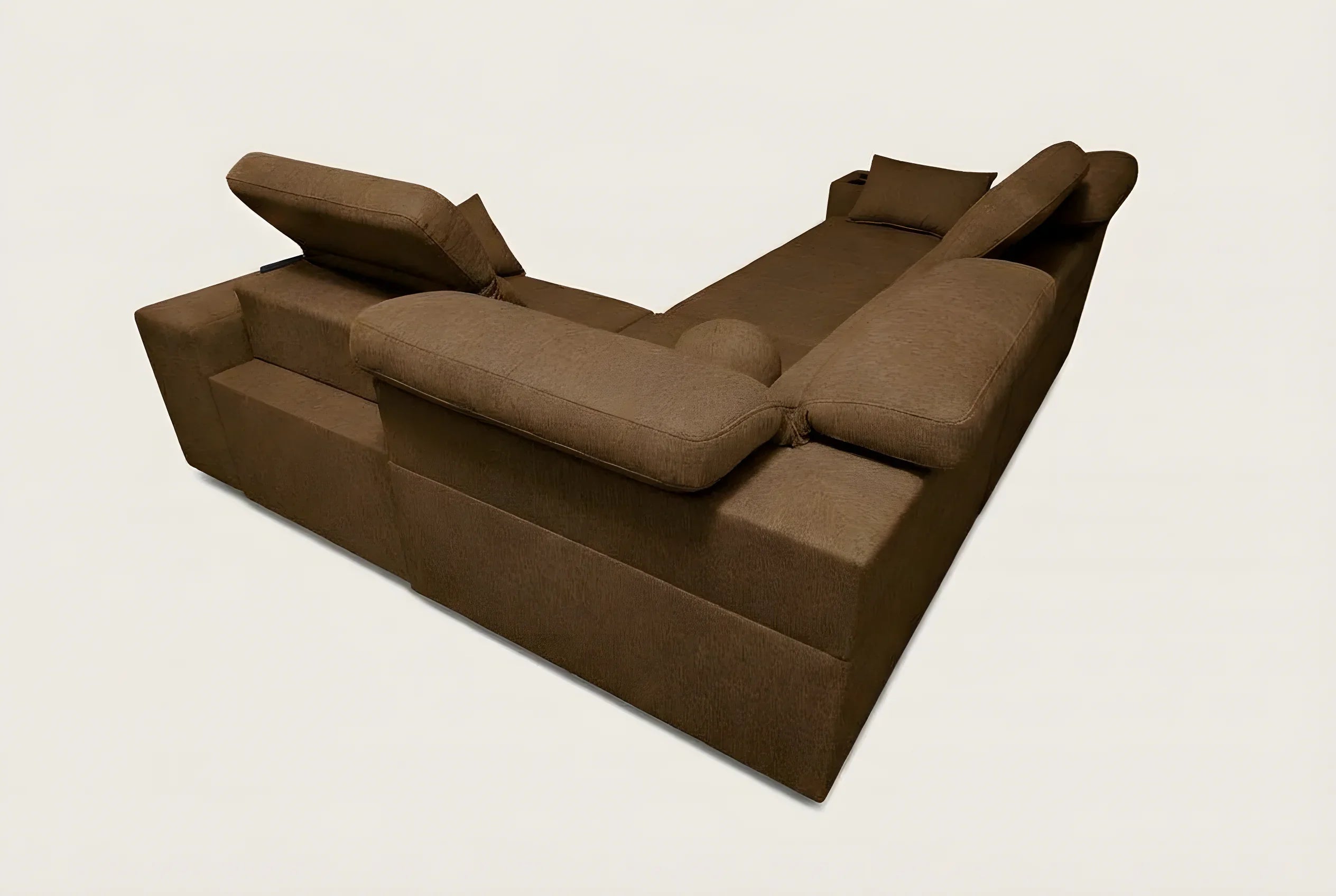
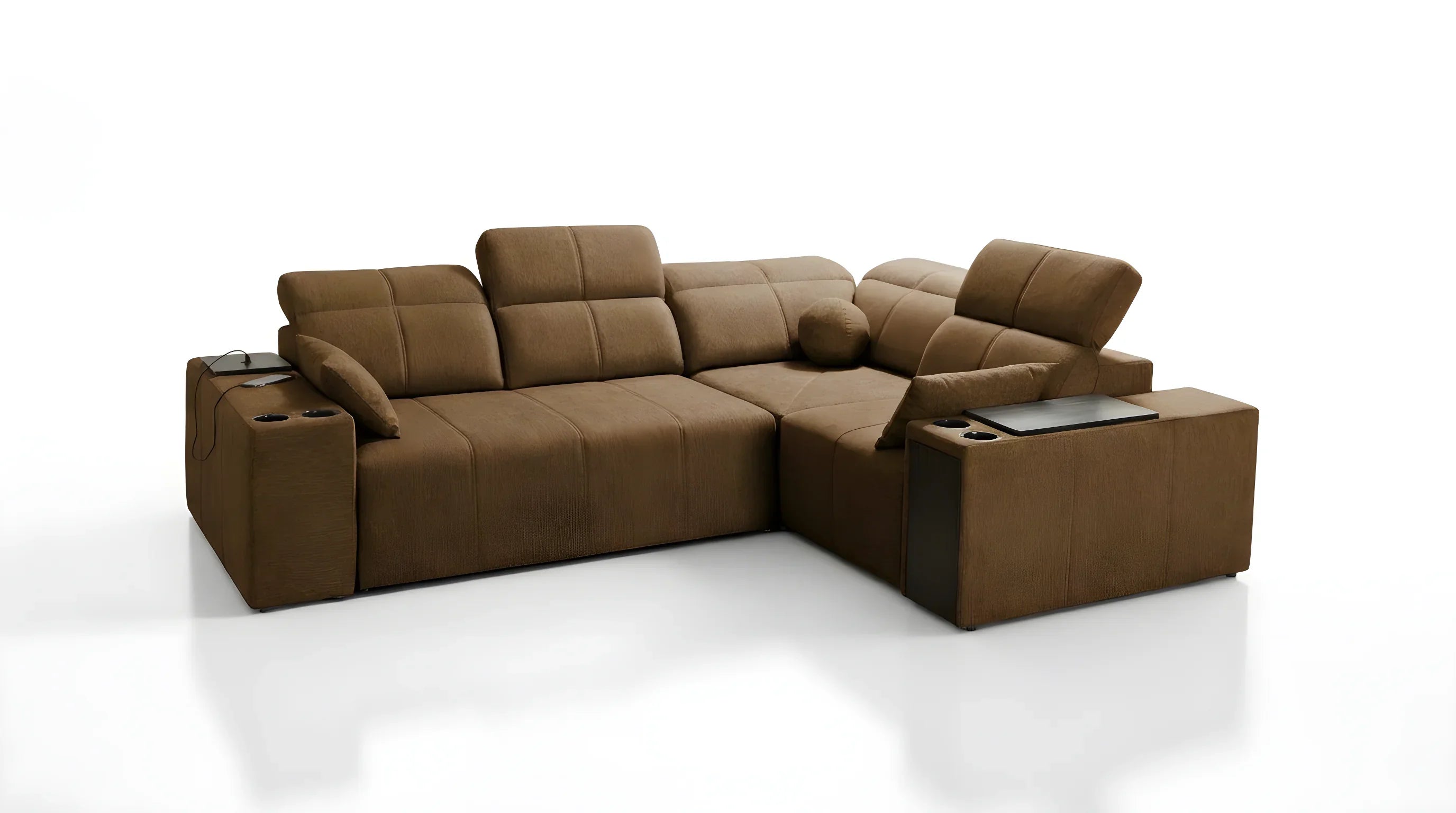
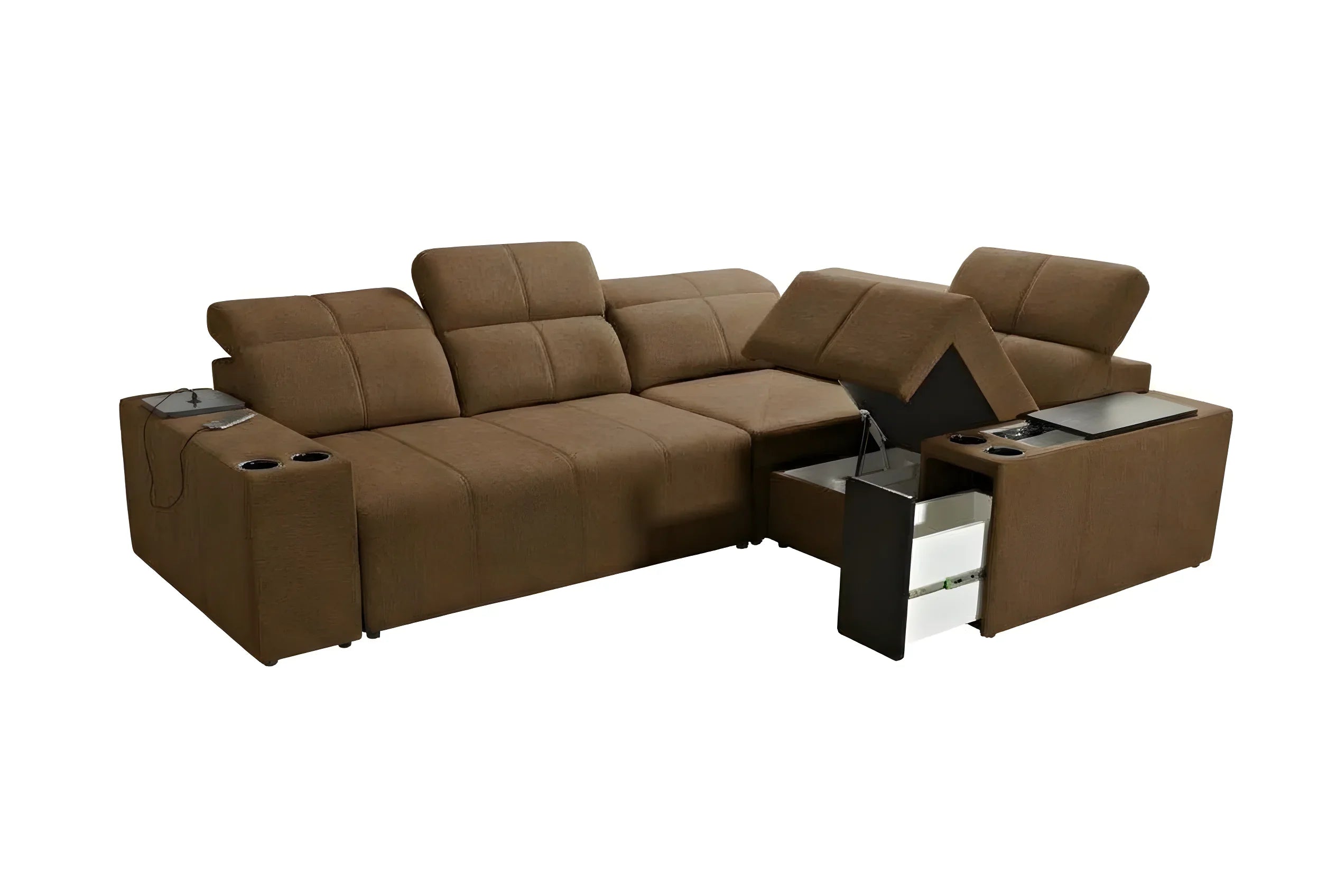
The corner sofa is the most versatile solution for 25 to 35 m² living rooms. It clearly defines the TV zone without taking over the whole space, and the chaise creates a natural lounge corner. Reversible models let you place the corner on the left or right depending on the configuration. For couples or families, this is often the best compromise.
The XXL straight sofa — for long living rooms
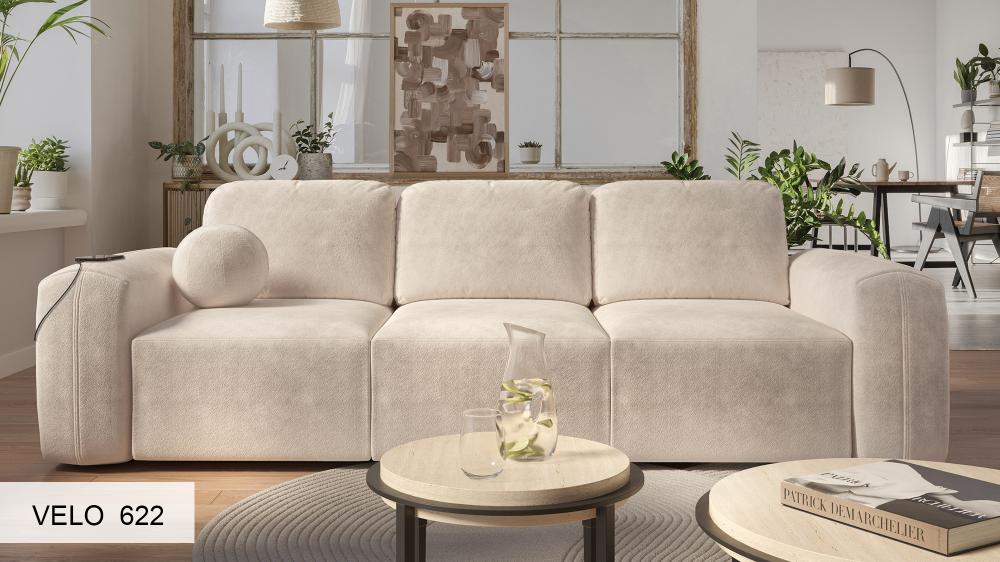
For long, narrow large living rooms, a large 4-seater straight sofa or a 5-seater sofa fits in perpendicular to the room's axis. It's also the configuration that leaves the most free space for other furniture (armchairs, coffee table, sideboard). You choose it when the room is too narrow for a corner or panoramic sofa.
Which sofa to choose based on the room size?
Here's a quick guide so you don't make a mistake.
20–30 m² living room
3-seater sofa + 2 armchairs, or 4-seater corner sofa. Avoid the panoramic, it's too imposing. Opt for light colours to avoid smothering the space.
30–40 m² living room
5-seater corner sofa or small panoramic. This is the most versatile size. You have room to add an armchair or a pouf without cluttering.
40–50 m² and more
Large 6–7-seater panoramic sofa, or combination of a corner sofa + 2 armchairs facing each other. This is where the modular sofa really comes into its own.
4. Dressing the walls and floor to structure the space
In a large living room, the walls and floor are structuring tools in their own right. Poorly dressed, they emphasise the feeling of emptiness. Well worked, they redefine the volumes.
The rug: the most underestimated tool
A large rug structures the sofa zone by visually delimiting it. The rule: the rug must be big enough that the sofa's feet and at least the front feet of the armchairs rest on it. For a large living room, aim for a 250x350 cm rug or bigger. A rug that's too small creates an 'island' effect that fragments the space.
For the choice of rug: geometric patterns for a contemporary style, Berber or kilim patterns for a Moroccan feel, floral patterns for a classic vibe. Coordinate with the sofa cushions for a coherent effect.
Curtains: height and fullness
In a large living room with big windows, the curtains should fall from ceiling to floor (not from the top of the window), with a fullness of 2.5 to 3 times the width of the window. This fullness creates those generous folds that immediately give a palatial feel. Heavy fabrics (velvet, thick linen) also absorb sound and improve acoustics.
The walls: don't leave them all blank
An entirely white wall in a large living room creates a 'warehouse' effect. Several options to warm it up: an accent paint on one wall only (midnight blue, terracotta, forest green), a panoramic wallpaper on the wall facing the sofa, a large bookcase covering an entire wall, or an XL artwork (minimum 100x150 cm for a large living room).
The ceiling: the forgotten 5th wall
In large volumes, the ceiling catches the eye as soon as you look up. Painting the ceiling in a shade slightly darker than the walls (a warmer tone, or a pearl grey) creates a cocoon feeling. For very high ceilings (3 m and above), it's almost essential to bring back some intimacy.
5. Lighting in three layers: ambient, task, accent
A large living room can't make do with a single central ceiling light: the light would be flat and uniform. The golden rule is lighting in three layers.
Layer 1 — Ambient
This is the main light, the one that illuminates the whole room. It can come from a dimmable ceiling light, from distributed recessed spots, or from a designer pendant over the centre of the sofa zone. What's important is that this light is adjustable (dimmable) to switch from daytime light to evening light.
Layer 2 — Task
These are the accent lights that respond to specific uses: floor lamp behind the reading armchair, table lamp on the sideboard, low-hanging pendants above the dining table, wall sconces near the sofa. For reading corners, aim for 400–500 lumens (enough to read without fatigue).
Layer 3 — Accent
These are the lights that enhance the decoration and create the mood: indirect lighting behind the TV (LED strip), adjustable spots on the paintings or plants, fairy lights on a bookcase, tea lights. These lights are often switched on in the evening, when you want a softer atmosphere.
The pro tip: plan all your lights on different circuits, controlled by a dimmer or separate switches. You can then modulate the atmosphere based on the time of day and the use.
6. Traffic flow: the 90 cm rule
In a large living room, there's a temptation to place furniture in abundance ('there's room, let's make the most of it'). That's the mistake that turns a large living room into a museum living room: too much furniture, no more circulation, you bump into everything.
The 90 cm rule
For a living room to stay functional and pleasant to live in, you need to leave at least 90 cm of passageway between each piece of furniture, and between the furniture and the walls. It's the minimum distance for an adult to walk comfortably without weaving. For really large rooms (50 m² and up), aim for 100–120 cm to keep a sense of space.
The paths to materialise
In a large living room, you enter and leave through several accesses: from the entrance, from the kitchen, from the hallway to the bedrooms. Each path must be clear, fluid, with no obstacles. Ask yourself the question: 'what's the shortest route between the front door and the sofa?' If that route crosses an armchair or a corner of the coffee table, move that element.
The 'middle of nowhere' trap
Never place a piece of furniture in the middle of a natural pathway, even if the room is large. A pouf in the middle of a circulation corridor quickly becomes an obstacle you keep going around. Better to attach it to another piece of furniture (sofa, armchair) to define the conversation zone.
7. Classic mistakes to avoid in a large living room
Here are the seven most common mistakes we observe in large living rooms, and how to avoid them.
- Multiplying small furniture pieces instead of investing in a few strong pieces. A large living room deserves a large sofa, not five small armchairs.
- Pushing everything against the walls. The opposite mistake: believing that by gluing the furniture to the walls, you 'free up' the space. On the contrary, it creates a gym effect. The sofa must be at least 20 cm away from the wall, ideally 50 cm.
- Neglecting the lighting. A large living room with a single central ceiling light looks dull and sad. Multiply the light sources as explained above.
- Choosing a rug that's too small. The rug must be proportional to the sofa zone, not to the sofa alone. For a 7-seater sofa, allow at least 300x400 cm.
- Forgetting the green plants. Plants are the most underestimated tool to warm up a large living room. A large ficus, a palm tree, a Monstera in a dead corner transforms a room.
- Multiplying bold colours. A large living room can take one strong colour (accent paint, red sofa), but not three or four. Stick to one accent colour maximum.
- Underestimating acoustics. Rugs, curtains and textile materials absorb sound. Without them, your large living room will be reverberant and unpleasant.
8. Conclusion: a large living room that feels like you
A successful large living room is not one filled with expensive furniture: it's one where every corner can breathe, every zone has its function, and every member of the household feels comfortable there. The secret boils down to three principles: structure the space into zones, choose a sofa that's the right scale, and look after the lighting in three layers.
At Kings Canape, we've selected collections designed for large spaces: panoramic sofas for very large volumes, reversible corner sofas to structure without partitioning, home cinema sofas for fans of immersive sessions. Each model has been designed to fit into a large space without overwhelming it.
Furnishing a large living room is a project that deserves taking your time: measuring, testing, moving things, adjusting. Don't rush into the first sofa you see. Take the time to visit the showroom, try the configurations, visualise the integration in your room. A well-chosen sofa means ten years of comfort. A badly chosen one means ten years of regrets.
Frequently asked questions about furnishing a large living room
How do you furnish a 40 m² large living room?
For a 40 m² living room, the ideal is to divide the space into two or three functional zones: a TV zone with a 5-seater corner sofa or a small panoramic, a conversation zone with two armchairs, and possibly a dining zone. The golden rule: place the sofa at 1.5–2.5 times the diagonal of the TV screen away from the TV, never flush against the wall. Plan for a rug of at least 250x350 cm under the sofa, and lighting in three layers (ambient, task, accent).
Which sofa for a large living room?
The choice depends on the shape of the room. For a rectangular or square room over 35 m², the panoramic sofa in U or extended L is ideal. For a more modest room (25–35 m²), a large 5–6-seat corner sofa is enough. For a very long and narrow living room, a large 5-seater straight sofa perpendicular to the room's axis is the right option.
How to avoid the 'warehouse' effect in a large living room?
Four main levers: 1) structure the space into zones delimited by the furniture, 2) multiply the light sources (never a single central ceiling light), 3) work the walls with an accent colour or a panoramic wallpaper, 4) invest in a large rug that visually delimits the sofa zone. Curtains falling from ceiling to floor, large-format green plants, and absorbent materials (velvet, boucle, thick rugs) also help warm up the volume.
What size rug for a large living room?
The rug must be proportional to the sofa zone, not to the sofa alone. For a 3-seater sofa, aim for 200x300 cm. For a 5-seater corner sofa or a small panoramic, aim for 250x350 cm. For a large 7-seater panoramic, allow 300x400 cm or more. The rule: the front feet of the sofa and armchairs must rest on the rug.
How many pieces of furniture in a large living room?
Less is more. For a large living room of 30 to 40 m², count: one main sofa (panoramic or corner), one to two accent armchairs, a coffee table, a side table or lamp, a rug, an artwork or a bookcase, and ambient lighting. Avoid adding a sideboard, console and accent furniture in excess: you'll lose the 'large space' effect you were after in the first place.
Should you paint the ceiling a different colour in a large living room?
For very large volumes (ceiling height 3 m or more, or surface area over 40 m²), painting the ceiling in a shade slightly warmer or darker than the walls (one tone down) creates a cocoon feeling and brings back some intimacy. For standard heights (2.5 m), keep the ceiling white: painting it in colour would visually flatten the room.



Leave a comment
This site is protected by hCaptcha and the hCaptcha Privacy Policy and Terms of Service apply.