


Table of contents

According to a 2024 study by DARES, nearly 4 million French people now work remotely at least one day a week, most of them from home. For many, this means making do with a space that was never designed for it: the living room. The good news is that you don't have to choose between a functional office corner and a genuinely warm living room. With the right furniture, a single room can play two roles — office by day, living room by night — without losing any comfort or aesthetic appeal. Here is the complete guide to making that transformation work, designed for those who refuse to sacrifice their home to their professional activity.
1. Why remote work is reshaping living-room design
Before remote work became widespread, the living room had a clearly defined purpose: relaxing, watching TV, entertaining. The arrival of work at home has introduced a new constraint into the most social space in the home. According to the Jean Jaurès Foundation Observatory, hybrid remote work now concerns more than 25% of workers in major French metropolitan areas. This creates a space problem — but also an opportunity.
The opportunity is to turn the living room into a multifunctional space. While the bedroom is meant to remain intimate and the kitchen utilitarian, the living room is the most modular room in the apartment. It usually has the best natural light, enough surface area, and a central piece of furniture — the sofa — that can be optimised to meet this new need.
The trap of the "improvised desk" on the sofa
The most tempting solution — but the worst — is to use the sofa as an improvised desk. Laptop on your lap, folders scattered across the cushions, video calls from the corner of the sofa. The result: recurring back pain, eye strain, blurred line between work and personal life. A study by ANACT shows that 62% of remote workers report suffering from postural pain when they don't have a dedicated workspace.
On the other hand, cleverly arranging the living room for remote work doesn't require investing in a bulky desk and a director's chair that would clash with your décor. It's about rethinking the sofa itself as a credible workstation — then folding it back into relaxation mode when the day ends.
What you will gain
A dedicated space that improves your concentration, protects your back, clearly separates professional and personal life, and doesn't detract from the look of your room.
What you will not lose
The comfort of your sofa, the conviviality of your living room, the modularity of your room. Everything stays fluid, transformable in a few simple moves.
2. Defining two zones in a single room: the golden rule of the "transformable living room"
The fundamental principle of designing a living-room workspace is zoning: creating two distinct territories in a single room, without putting up a single wall. That means working three levers: the floor, the light and the furniture.
The rug as an invisible boundary
The simplest and least expensive way to delineate an office zone in your living room is the rug. A large rug under the sofa-TV corner creates a "relaxation" zone. A second, smaller rug — or a simple wood-look vinyl — marks out the work space. Visually, your brain will instantly associate each zone with its purpose.
The strategic position of the sofa
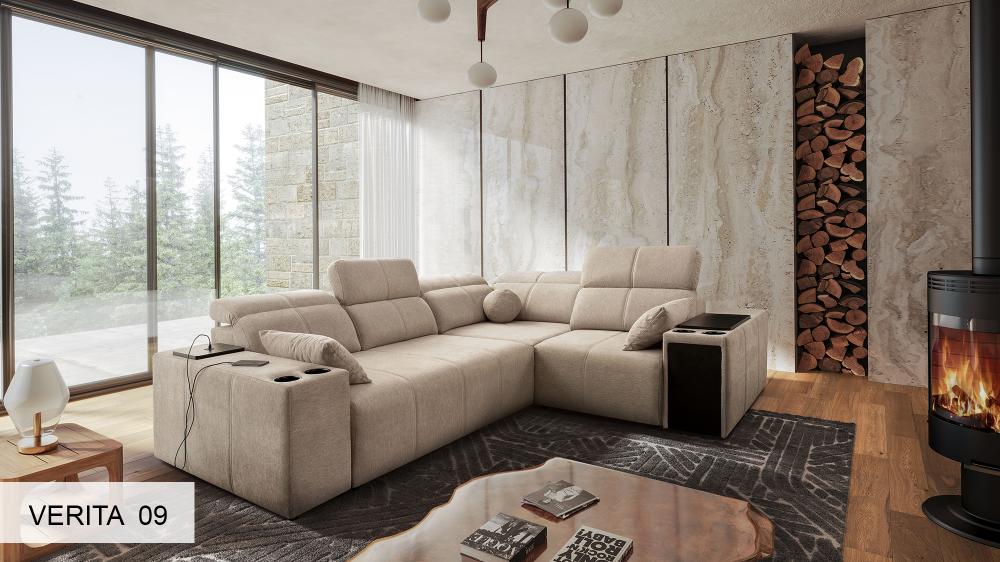
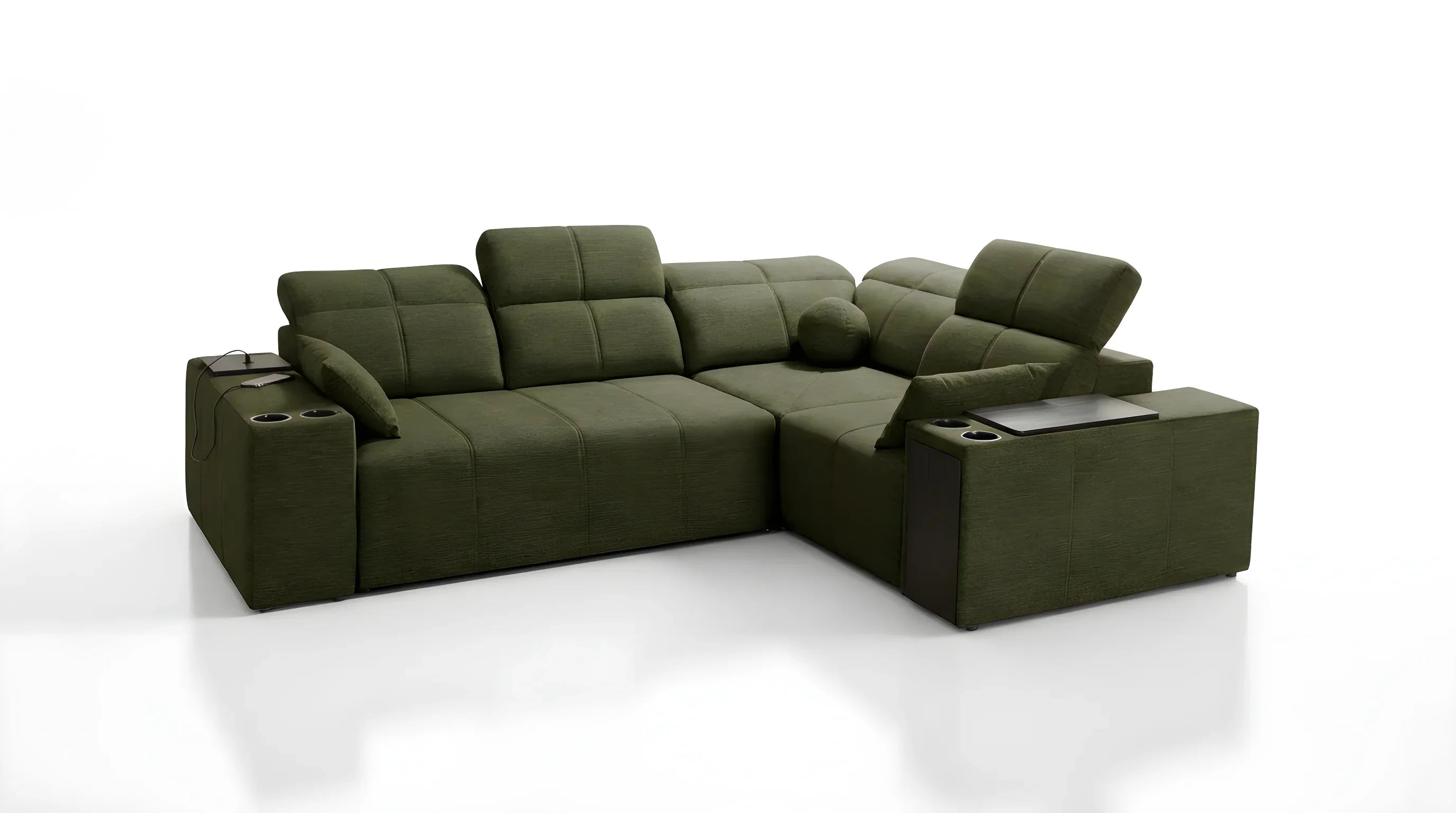
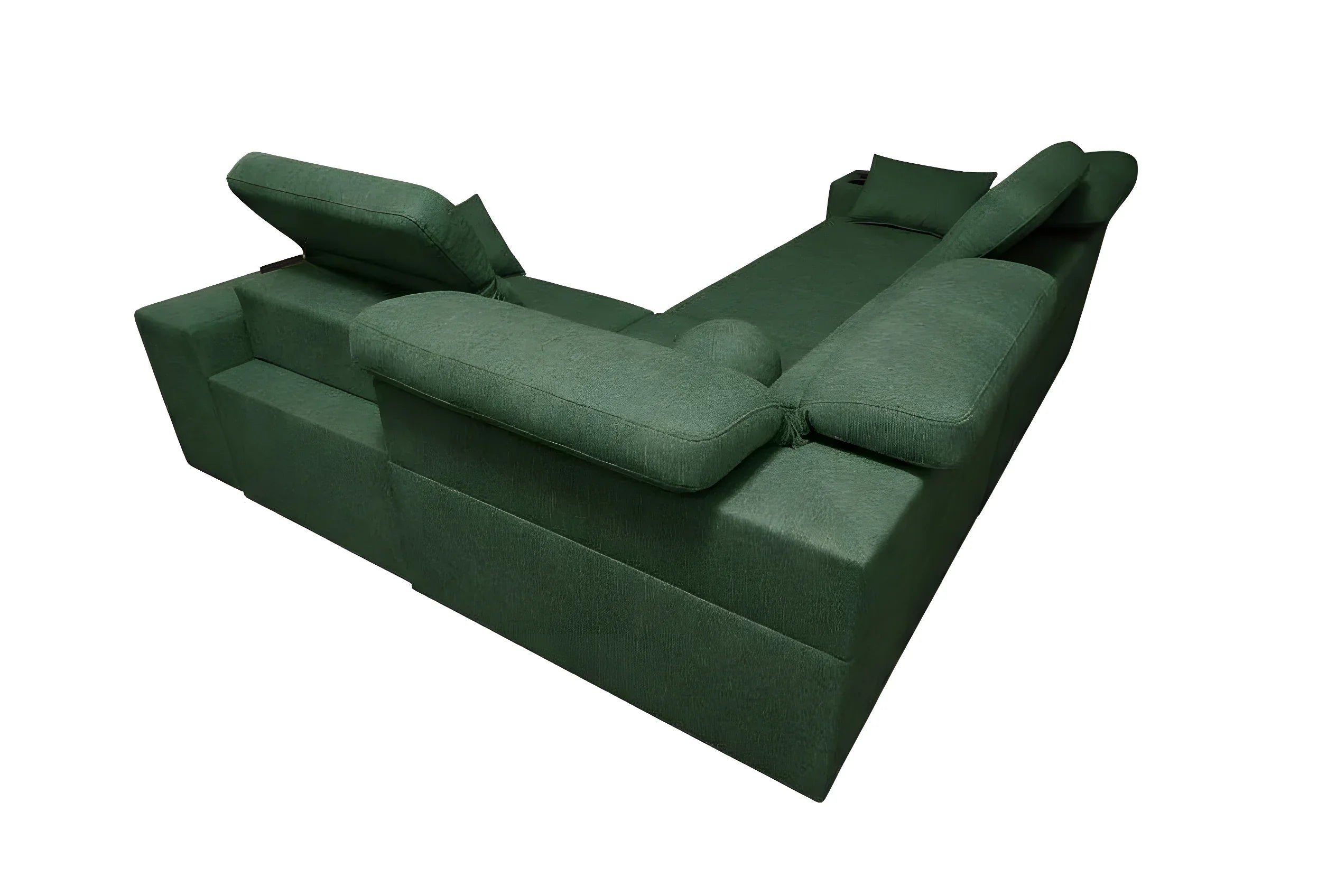
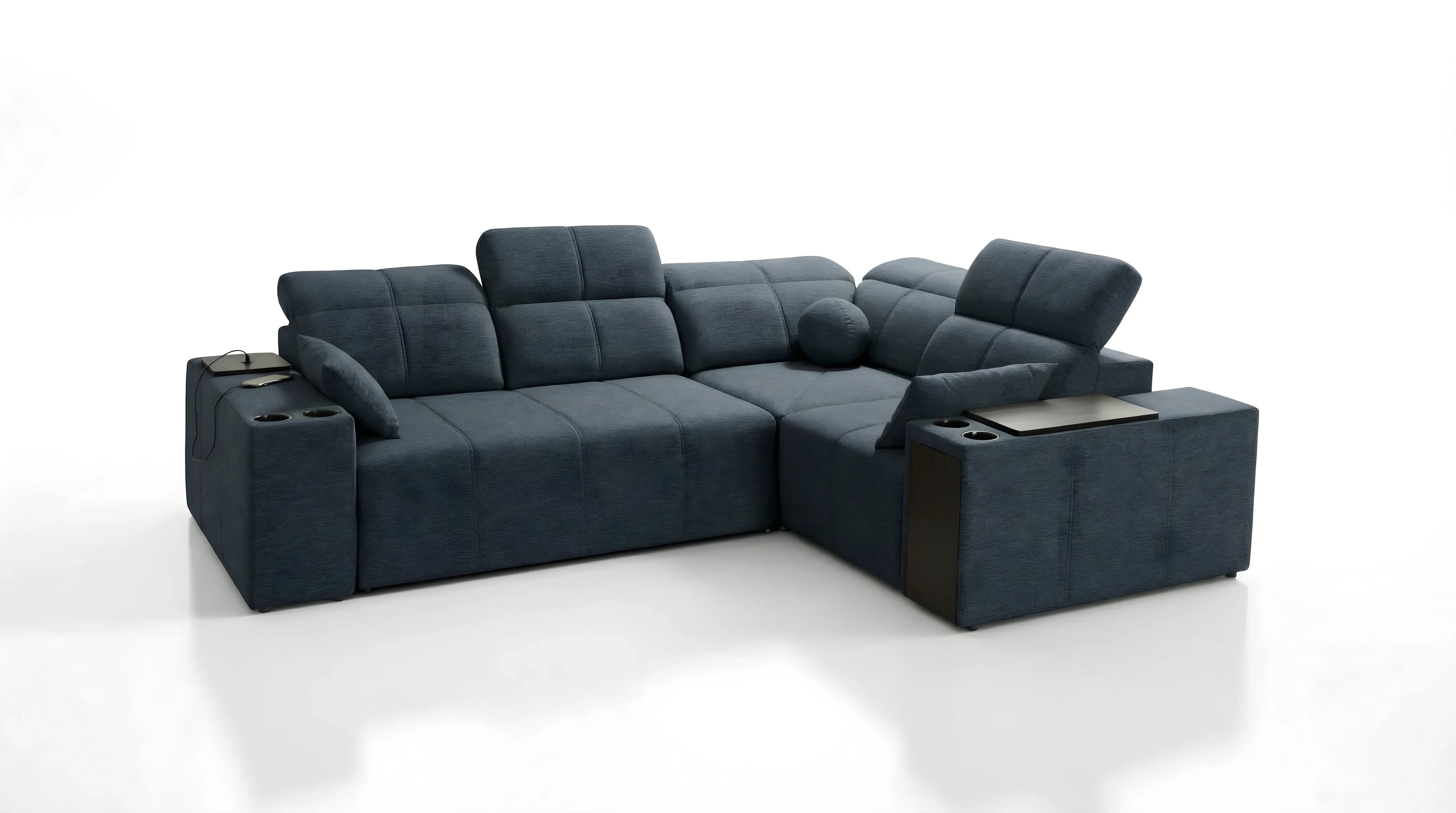
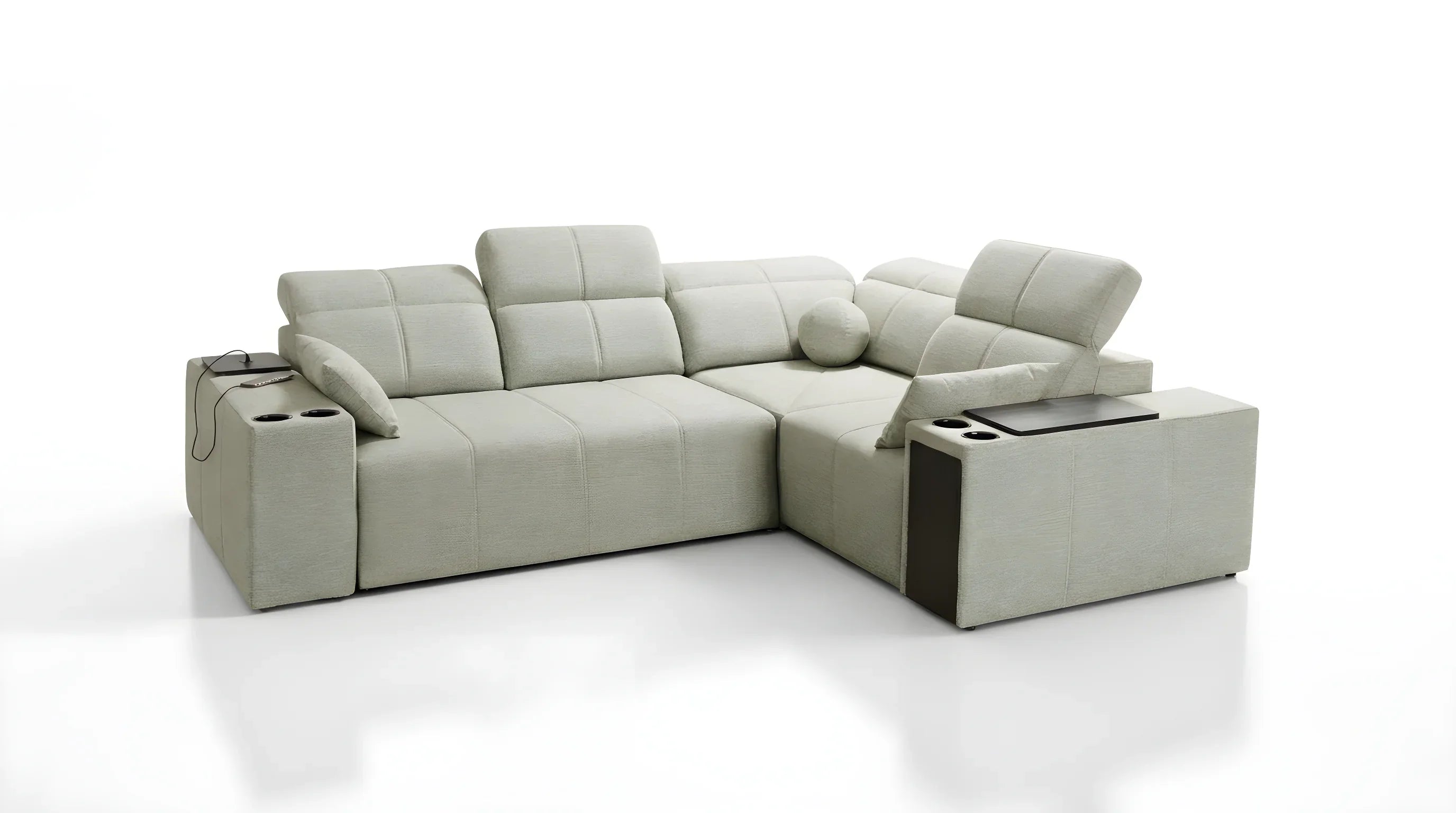
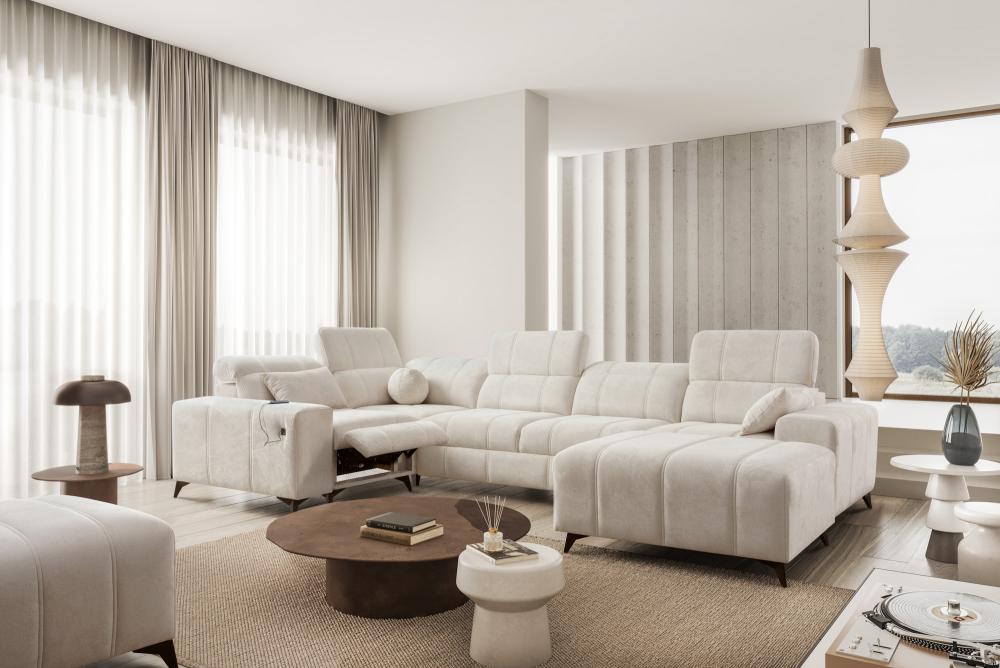
The sofa should not have its back to the entrance of the living room. Ideally, it acts as a natural separation between the office zone and the rest of the room. A corner sofa or a panoramic sofa can play this visual-partition role while preserving circulation. You work behind it, you live in front of it — without seeing each other.
Differentiated lighting to separate roles
Light is a powerful psychological marker. A warm, adjustable desk lamp over your work area switches on focus. Soft lighting above the sofa (dimmer floor lamp, LED string behind the TV) signals relaxation. By manipulating these two light sources, you mentally program your brain: "office light = focus", "living-room light = rest".
3. The ideal sofa for remote work: 5 technical criteria to check
Not every sofa lends itself to remote work. Some are incompatible with prolonged professional use. Here are the 5 technical criteria to check before buying, and which make the difference between a sofa that turns into a desk and one that wrecks your back.
1. Seat density (kg/m³)
For a seat that supports your weight for 8 hours a day in a working posture, aim for a minimum density of 35 kg/m³. Below that, the foam collapses quickly and your lower back pays the price. This is technical criterion #1.
2. Seat depth
For multi-purpose use (relaxation + work), a depth of 95 to 105 cm offers the best compromise. Deeper, and you "swim" in it. Shallower, and your knees stick out when sitting upright.
3. Seat height
A seat height of 45 to 50 cm lets you plant your feet flat on the floor — a non-negotiable condition to protect your lower back during long sessions. Avoid very low sofas that force you to arch your back.
4. Backrest comfort
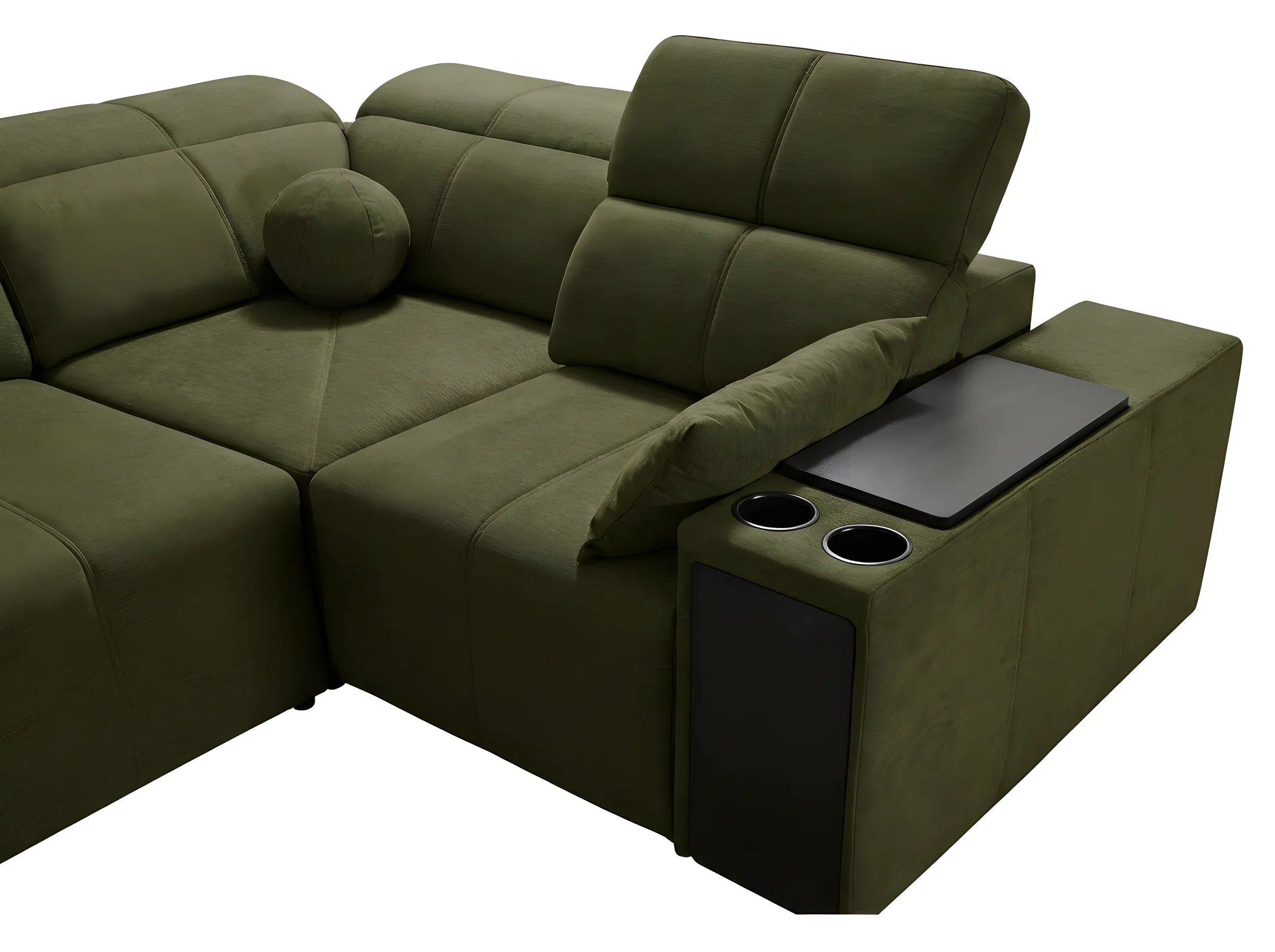
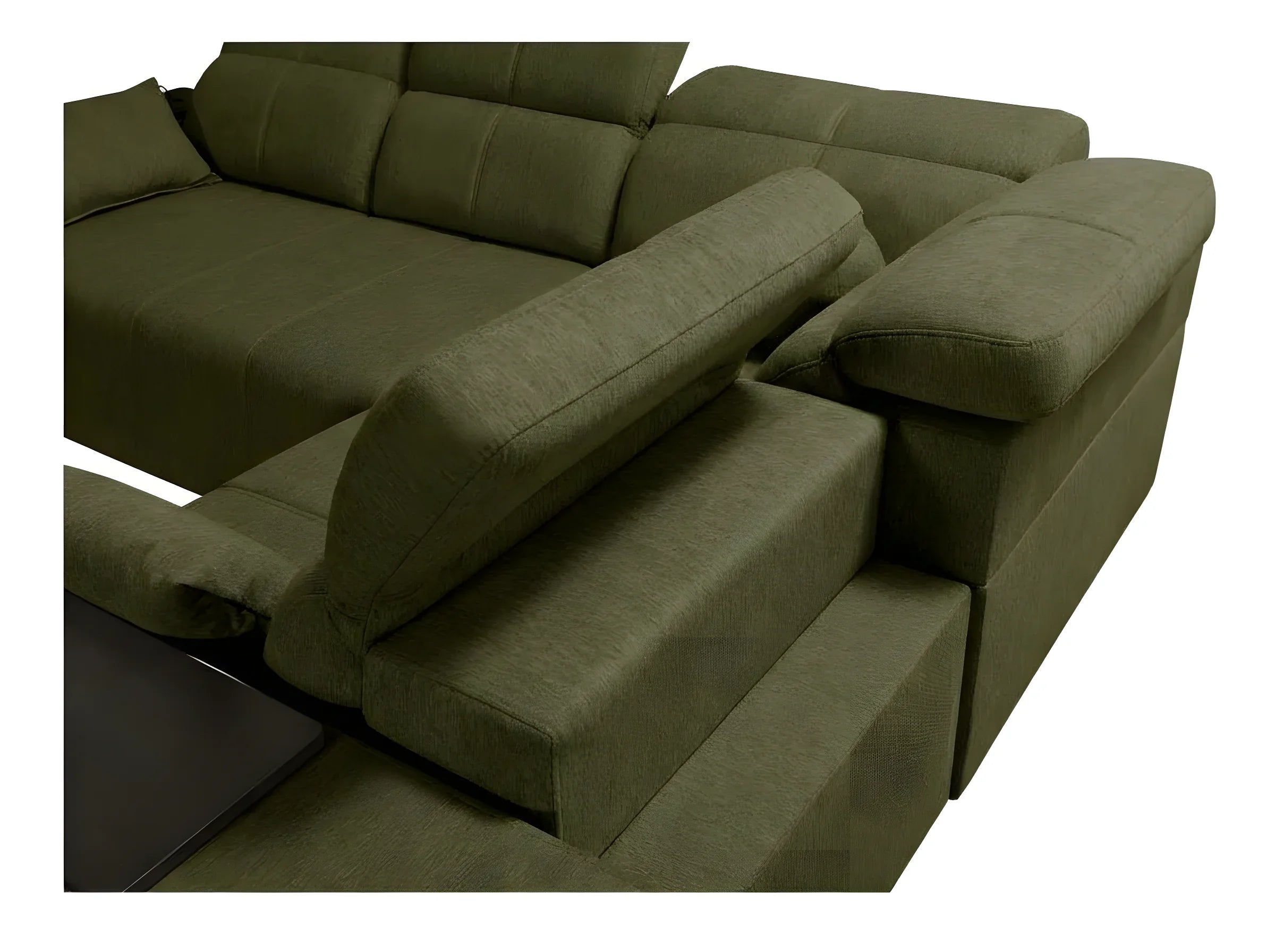
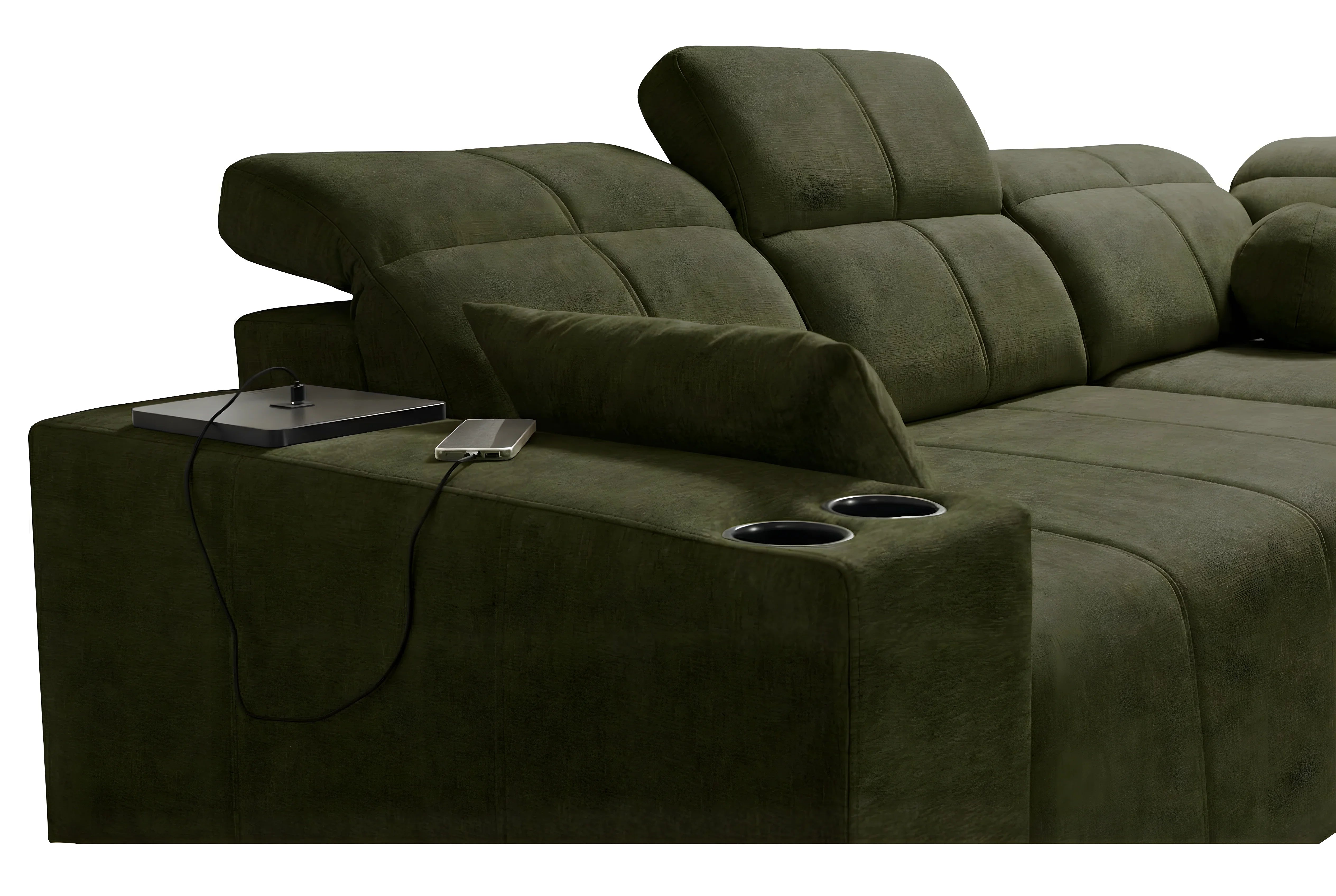
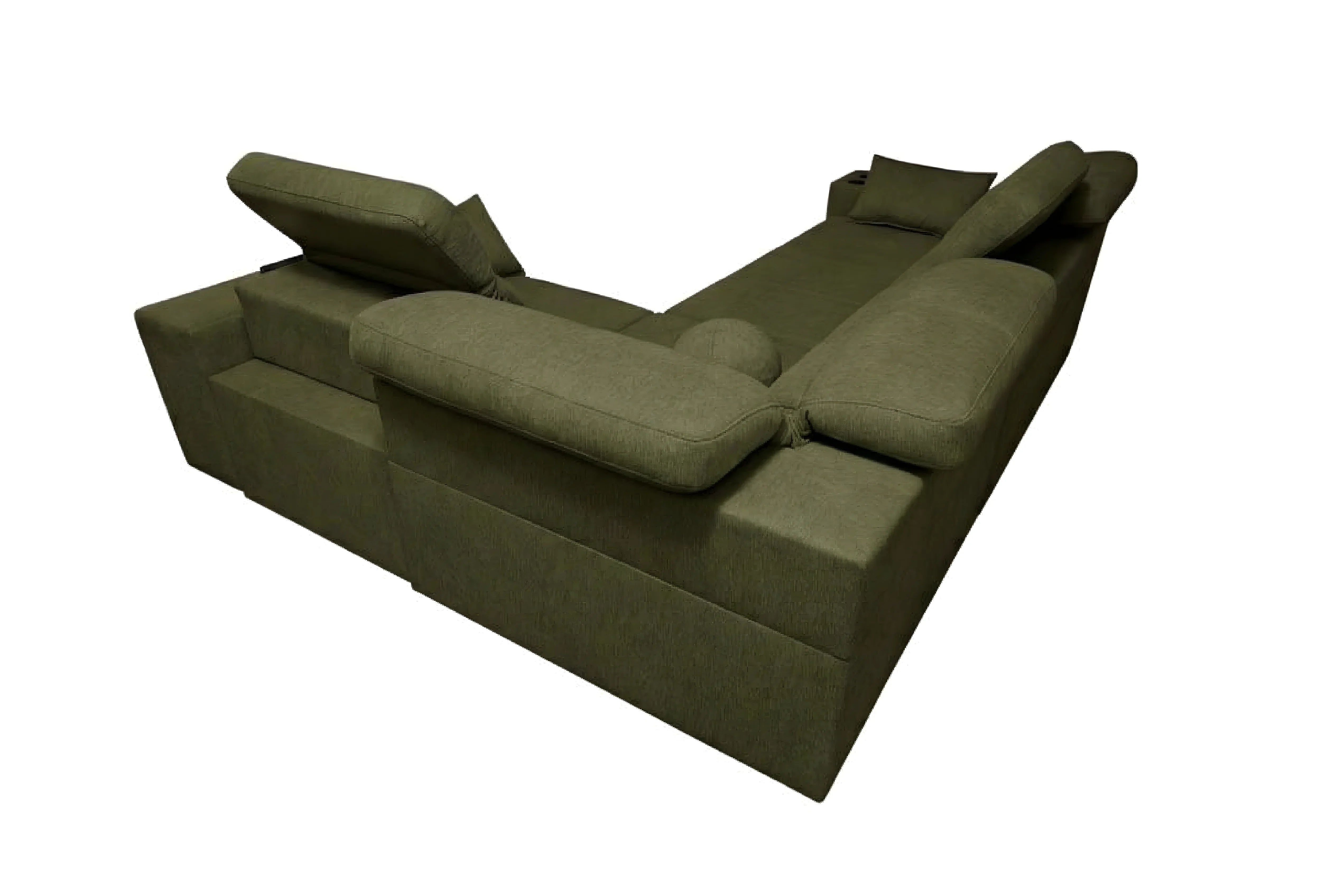
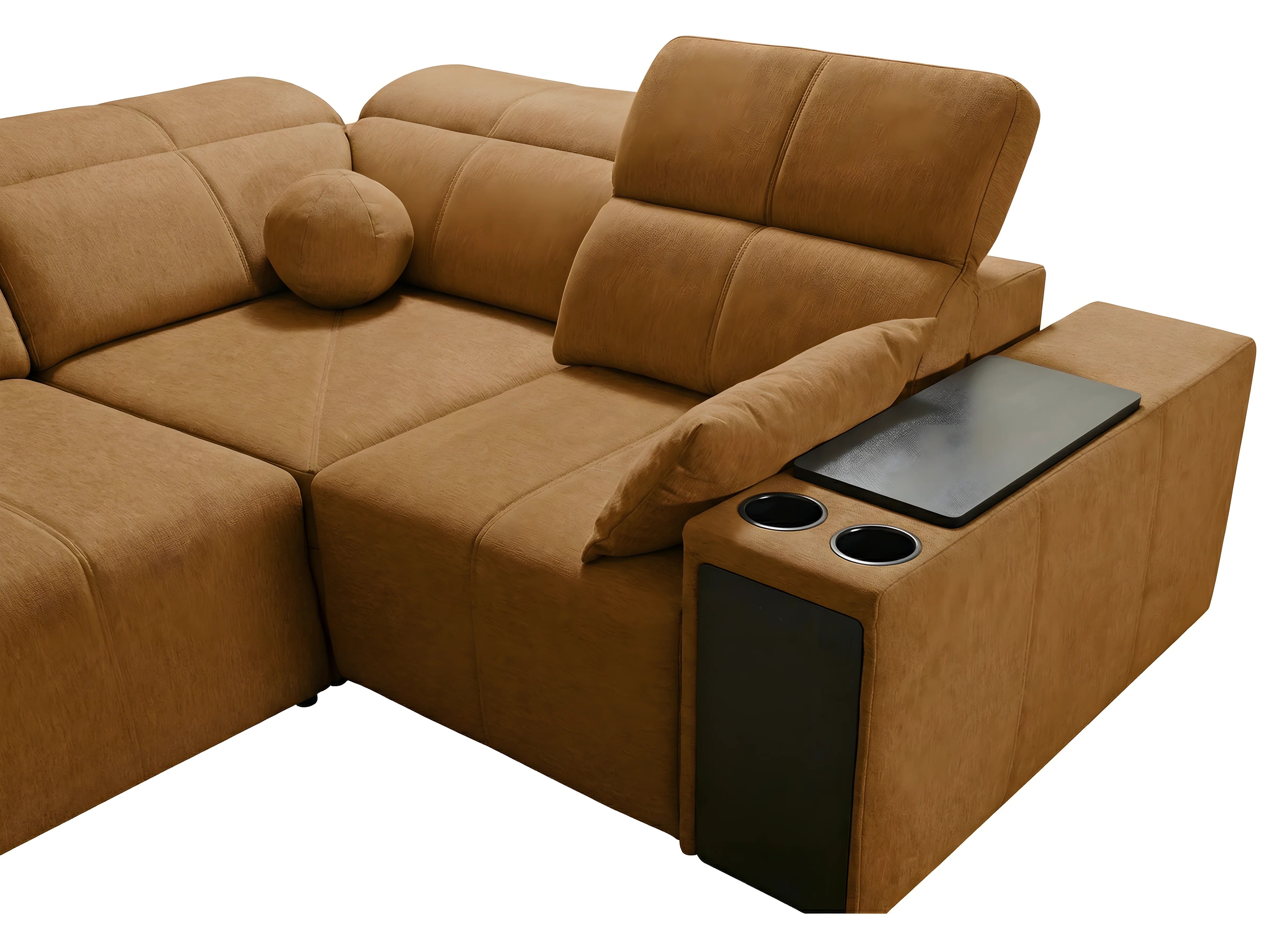
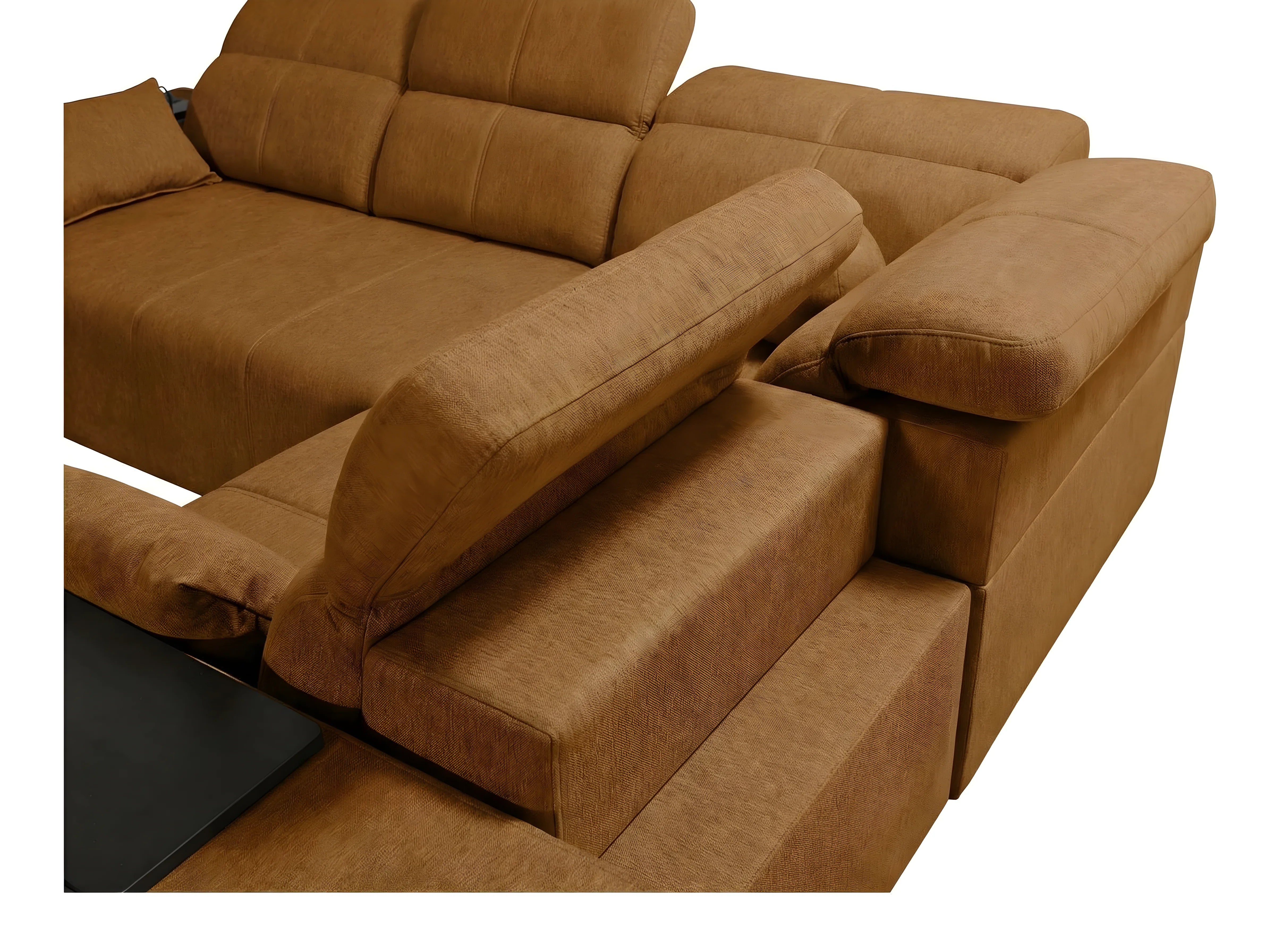
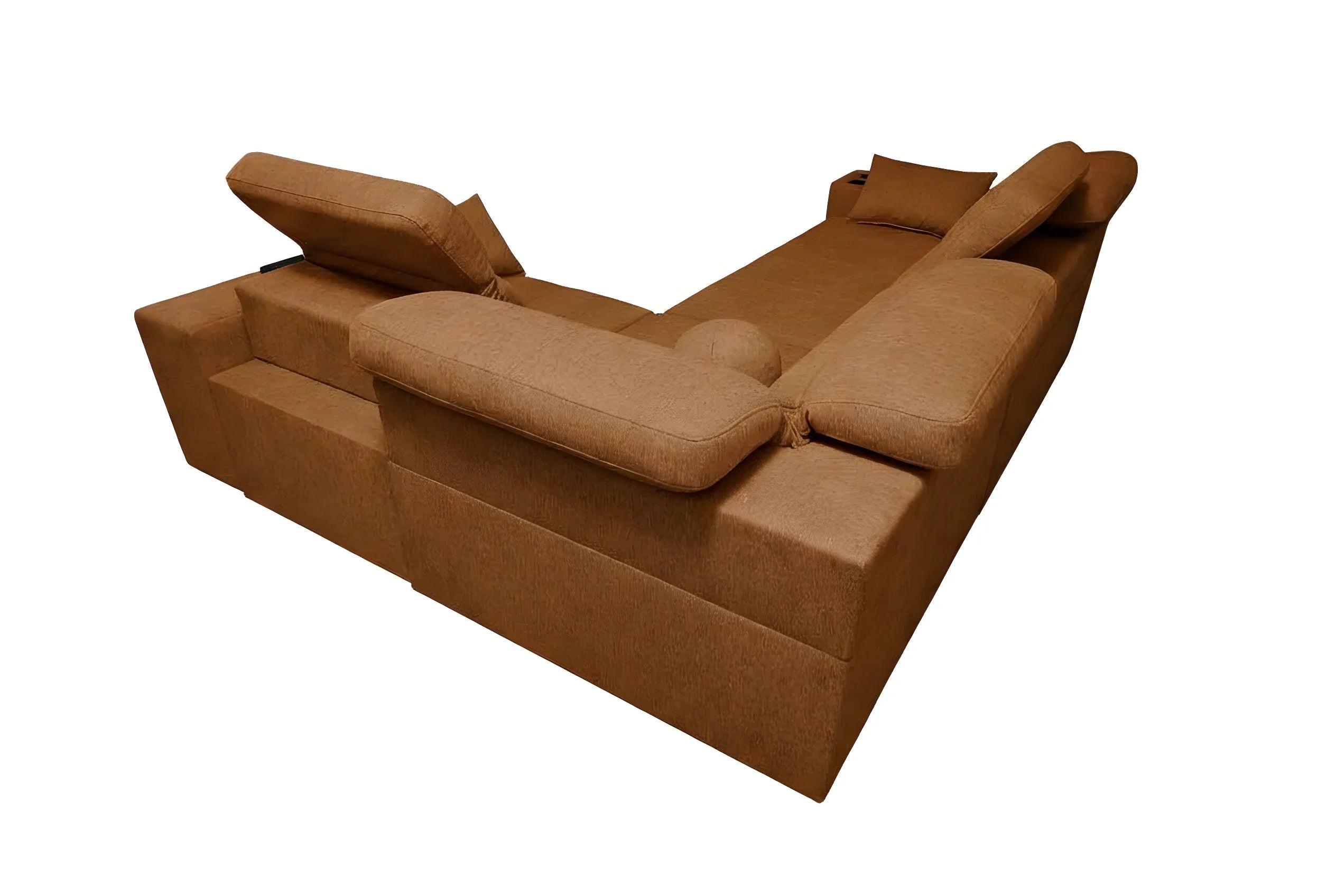
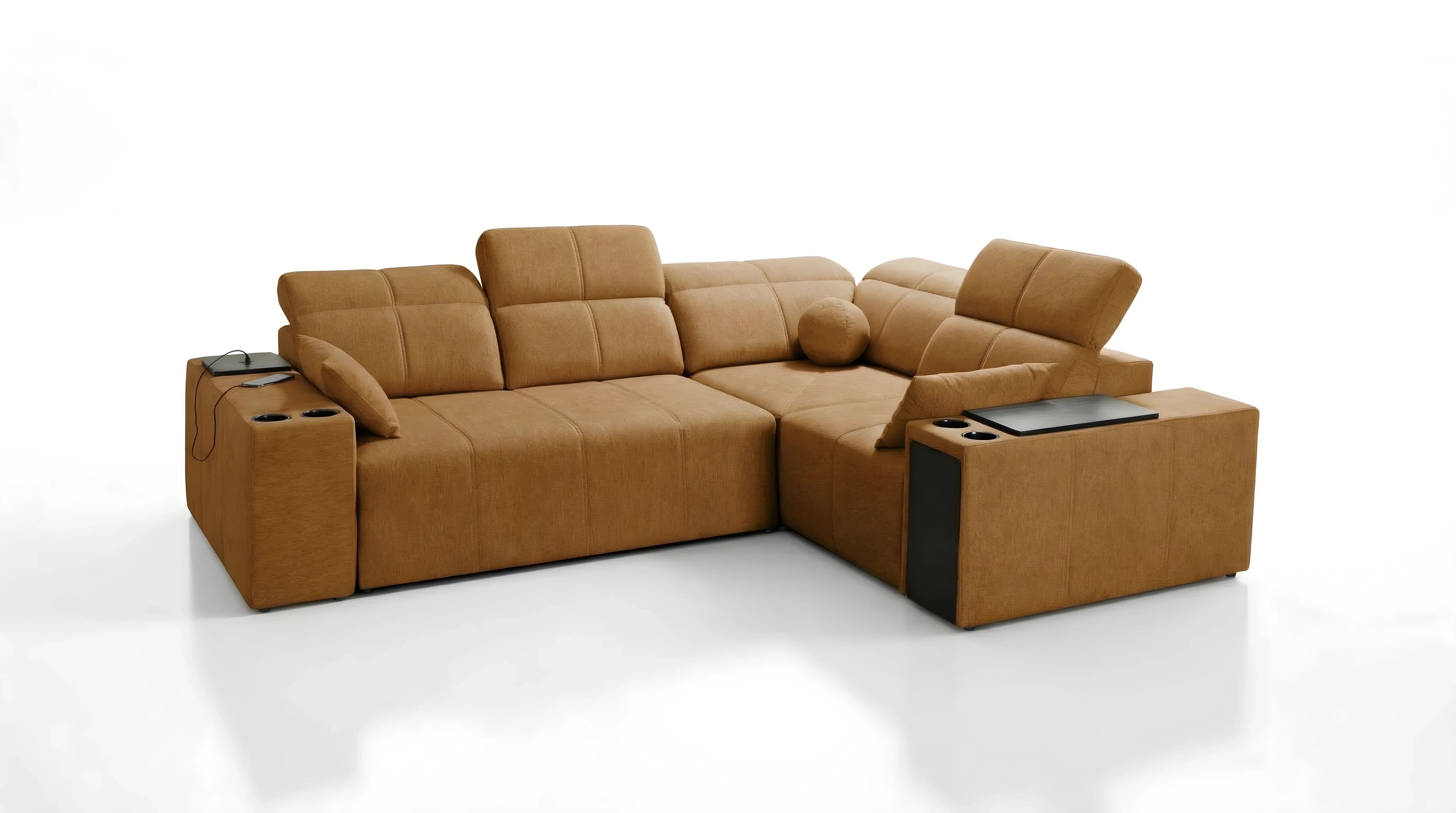
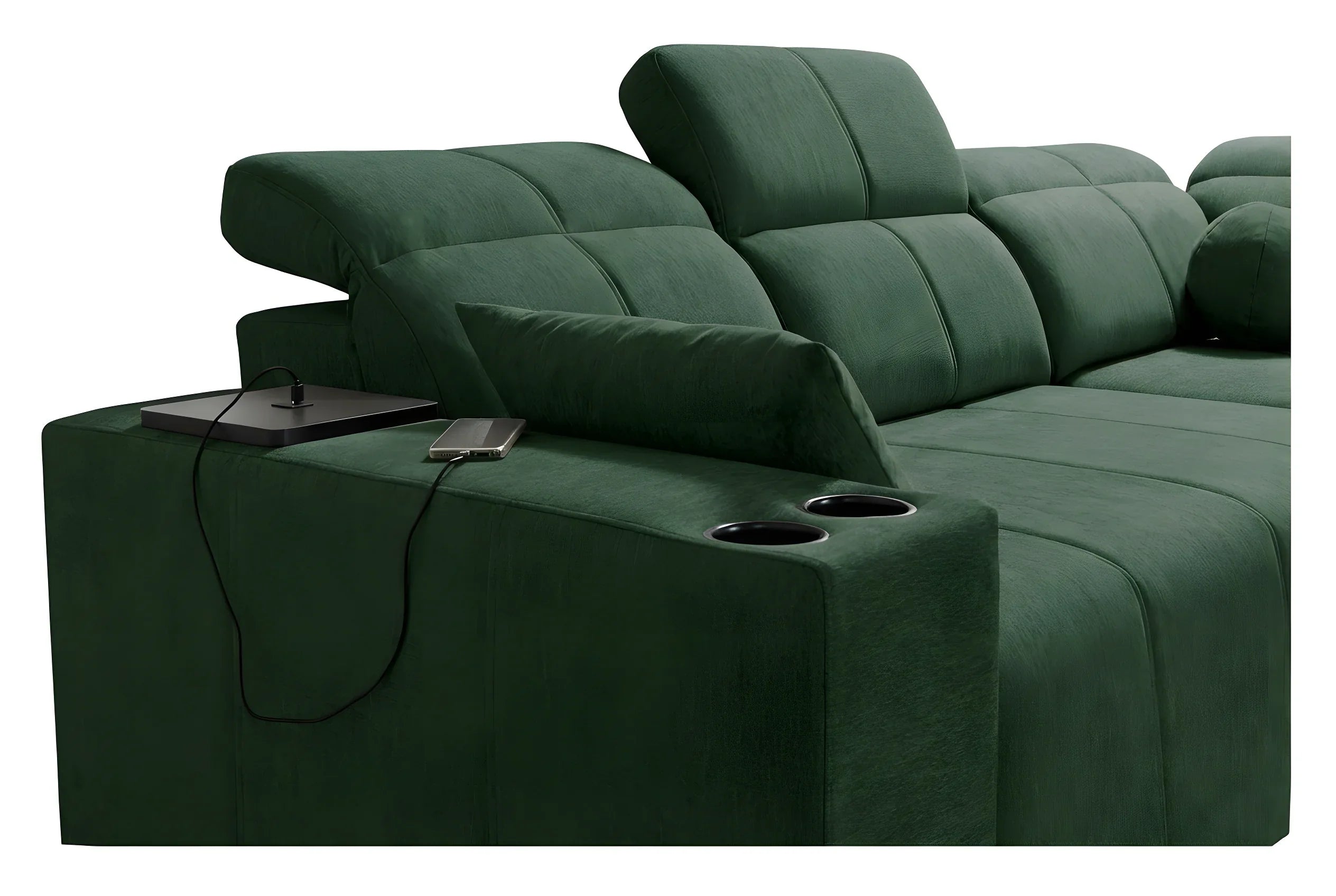
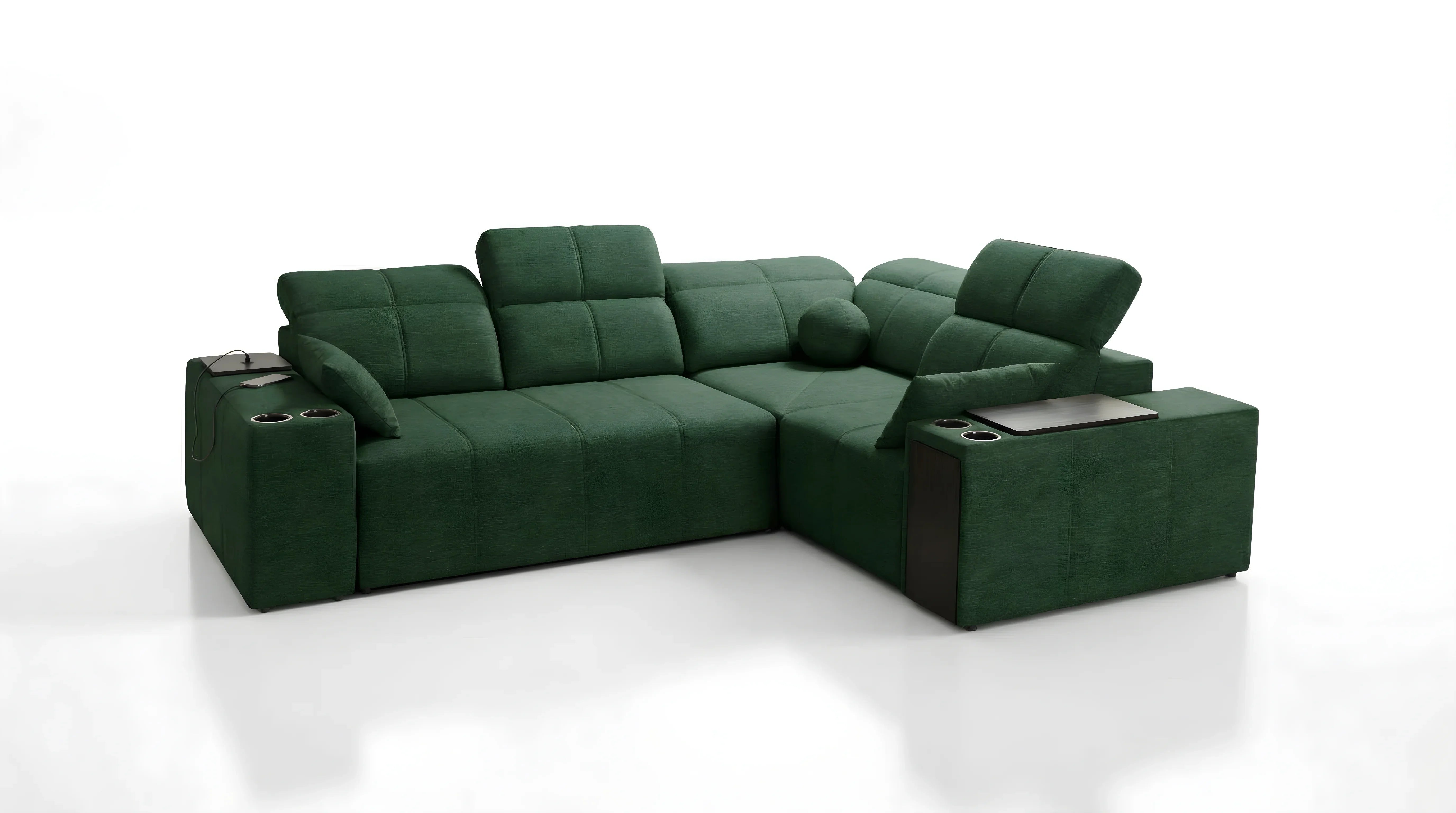
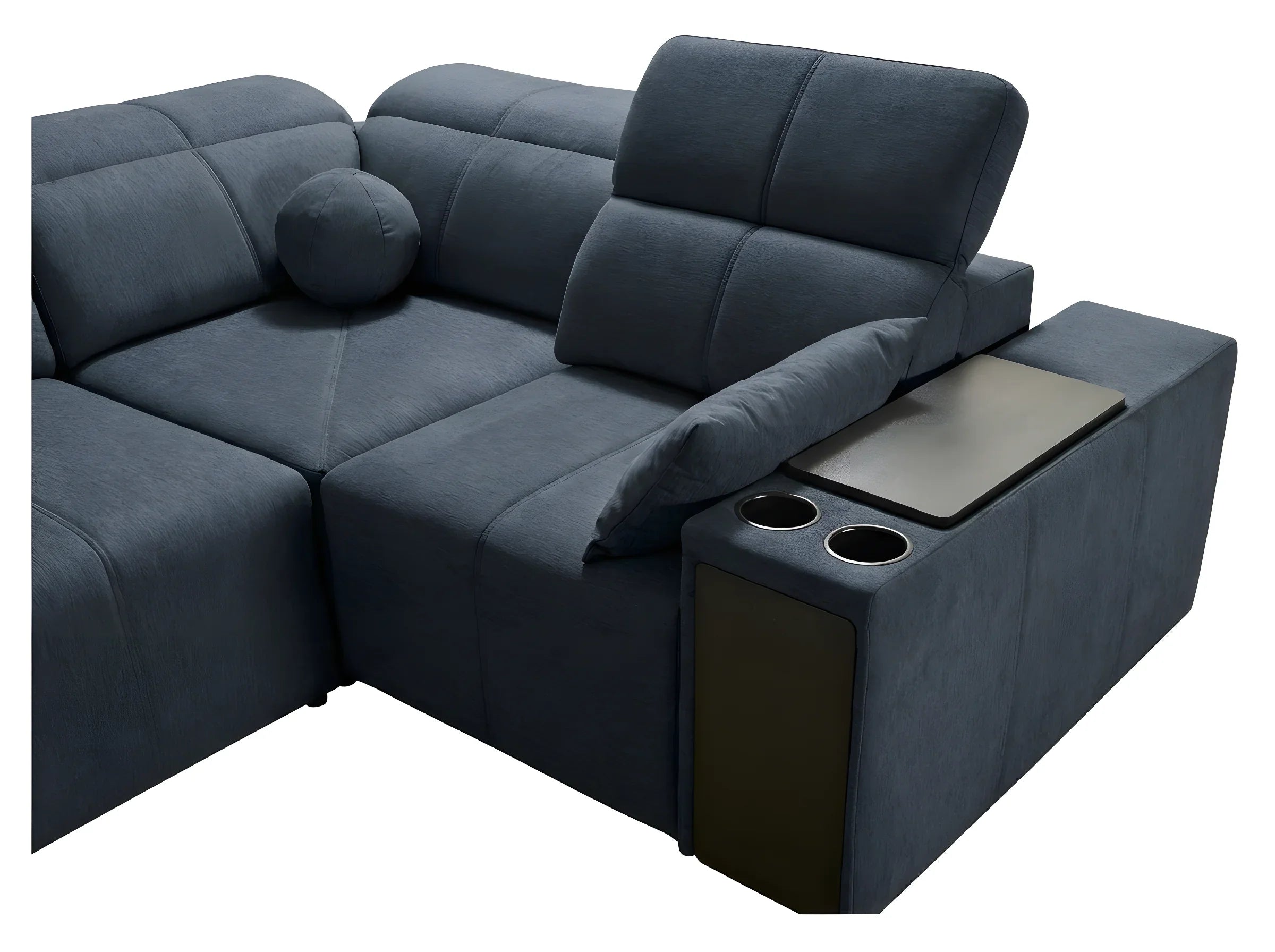
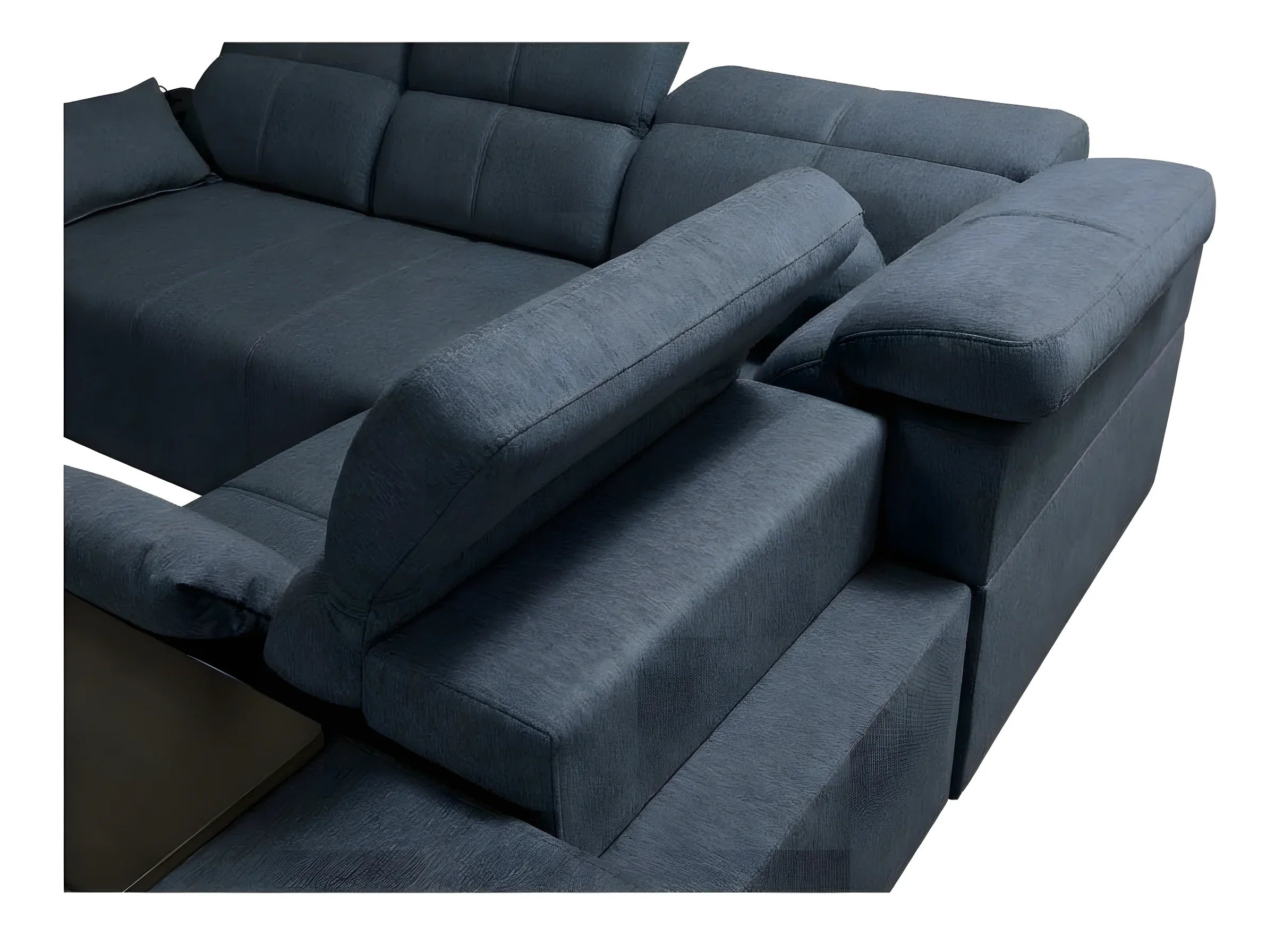
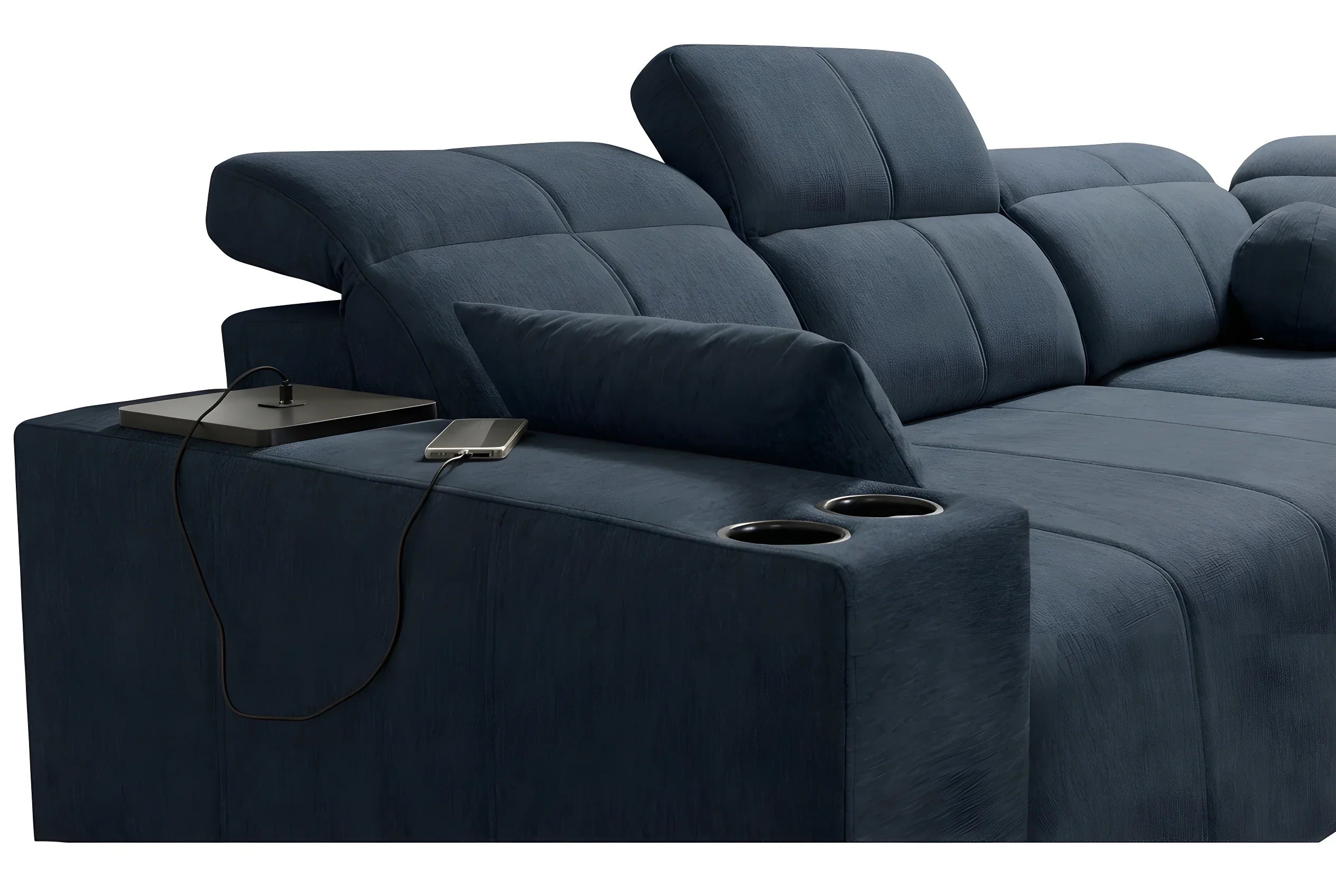
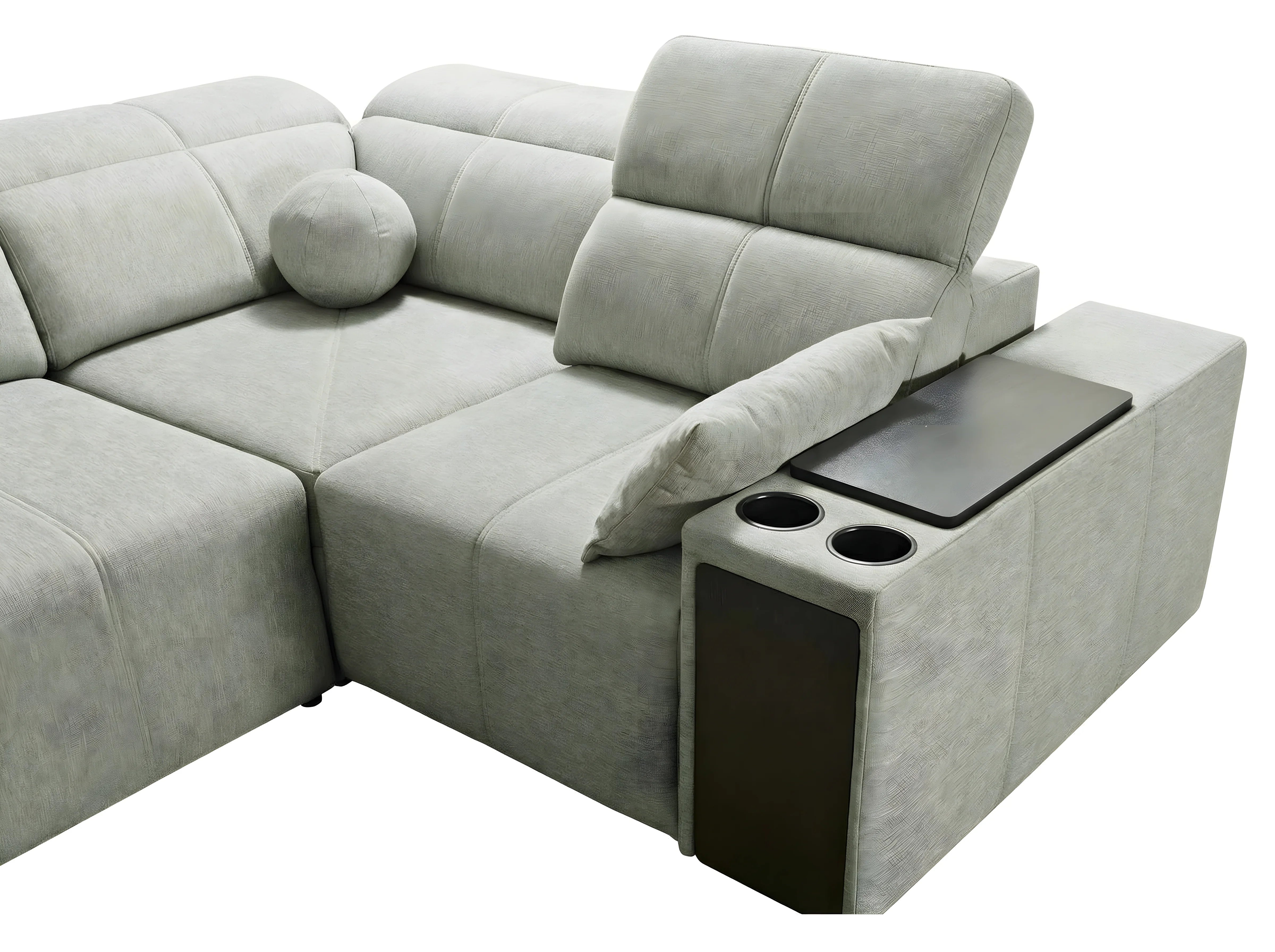
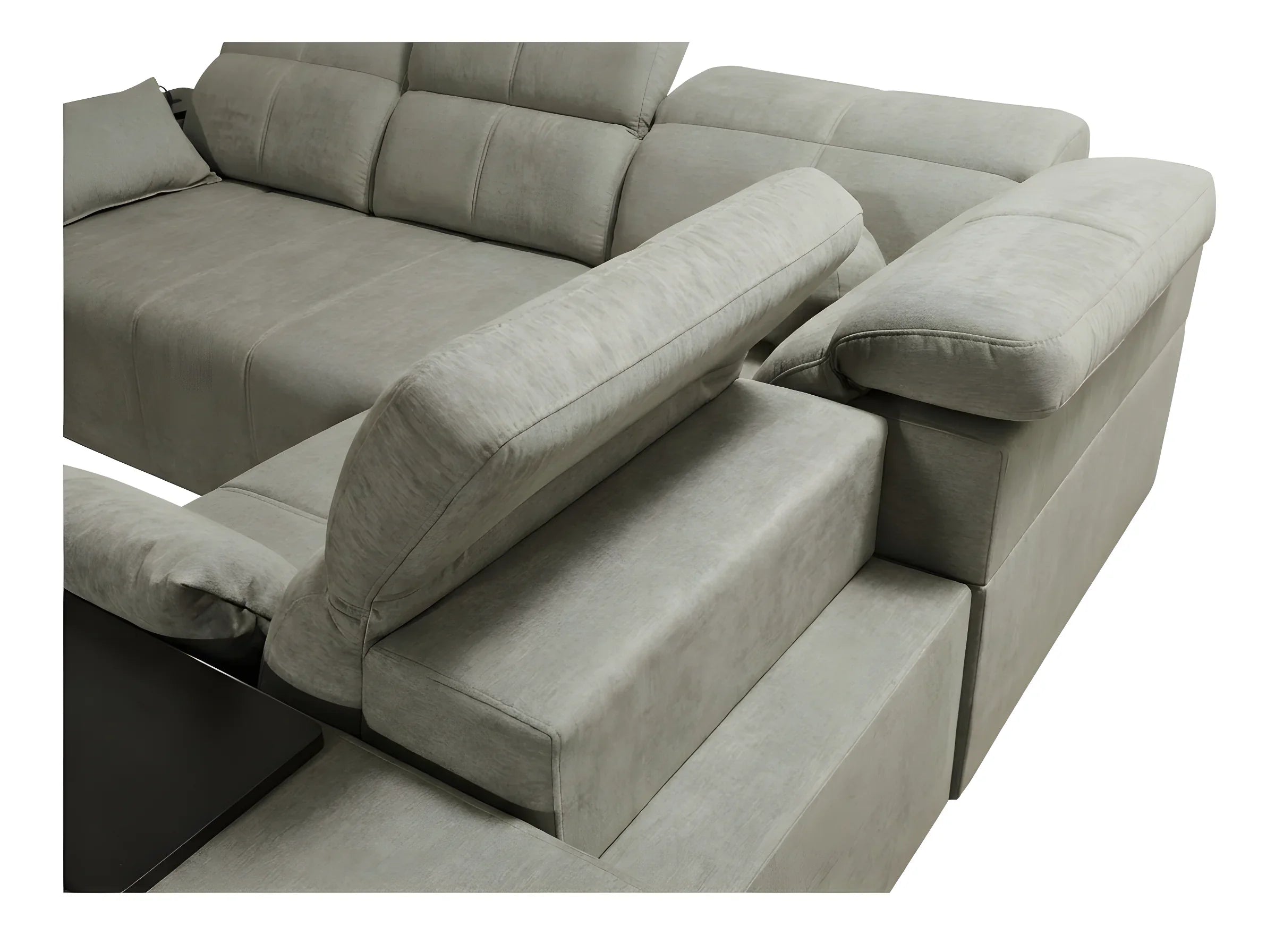
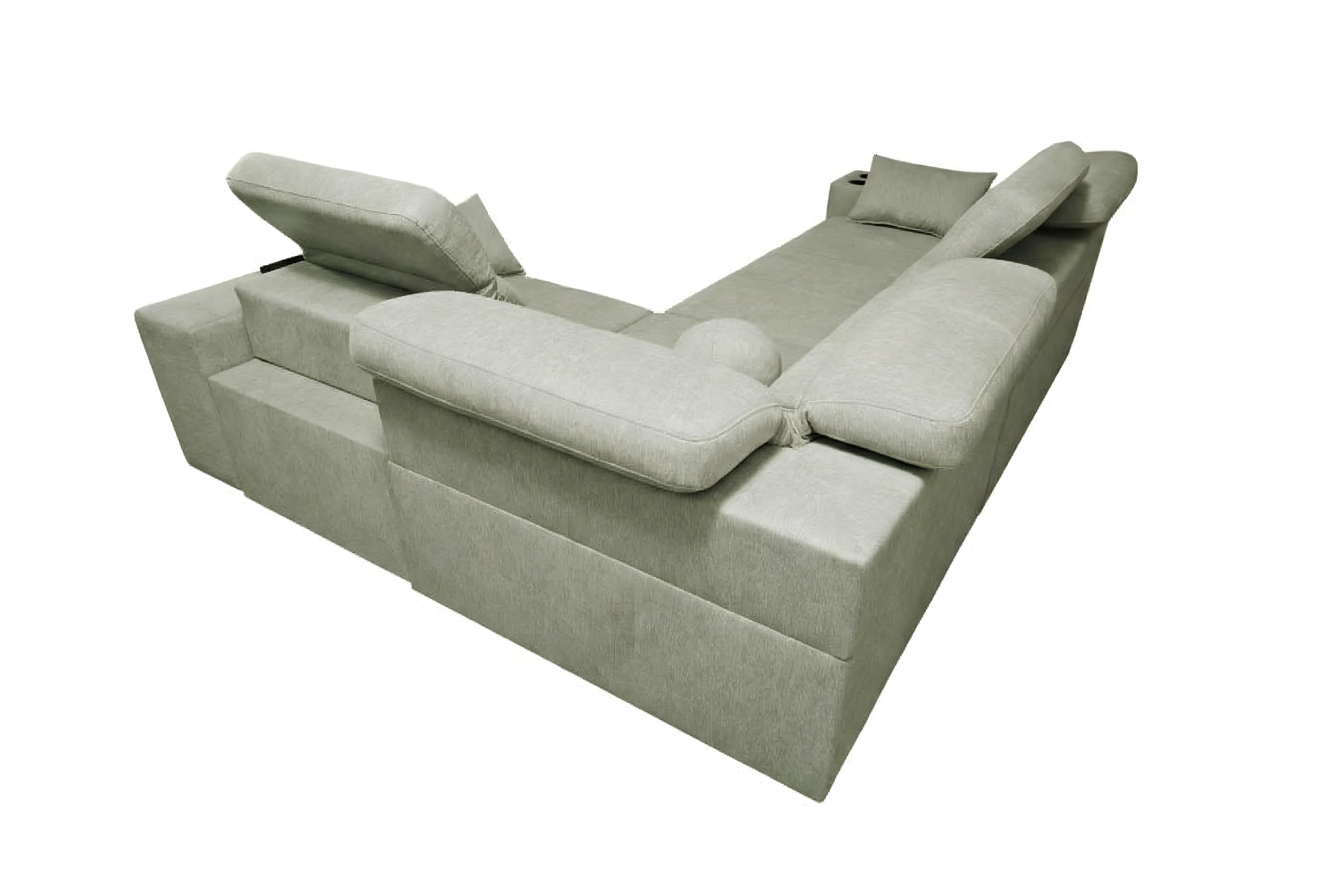
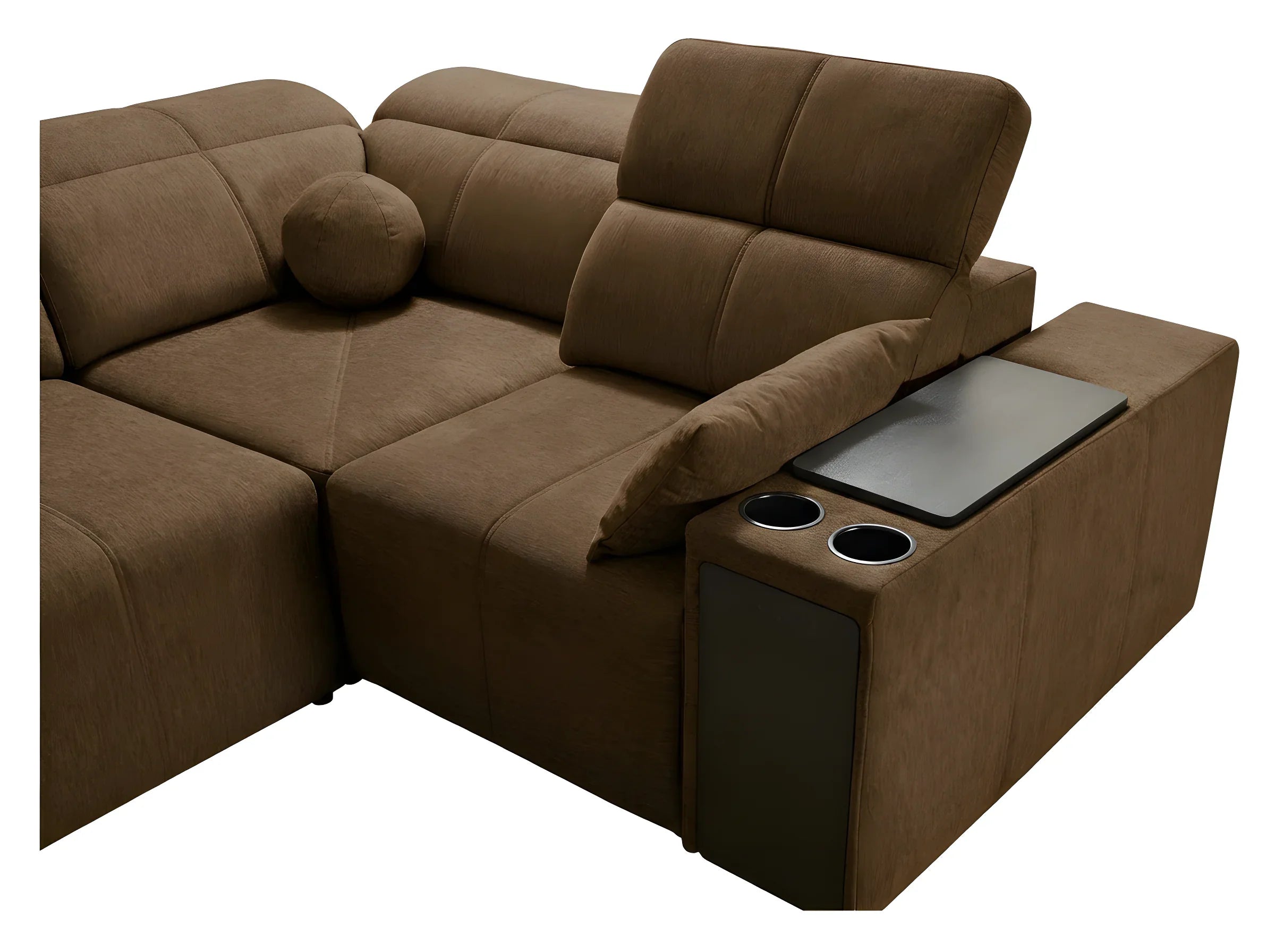
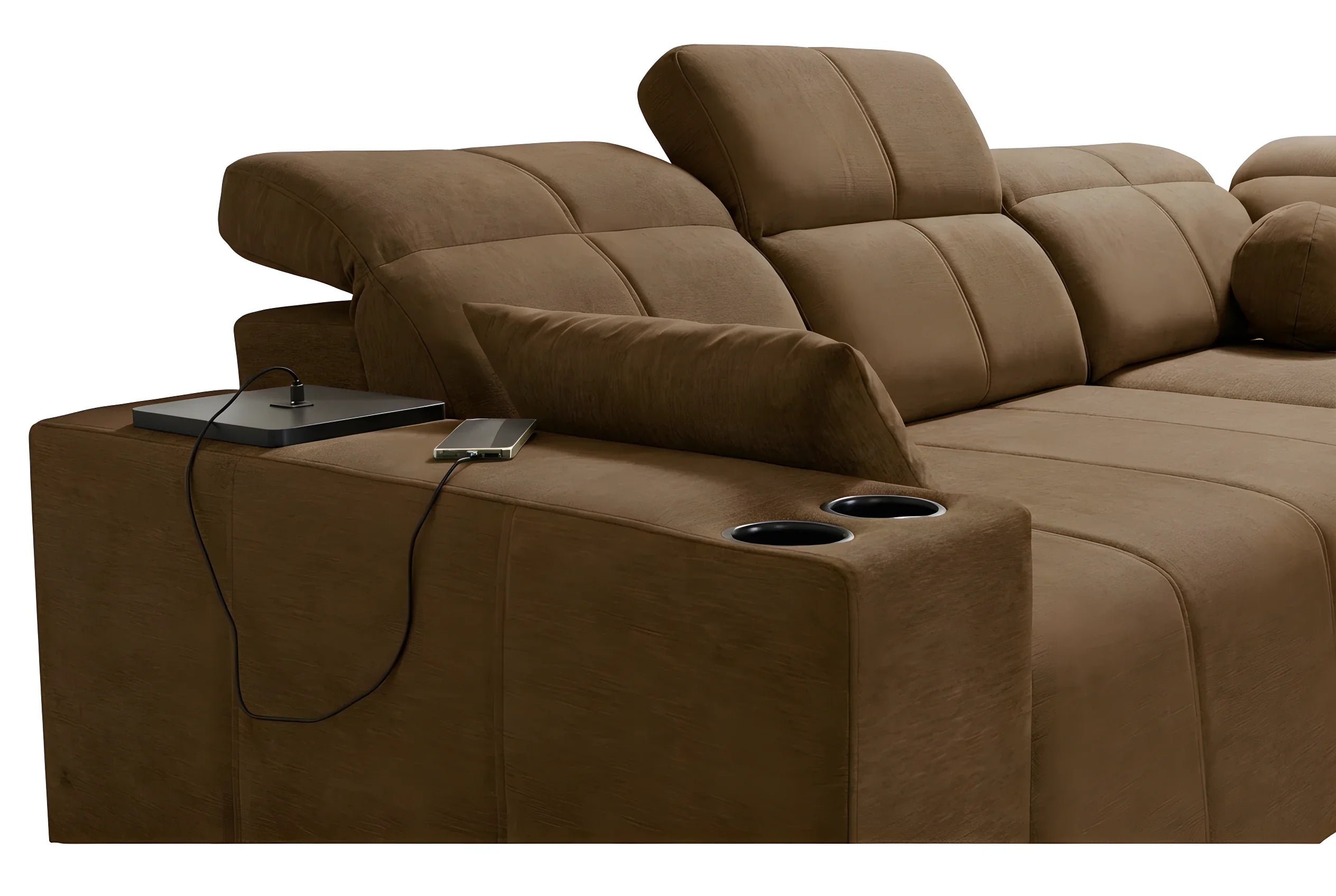
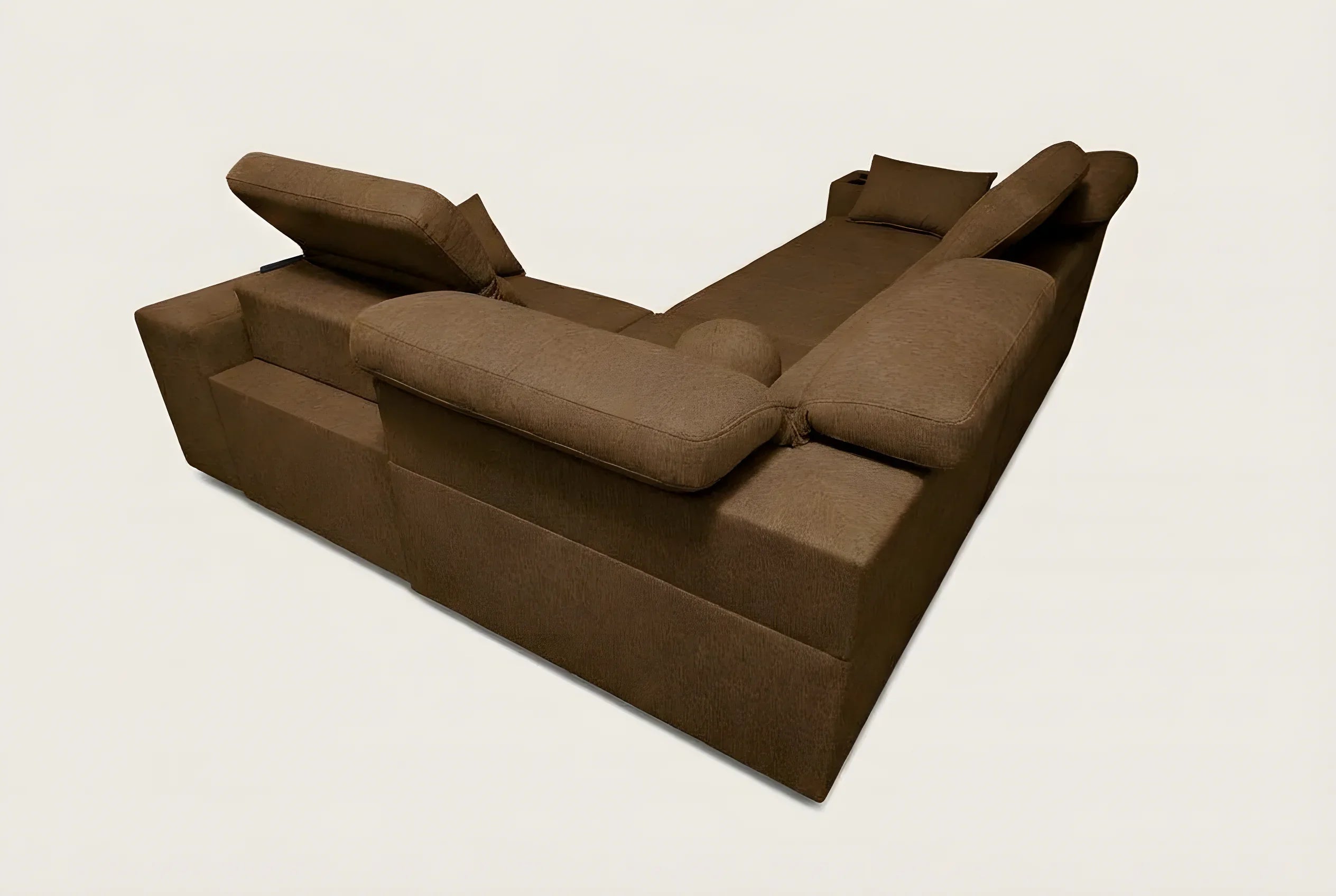
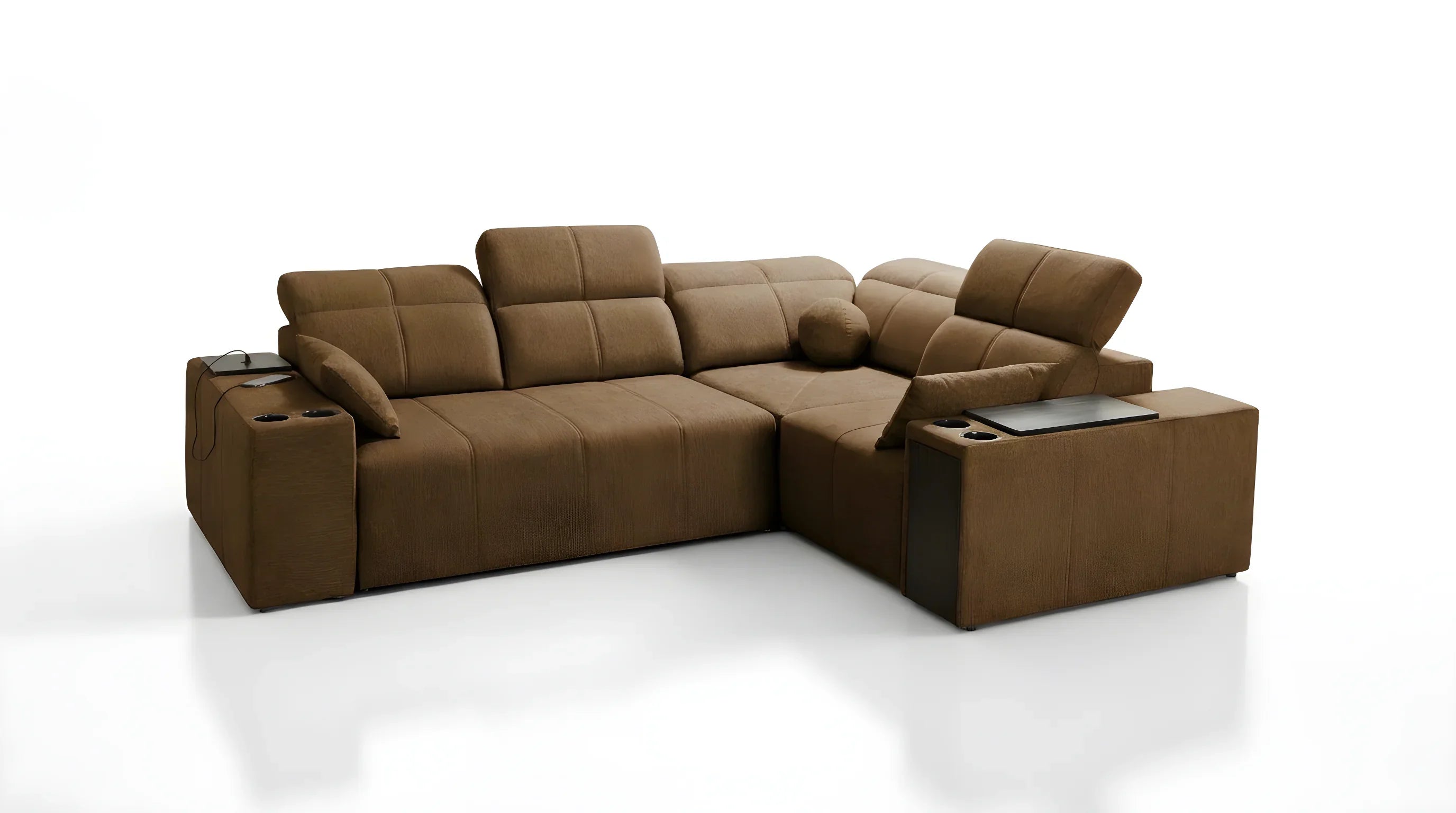
The backrest must provide firm lumbar support without being hard. Backrests with adjustable headrests are a real plus for video calls: they keep your head aligned with the camera, avoiding the "chin-on-chest" look.
5. Seat width
For office use, allow at least 80 cm per seat side so you can cross your legs during breaks without spilling into the work zone. A compact sofa bed for small spaces of 140 cm is enough for a solo remote worker.
These 5 criteria explain why a simple "nice designer sofa" isn't enough for remote work. Immediate comfort shouldn't be confused with long-term use comfort. A sofa that's firm in the shop but with a 40 kg/m³ density will last you ten years without flinching. A soft sofa at 25 kg/m³ will sag in six months.
4. Modularity, storage, comfort: the features that make all the difference
Beyond the basic technical criteria, certain features radically transform a remote worker's day in the living room. They're what make it possible to actually switch between two uses in the same day.
Modularity: reconfiguring without moving
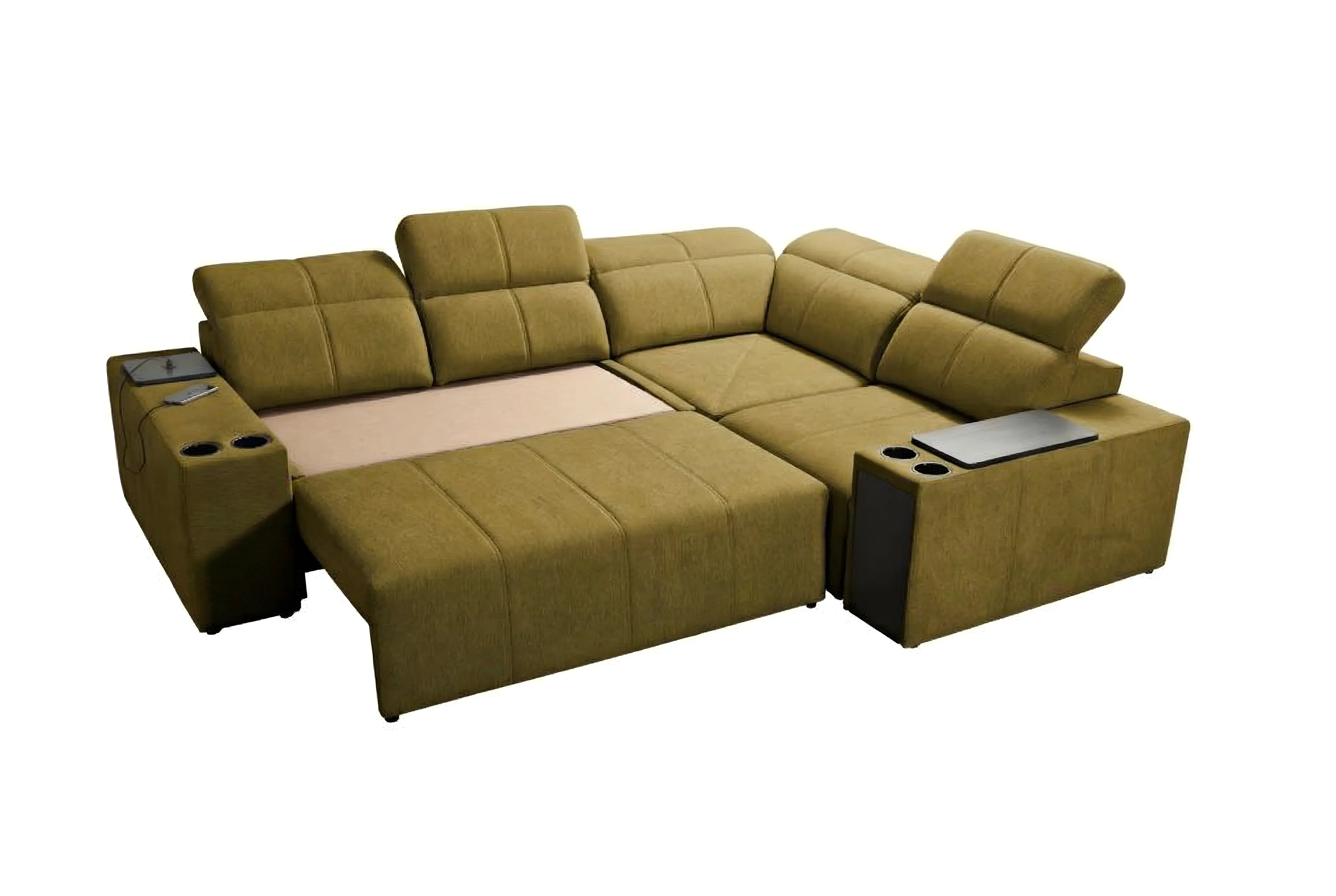
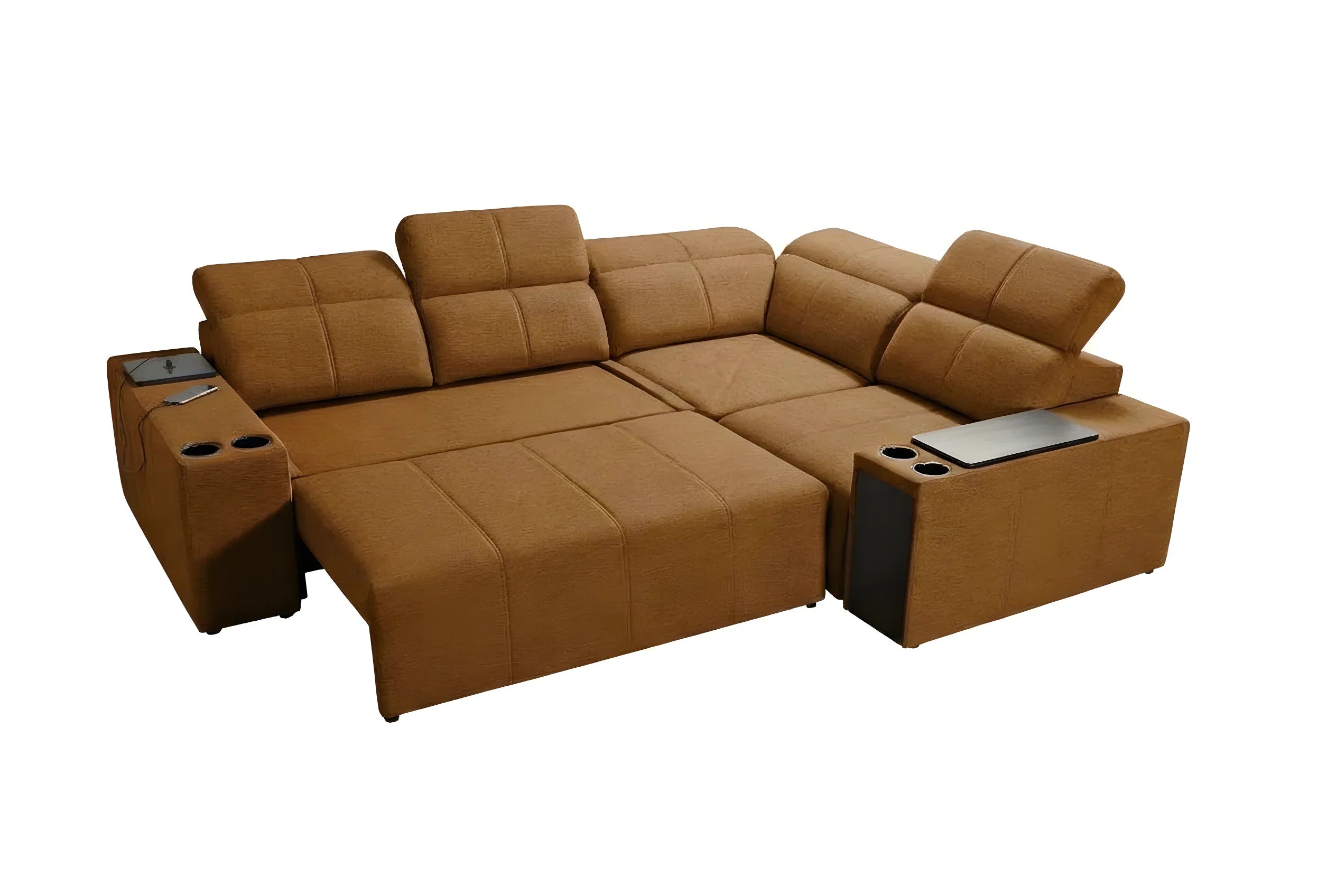
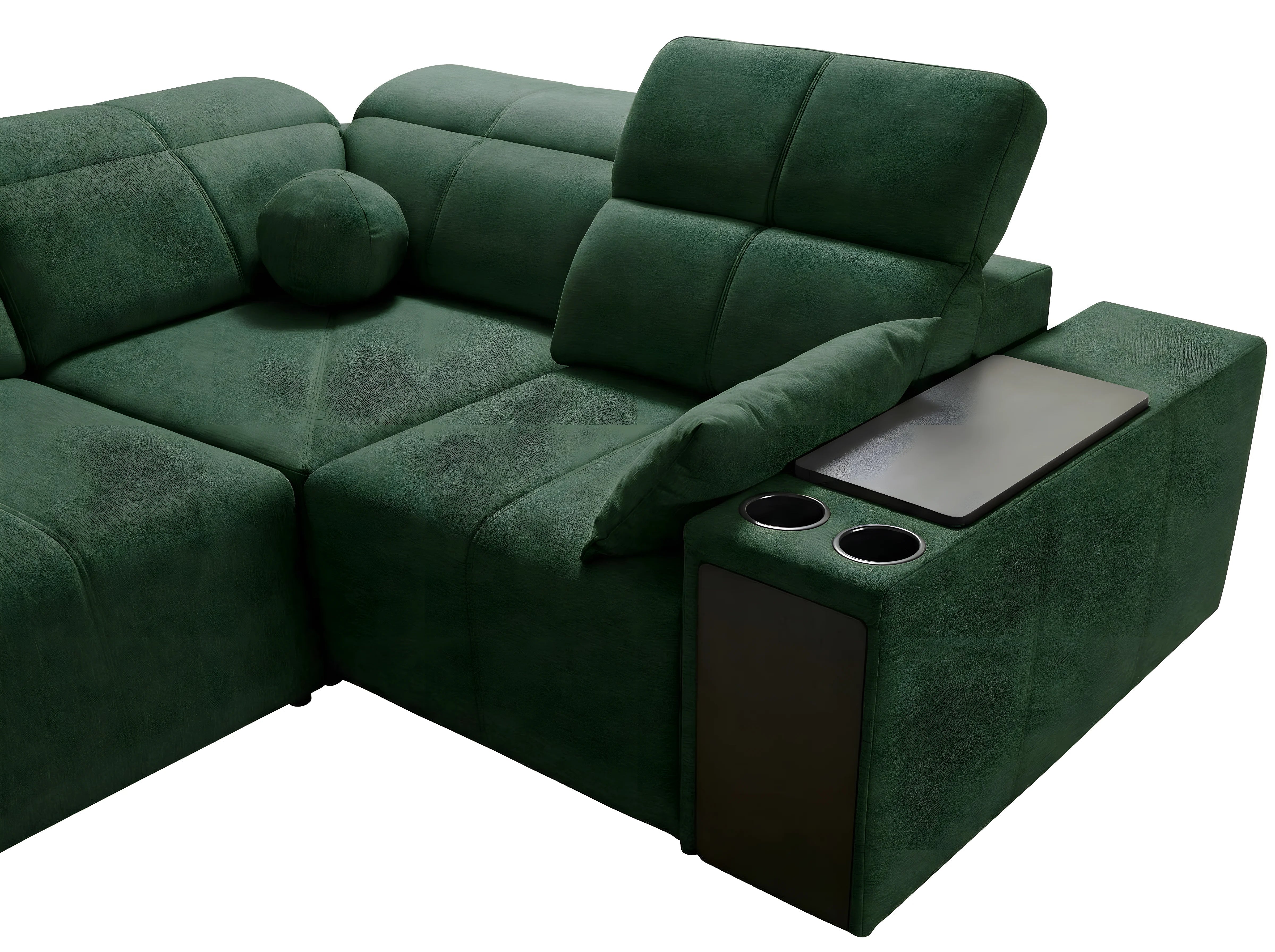
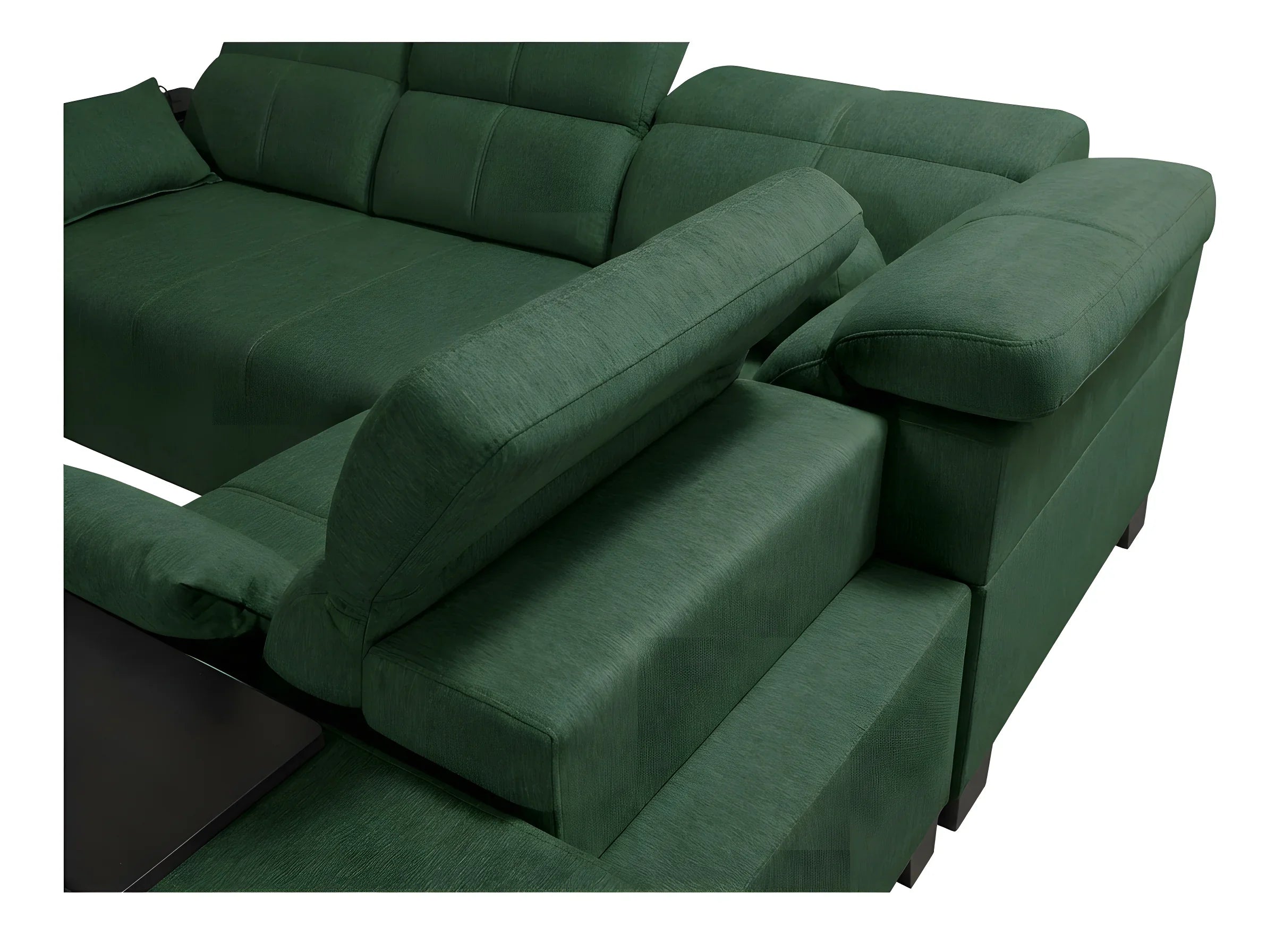
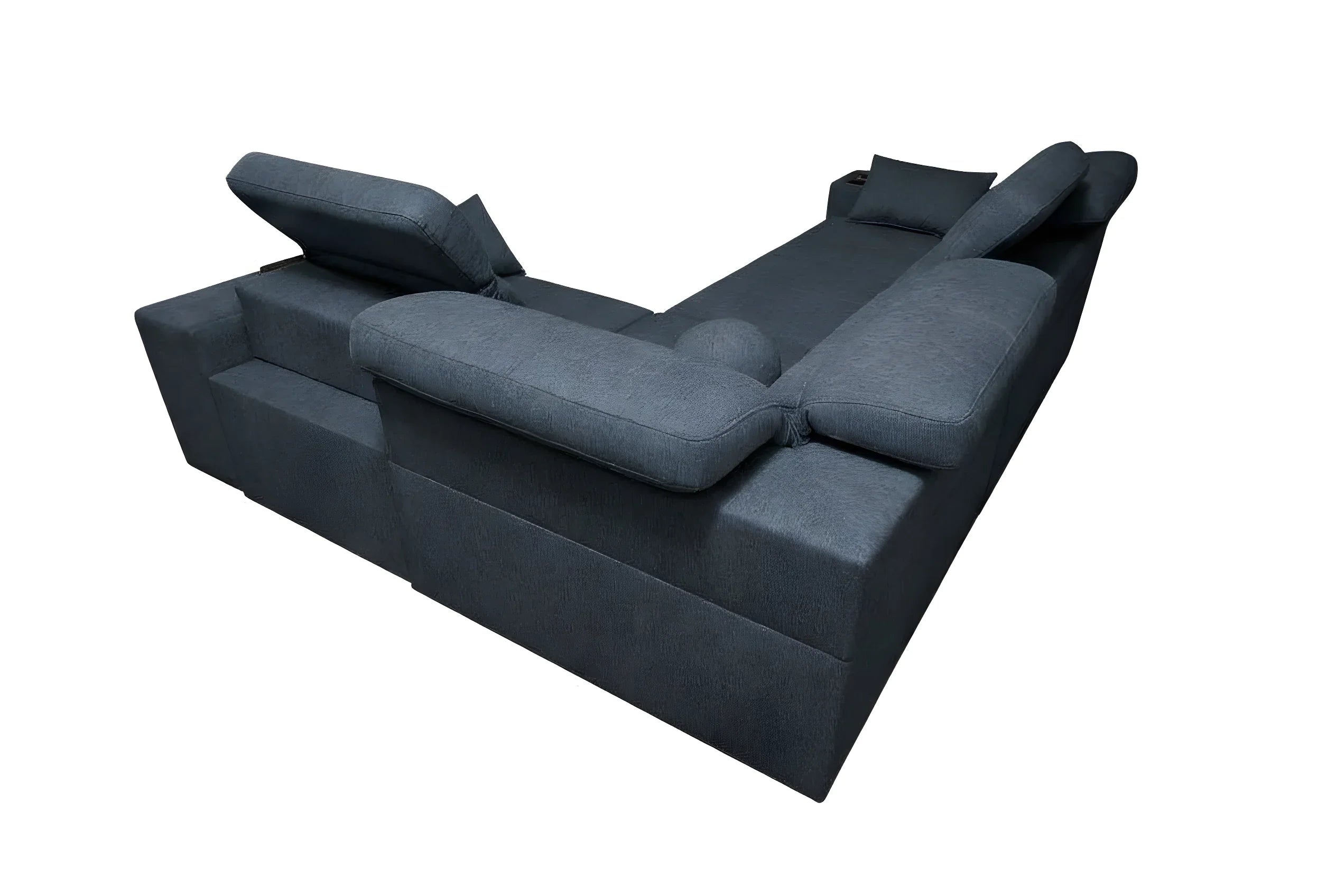
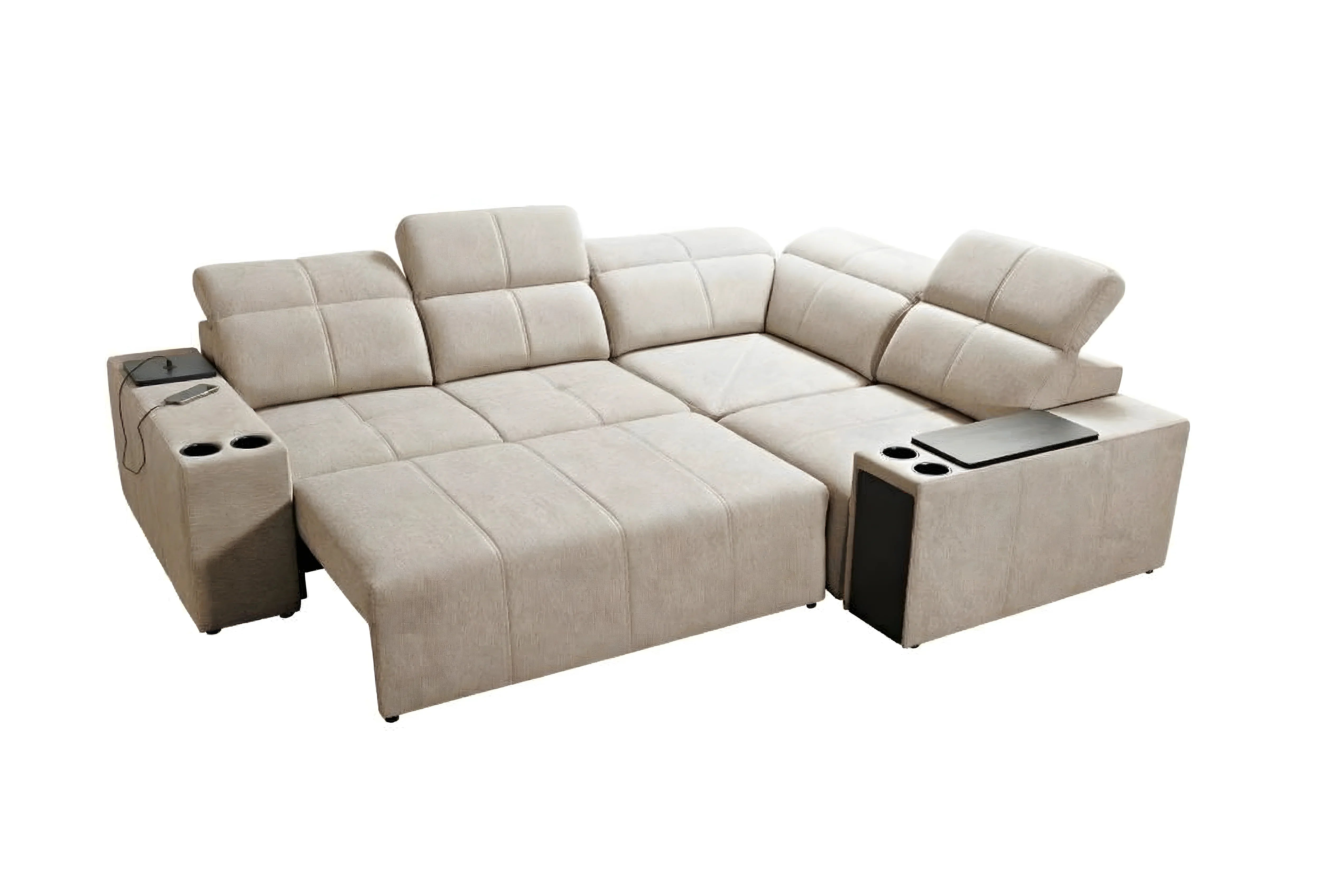
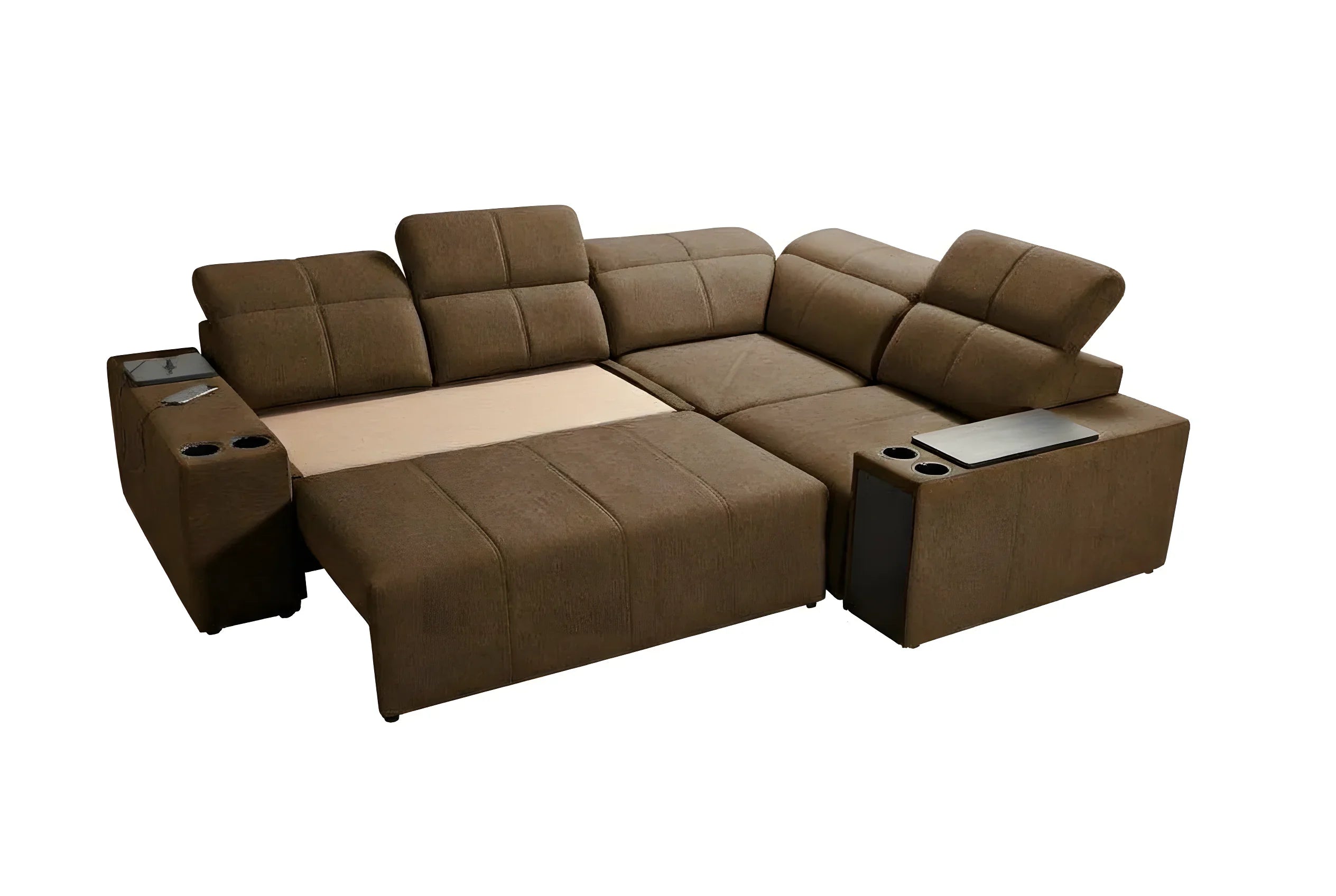
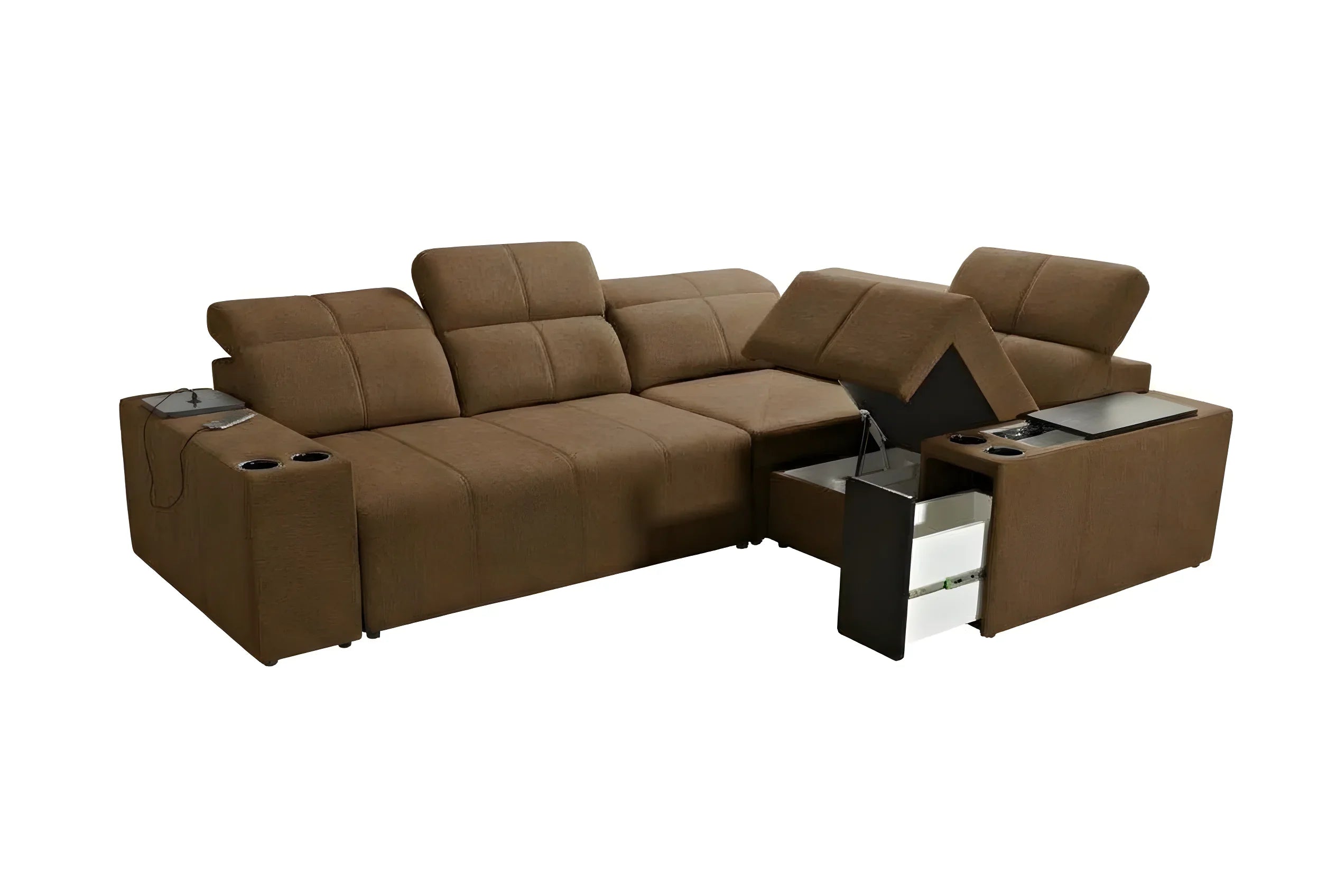
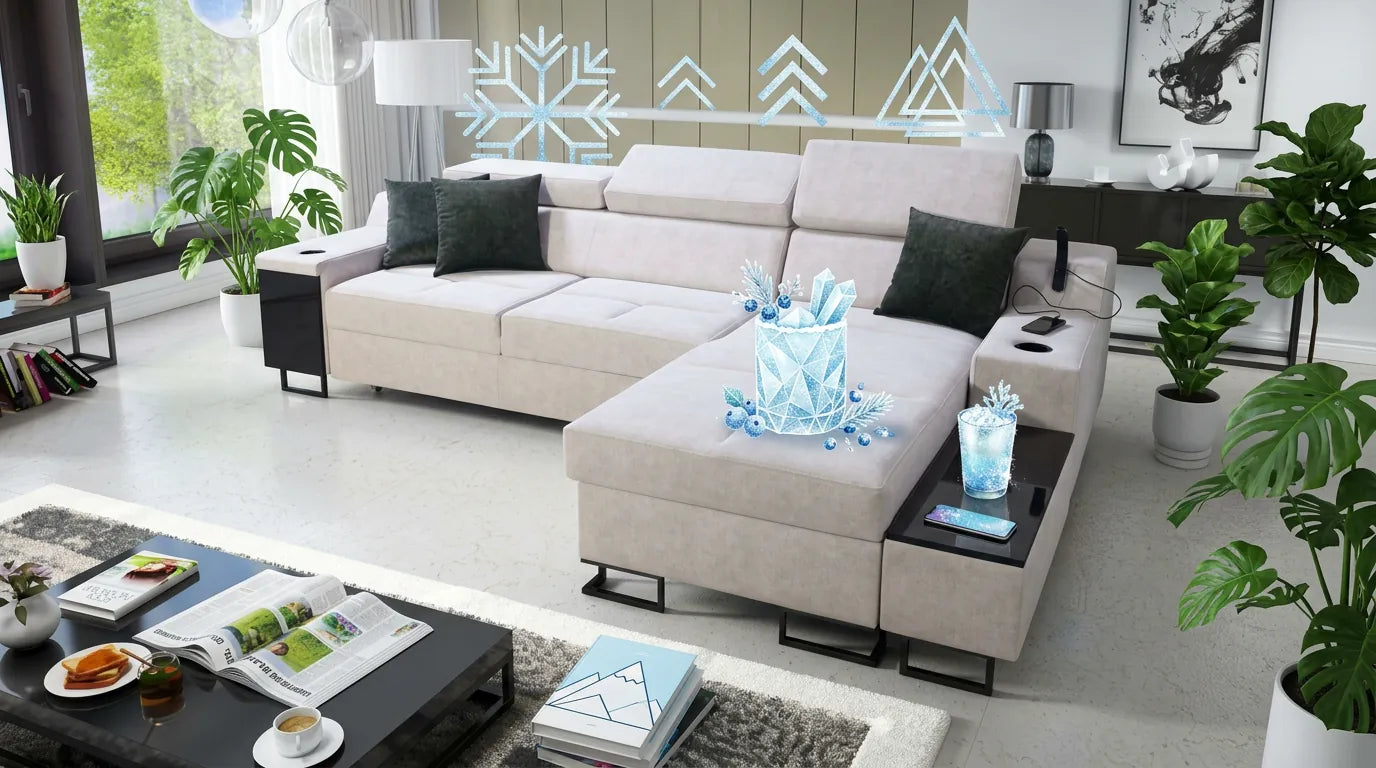
A modular sofa for small spaces lets you detach a module to use it as an extra seat during a group meeting, then slot it back into the sofa at the end of the day. It's the standout feature for remote work in the living room. For larger spaces, a panoramic sofa or a modular, dismantlable panoramic sofa offers the same flexibility on a larger scale.
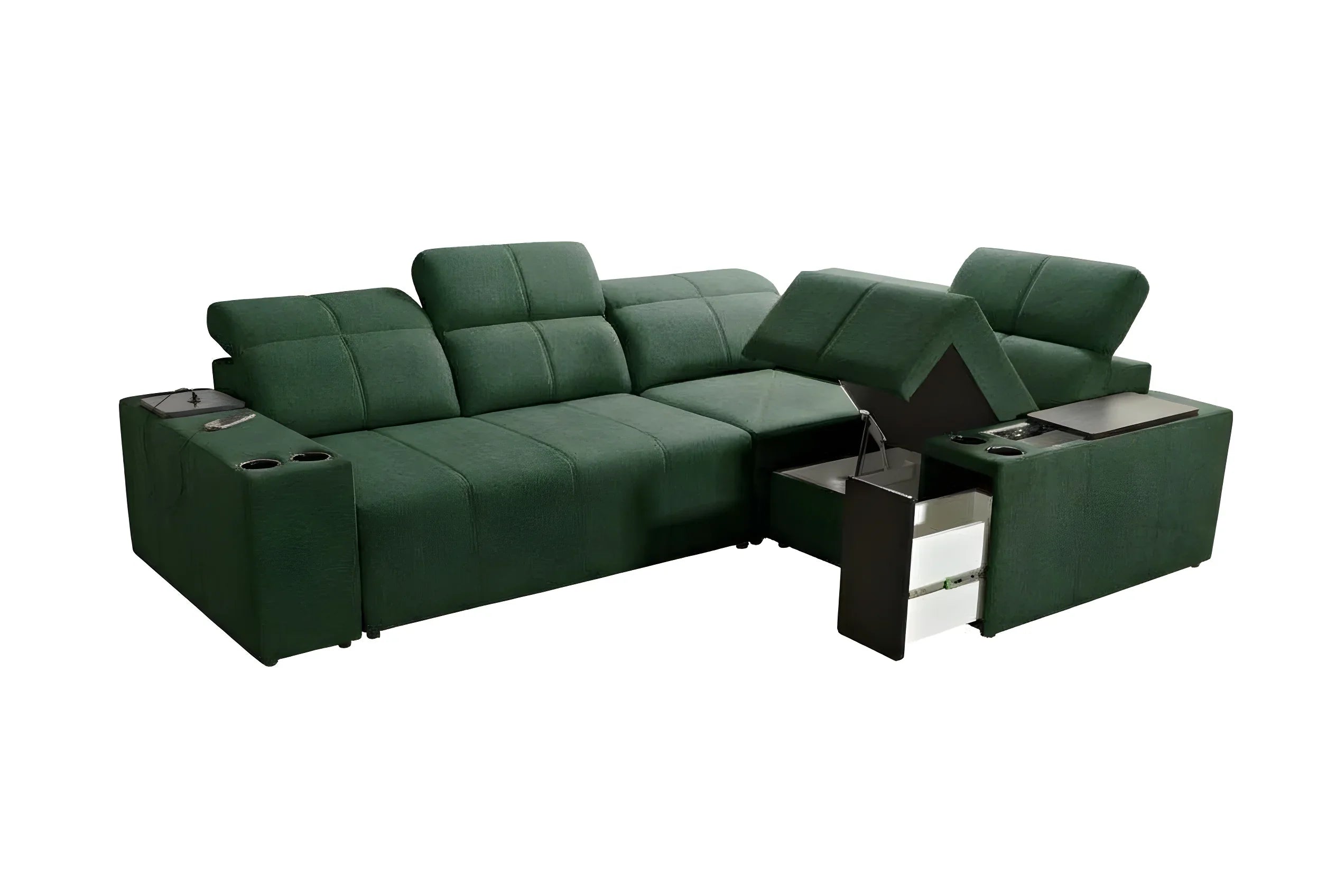
Storage compartment: making work gear disappear
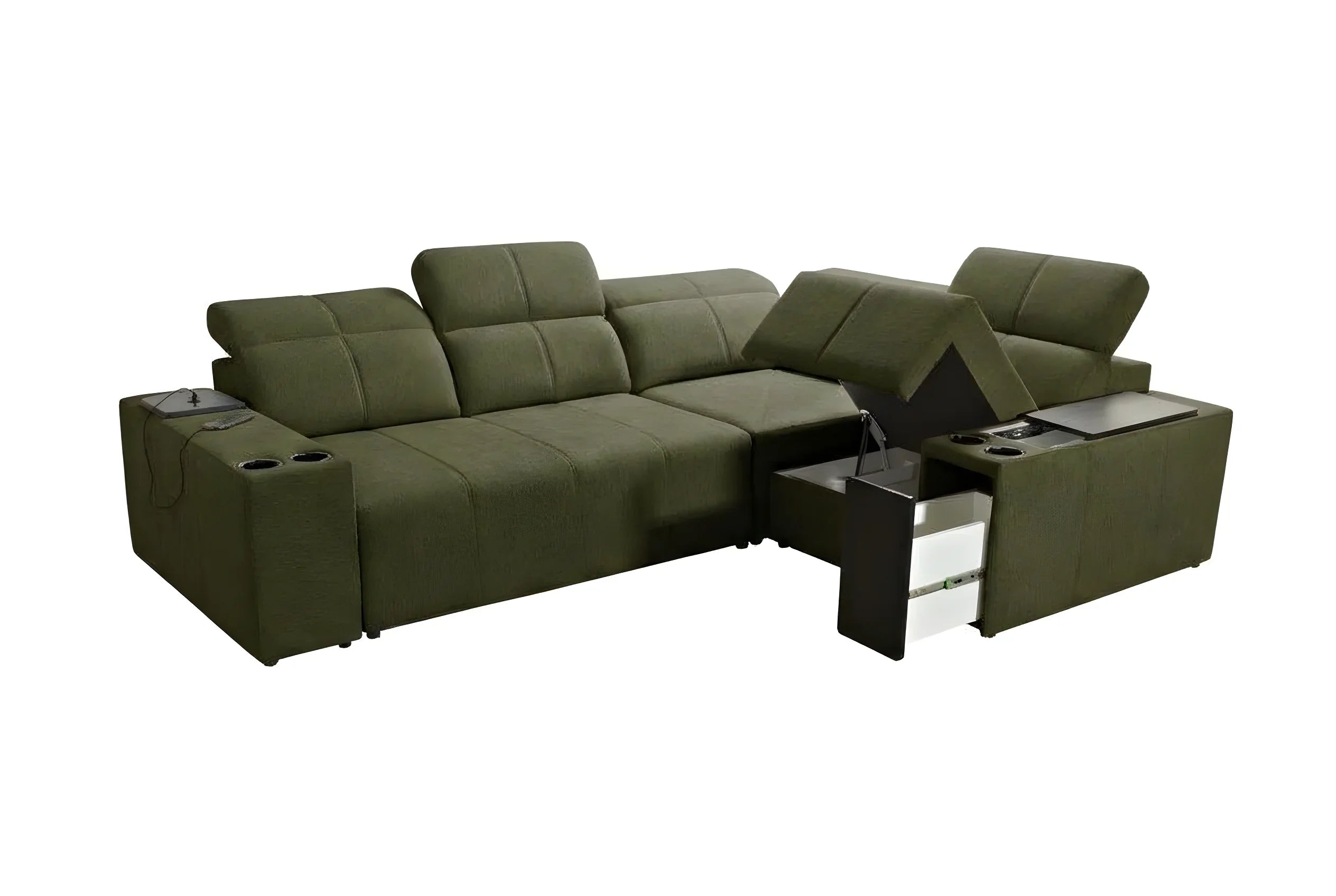
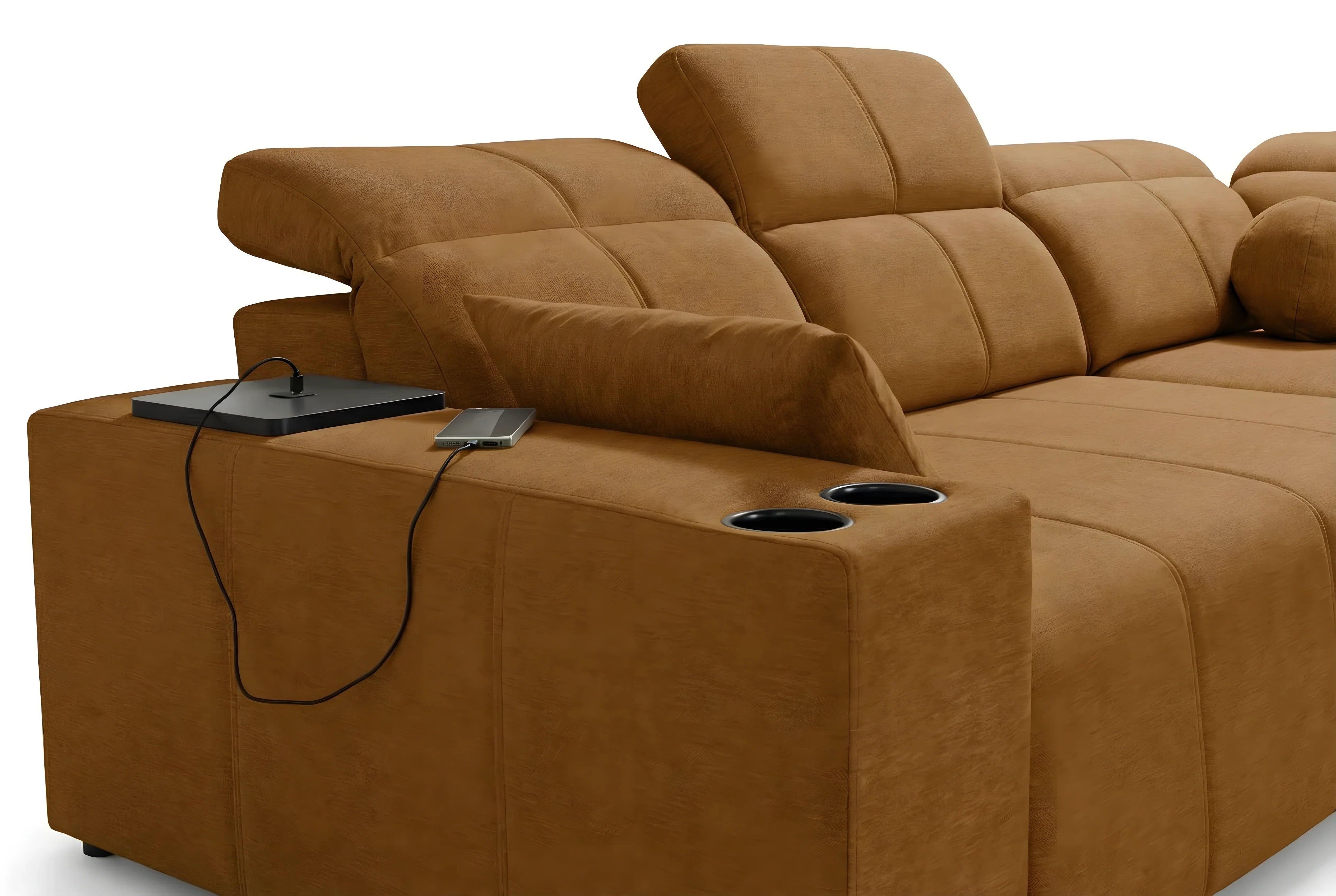
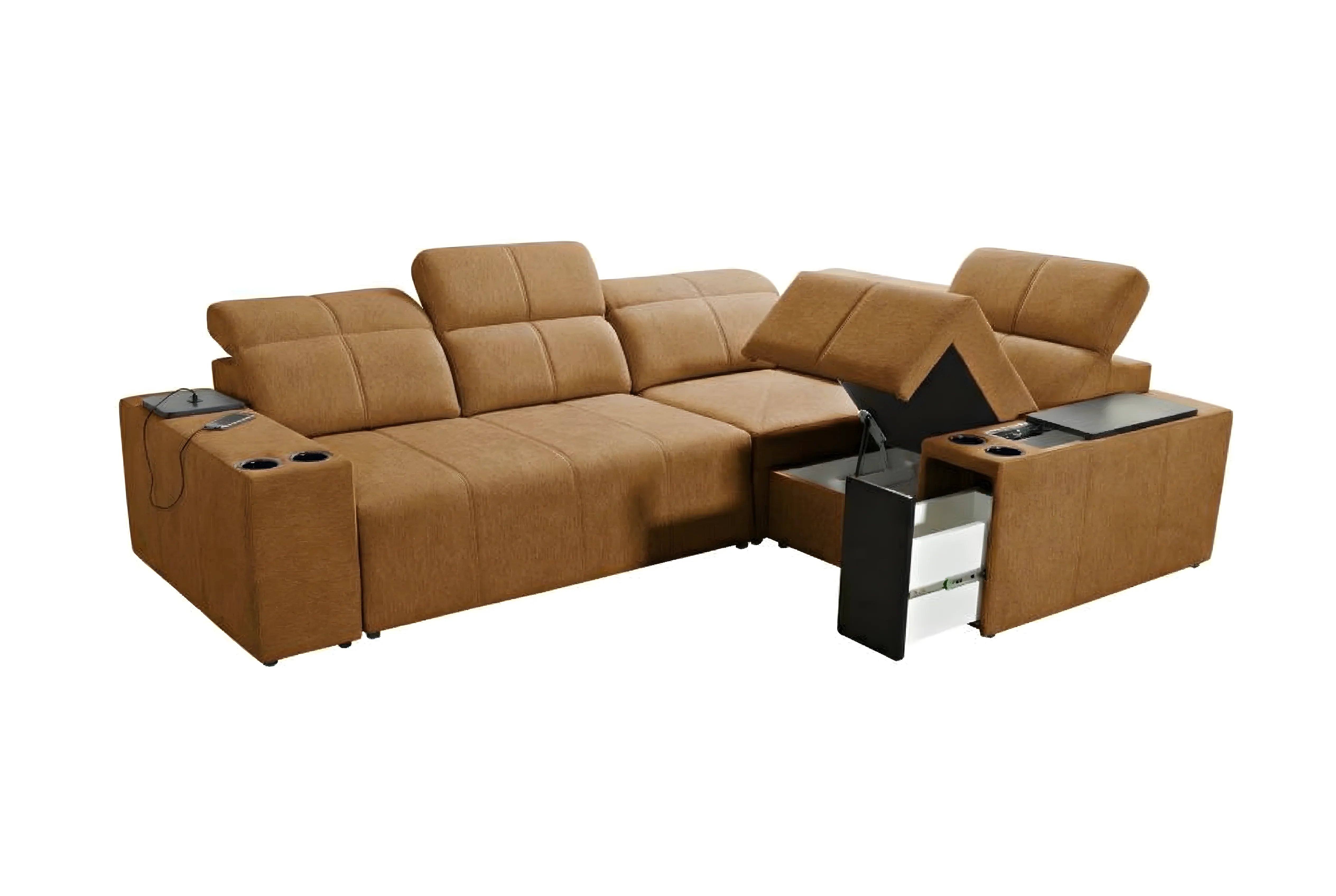
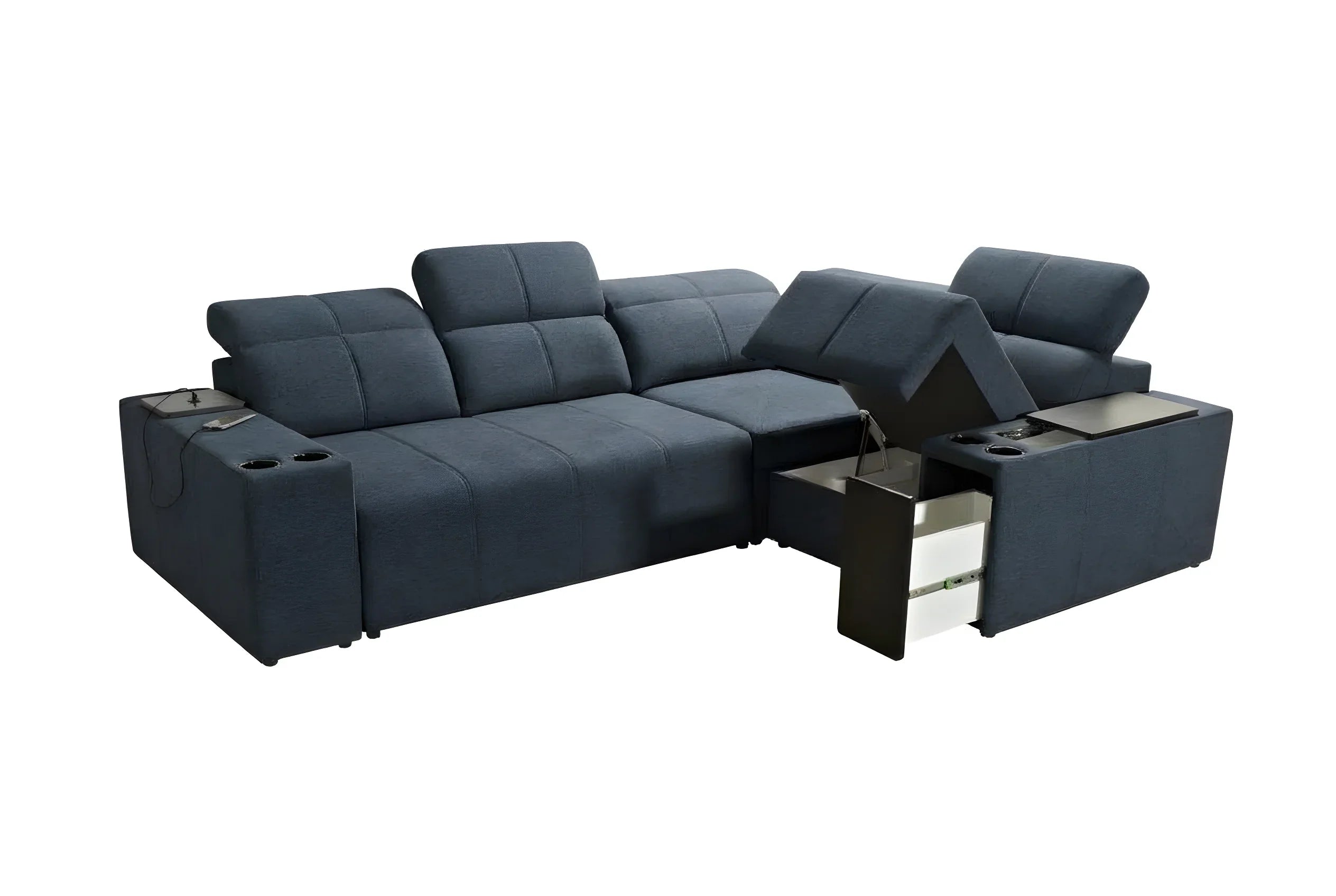
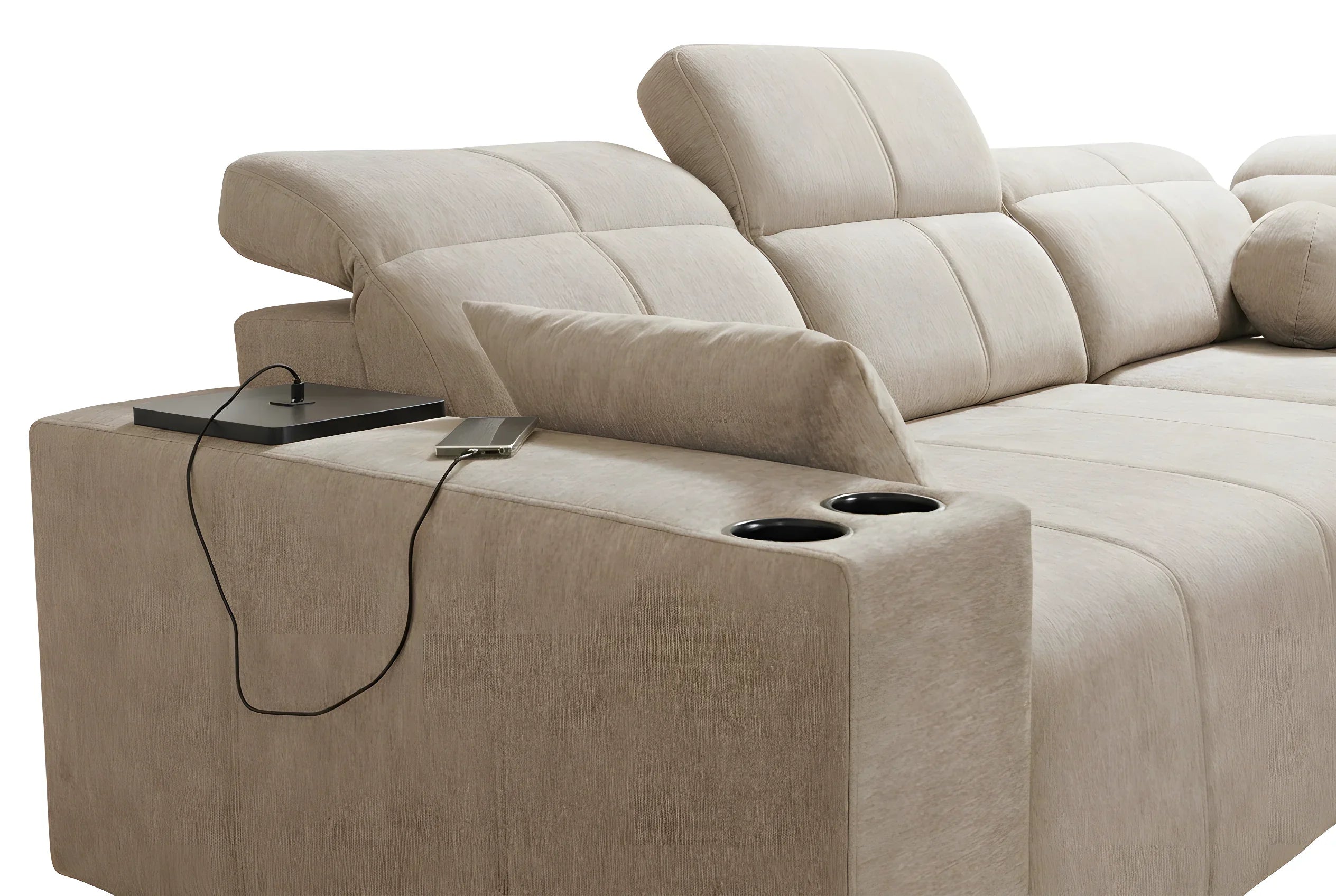
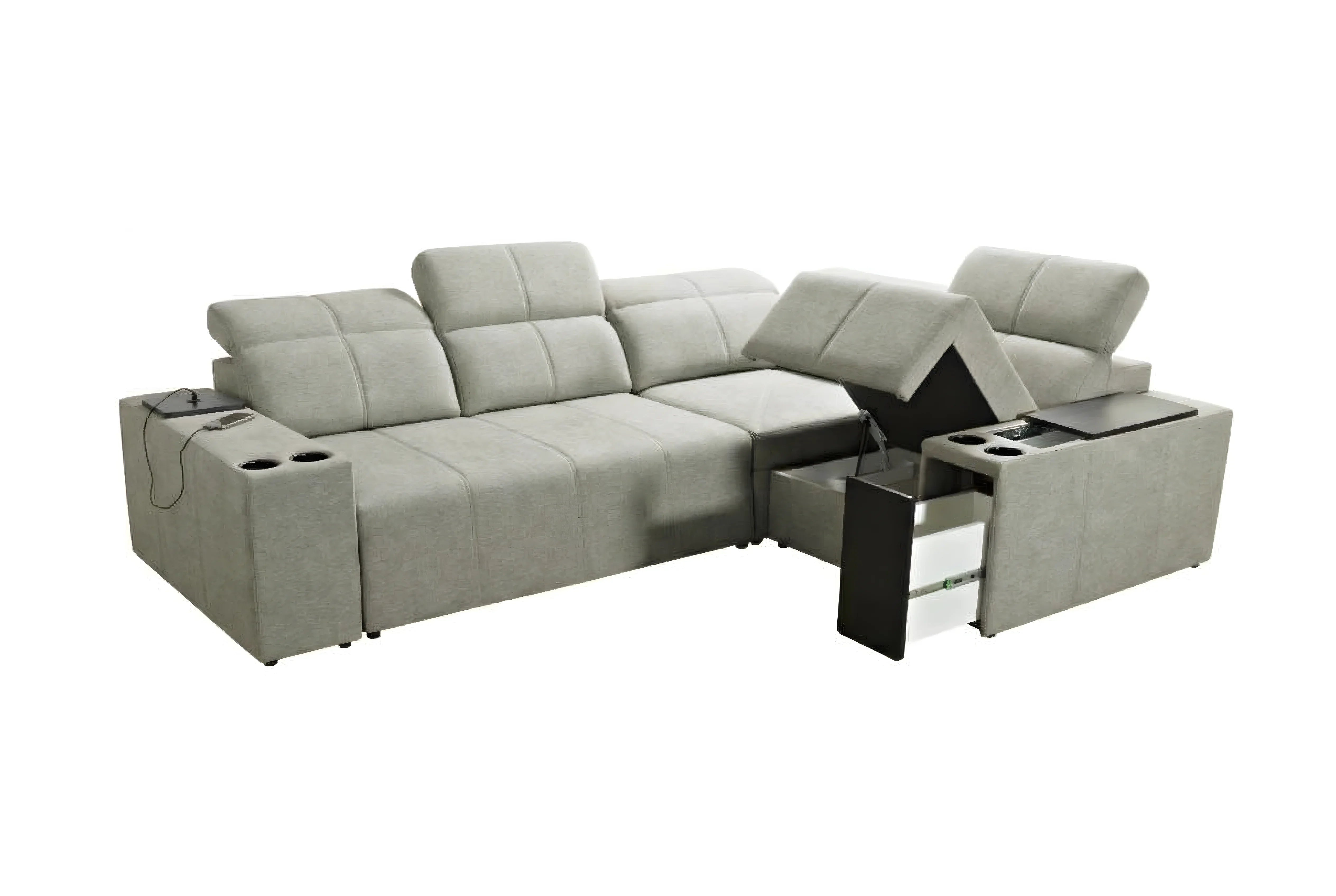
Cables, chargers, a portable printer, pending folders, earbuds… Remote work generates a lot of work equipment that needs to disappear in the evening. A sofa with a storage compartment under the seat is the most discreet solution. You stash everything inside at the end of the day, and the living room becomes a living room again. For a large format, the panoramic sofa with a storage compartment offers several distinct compartments, perfect for keeping work and personal life separate.
| Feature | Remote-work use | Impact on comfort |
|---|---|---|
| Modularity (detachable modules) | Impromptu meetings, day/evening setup | ✓ High |
| Built-in storage compartment | Stowing work gear in the evening | ✓ High |
| Slide-forward system | Adjusting seat depth for work | ✓ High |
| Electric recliner | Recovery micro-nap break between two tasks | ✓ Very high |
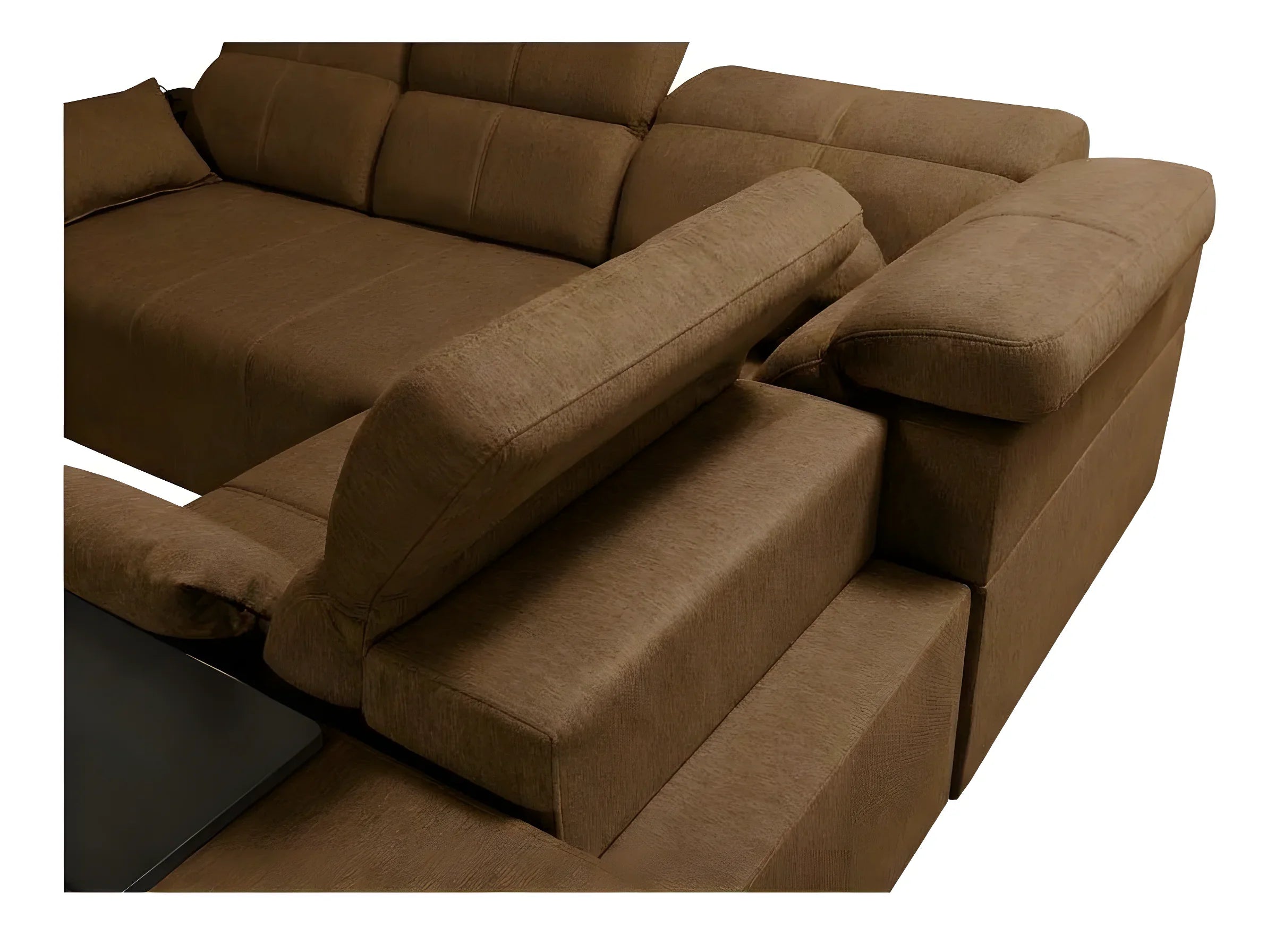
| Adjustable headrest | Neck support on video calls, reading | ✓ High |
| Sleeper sofa bed | Occasional overnight without leaving the living room | ✓ Moderate |
The slide-forward system: the pros' trick
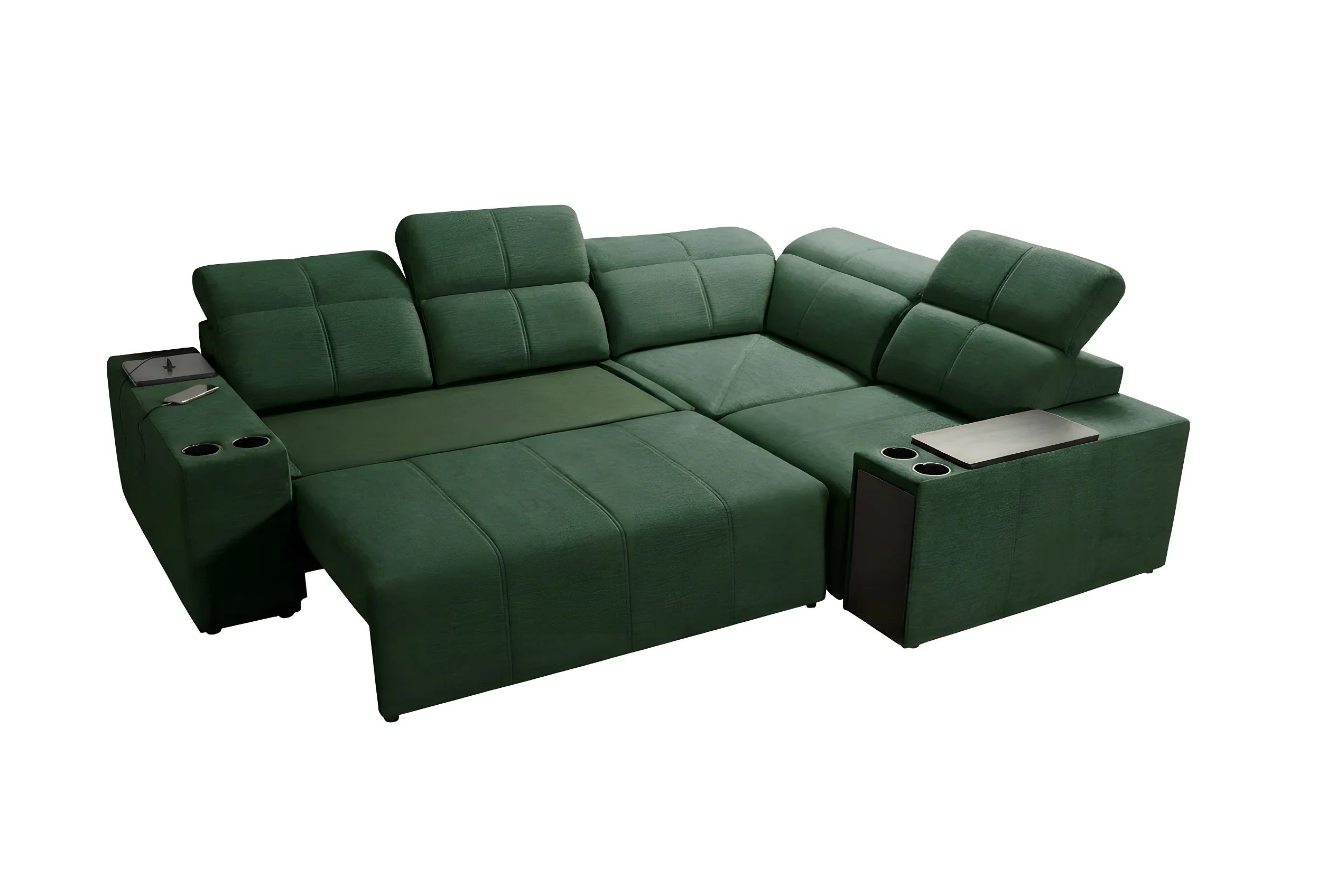
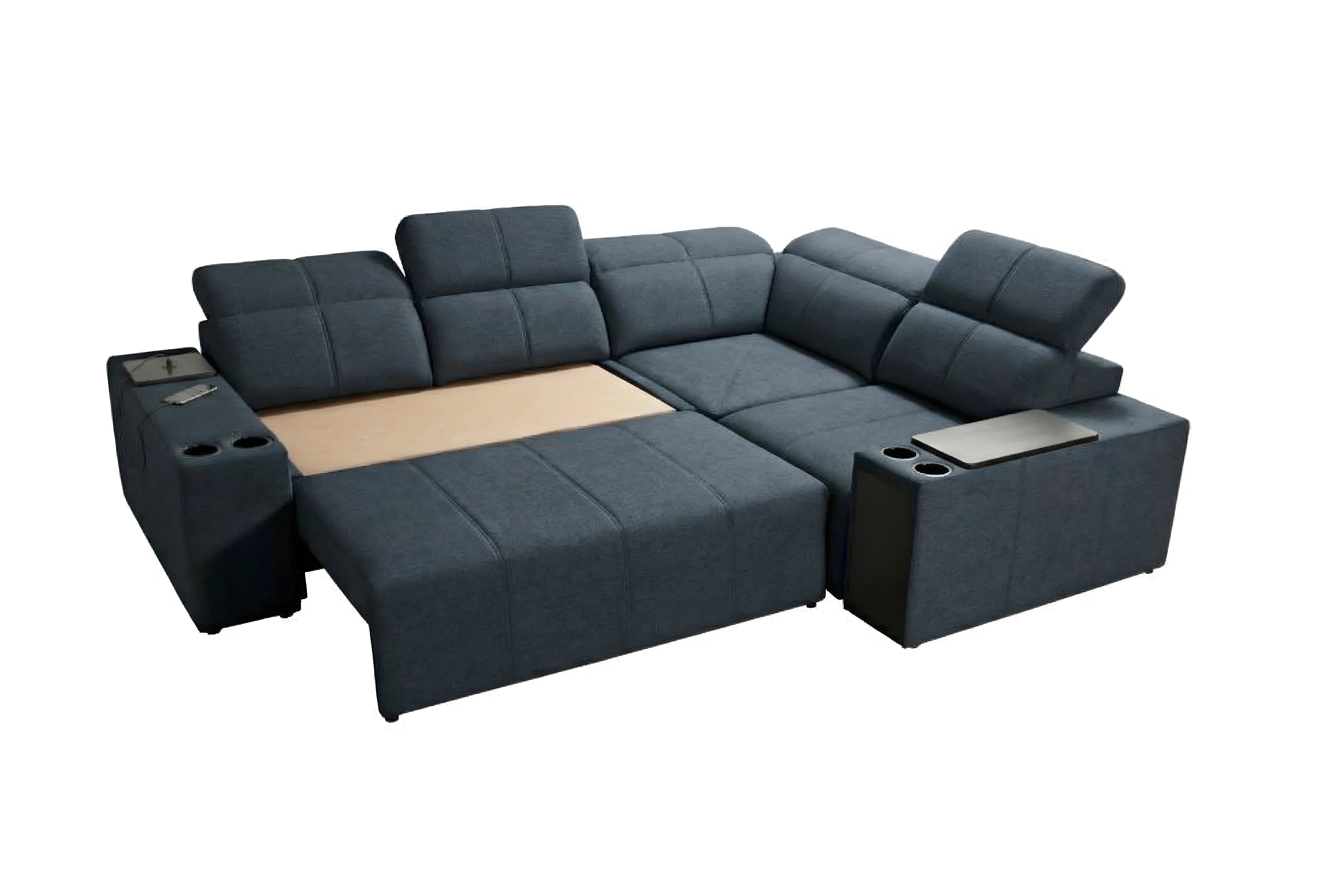
Less well known to the general public, the convertible sofa with slide-forward system lets you increase seat depth by 20 to 30 cm without changing the outer footprint. It's the perfect feature for remote work: an upright, supportive seat in work mode, a deep, relaxing seat in relaxation mode, with no complex handling.
Electric recliner: the sanctioned recovery break
An electric recliner sofa isn't a gimmick. It's an active recovery tool. Between two video calls, 10 minutes of recliner with legs raised is enough to boost circulation and concentration. Over an 8-hour day, these cumulative breaks change everything.
5. Adapting the room to your work rhythm: light, noise and ergonomics
A suitable sofa isn't enough. The living room that turns into an office must also handle three other dimensions: light, noise and overall posture. These are the elements that make the difference between remote work that's livable and remote work that's a source of burnout.
Managing natural light without screen glare
The classic trap: placing your desk facing the window to enjoy the light. Bad idea. The sun creates blinding reflections on the screen and forces you to squint all day. The right position is at 90° to the window: side lighting, no glare, no dazzle. For very exposed rooms, a filtering blind or a sheer curtain on the window solves the problem without darkening the room.
Soundproofing without major works
The modular sofas in fabric or boucle absorb sound better than a smooth leather sofa, which reflects it. For video calls, add a thick rug under the desk (ideally with long pile): it absorbs reverberation and improves how your voice is perceived by your listeners. Wall bookshelves filled with books are also excellent natural sound insulators.
What to favour
Matte fabrics (corduroy velvet, boucle, heavy linen), long-pile rugs, heavy curtains, full shelves. All these materials absorb sound instead of bouncing it back.
What to avoid
Bare floors (tile, parquet without a rug), untreated large windows, smooth empty white walls, glass coffee tables. These surfaces create an unpleasant echo.
Seated posture ergonomics: the 90° rule
No matter how good the sofa is, your posture must respect three 90° angles: knees, hips, elbows. To achieve this from a sofa:
- Raise the screen: place your laptop on a box, a stand or a footrest to bring your eyes level with the screen. It's the #1 cause of neck pain when working from home.
- Support your lower back: a firm lumbar cushion (or a folded towel) against the lower back fills the gap and relieves the vertebrae.
- Keep your feet flat: if your feet don't touch the floor, add a footrest. Feet dangling compress the back of your thighs.
6. Turning your sofa into a workstation: a step-by-step guide
Here's the concrete protocol to switch your sofa between its two roles, morning and evening, in under 5 minutes.
Morning: switching to office mode
- Open the storage compartment and take out the work gear (external screen, keyboard, headset, folders).
- Set up the auxiliary desk: a rolling mobile desk, an adaptable tray on the armrest (some sofas with footrest include this option), or a simple stable board laid across your lap.
- Adjust the lighting: turn on the adjustable desk lamp, turn on the accent lamp behind the screen to avoid harsh contrast.
- Check the ergonomics: feet flat, back supported by a lumbar cushion, screen at eye level.
- Place a psychological marker: a coffee mug, an open notebook, a signal object. This gesture anchors the brain in work mode.
Evening: back to living-room mode
- Turn off the desk lamp, turn on the warm lighting (floor lamp, LED behind the TV).
- Put the work gear away in the storage compartment. This step is crucial: as long as the gear stays visible, your brain doesn't really switch off.
- Mute work notifications on your phone. The mental boundary is also digital.
- Reconfigure the sofa: put the cushions back in place, deploy the reclining seat if there is one, get throws and cushions ready for relaxation.
- Leave a closing marker: an open book on the coffee table, a cup of tea, a favourite cushion. Symmetrically to the morning's signal object, this gesture anchors the brain in rest mode.
FAQ: Your questions about the remote-work sofa
What type of sofa should I choose for remote work in a small space?
In a studio or small living room (under 15 m²), opt for a modular sofa for small spaces or a compact sofa bed for small spaces. These models offer the modularity needed to reconfigure the room between two uses, without sacrificing compactness. A 2-seater of 140-160 cm is enough for a solo remote worker.
How can I avoid back pain when working on my sofa?
Three non-negotiable rules: the screen must be at eye level (otherwise neck pain within a few days), a firm lumbar cushion must support the lower back, and your feet must rest flat on the floor. Add a non-slip mat under a mobile desk to stabilise the workspace. For sessions over 2 hours, an electric recliner sofa with a leg rest lets you vary your postures.
Do I need a sofa bed if I work remotely in my living room?
Not necessarily, but it's a real plus if you have guests staying over, or if you want a nap option during your lunch break. A standard sofa bed is bulky once unfolded. Better to choose a sofa with a pull-out trundle bed that unfolds from the storage compartment without spoiling the look of the living room.
What seat density do I need to work 8 hours on a sofa?
Aim for at least 35 kg/m³ of seat density, ideally 40 kg/m³ if you weigh over 80 kg. Below 30 kg/m³, the foam sags within a few months and your lower back suffers daily. This figure appears on the technical sheet — if it isn't there, walk away: it's an indicator of transparency.
How do I store remote-work gear without spoiling the look of the living room?
The sofa with a storage compartment is the most discreet solution: everything disappears under the seat at the end of the day, with no extra piece of furniture. For a large format, the panoramic sofa with a storage compartment offers several compartments to separate work and personal life. Avoid open shelves that leave your folders on permanent display.
Is a leather or fabric sofa better for remote work?
Fabric is the better choice for remote work: it's more breathable (no sticky sweat in summer), quieter (the rustle of clothes is inaudible on video calls) and visually warmer. Leather or faux leather has the advantage of being easy to clean — handy if you often eat on the sofa while working from home — but it breathes less well and becomes slippery when seated for a long time.
Conclusion: The transformable living room is the remote worker's best ally
The sofa is no longer just a piece of furniture for relaxation. For millions of French people, it has become the central workstation of a day that unfolds at home. But a poorly chosen sofa quickly turns into a source of pain and a brake on productivity. On the other hand, a well-thought-out sofa — modular, dense, properly sized, with a storage compartment and an adjustable seat — becomes an invisible ally that improves your working comfort without ever reminding you it's doing that job.
At Kings Canapé, we've designed our collections with this dual requirement in mind: the aesthetics of a living room, the ergonomics of an office. Every model has been designed to adapt to multiple uses with no compromise on comfort or design. Because your home deserves a sofa that can do it all — without ever looking like it's trying too hard.



Leave a comment
This site is protected by hCaptcha and the hCaptcha Privacy Policy and Terms of Service apply.