


Article table of contents

Did you know that we spend on average more than 3 hours a day in front of our television? Yet a large majority of households neglect a fundamental parameter: the ergonomic layout of the living room. A poor TV sofa distance is not just a nuisance for cinematic immersion; it is a direct factor in visual fatigue, headaches, and deterioration of posture. Between the new 4K, 8K resolutions and the diversity of screen sizes, the old rules no longer apply. This expert guide gives you the mathematical and ergonomic keys to precisely define what distance to keep between the TV and the sofa to avoid damaging your eyes, while maximising your comfort.
Why is the Sofa-TV distance more than a question of comfort?
The installation of your entertainment space goes far beyond the simple aesthetic choice. The spatial relationship between your seat and your screen directly influences your visual health. When the television sofa distance is unsuitable, the human eye is subjected to severe strain.
The physiological impact on vision
If you are positioned too close to the screen, your eyes must provide constant accommodation effort to process individual pixels, which quickly leads to digital eye strain. Conversely, a necessary TV distance that is too great forces the viewer to squint to perceive details, creating muscle tension around the orbit and at the cervical level.
To protect eyes in front of the TV, you must find the balance point where the image is perceived as a coherent and sharp whole, without effort. This is where your television's technology comes into play. The higher the definition (Full HD, 4K, 8K), the denser the pixels, and the closer you can get without perceiving the grid of the image. This is why a well-positioned comfortable sofa is the best ally of your optical health.
Immersion vs pixelation: The field of vision
Beyond health, it is about experience. Cinema plays on our peripheral vision to create immersion. To reproduce this effect at home without nausea or fatigue, the SMPTE (Society of Motion Picture and Television Engineers) recommends that the screen occupies about 30 degrees of your field of vision. THX, the cinema reference, pushes this recommendation to 40 degrees for a "theatrical" experience.
However, respecting this angle requires precisely calculating the optimal TV distance based on the diagonal of the panel. This is an equation that must also take into account the space available in your room, whether it is a large living room requiring a sofa for large spaces or a more modest studio.
The golden rule for calculating the optimal distance according to the size of your screen
Forget rough finger estimates. To define the ideal TV viewing distance, we rely on mathematical formulas proven by manufacturers and ergonomics experts. The main variable of this TV distance calculation formula is the resolution of your screen.
For Full HD screens (1080p)
On these models, the pixel density is lower. You therefore need more distance for the image to appear smooth. The rule is to multiply the diagonal of the screen by 2.5 to 3 times.
Example: For a 100 cm diagonal TV, place your sofa at 2.5 or 3 metres.
For 4K Ultra HD screens (2160p)
With four times more pixels, the image is incredibly fine. This allows you to considerably reduce the distance without seeing the dots. The recommendation is to multiply the diagonal by 1.2 to 1.5 times.
This allows total immersion, ideal for home cinema lovers installed in a modern sofa for the living room.
Correspondence table: TV / Sofa Distance
To simplify the task, here is a summary of the recommended distances for the most common screen sizes on the market today. This table will help you position your perfect sofa dimension.
| Screen Size (Inches/Cm) | Full HD Resolution (Recommended distance) | 4K UHD Resolution (Recommended distance) | Ideal living room type |
|---|---|---|---|
| 43" (109 cm) | 2.70 m | 1.30 m - 1.60 m | Sofa for small space |
| 55" (140 cm) | 3.50 m | 1.70 m - 2.10 m | Standard living room |
| 65" (165 cm) | 4.10 m | 2.00 m - 2.50 m | Spacious corner sofa |
| 75" (190 cm) | 4.80 m | 2.30 m - 2.90 m | Large living room |
| 85" (216 cm) | 5.40 m | 2.60 m - 3.25 m | Panoramic sofa |
Beyond distance: how to position your sofa and your TV for perfect alignment?
Having the right sofa screen distance rule is not enough if the vertical or horizontal angle is wrong. Ergonomics is a whole. A television fixed too high, as is often seen above fireplaces, forces the viewer to raise the chin, creating cervical tensions and increased eye dryness (because the eye is more open).
The ideal height: The line of sight
The golden rule for the ideal TV sofa height is as follows: when you are seated comfortably, the upper third of the screen should be at the level of your eyes. In other words, the centre of the screen should be slightly lower than your horizon line.
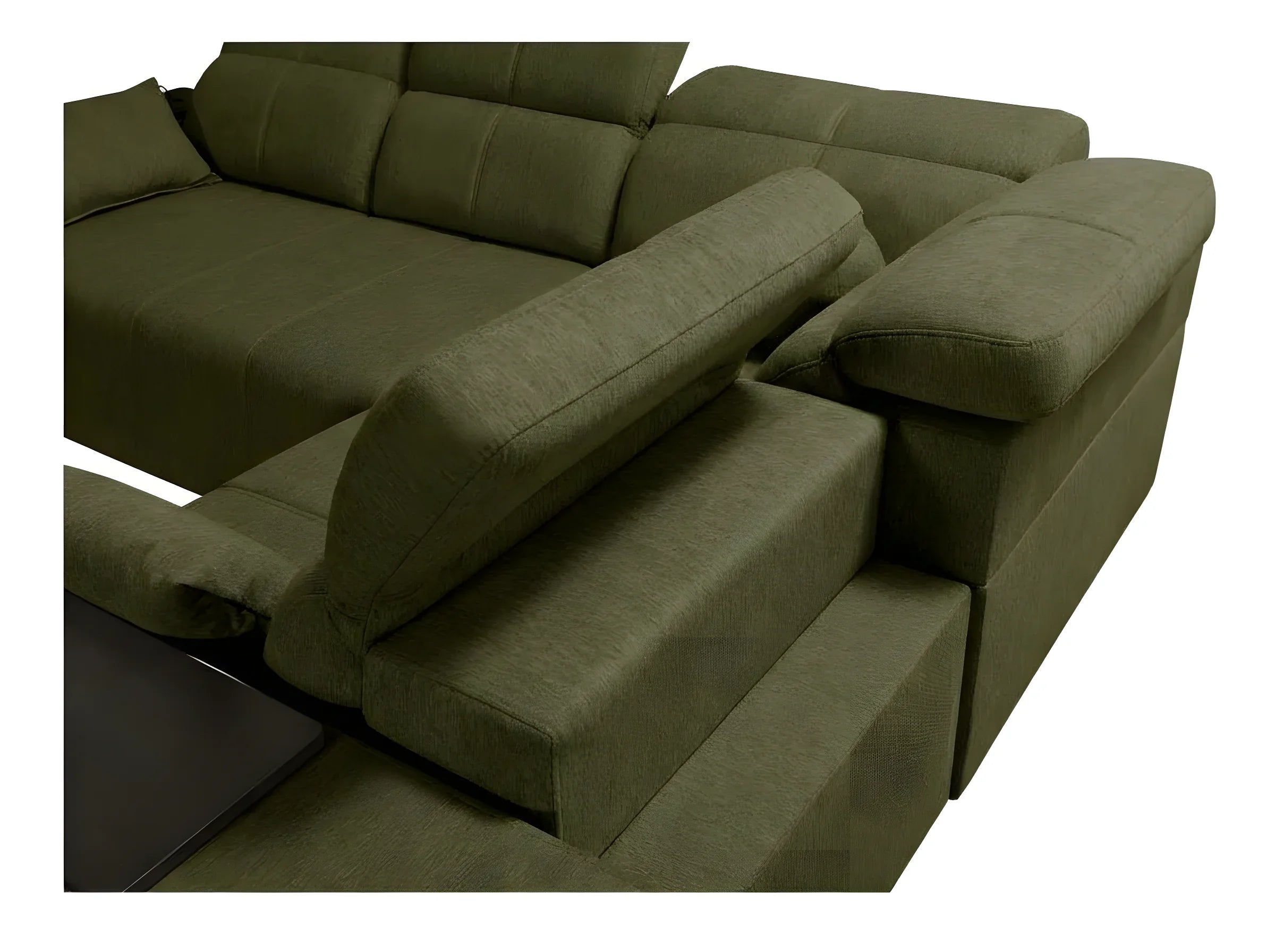
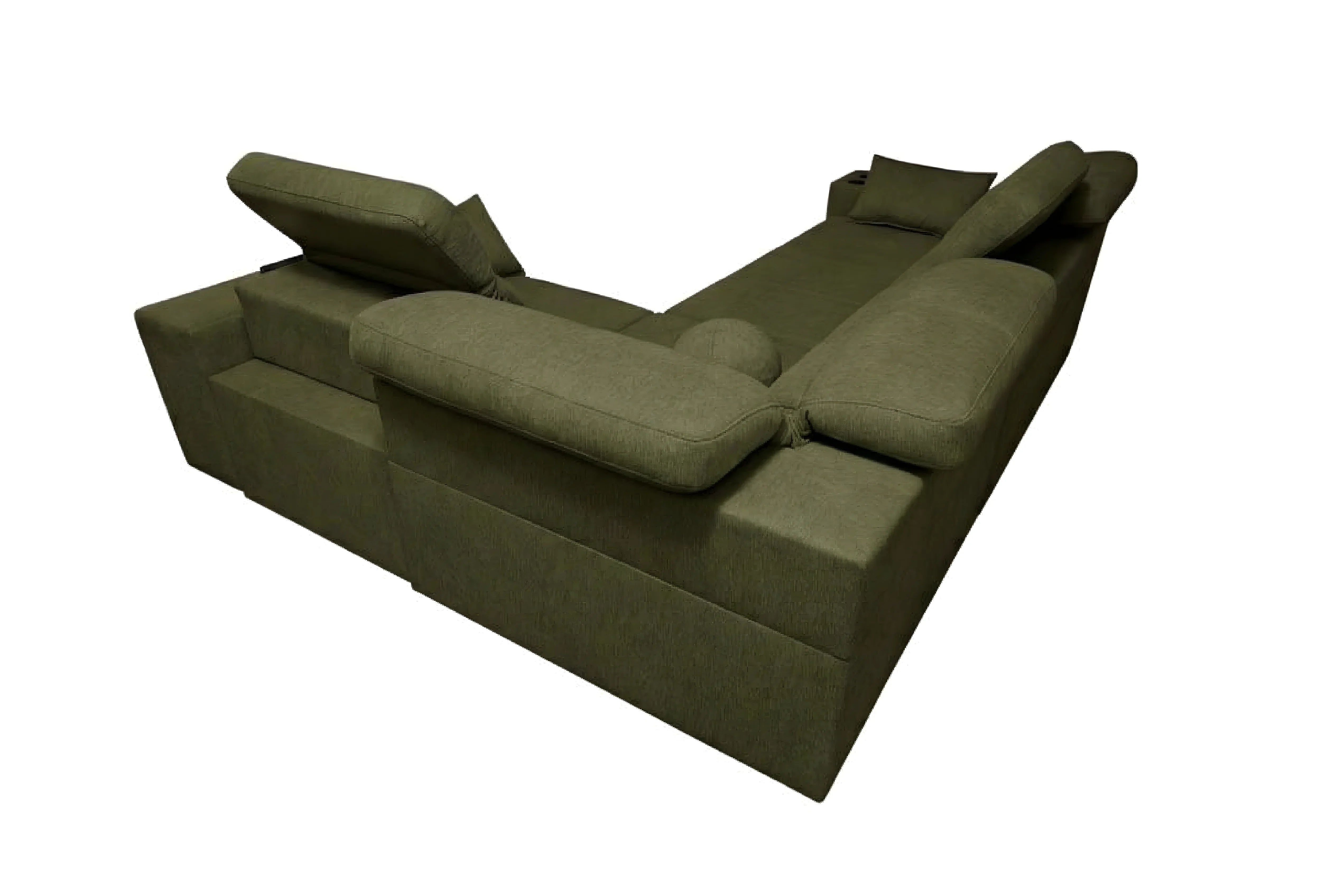
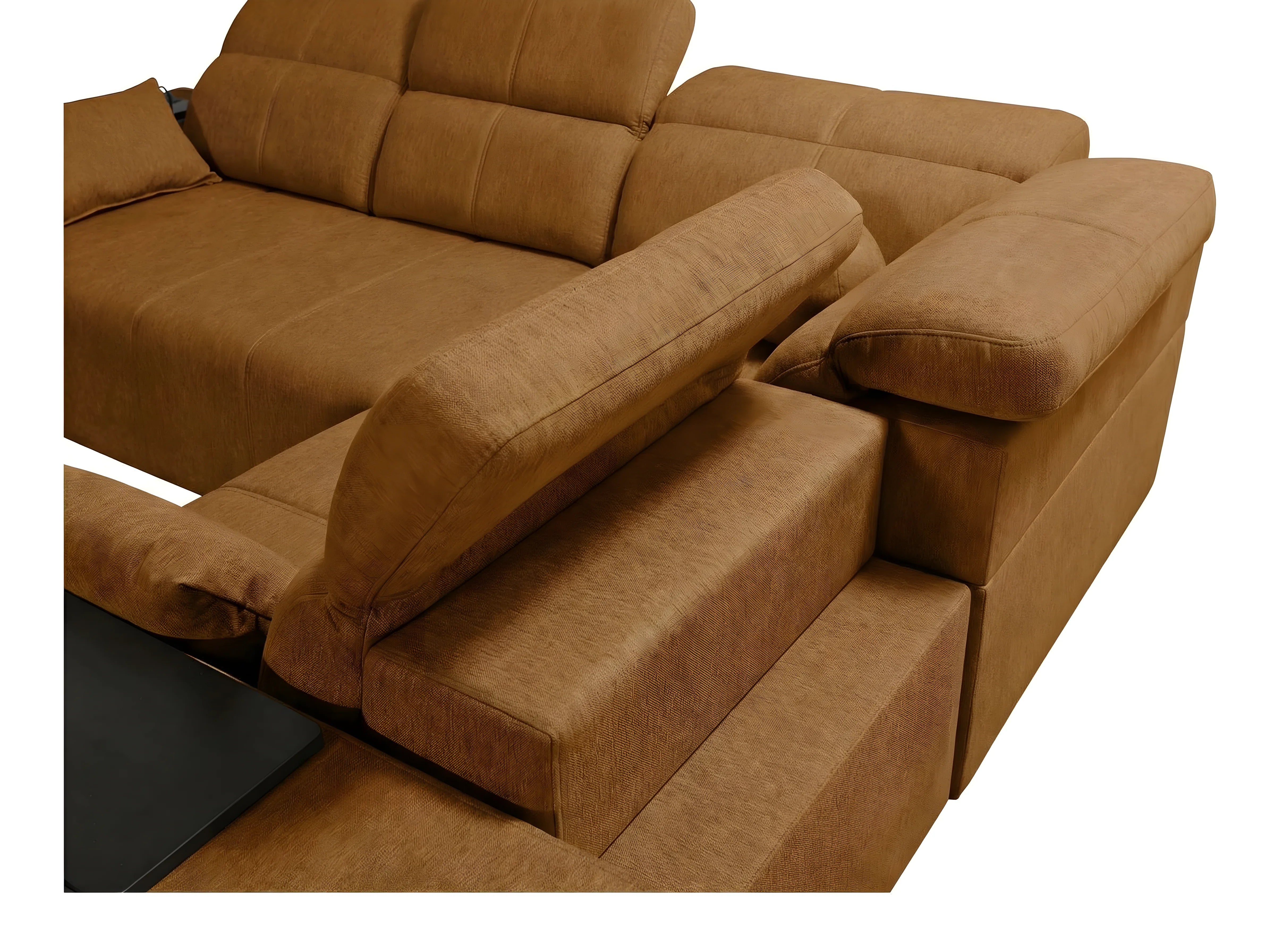
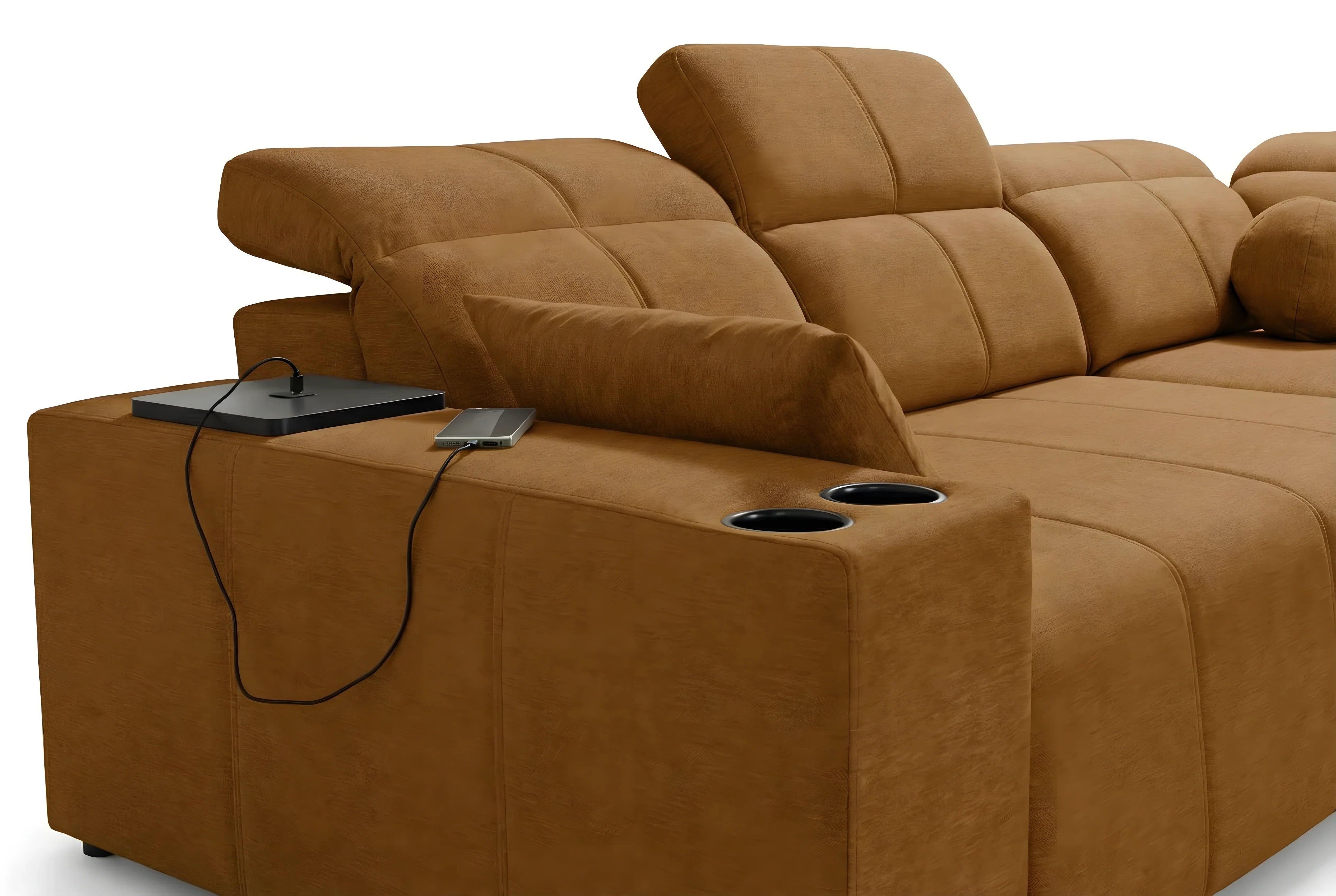
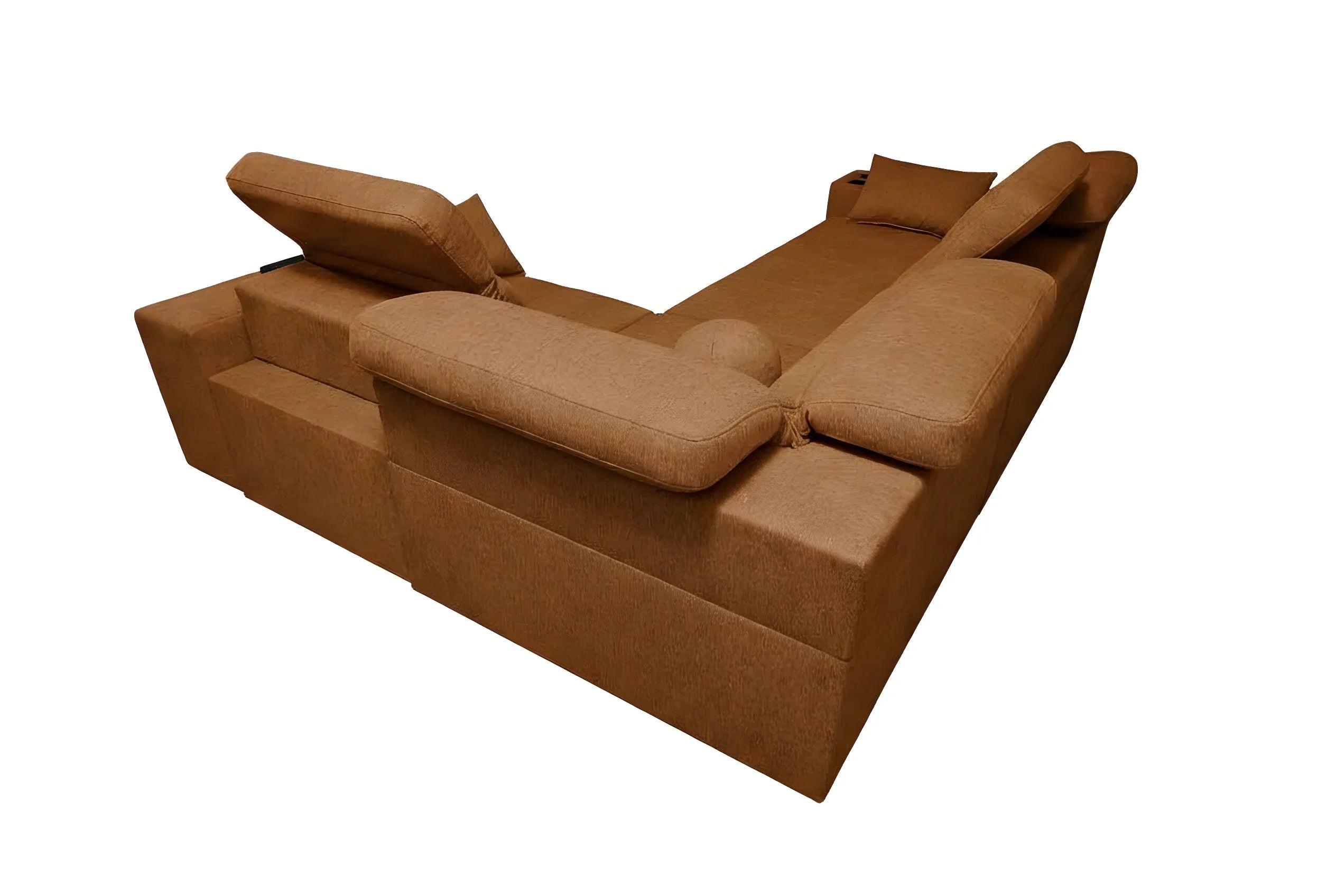
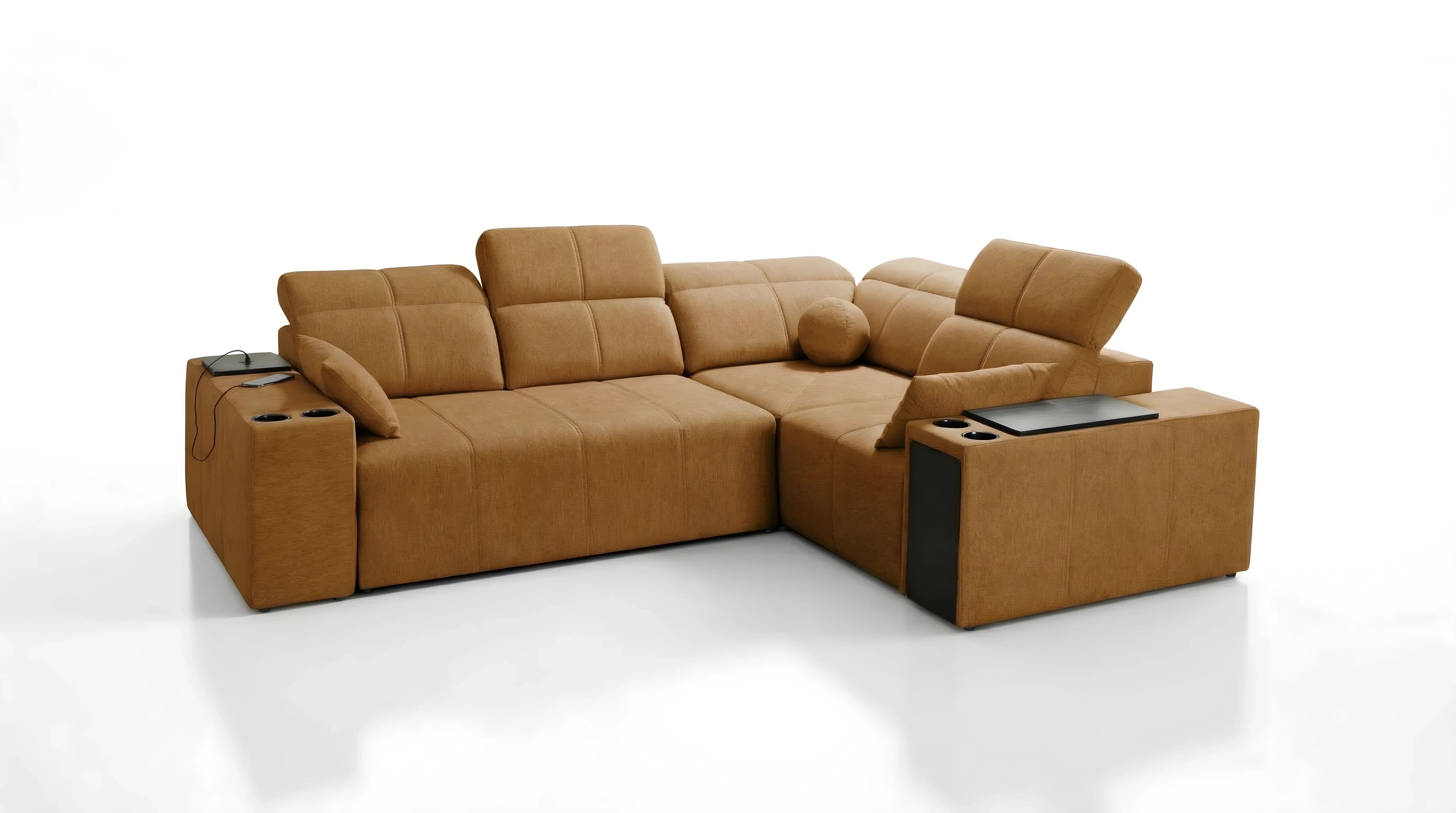
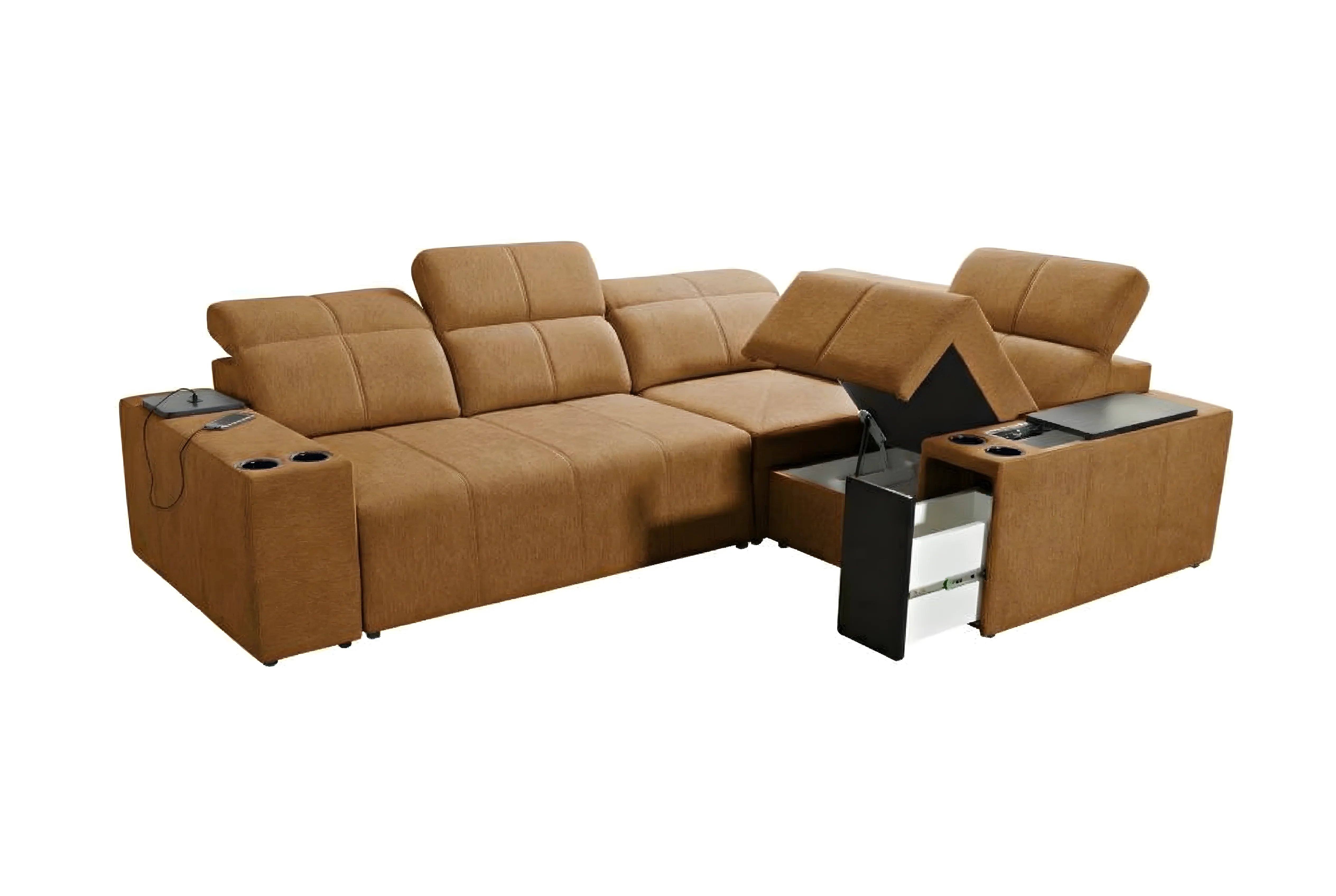
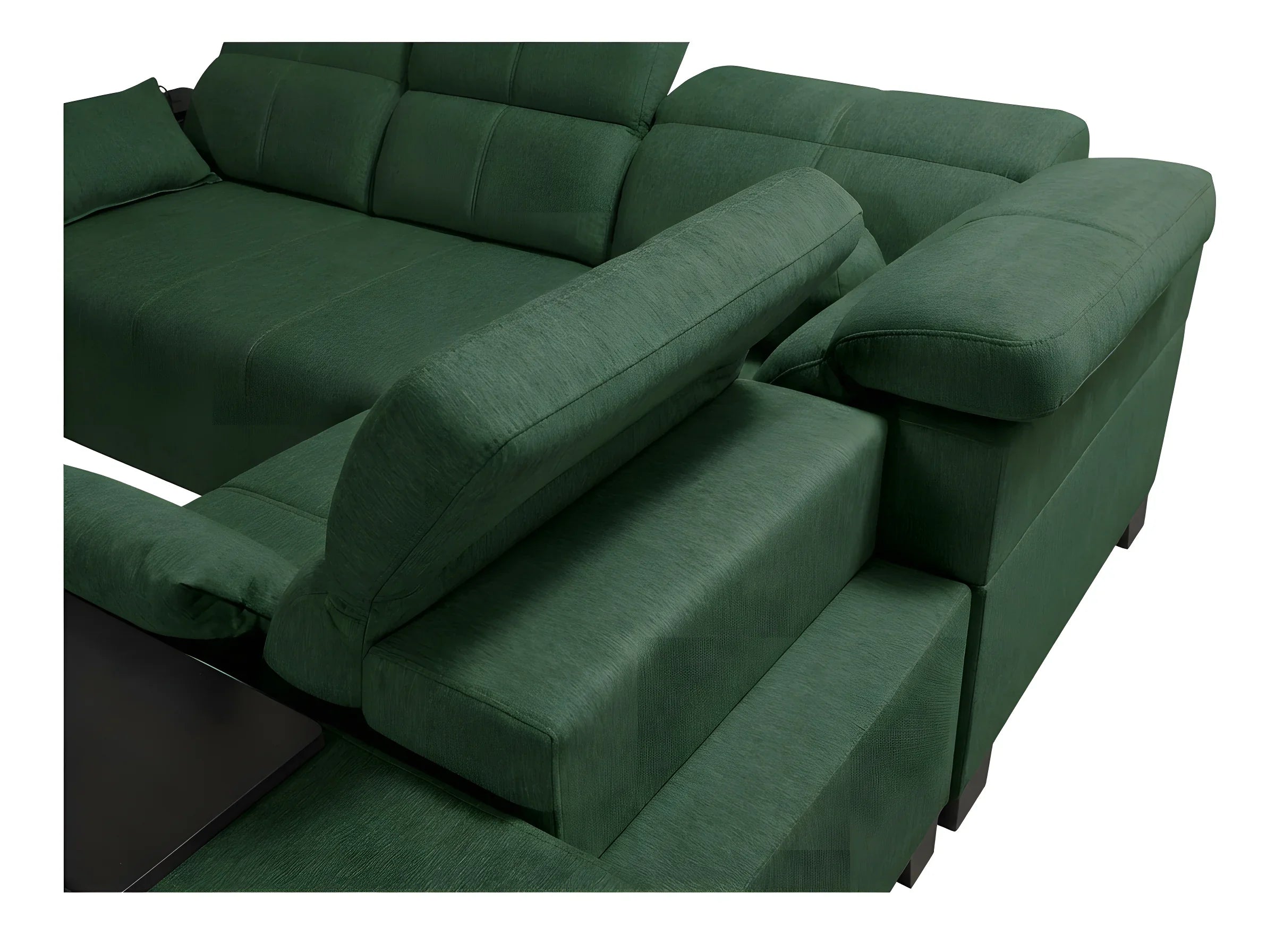
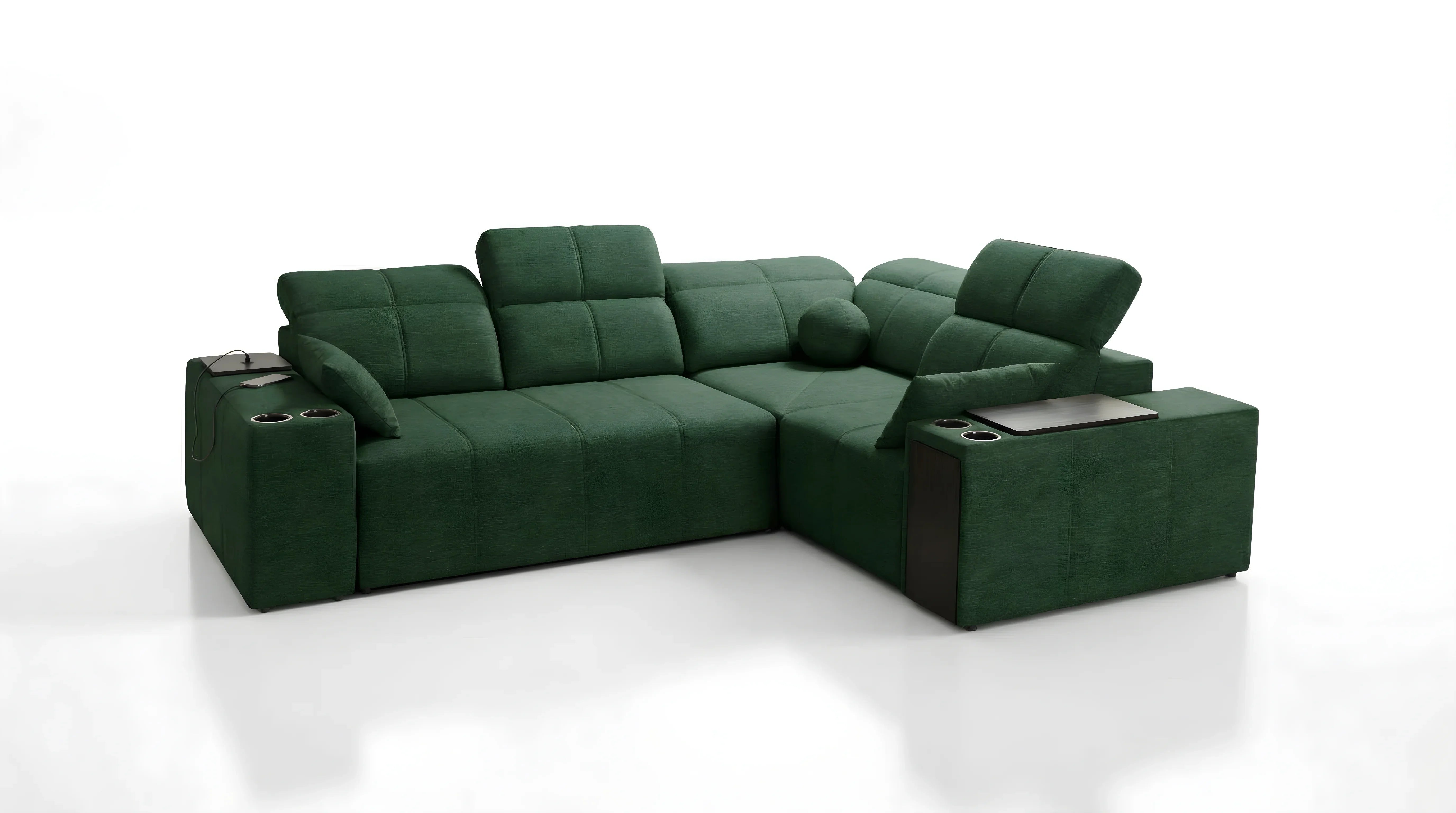
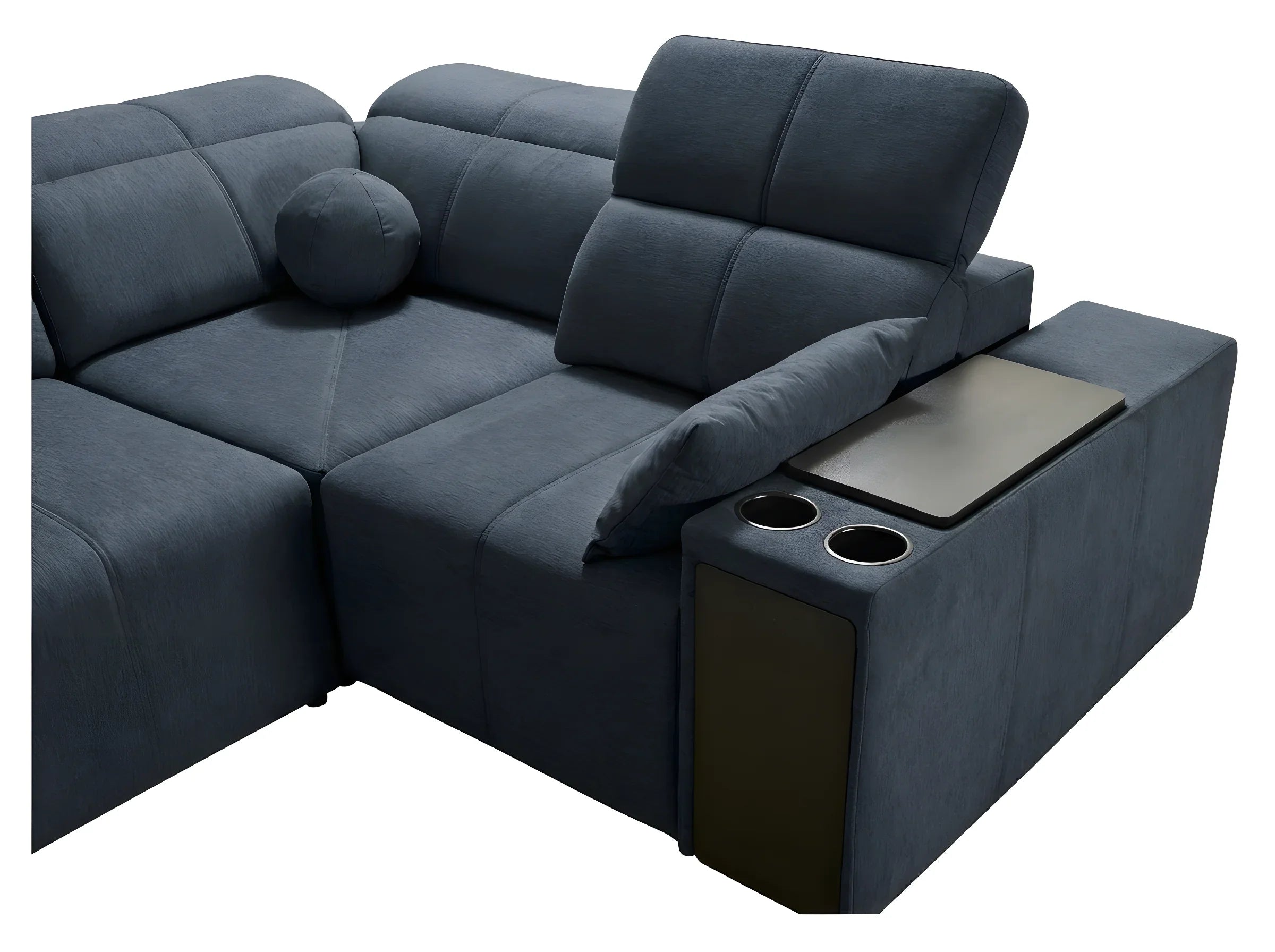
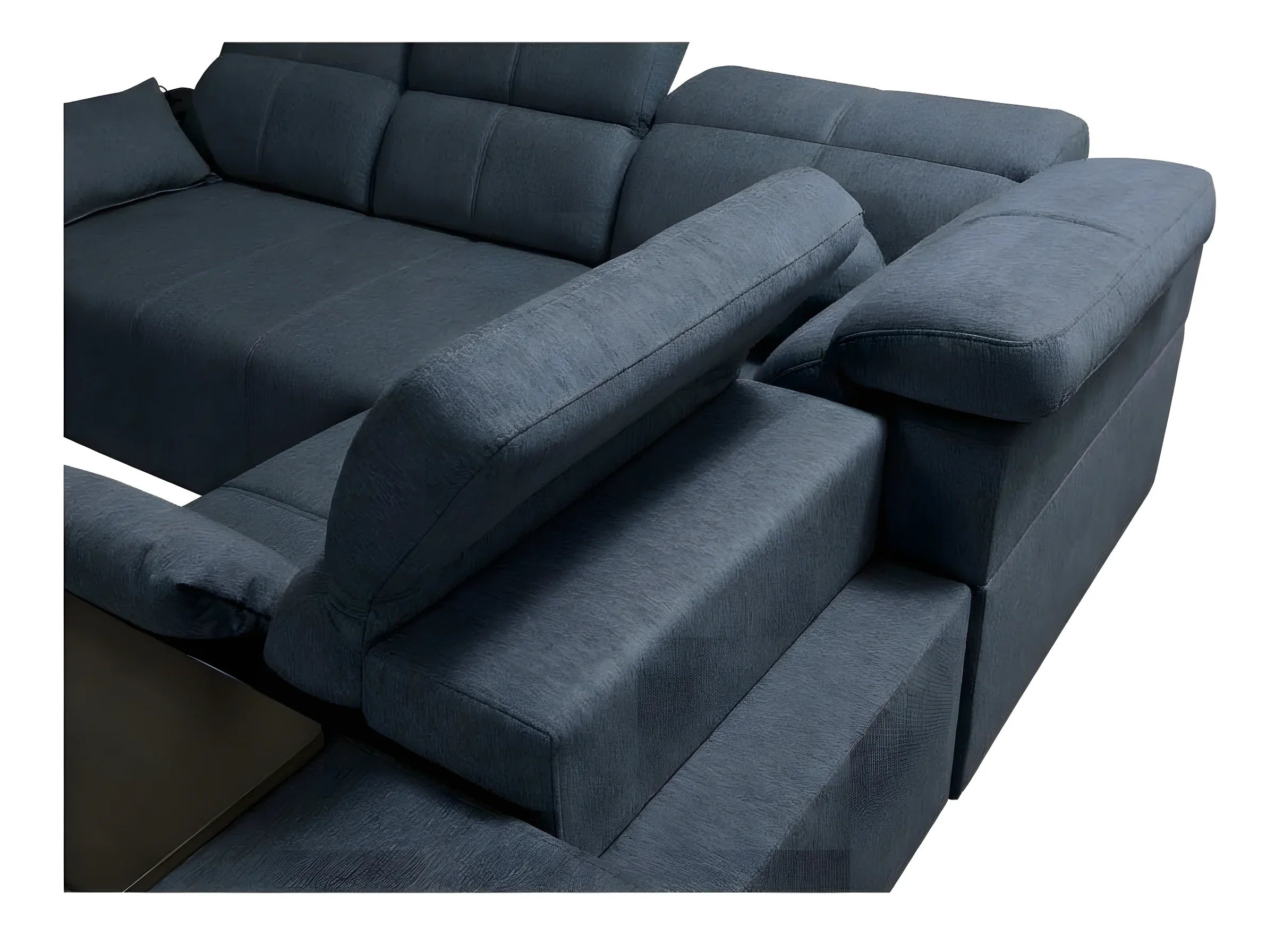
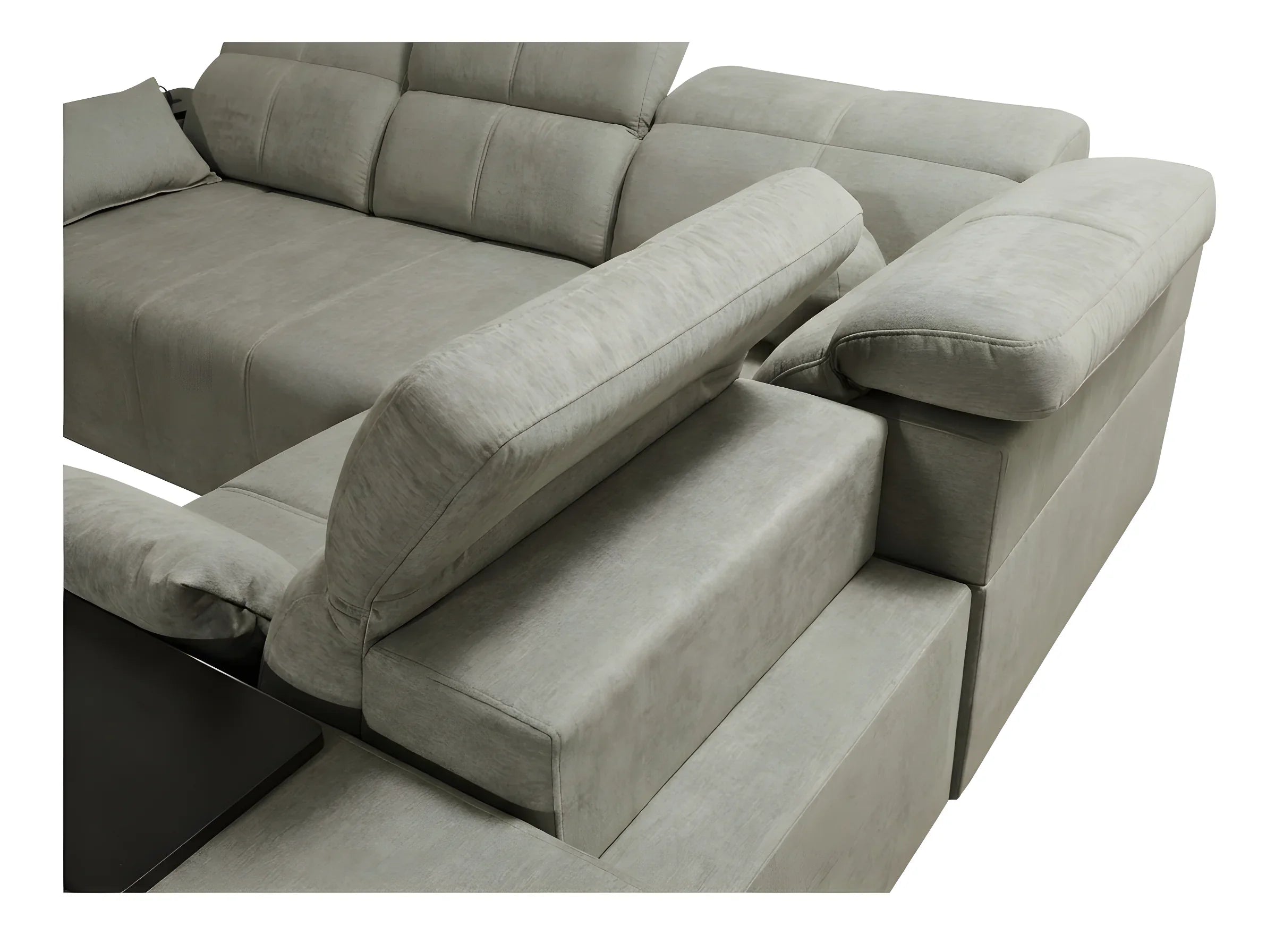
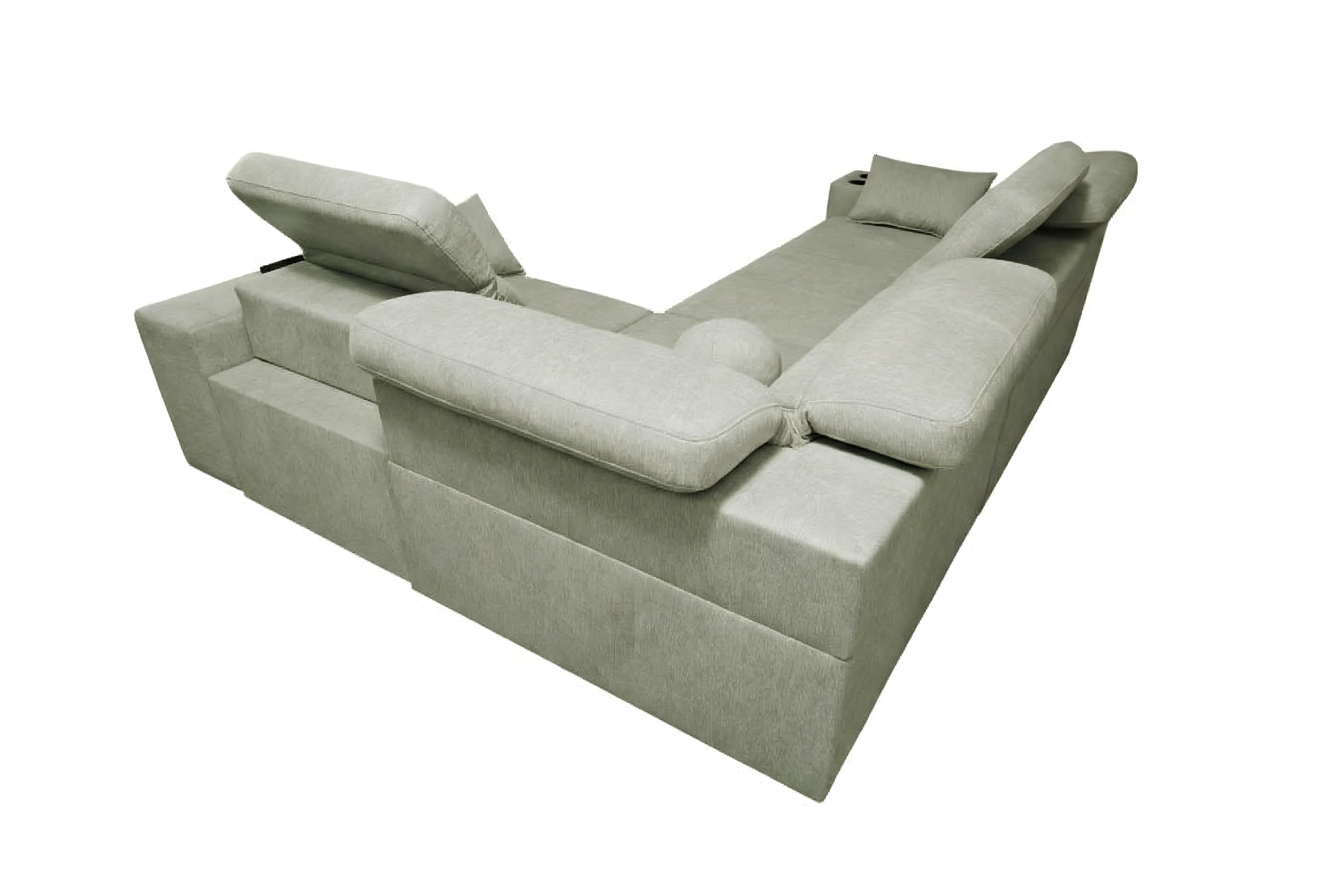
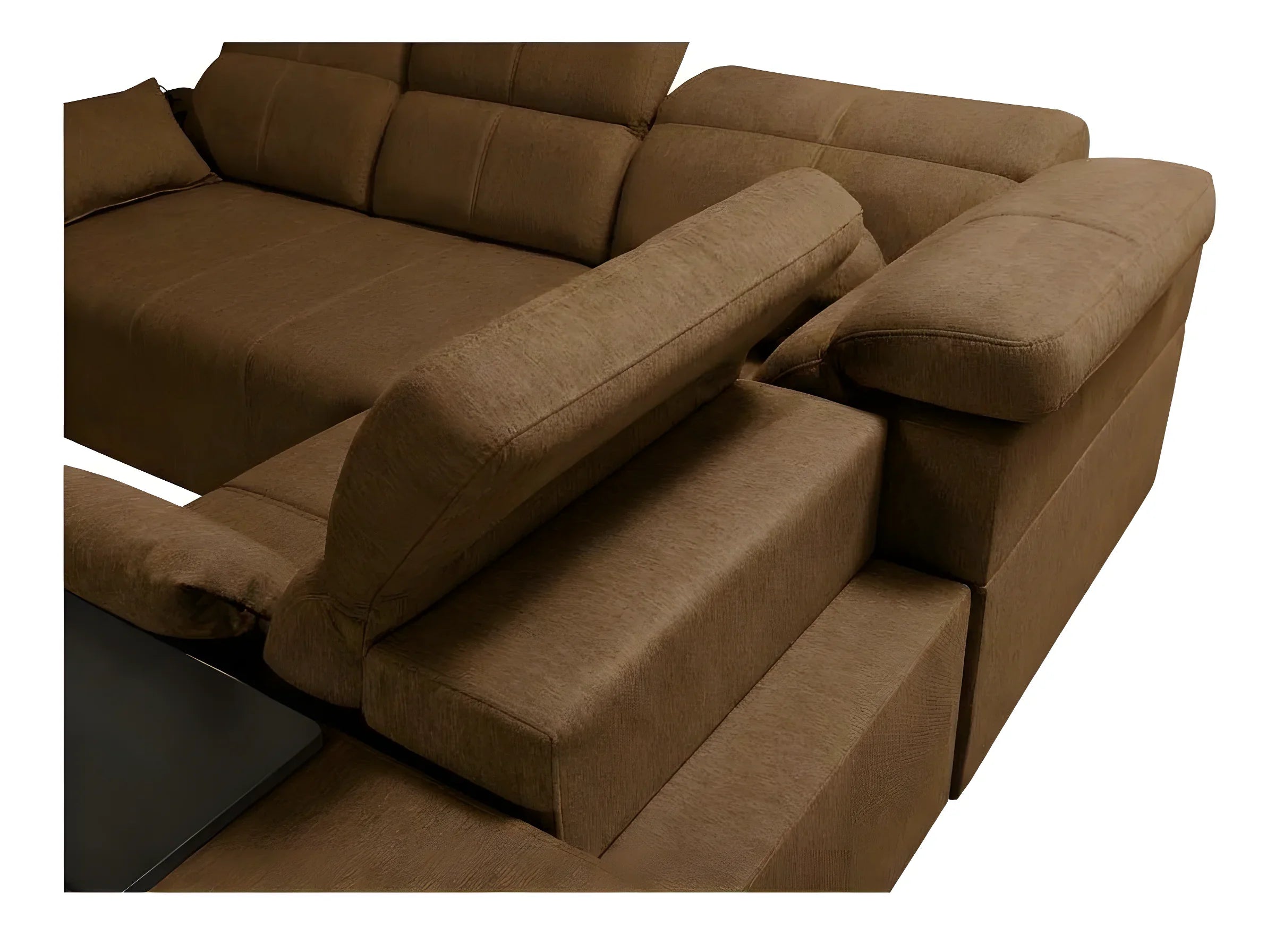
This depends greatly on your furniture. If you have a sofa with a low, very contemporary design, your TV stand will need to be lower than if you opt for a traditional model. For those who like to vary positions, a sofa with adjustable headrest keeps the neck in a neutral alignment, regardless of the height of the screen.
The horizontal viewing angle
To avoid distorting colours and contrasts (unless you have an OLED panel), try to place your main sofa directly in front of the screen. If you often entertain and have a U-shaped sofa, make sure that the side seats do not exceed a 40 degree angle from the centre of the TV. Beyond that, the visual experience degrades significantly.
Choosing the ideal sofa for your TV setup: Ergonomics in service of viewing
Now that you master the theory of distance, it is time to integrate the central element of your comfort: the sofa. Because yes, the type of sofa influences the actual TV distance.
Seat depth and actual distance
A frequent mistake is to measure the distance from wall to wall. However, a sofa with a wide seat or deep can advance your viewing position by 20 to 30 centimetres compared to a compact model. If you are at the limit of the minimum recommended distance for your 4K screen, opting for a very deep model could place you too close to the image.
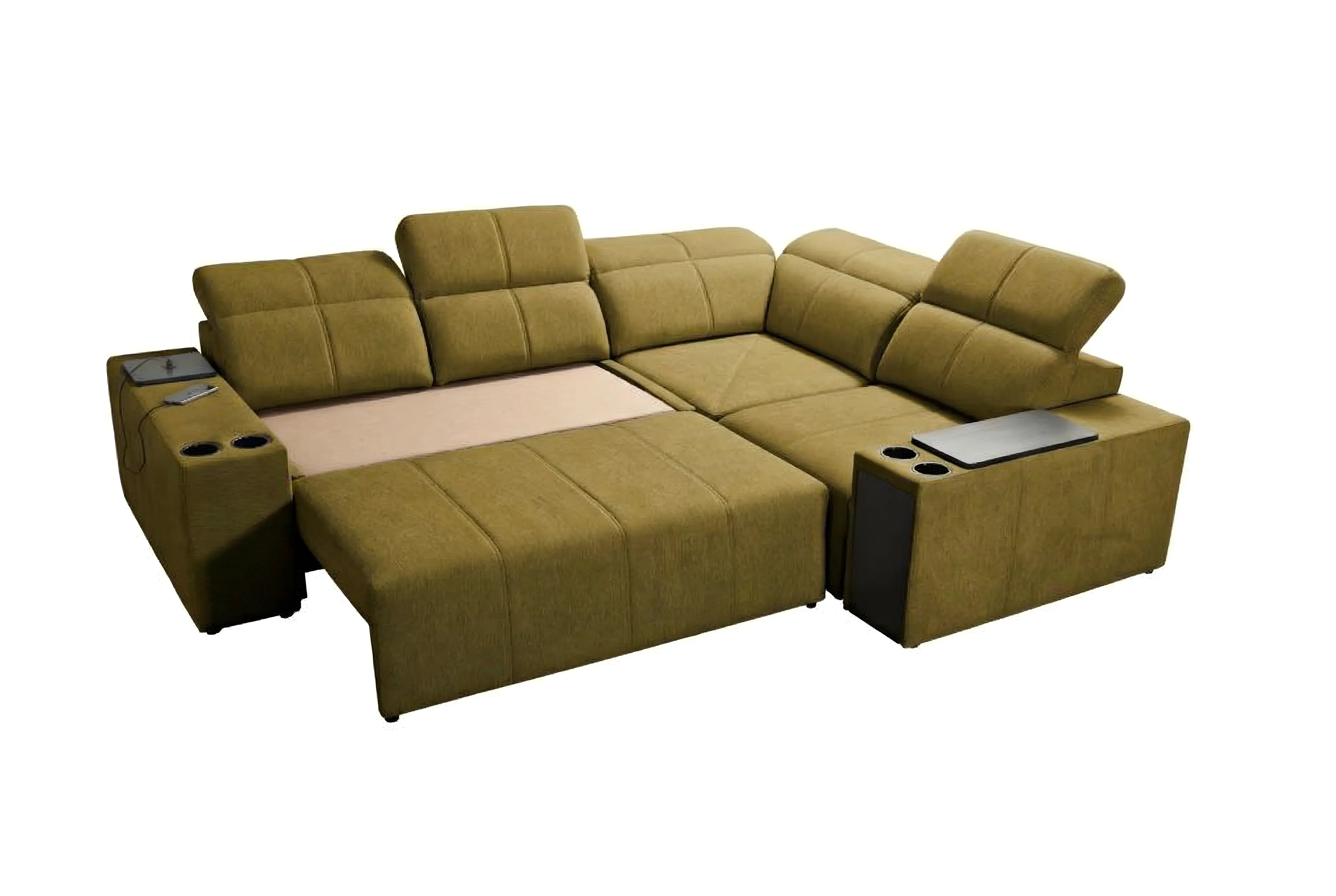
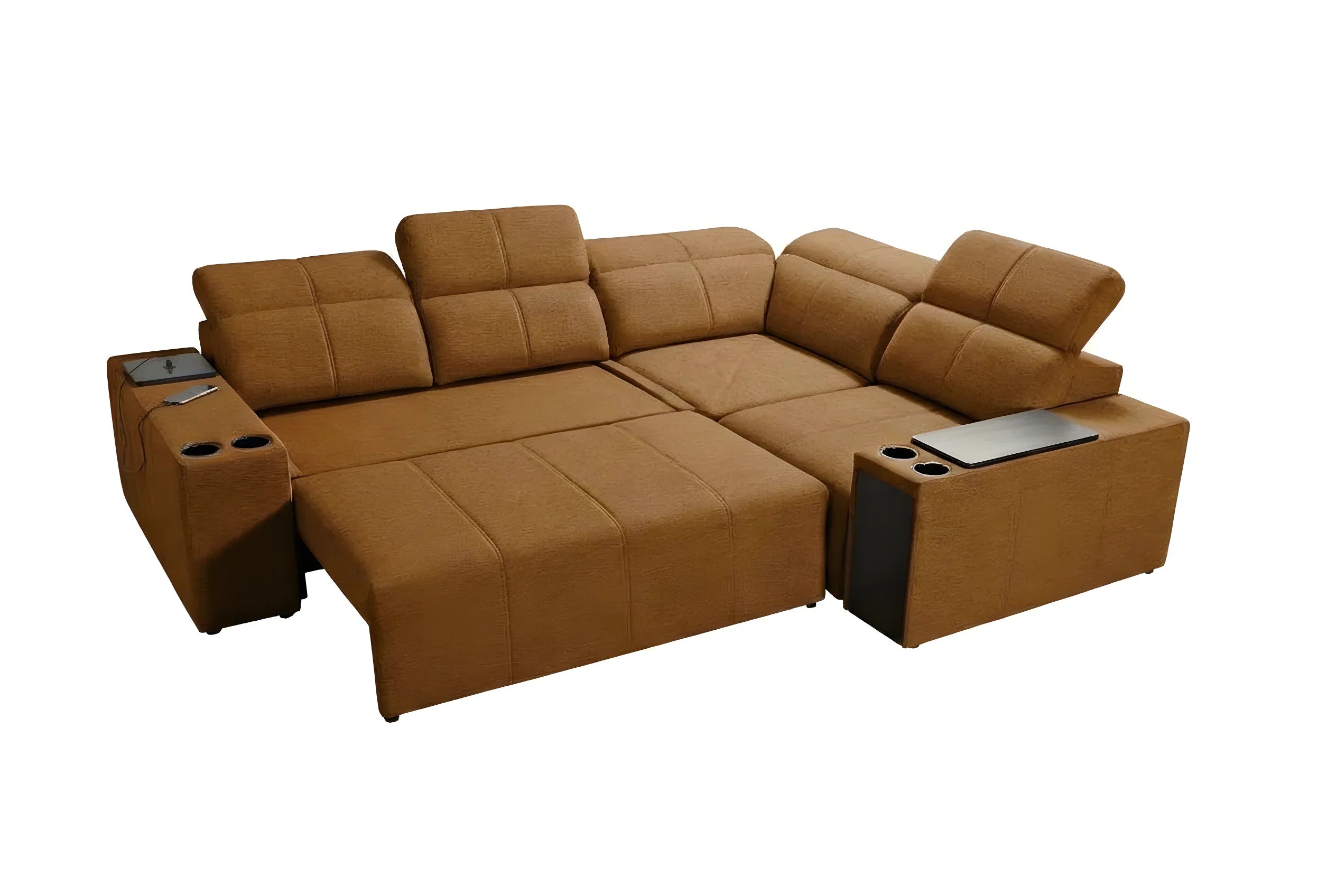
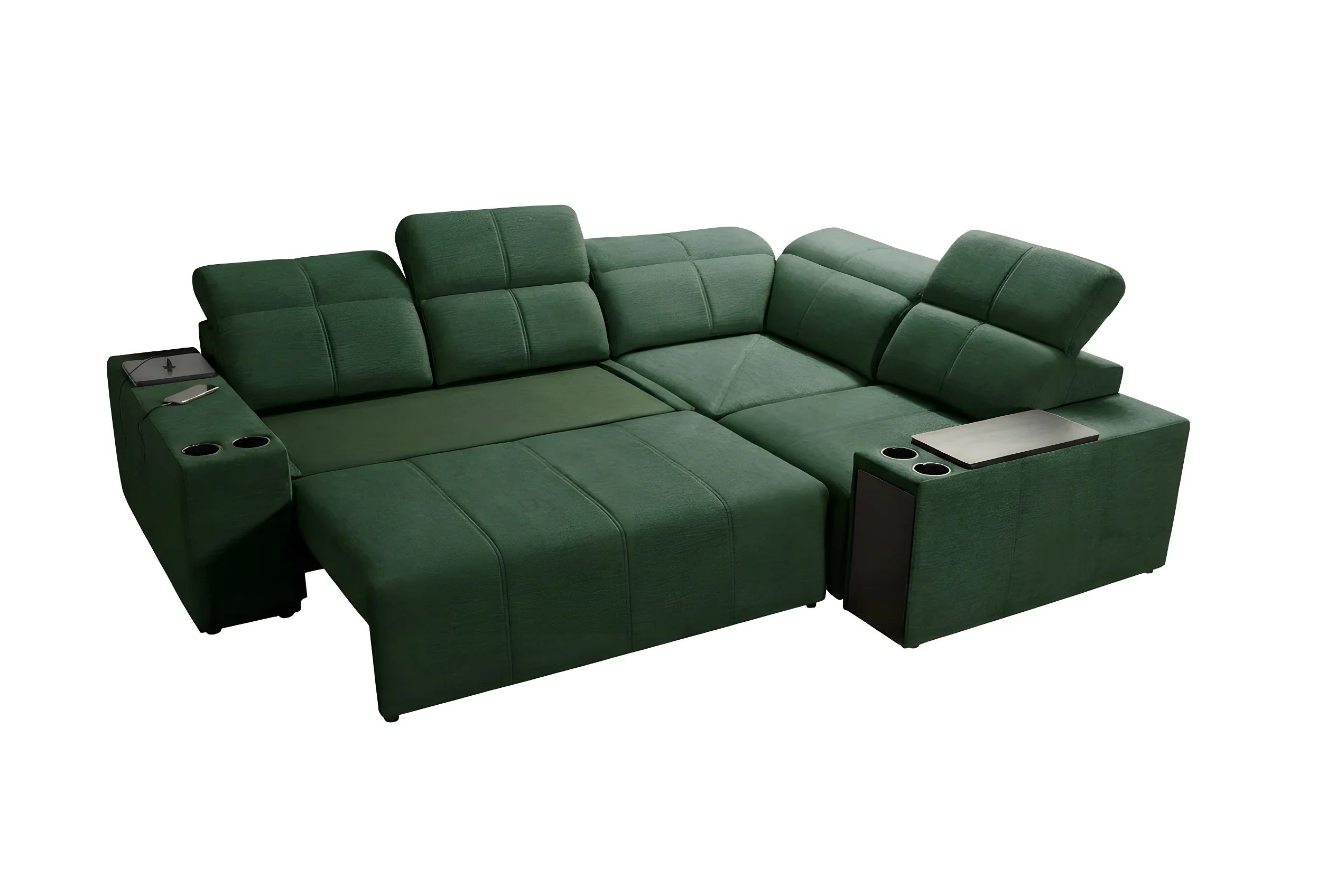
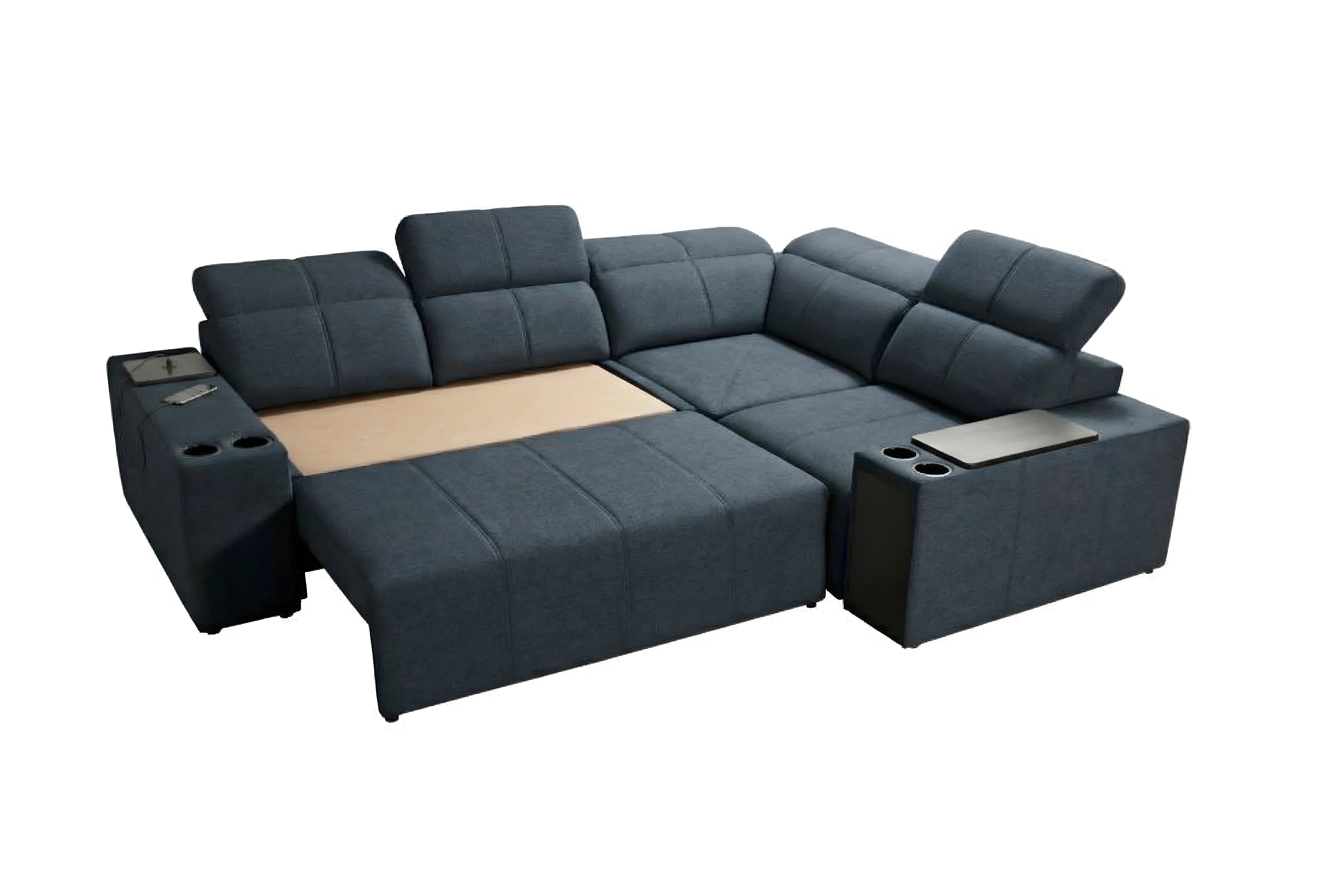
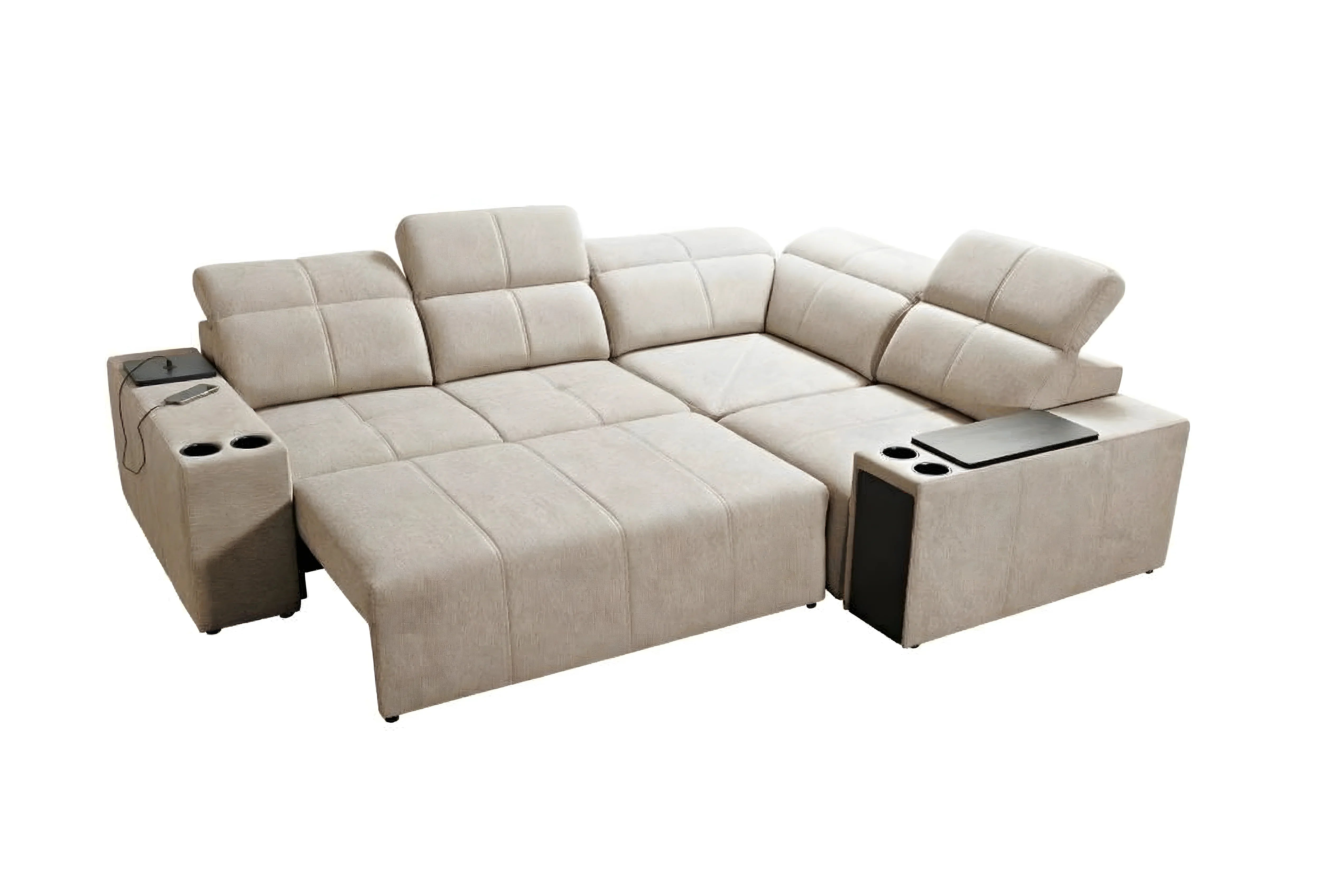
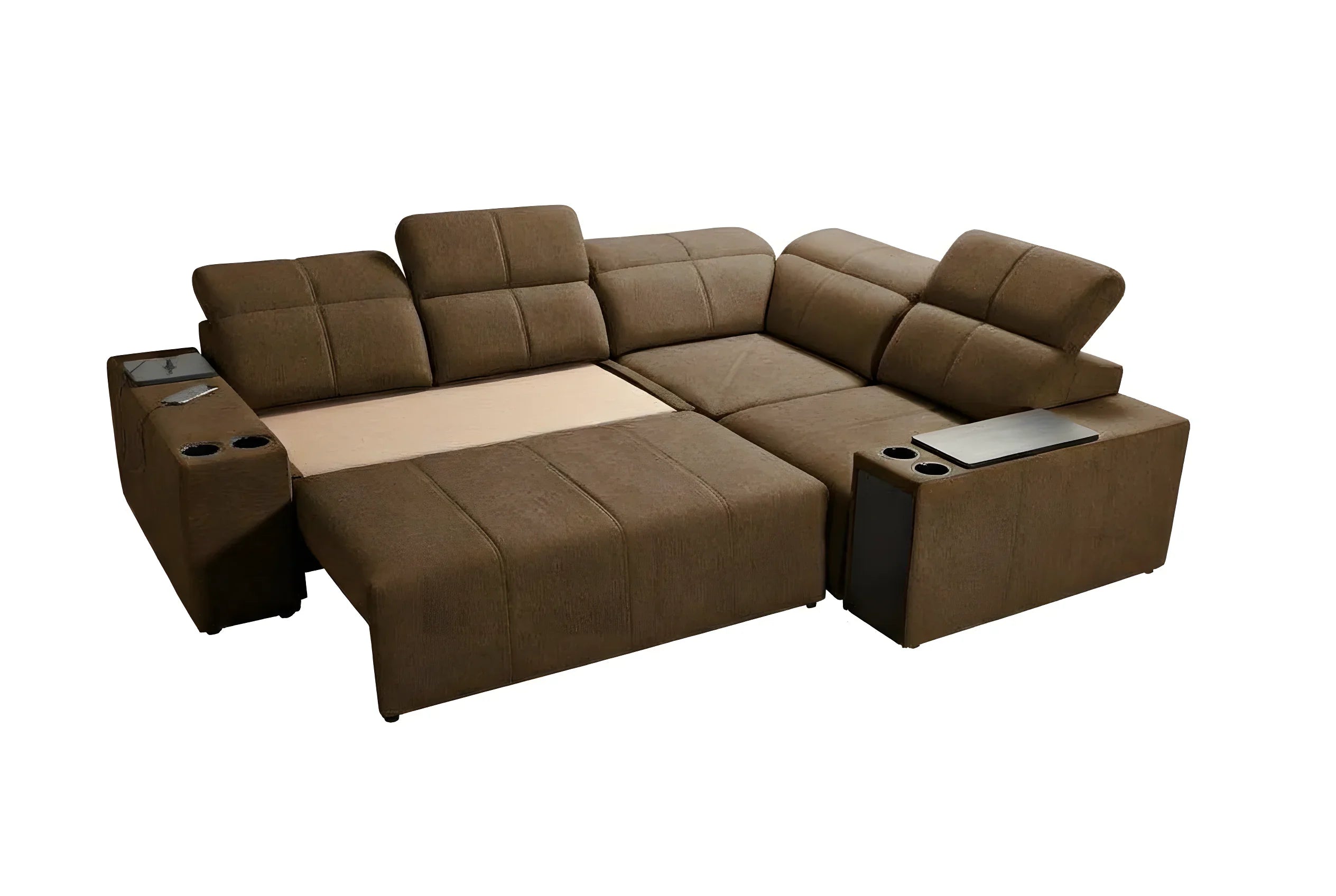
Conversely, if your living room is huge and your TV seems lost in the distance, a model with advance-recede backrest is an ingenious solution. A sofa with adjustable seat allows you to modulate your physical distance depending on whether you are watching a film (immersion mode) or having aperitifs (conviviality mode).
The importance of posture with relaxation sofas
The distance calculation changes slightly if you use a relax sofa. In the reclined position, your head moves away from the television and the viewing angle changes. The gaze naturally falls more downward.
- In the upright seated position: You are at the standard calculated distance.
- In the relax position (semi-reclined): Your eyes move back 10 to 15 cm and lower. It is therefore often preferable to have a slightly larger screen or an orientable wall mount (tiltable downwards) to compensate for this angle.
Optimising space with modularity
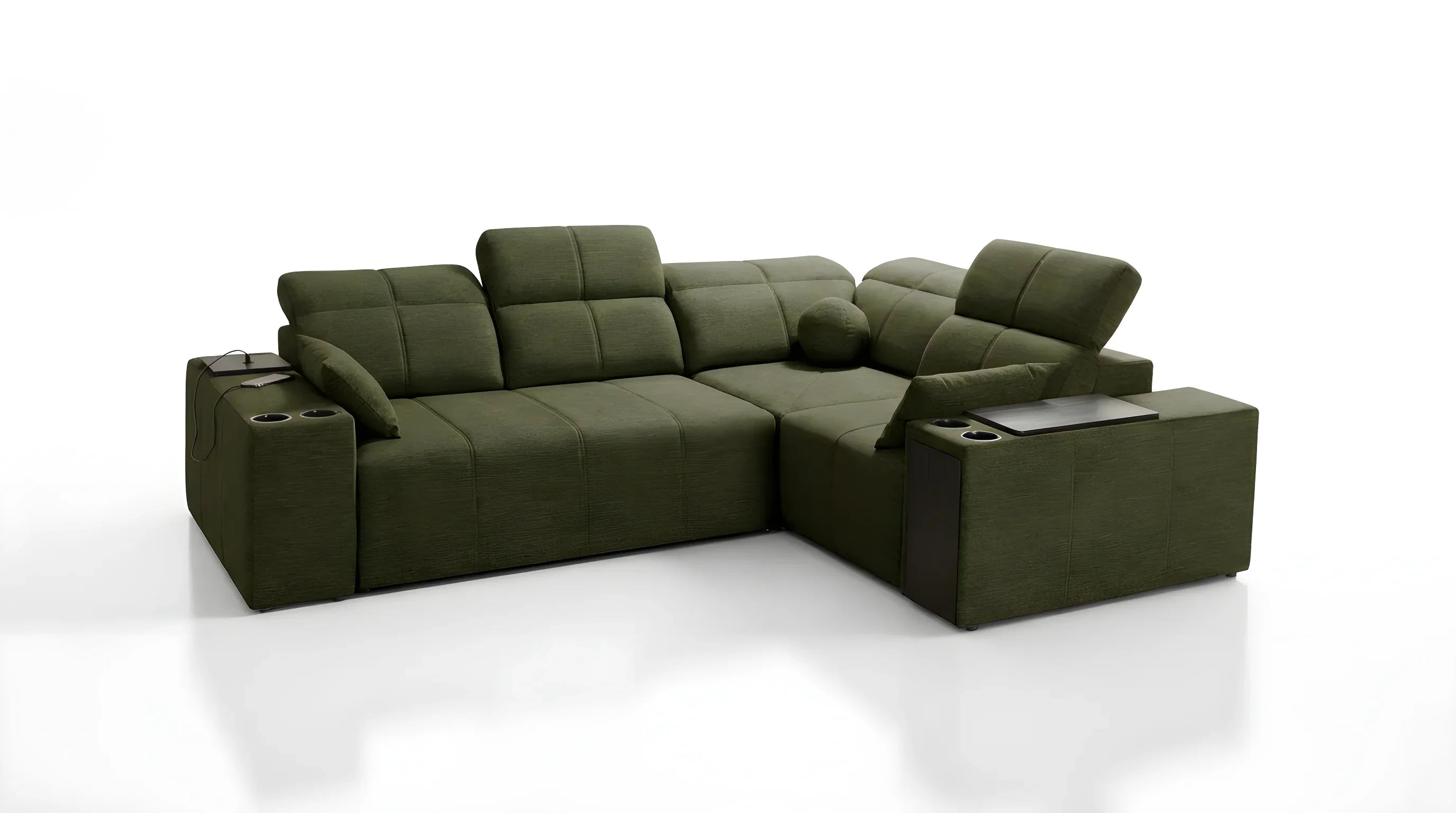
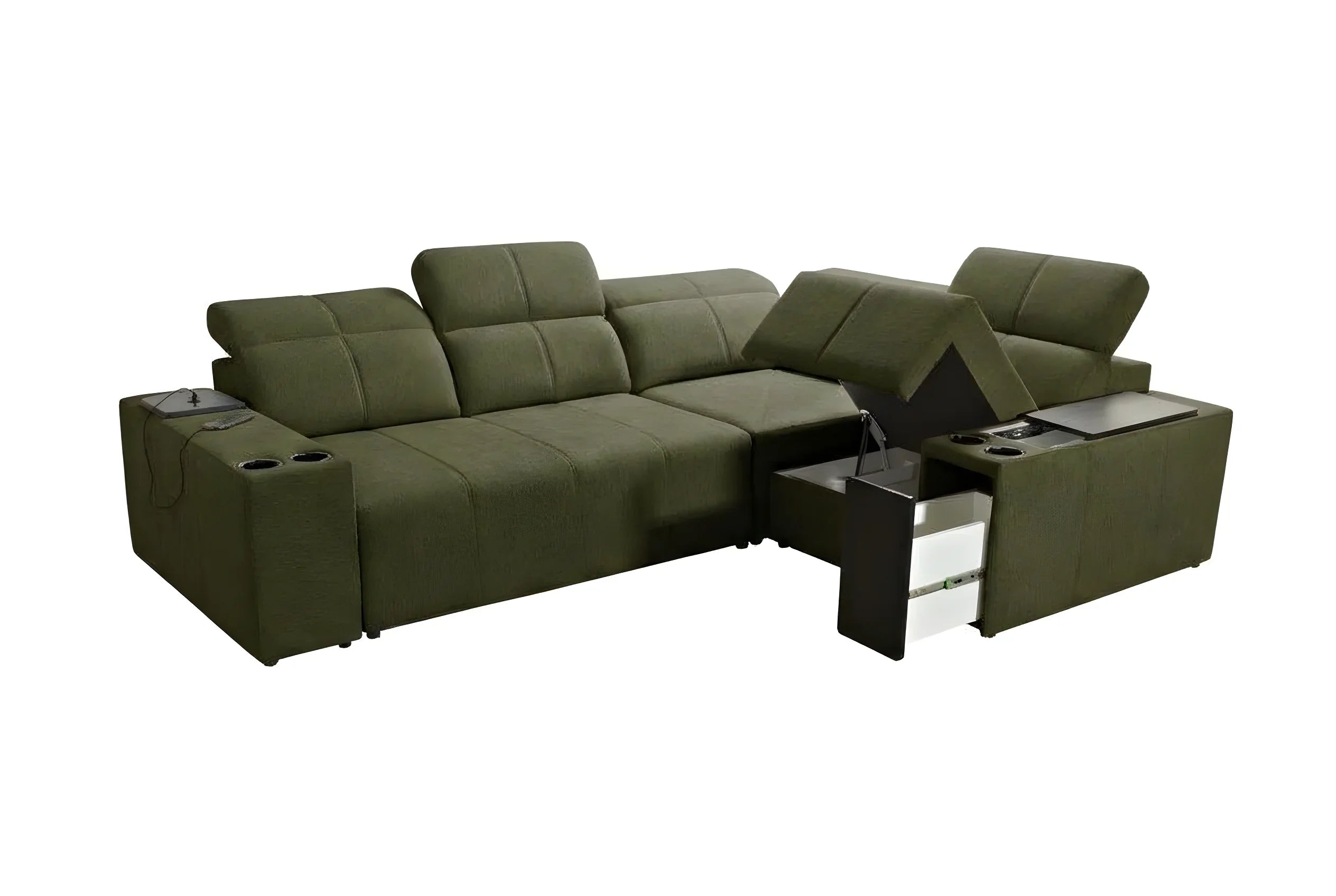
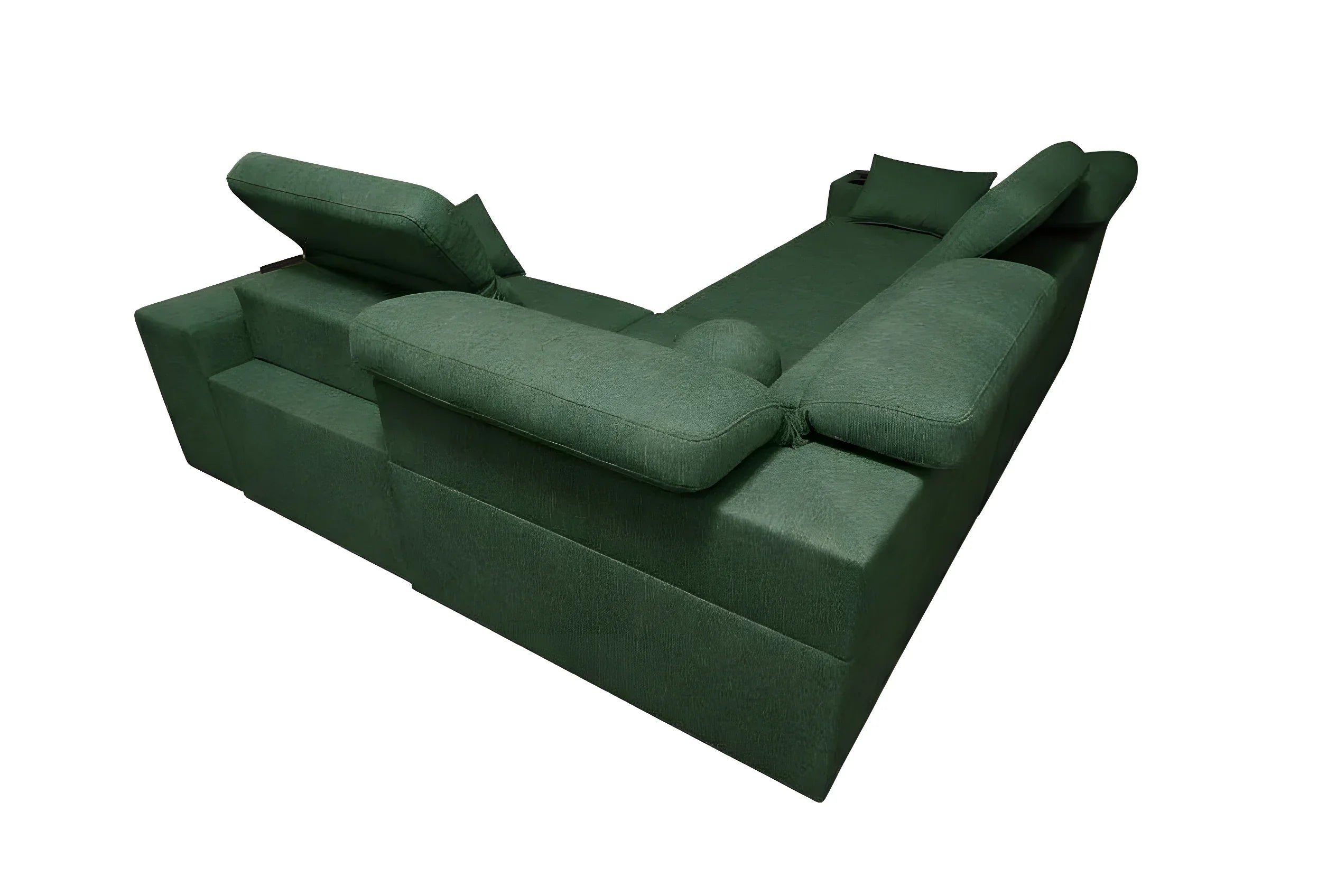
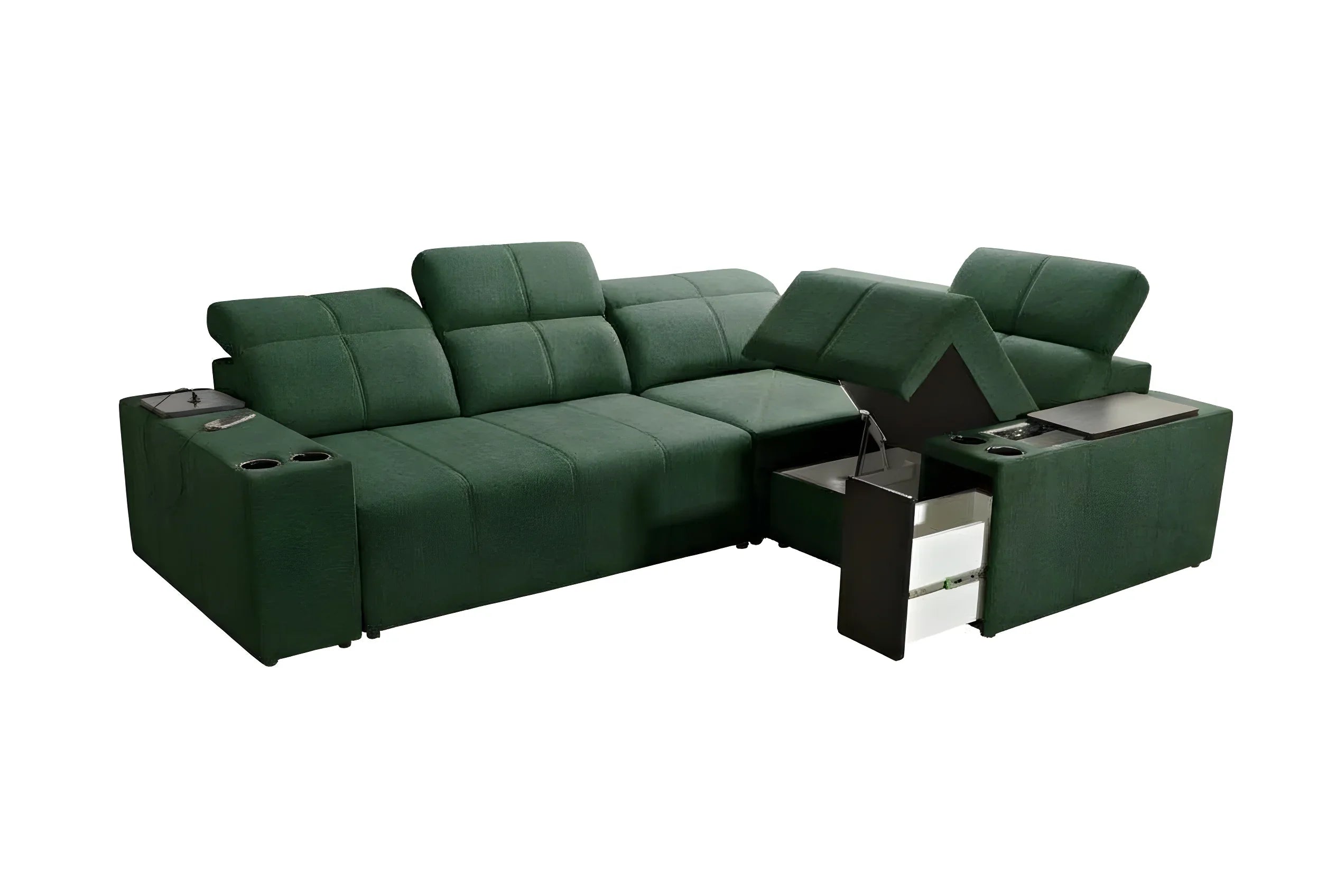
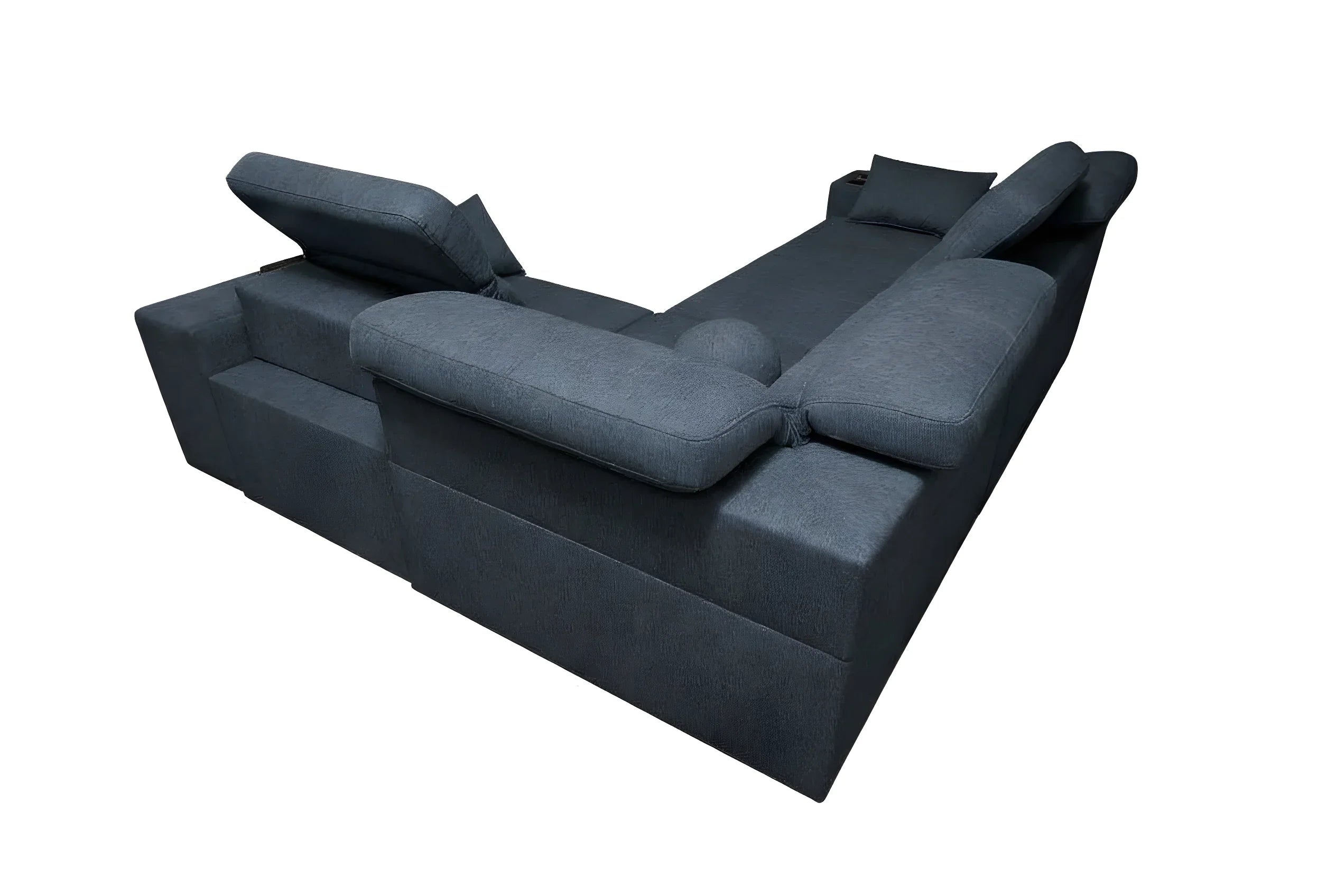
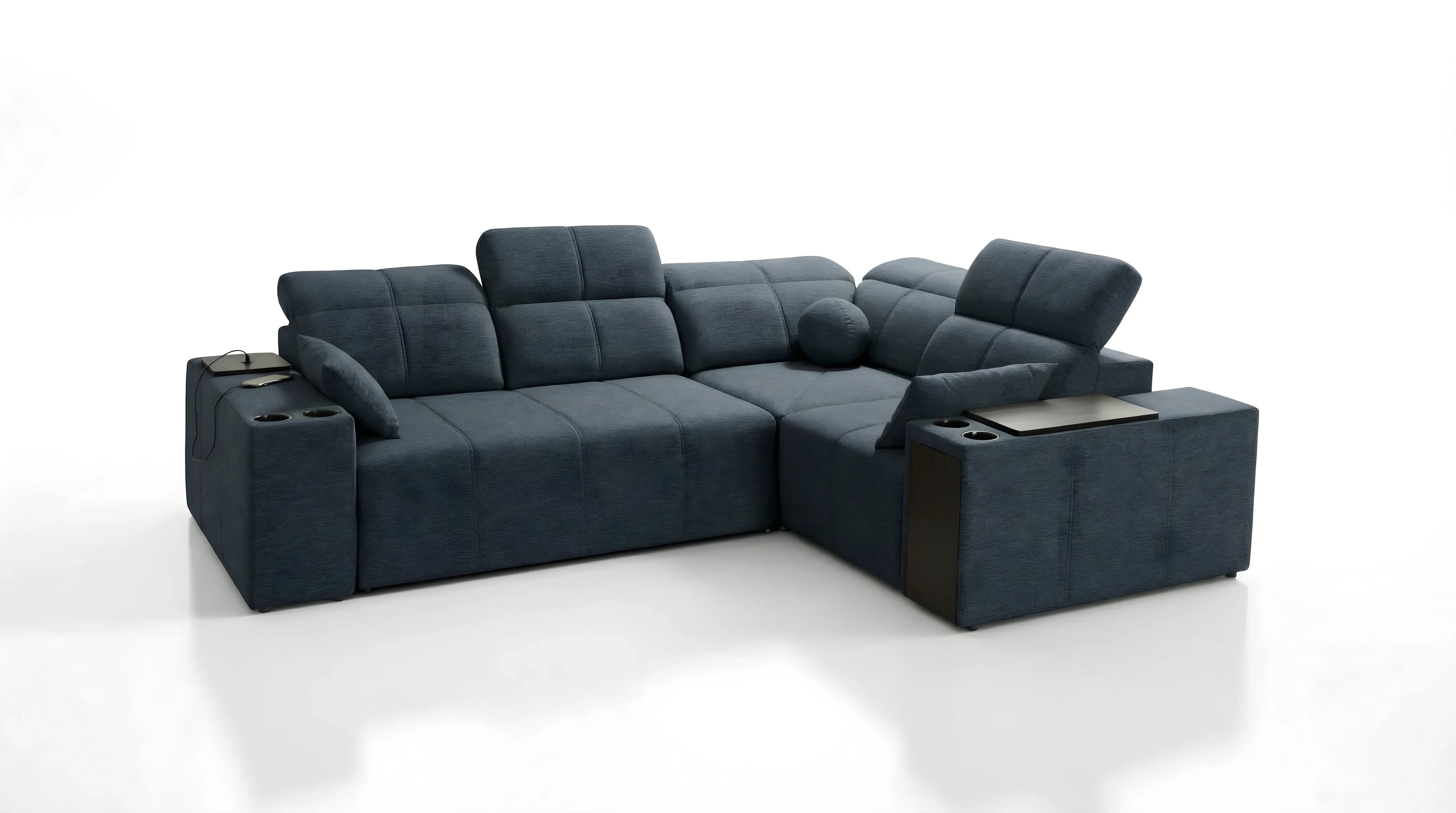
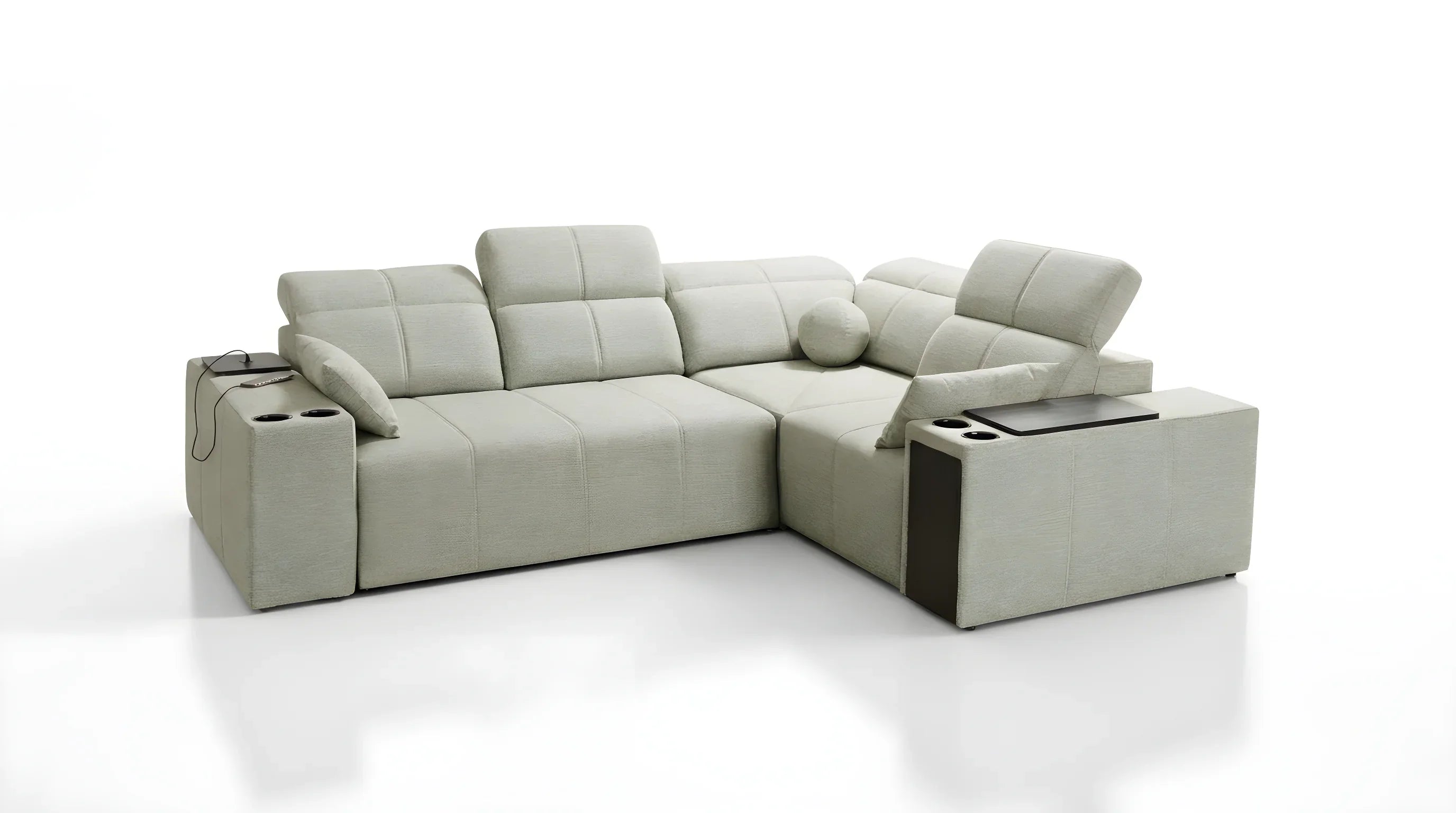
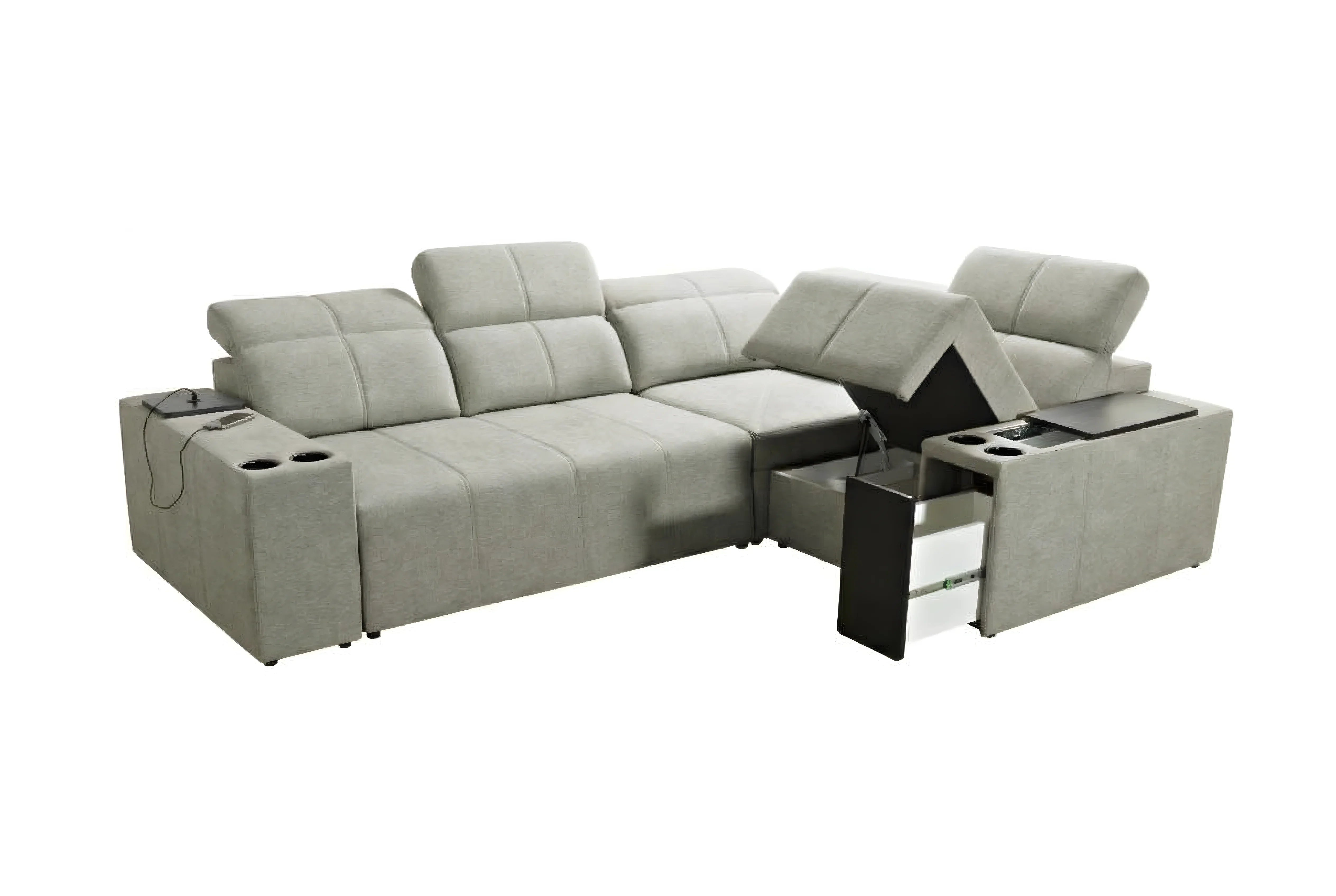
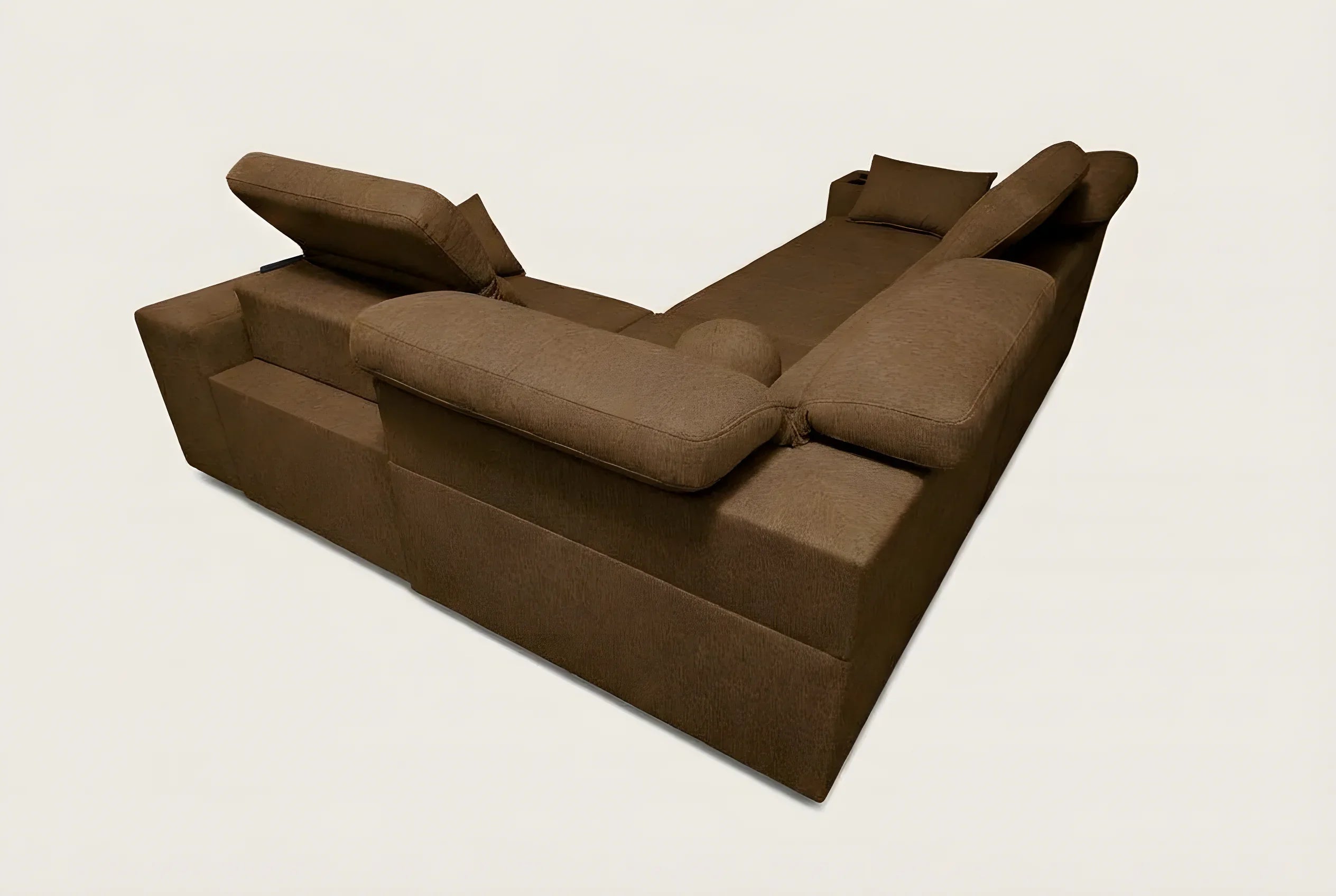
For atypical configurations where distance is difficult to respect (long room, L-shaped living room), the modular sofa is the queen solution. It allows you to compose your seat piece by piece to bypass architectural constraints while respecting the ideal viewing axis. You can thus create a perfect viewing zone without sacrificing circulation in the room.
Adapt the TV size to your living room (and not the other way around)
It is tempting to buy the largest screen possible, but if your room does not allow the necessary distance, the investment will be counterproductive. What TV size for living room to choose? It all depends on the available surface.
For small spaces and studios
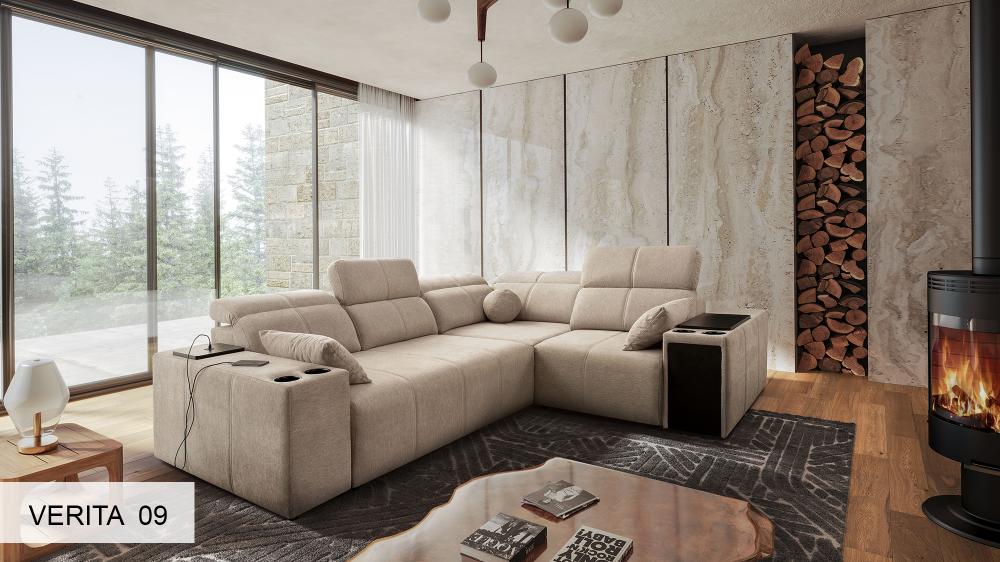
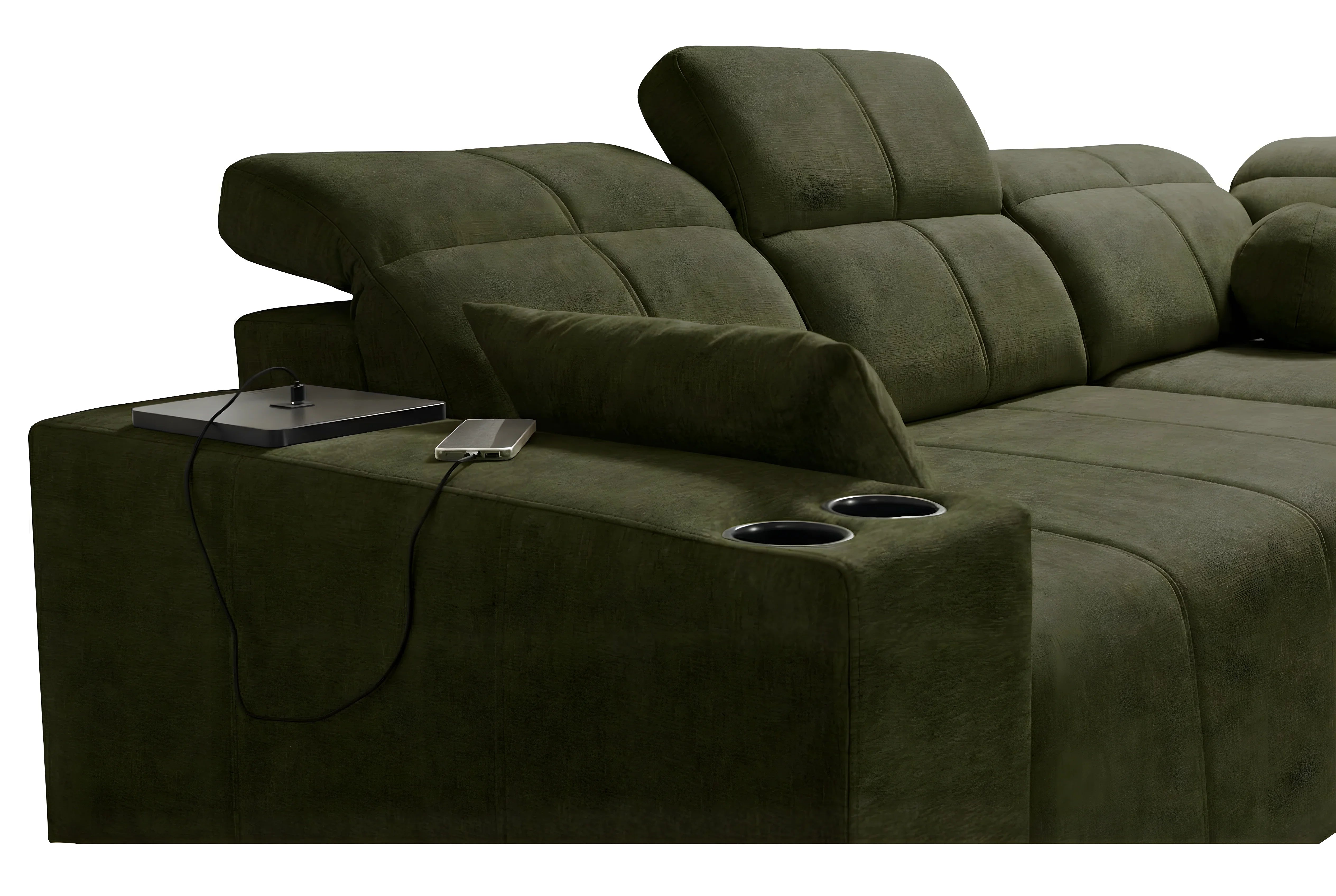
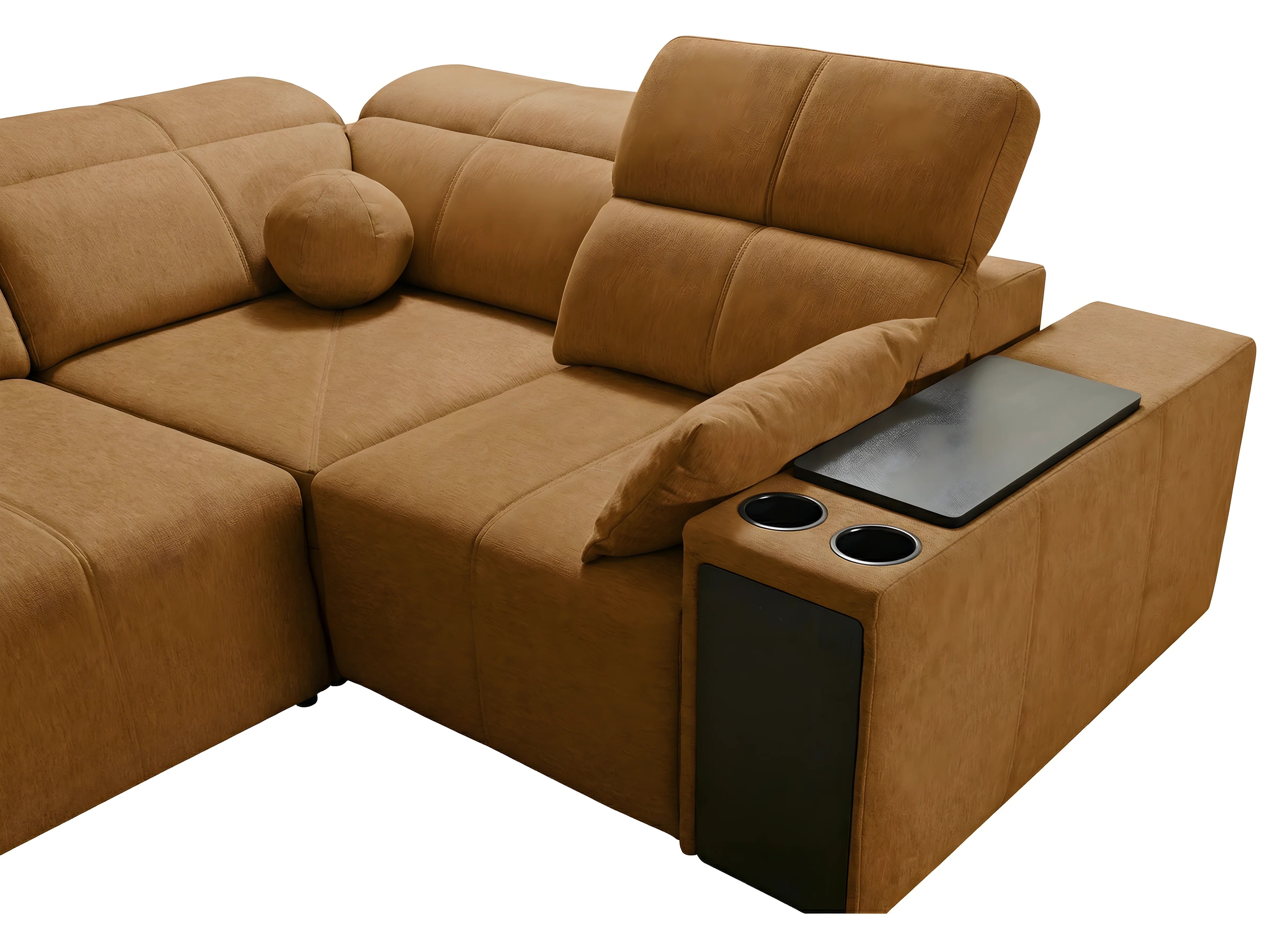
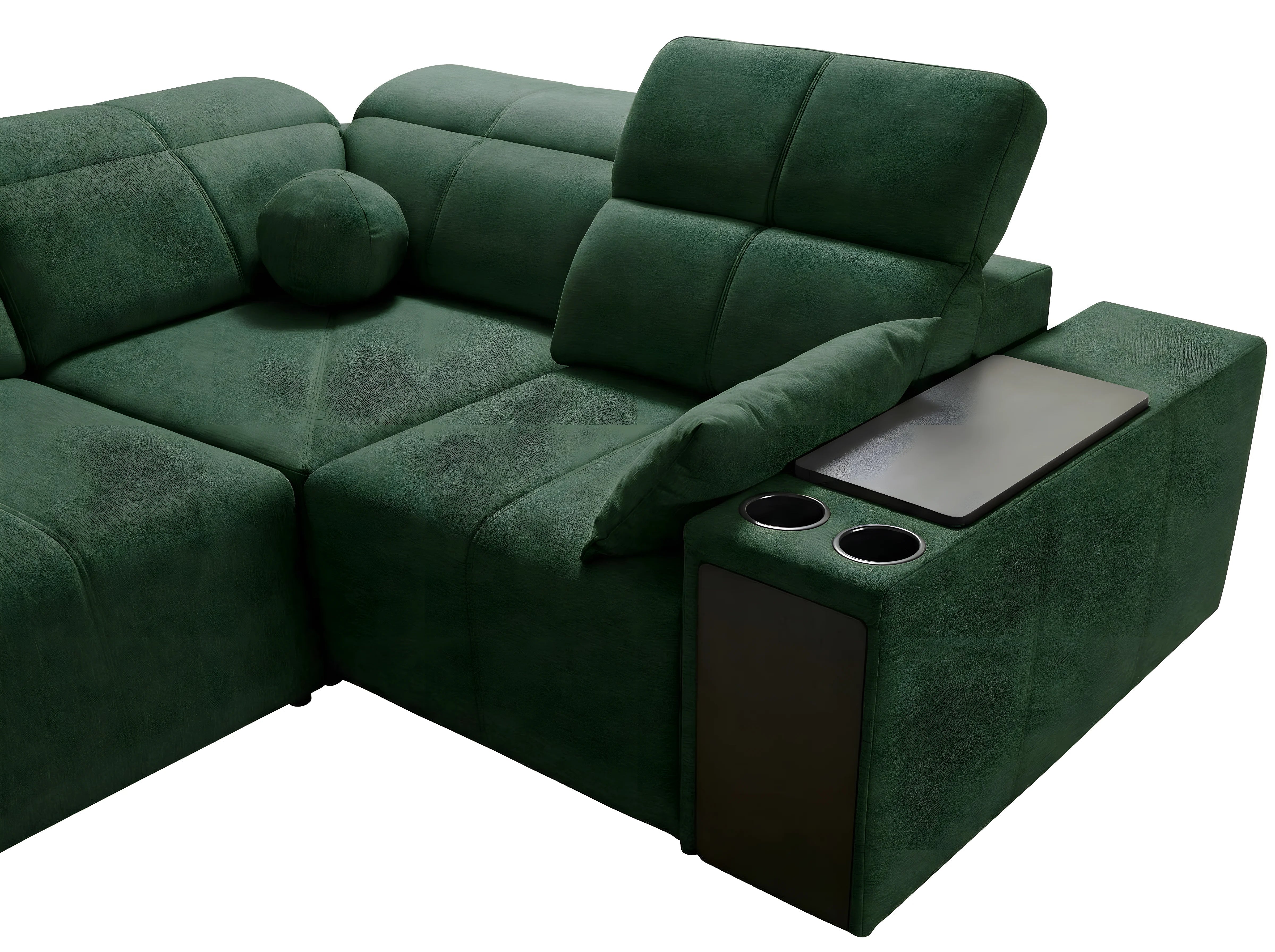
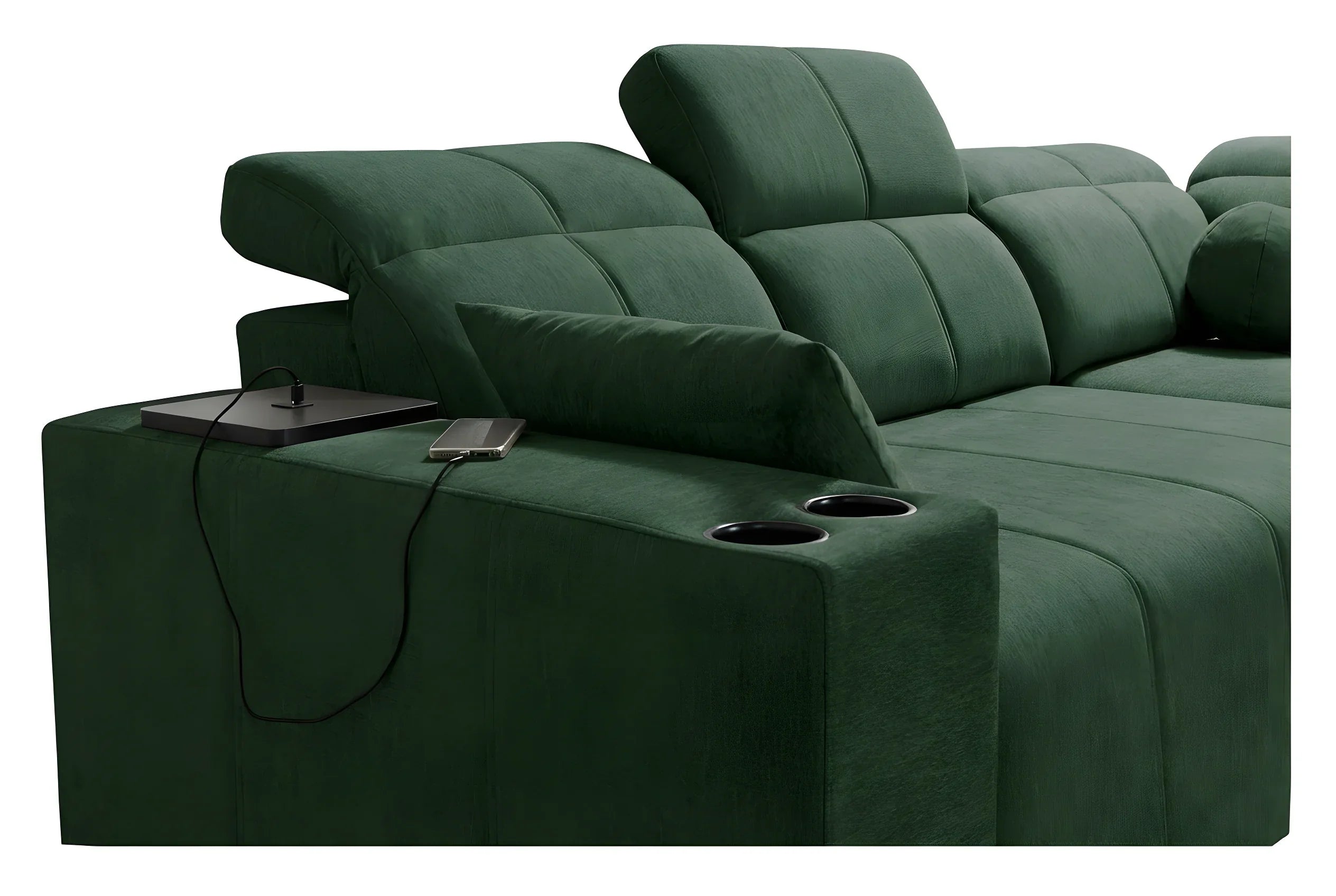
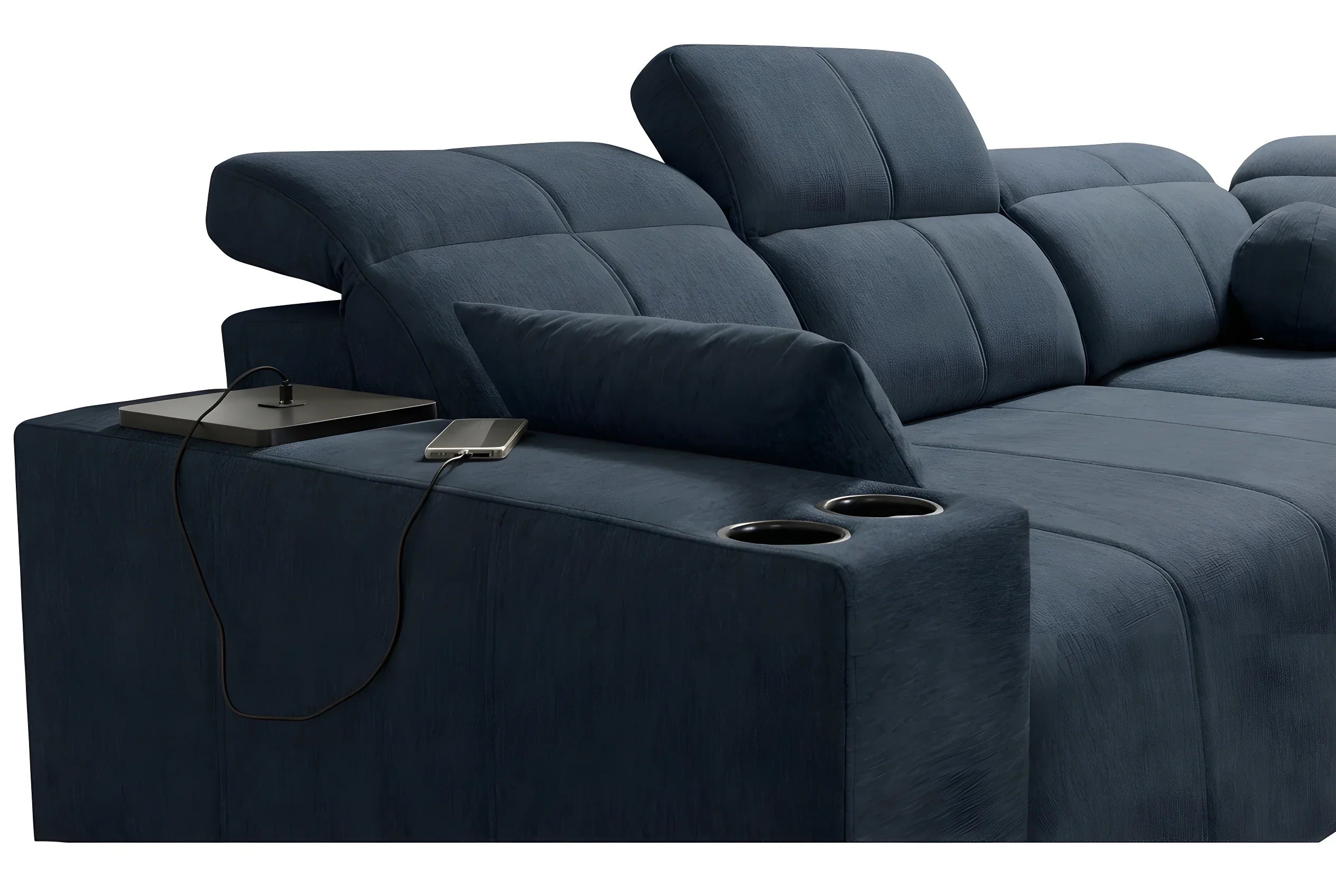
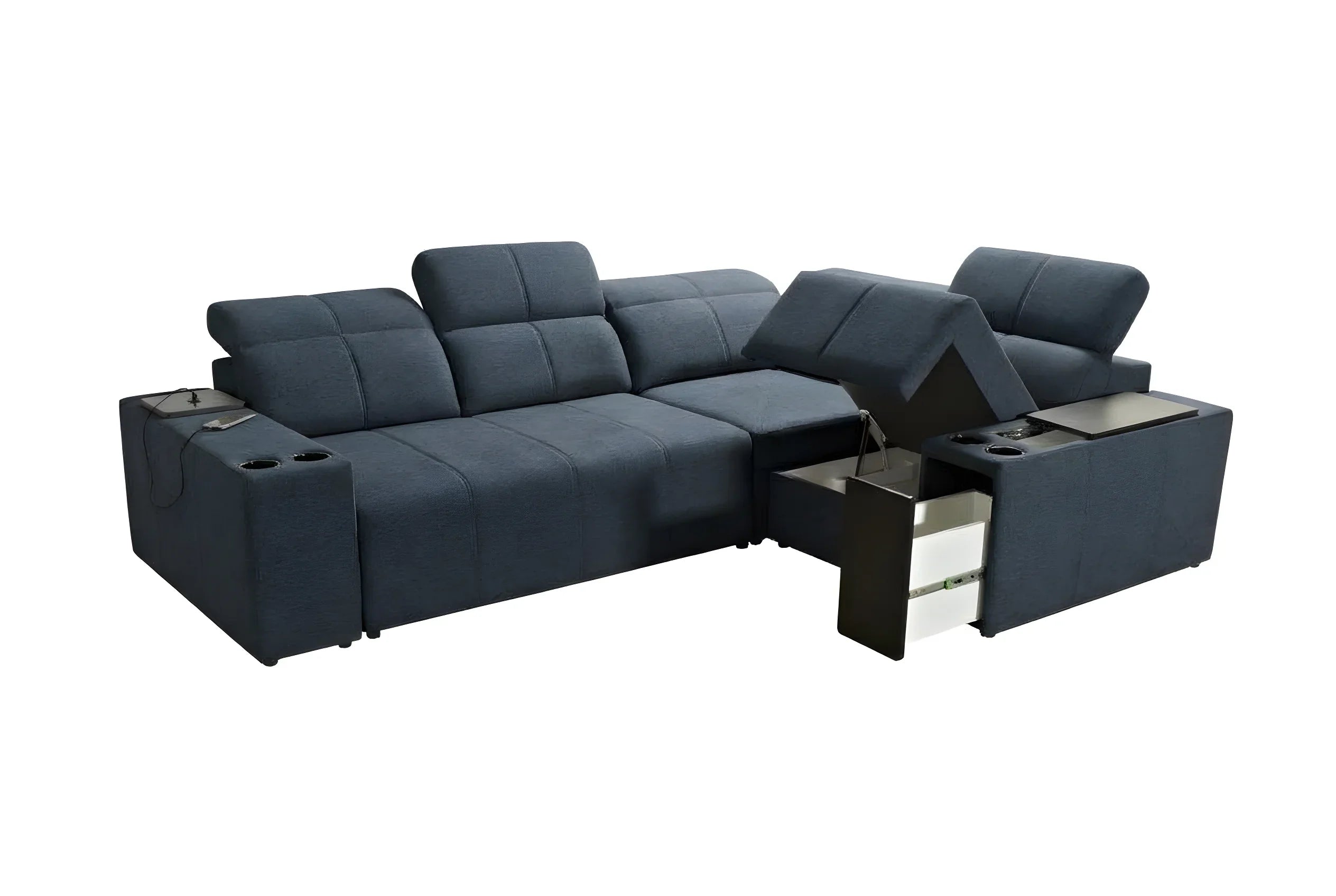
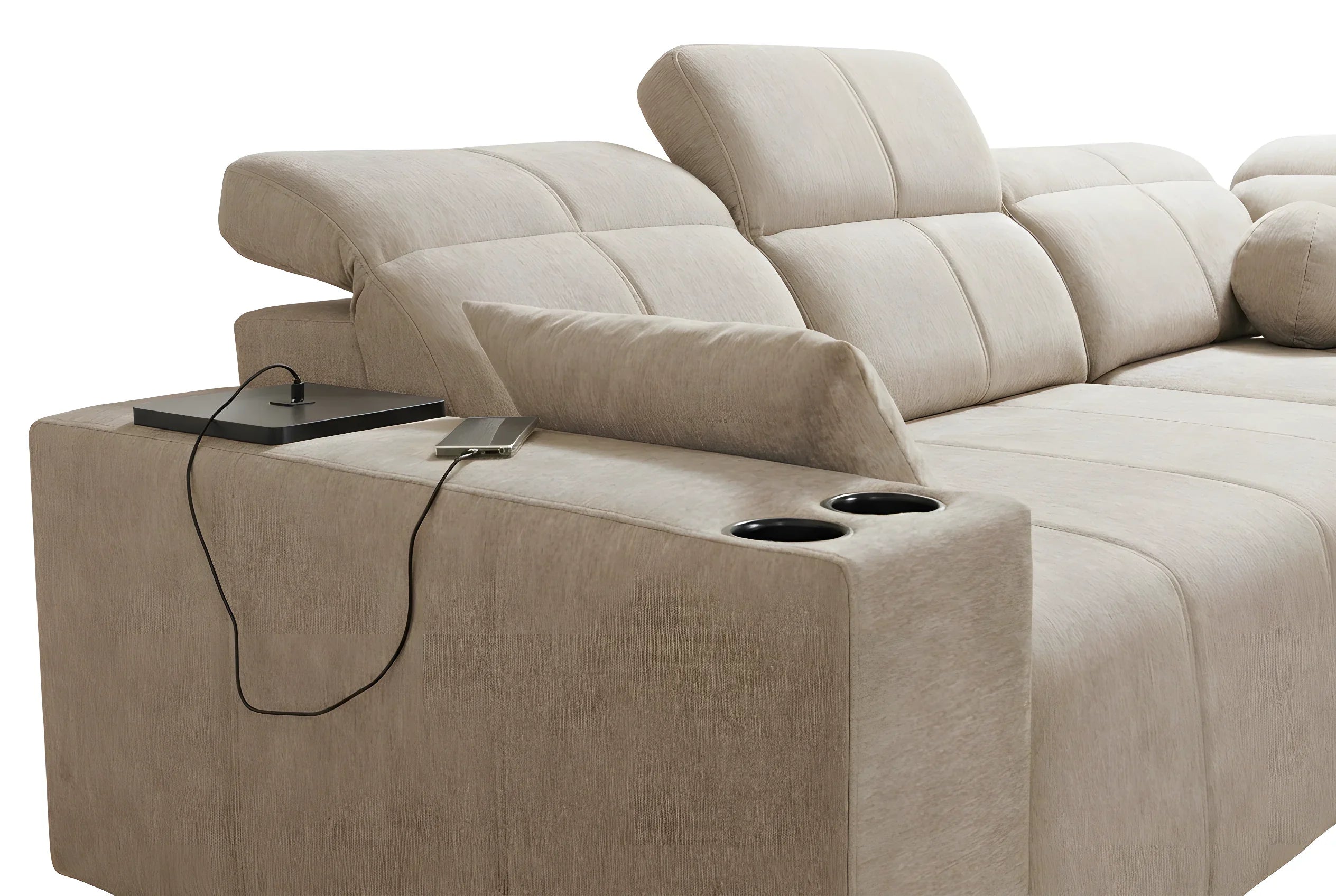
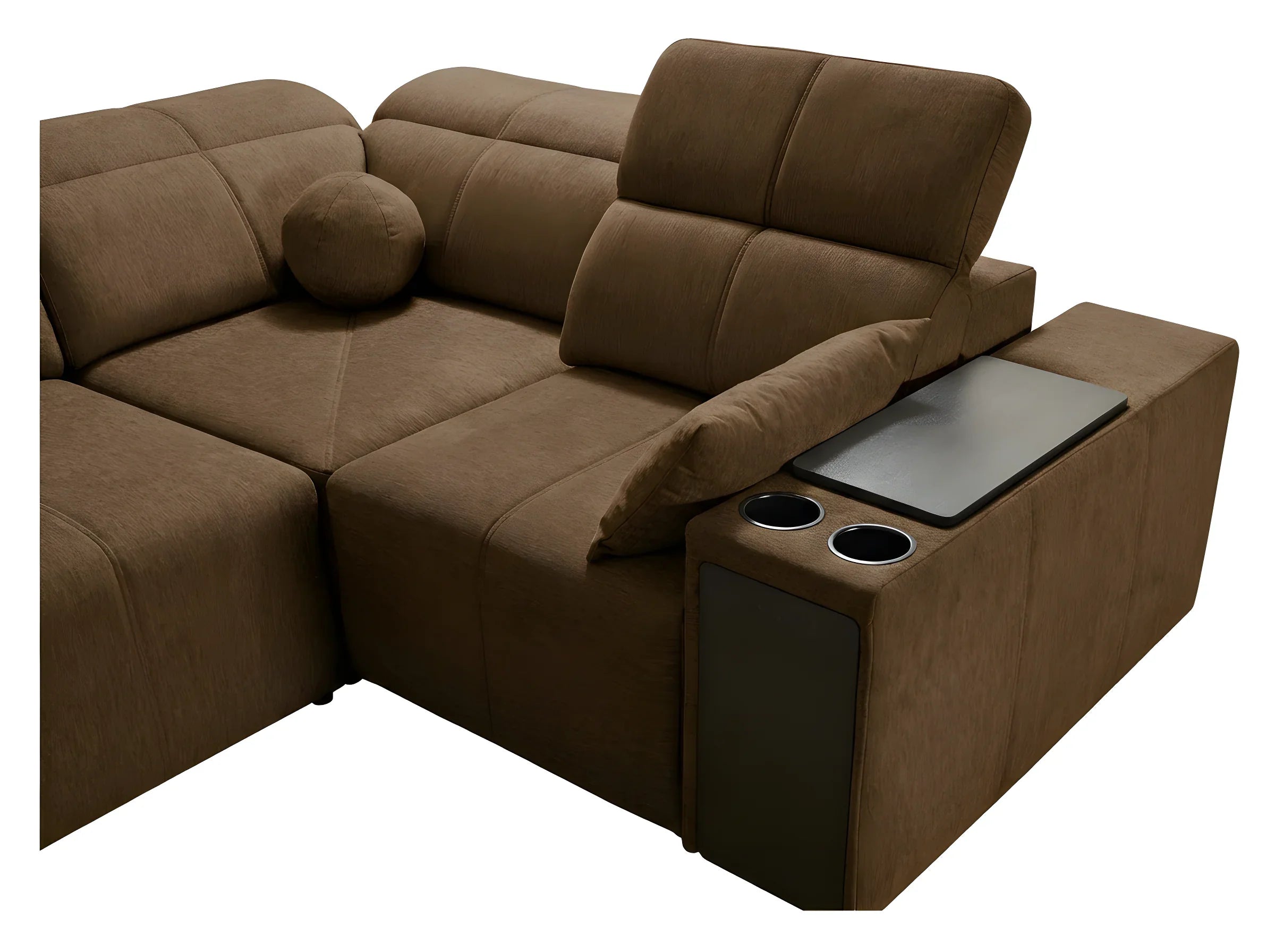
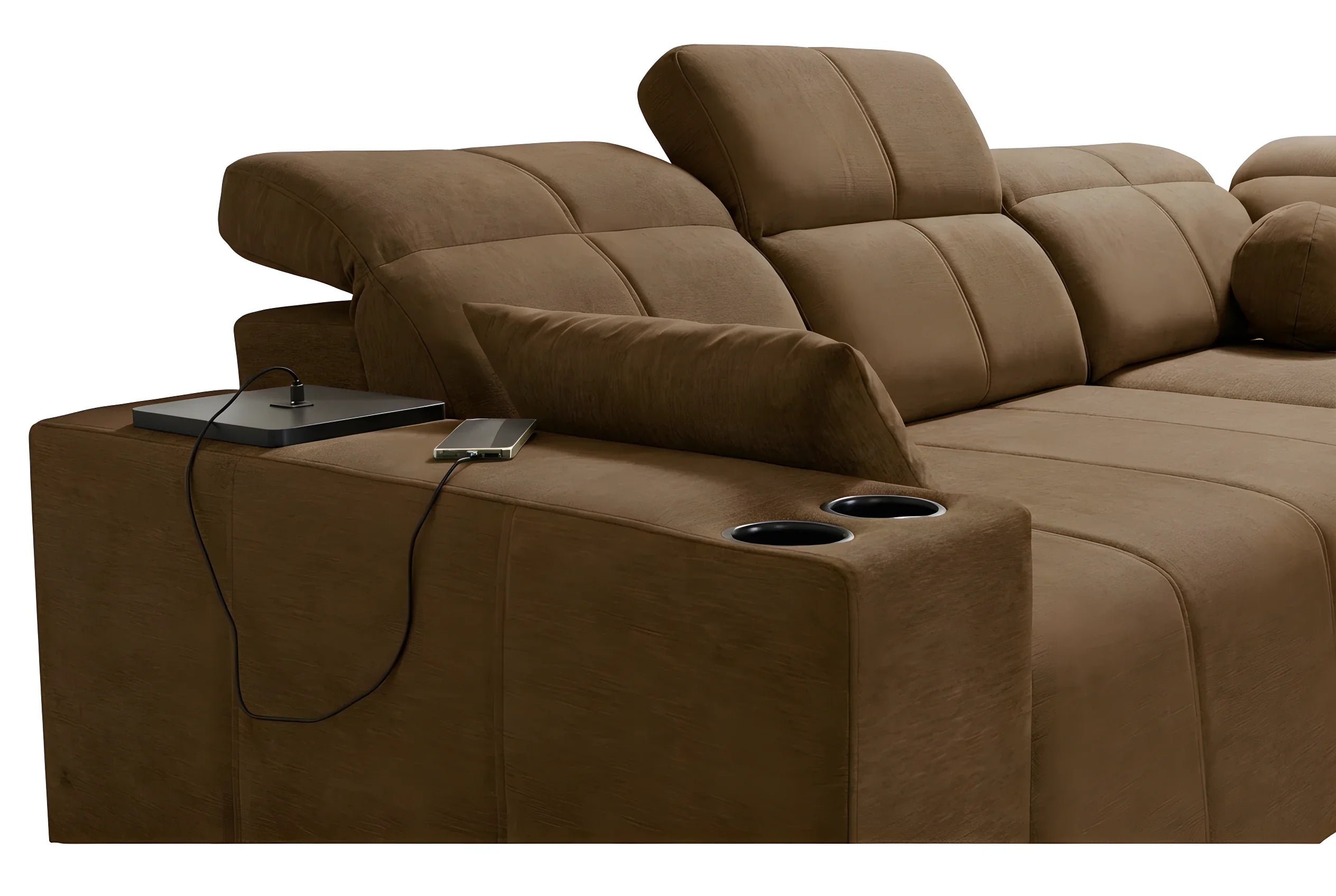
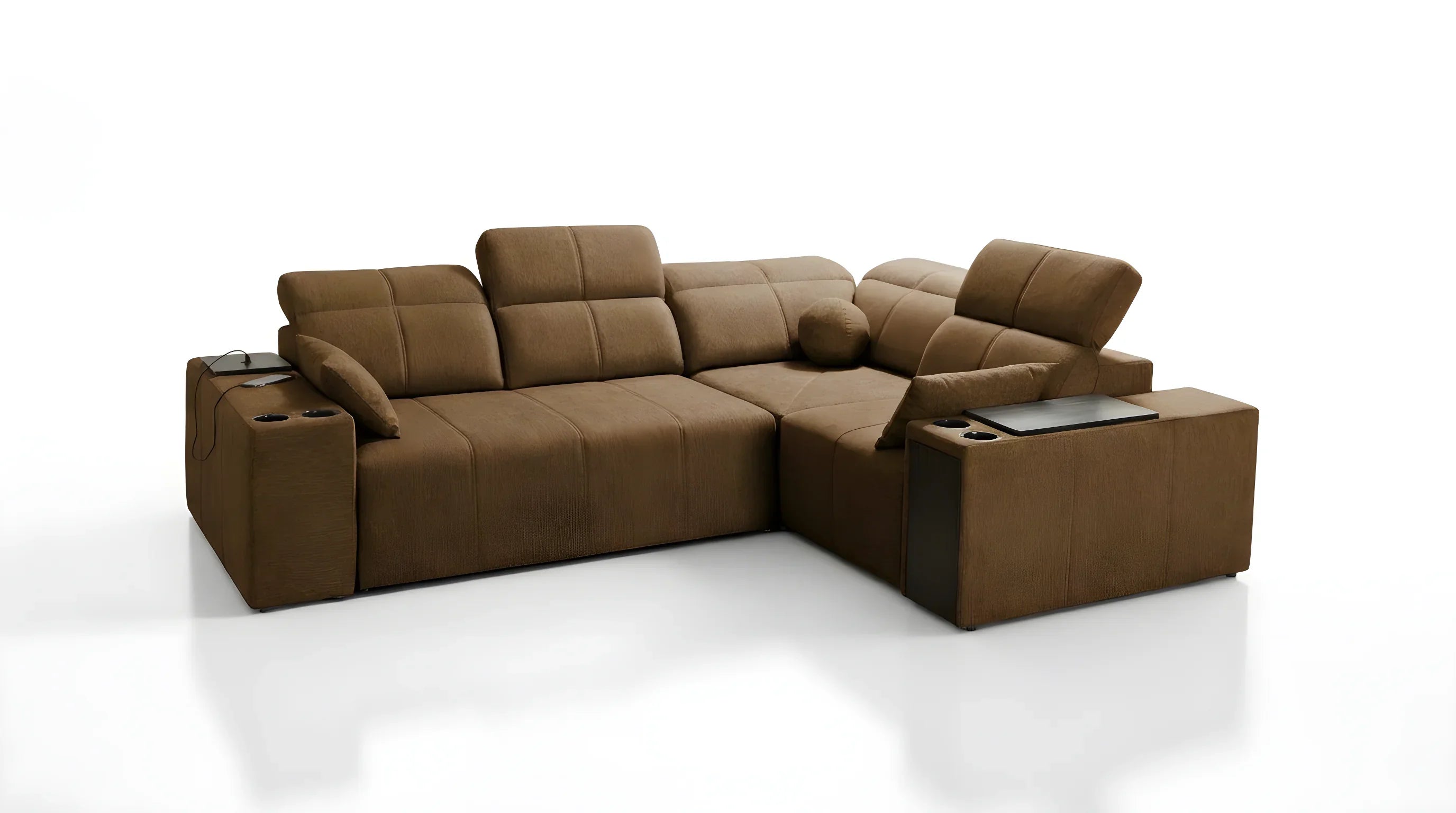
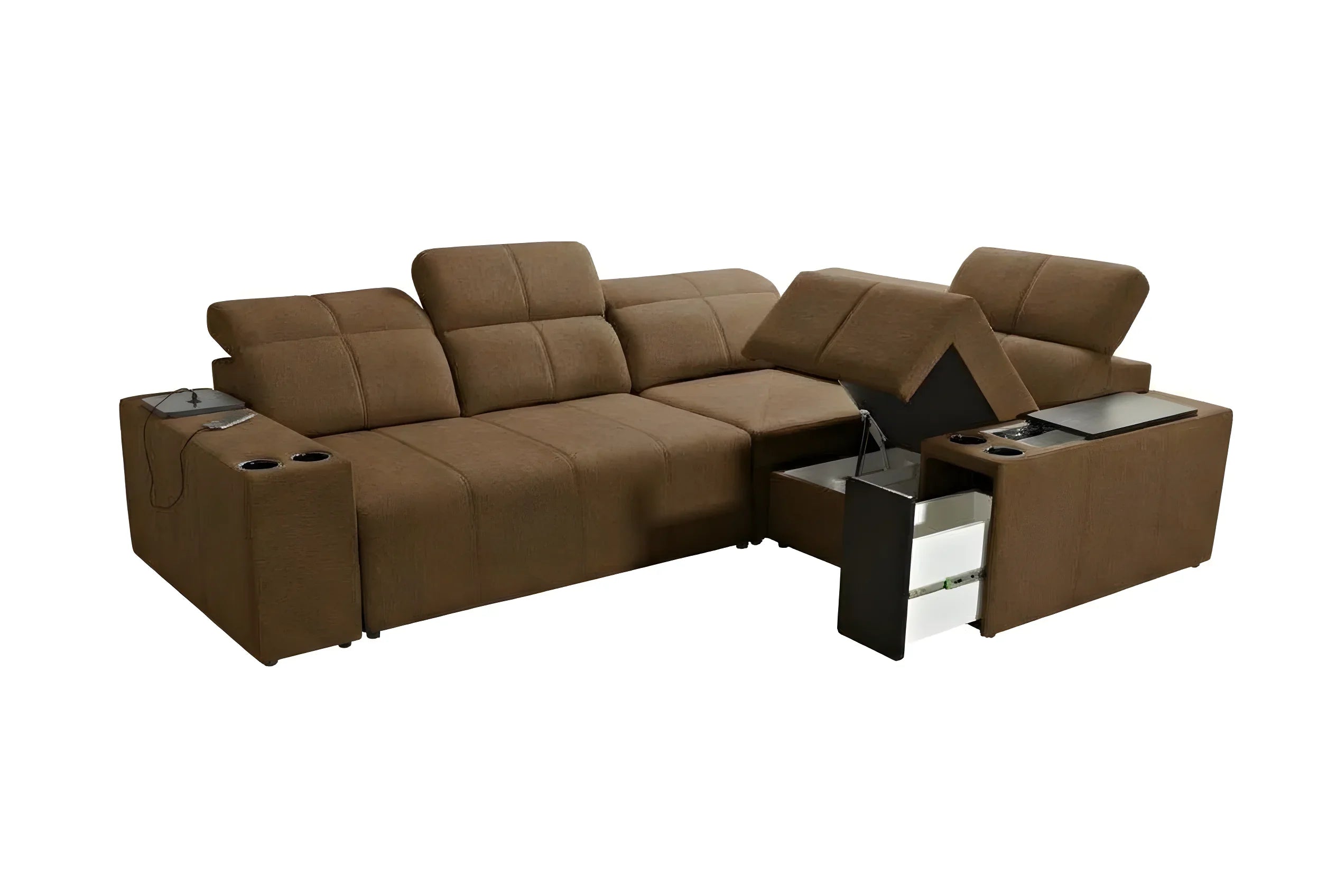
In a restricted space, every centimetre counts. If you only have 2 metres of distance, a 55-inch 4K screen is the reasonable maximum. To maximise floor space, pair this screen with a small space corner sofa that optimises corners without encroaching on the distance zone. Also consider models including practical features like a sofa with USB port to charge your devices without cables crossing the passage area.
For large volumes
If you are lucky enough to have a living room allowing more than 3 metres of distance, you can aim for 75 or 85-inch screens. Here, the furniture must match the screen so as not to create visual imbalance. An extra-large XXL corner sofa allows you to visually "furnish" the space and offers several viewing distances: a central seat for cinema immersion, and side seats for discussion.
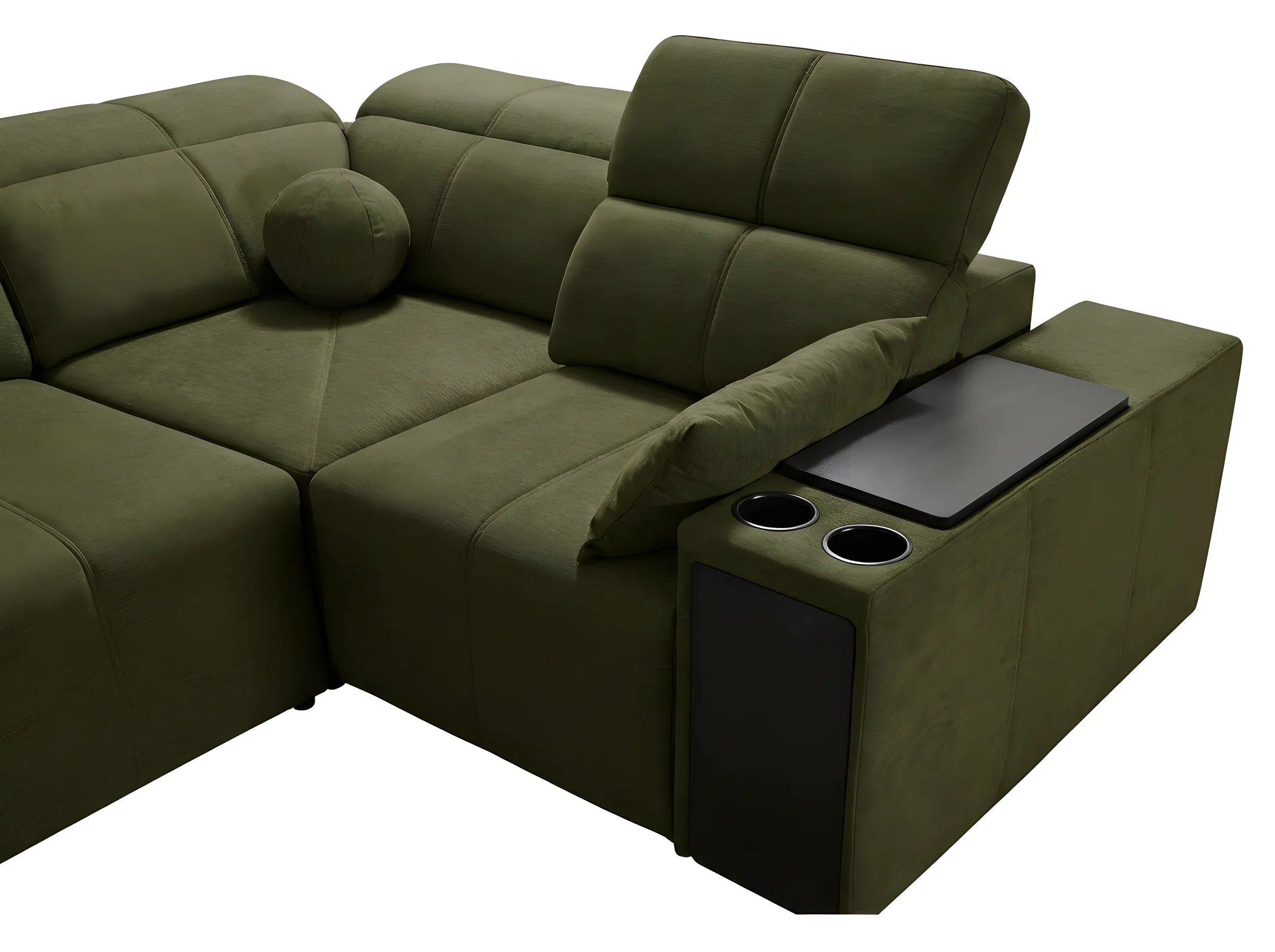
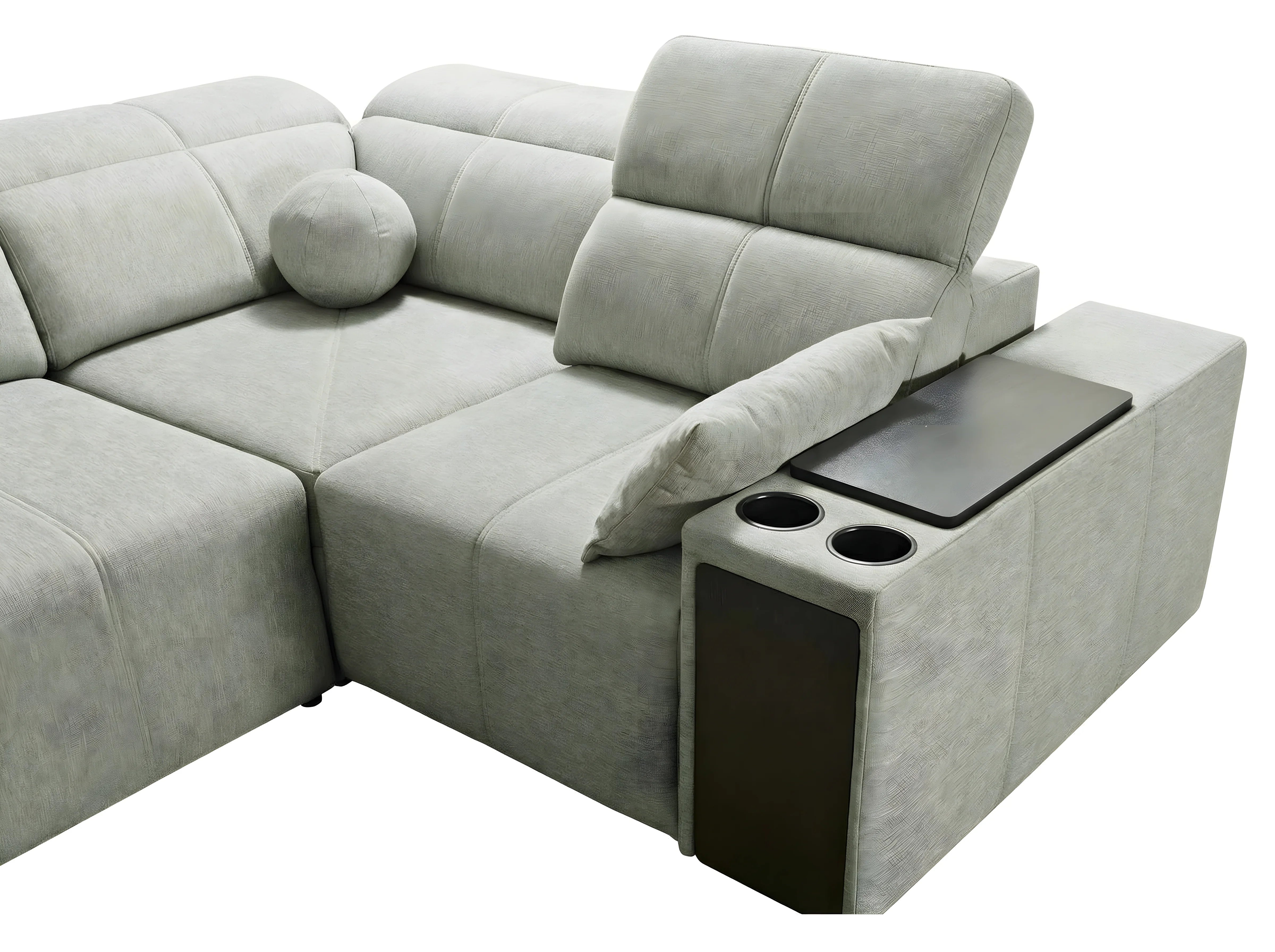
For the ultimate cinema experience, do not forget the details that make the difference: a sofa with cup holder integrated transforms your Netflix session into a true private screening.
FAQ: Frequently asked questions on TV and Sofa ergonomics
Can I damage my eyes if I am too close to a 4K TV?
Contrary to old cathode-ray screens, 4K screens do not emit harmful radiation. However, being too close (less than once the diagonal) can cause digital eye strain because your eyes have to make too many movements to scan the whole image. In addition, the intense brightness at close range can disrupt your sleep cycle (blue light).
How to measure distance if my sofa is against the wall?
Do not measure from wall to screen. Sit at the back of your sofa, with your back well supported, and measure the distance from your eyes to the screen. Depending on the padding of your custom or standard sofa, you can "lose" between 40 and 60 cm compared to the rear wall. It is this "eye-to-screen" measurement that matters for the calculation.
Does the distance change for an OLED or QLED screen?
Technically, the recommended viewing distance depends on the resolution (4K, 8K) and not on the panel technology (OLED, QLED). However, OLED screens offering infinite contrast and deep blacks often allow a more comfortable experience at close range because the image is less "aggressive" and more natural than a poorly calibrated very bright LCD screen.
What TV stand height to choose for a low sofa?
If you have a design sofa with a low seat (about 40 cm from the floor), your TV stand should be low as well. The goal is for the centre of the TV to be about 90-100 cm from the floor (average height of seated eyes). If your stand is too high, you will have to raise your head, which is uncomfortable in the long run.
Conclusion: The alliance of comfort and technology
Determining what distance to keep between the TV and the sofa to avoid damaging your eyes is a clever blend of mathematics and personal feeling. While the formulas based on 4K or HD resolution give a framework, your comfort remains the final judge. A successful installation is not limited to placing a screen at the right distance: it requires a seat that supports your body correctly during these viewing hours. At Kings Canape, we understand that every living room is unique. This is why we design entirely modular and customisable models, capable of adapting to your available distance, so that your cinema evenings remain a pleasure for your eyes as well as your back.




Leave a comment
This site is protected by hCaptcha and the hCaptcha Privacy Policy and Terms of Service apply.