


Article summary

A leather sofa is far more than just a piece of furniture; it is an aesthetic and lasting investment that can span decades, often getting better with time like a fine wine. However, statistics show that without proper care, the lifespan of this noble material can be reduced by 40%. Accidental stains, drying out, cracking... The fear of damaging it through ignorance often paralyses owners. This expert guide aims to demystify leather care and provide you with proven methods to know how to clean a leather sofa safely, ensuring elegance and longevity for your living room.
I. Preparation and diagnosis: Understand your leather before acting
Before rushing for a sponge, it is essential to understand the nature of the surface you are going to treat. Leather is a living, porous and sensitive material. A wrong diagnosis can turn a simple stain into permanent damage.
Identify the type of covering
Not all living rooms are equal when it comes to cleaning. The method will vary considerably depending on the finish:
- Full-grain leather (aniline): This is the skin in its most natural form. Very soft to the touch but porous, it absorbs water quickly. It requires extreme gentleness.
- Pigmented or corrected leather: More common on a family comfortable sofa, it has received a protective layer that makes it more stain-resistant and easier to clean.
- Faux leather: Often confused visually, the faux leather sofa is made of synthetic materials. Its care is radically different (water worries it less, but greasy substances should be avoided).
The crucial dusting step
There is no point, indeed it is dangerous, to wet a dusty sofa. Dust mixed with water or cleaning product can create an abrasive slurry that will embed itself in the leather pores. Use a vacuum cleaner with a soft-bristled brush attachment to avoid scratching the surface. Pay attention to the gaps, especially if you have a corner sofa where crumbs love to lodge.
II. Routine cleaning: Gentle and natural methods
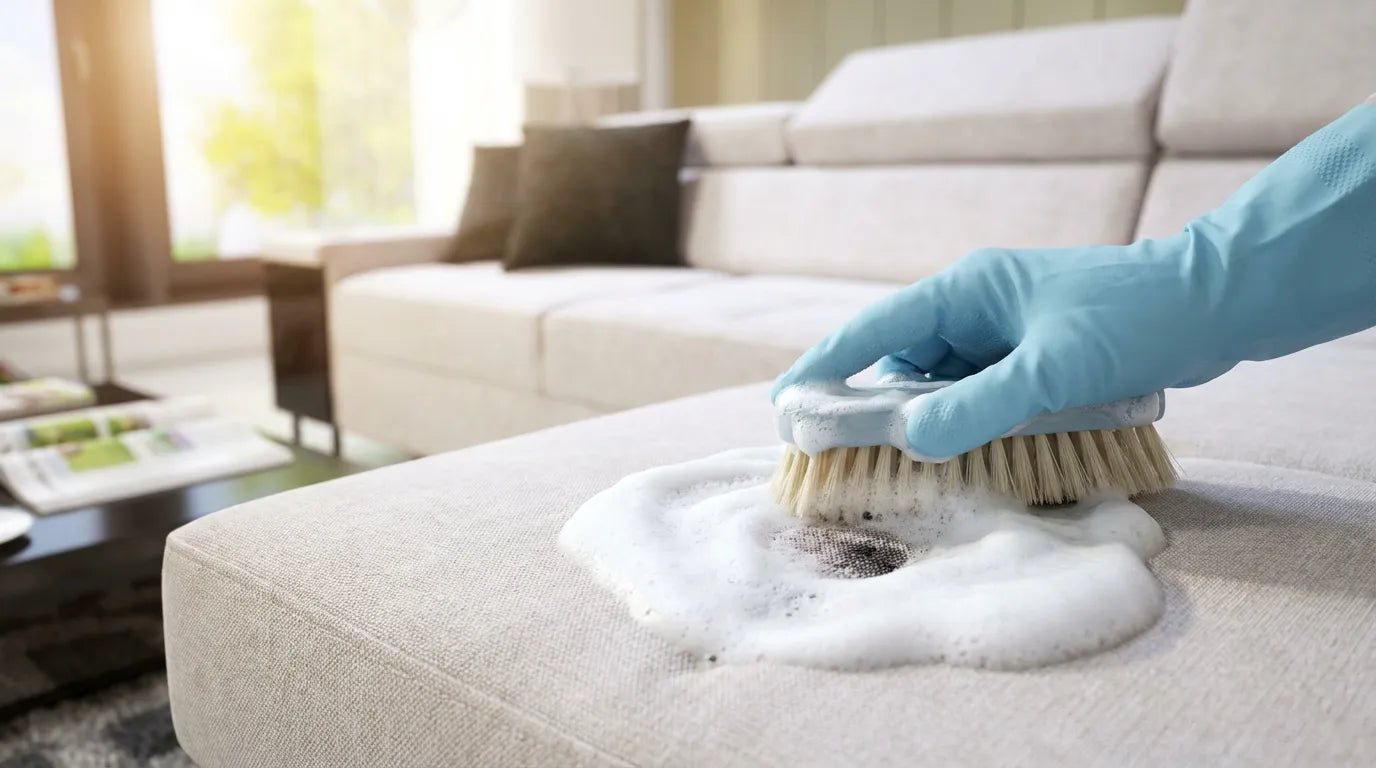
For regular maintenance, there is no need for a chemical arsenal. The key to knowing how to clean a leather sofa often lies in simplicity and regularity. The goal is to remove surface dirt without attacking the protective film of the leather.
Marseille soap: The universal ally
It is the safest method for most leathers. Use real Marseille soap (without added glycerine if possible):
- Rub a damp wash glove or soft sponge on the soap to make it lather lightly.
- Clean the leather in circular motions, never rubbing hard.
- Rinse immediately with a cloth dampened with clear water (ideally demineralised to avoid limescale).
- Dry with a dry cotton cloth.
Make-up remover milk: Cleanse and nourish
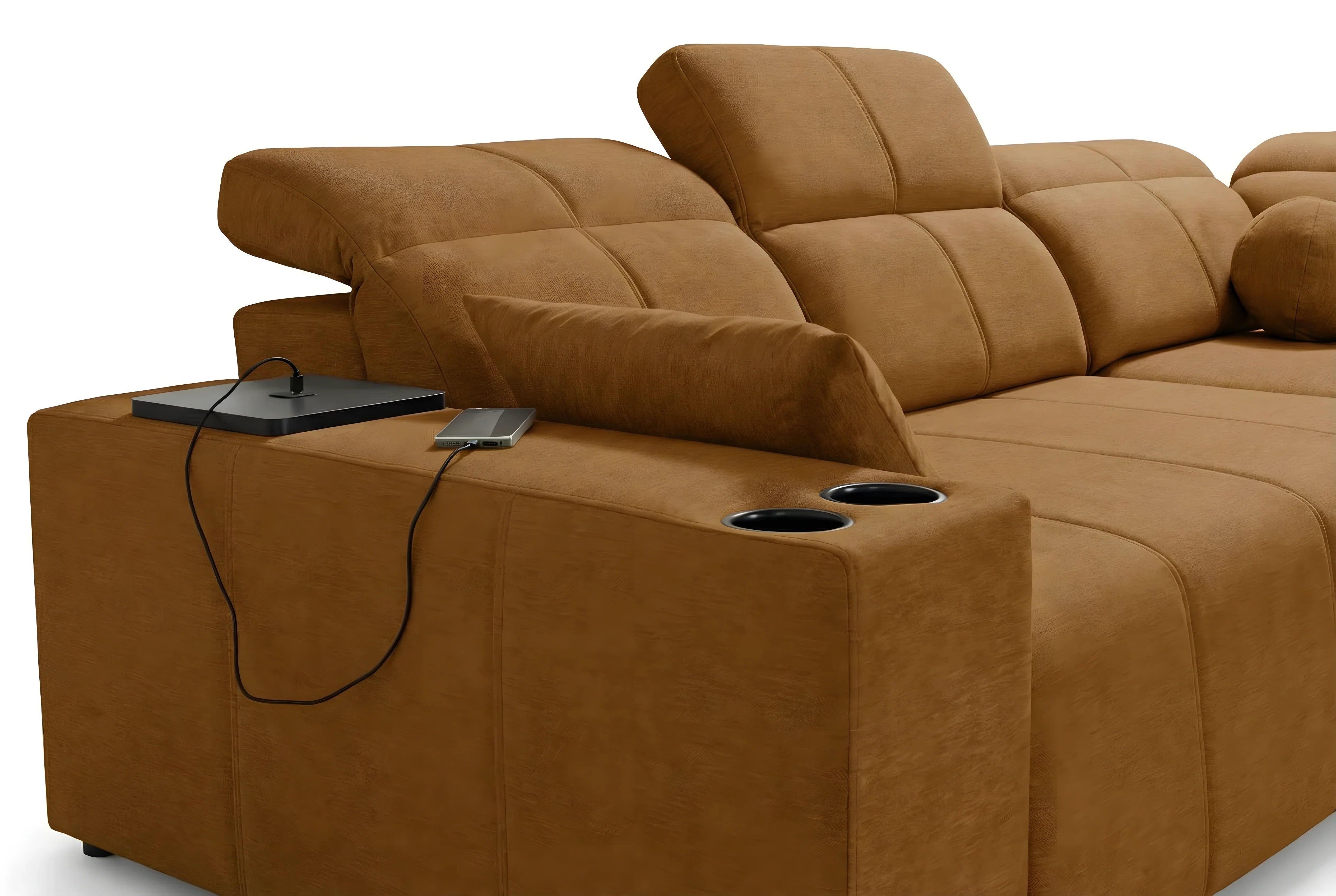
Surprising but effective, make-up remover milk (or baby cleansing milk) cleans surface impurities while hydrating the material. It is particularly suited to reviving a camel sofa that has dulled. Apply a hazelnut-sized amount on a cotton pad, wipe over the leather, then buff with a soft cloth.
The special case of light and dark colours
Care differs slightly depending on the shade. On a black sofa, dust is the number one enemy and is immediately visible, requiring almost daily dusting. Conversely, on a white or beige model, colour transfer (the "bleeding" of blue jeans for example) is the main risk. For the latter, monthly preventive cleaning is recommended to prevent dirt from greying the leather permanently.
III. SOS stains: Targeted solutions for household accidents
Despite all precautions, accidents happen quickly, especially if your living room is the main living space. Here is how to react to the toughest stains without panicking.
| Type of stain | Recommended solution | Precautions |
|---|---|---|
| Greasy stain (oil, sebum) | Fuller's earth | Sprinkle generously, leave to act for 3 to 5 hours without touching, then vacuum. Do not rub with water. |
| Pen / Ink | Mixture of 70° alcohol (1/4) and water (3/4) | Dab delicately with a cotton bud only on the ink mark. Rinse and nourish immediately afterwards. |
| Drink (coffee, wine, soda) | Absorbent paper + soapy water | Absorb the liquid immediately. Do not let it dry. If the stain persists, a little diluted white vinegar can help. |
| Colour transfer (denim) | White clay stone | Use a damp sponge impregnated with clay stone. Rub gently. Rinse well. |
Managing scratches and wear
If you have pets, surface scratches are common. Although we often recommend a scratch-resistant sofa for pets in technical fabric for this situation, leather also marks. To fade a light scratch: massage the area with a clean finger. The heat and natural sebum of your skin may be enough to repigment the trace. For a deeper mark, applying a renovating cream in the same shade as your sofa will be necessary.
For a vintage sofa, these marks are often part of the patina and charm, so it is sometimes better to simply nourish them rather than try to erase them completely.
IV. Nourish to last: The essential step after cleaning
Cleaning leather without nourishing it is like washing your hands without applying hand cream in winter: the skin ends up tight and cracked. Leather needs to be nourished to keep its suppleness and silky appearance, characteristic of a high-end sofa.
When and how to moisturise your sofa?
Ideally, a moisturising treatment should be applied every 6 months, or after each intensive cleaning. Here is the procedure:
- Make sure the sofa is perfectly clean and dry.
- Use a specific care cream for furniture or, failing that, a very neutral body moisturising cream. Avoid shoe polishes which clog the pores and stain clothing!
- Apply the product with a soft cloth, making figure-of-eight motions over the whole surface.
- Leave to penetrate for at least 15 minutes.
- Buff with a clean cloth to bring back the shine.
This step is all the more important for mechanical models like the recliner sofa, where the folds of the leather undergo repeated tension during opening and closing. Dry leather will eventually tear at these strategic points.
V. Fatal mistakes and daily prevention
To keep your living room sofa in pristine condition, knowing what not to do is just as important.
The invisible enemies of leather
- Direct heat: Never place your sofa right next to a radiator or in front of a fireplace. The heat dries out leather deep down, leading to irreversible cracking.
- Sun (UV): Direct exposure to sunlight discolours the pigments. If your chic sofa is under a picture window, think about closing the voiles or using a throw during the hottest hours.
- Excess water: Leather does not like water. Always wring out your sponges as much as possible. A waterlogged leather will warp as it dries.
The specific case of faux leather
Be careful not to apply greasy substances (oils, waxes) on a corner faux leather sofa. Unlike real leather, the plastic of the faux cannot absorb grease. The product will stay on the surface, making the sofa slippery and sticky. For faux leather, cleaning with soapy water is enough, followed by meticulous rinsing.
Likewise, for a black faux leather sofa, avoid abrasive sponges (green side) which would leave permanent matt micro-scratches on the shiny surface.
If leather or faux leather care seems too constraining on a daily basis, it may be wise to turn to modern alternatives like the sofa with water-repellent fabric, which offers easier cleaning for very active households.
FAQ: Expert answers to your care doubts
Can I use a steam cleaner on my leather sofa?
It is strongly advised against using a steam cleaner on real leather. The combination of intense heat and humidity will "cook" the collagen of the skin, harden it and eventually cause shrinkage or cracking. Reserve steam for fabrics, and prefer gentle manual cleaning for leather.
My leather sofa is starting to crack, what should I do?
Cracks are the sign of advanced dehydration. If they are superficial, an intensive treatment with neat's-foot oil or a rich nourishing cream, applied in several layers over several days, can soften the material and stop the progression. For deep cracks, the intervention of a professional repairer or the use of repair resin will be necessary.
Is white vinegar dangerous for leather?
White vinegar is an acid. Neat, it can attack the protective finish of the leather and dull it. However, diluted 50/50 with water, it is excellent for removing bad smells or cleaning very dirty leather, provided you rinse the area immediately and nourish the leather (moisturising) right after the operation.
How do you clean a faux leather sofa bed without damaging the mechanism?
For a faux leather sofa bed, clean the covering in "sofa" position so the fabric is taut. Absolutely avoid water running between the cushions towards the metal structure, which could cause rust. Make sure everything is perfectly dry before unfolding the bed or putting sheets on.
Conclusion: Regularity in the service of elegance
Knowing how to clean a leather sofa is not a question of miracle products, but of good gestures. By adopting a simple routine of dusting and semi-annual moisturising, you preserve not only the aesthetic of your living room, but also the value of your furniture. Whether you have opted for a vast panoramic set or a made-to-measure sofa suited to your interior, leather will pay you back a hundredfold for the attention you give it. At Kings Canapé, we design our sofas with materials selected for their durability, so that care remains a simple pleasure and not a chore, allowing you to make the most of your relaxing moments.




























Leave a comment
This site is protected by hCaptcha and the hCaptcha Privacy Policy and Terms of Service apply.