


Article table of contents

This is the ailment of the century: according to the latest public health studies, nearly 80% of the population will suffer from lower back pain at least once in their life. While we are quick to blame our office chair or bedding, a silent culprit sits in the heart of our living room. We spend an average of 3 to 4 hours a day there, but is it your ally or your enemy? The question of back pain: is your sofa too soft or too firm? is essential. Choosing a sofa should not be limited to a matter of design; it is a crucial ergonomic health decision. In this expert guide, we will dissect the mechanics of comfort to help you identify the ideal firmness and transform your living room into an orthopaedic recovery haven.
The comfort equation: Why your sofa can ruin your back
The living room is synonymous with absolute relaxation. You throw yourself in after a long day, you snuggle up. Yet, this immediate feeling of release is often misleading. A comfortable sofa on first contact is not necessarily beneficial for your skeleton in the long run. The most common mistake is to confuse "soft welcome" with "structural support".
The biomechanics of the seat
When you are sitting, the pressure exerted on your intervertebral discs is 40% higher than when standing. If your sofa does not provide adequate counter-pressure, your spine loses its natural "S" curvature to form a "C". This postural deformation, maintained while watching a film or a reading evening, creates micro-traumas. Back pain is then not a fatality, but the logical consequence of unsuitable furniture.
Too soft or too firm: Understanding the impact on your spine
To determine whether your seat is the source of your ailments, you must analyse both extremes. The quest for an orthopaedic sofa begins by eliminating major structural defects.
The syndrome of the too-soft sofa
This is what is called the "hammock" effect. A too soft sofa back pain causes the pelvis to sink lower than the knees. As a result, the lower back rounds excessively, stretching the posterior ligaments and compressing the front of the lumbar discs. In addition, extracting oneself from a too-deep and soft sofa requires violent muscular effort for the back, often when cold. If you have to "hoist" yourself up to stand, your sofa is probably too soft.
The trap of excessive firmness
Conversely, a too firm sofa back pain creates immediate pressure points. Instead of hugging the shape of your buttocks and vertebrae, the seat pushes your body back. This leads to poor blood circulation and forces the user to constantly change position, preventing muscle relaxation. A firm seat is recommended, but it must have a sufficient welcome layer to distribute weight.
Quick test: The tipping point
Sit normally. If your buttocks sink more than 5 to 7 cm without encountering firm resistance, the support is insufficient for a sensitive back. If you feel like you are sitting on a public bench with a thin layer of fabric, the rigidity will create tension.
Foam density: The technical secret of lumbar support
If you are looking for the sofa firmness for sensitive back, forget vague marketing terms like "cloud" or "tonic". The only truth lies in the numbers, and more precisely in the density of the foam used. This is the number one criterion for a quality sofa that preserves your health.
| Type of Foam | Density (Kg/m3) | Orthopaedic Verdict | Durability of support |
|---|---|---|---|
| Standard polyether | 16 - 25 kg/m3 | ✘ Not recommended. Too soft, sags quickly. | Low (1-2 years) |
| High Resilience Polyurethane (HR) | 30 - 35 kg/m3 | ✔ Ideal. Perfect balance between welcome and support. | High (5-8 years) |
| Full High Density / Bultex | > 40 kg/m3 | ✔ Excellent. Recommended for builds > 90kg. | Very high (+10 years) |
To relieve back pain from the sofa, imperatively favour a High Resilience (HR) foam of at least 30kg/m3 for the seat. This material has the ability to instantly regain its initial shape after pressure, ensuring that your spine is actively supported with every movement. This type of padding is found in a sofa with good foam for the seat.
However, be careful: density is not hardness. You can have a very dense foam (therefore durable and supportive) but engineered to be soft on contact. This is often the case in luxury sofa ranges, which layer a dense core with a layer of feathers or wadding for contact comfort.
Ergonomics and Morphology: The sofa must adapt to you, not the other way around
Effective lumbar support from the sofa depends intrinsically on your morphology. A sofa perfect for a 1m85 person will be an ergonomic nightmare for a 1m60 person. Here are the adjustments and characteristics to watch.
Seat depth: The hidden enemy
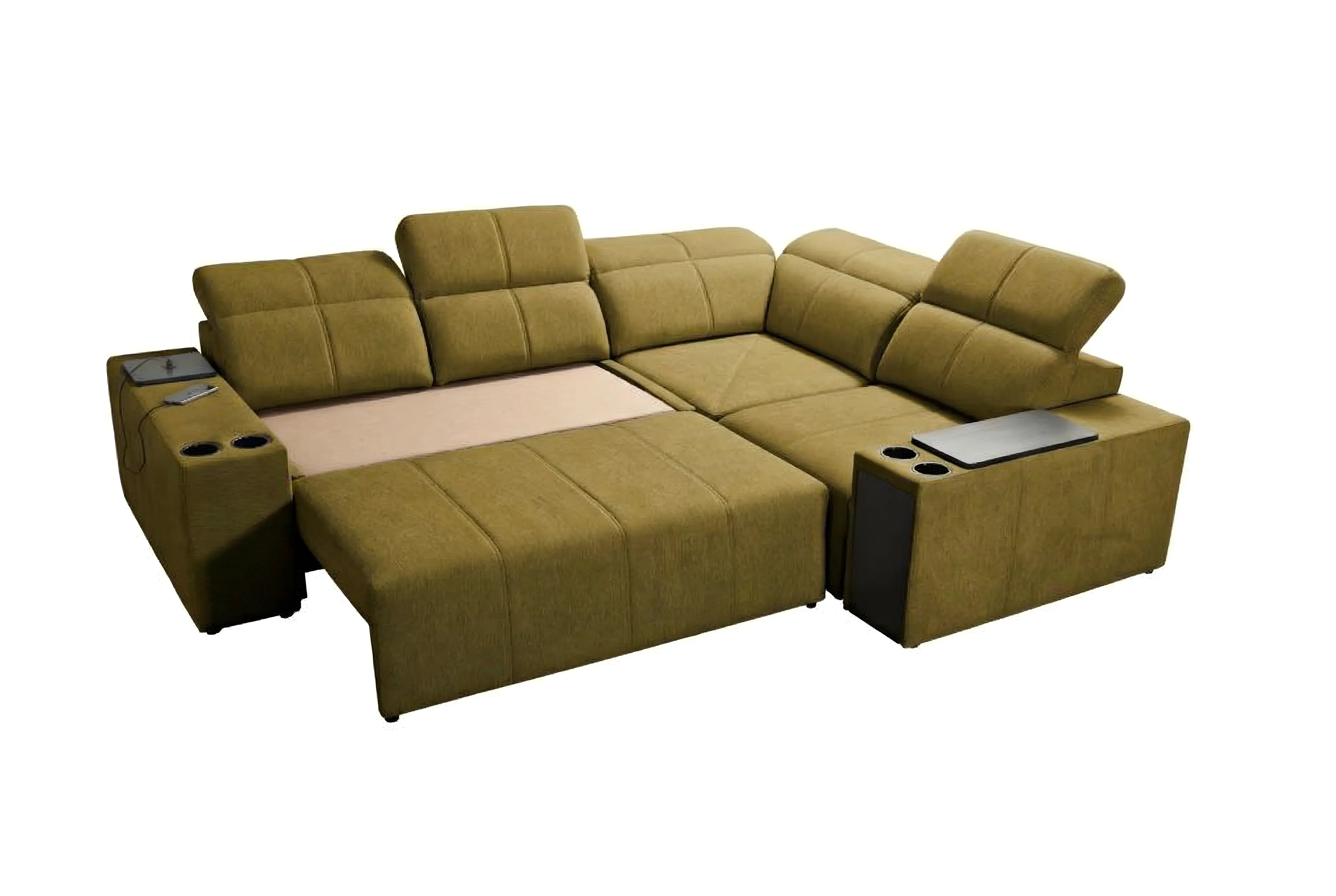
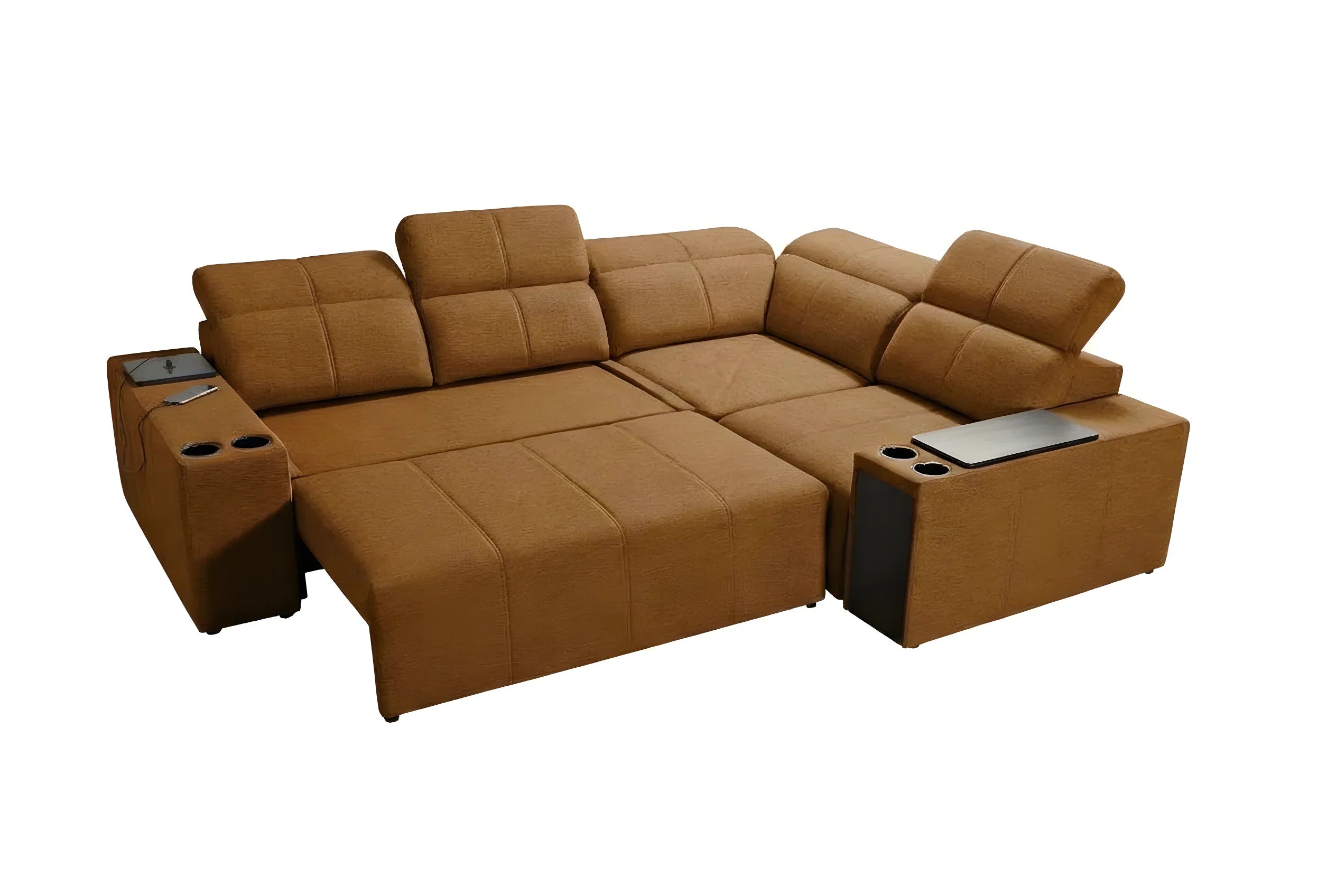
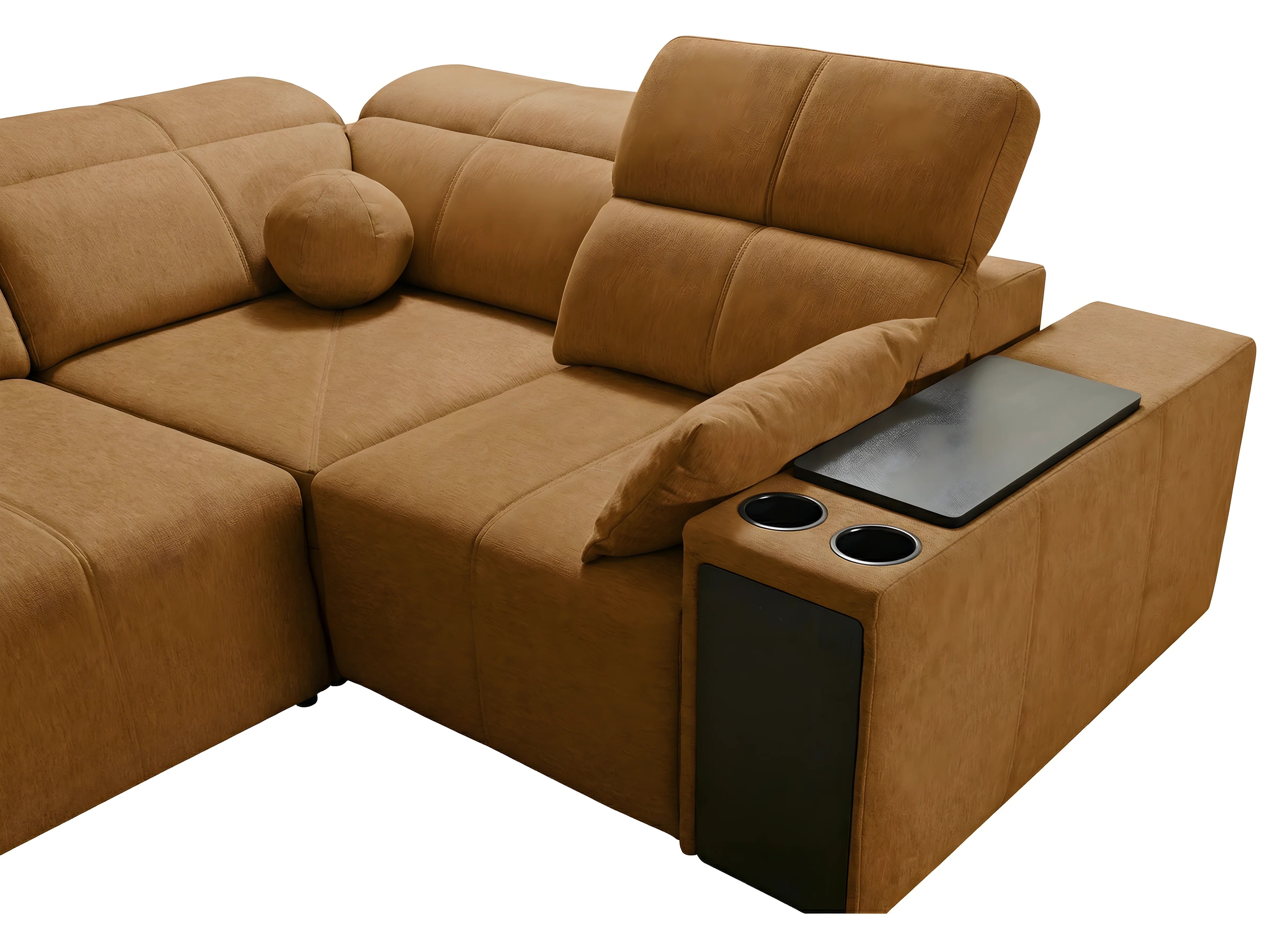
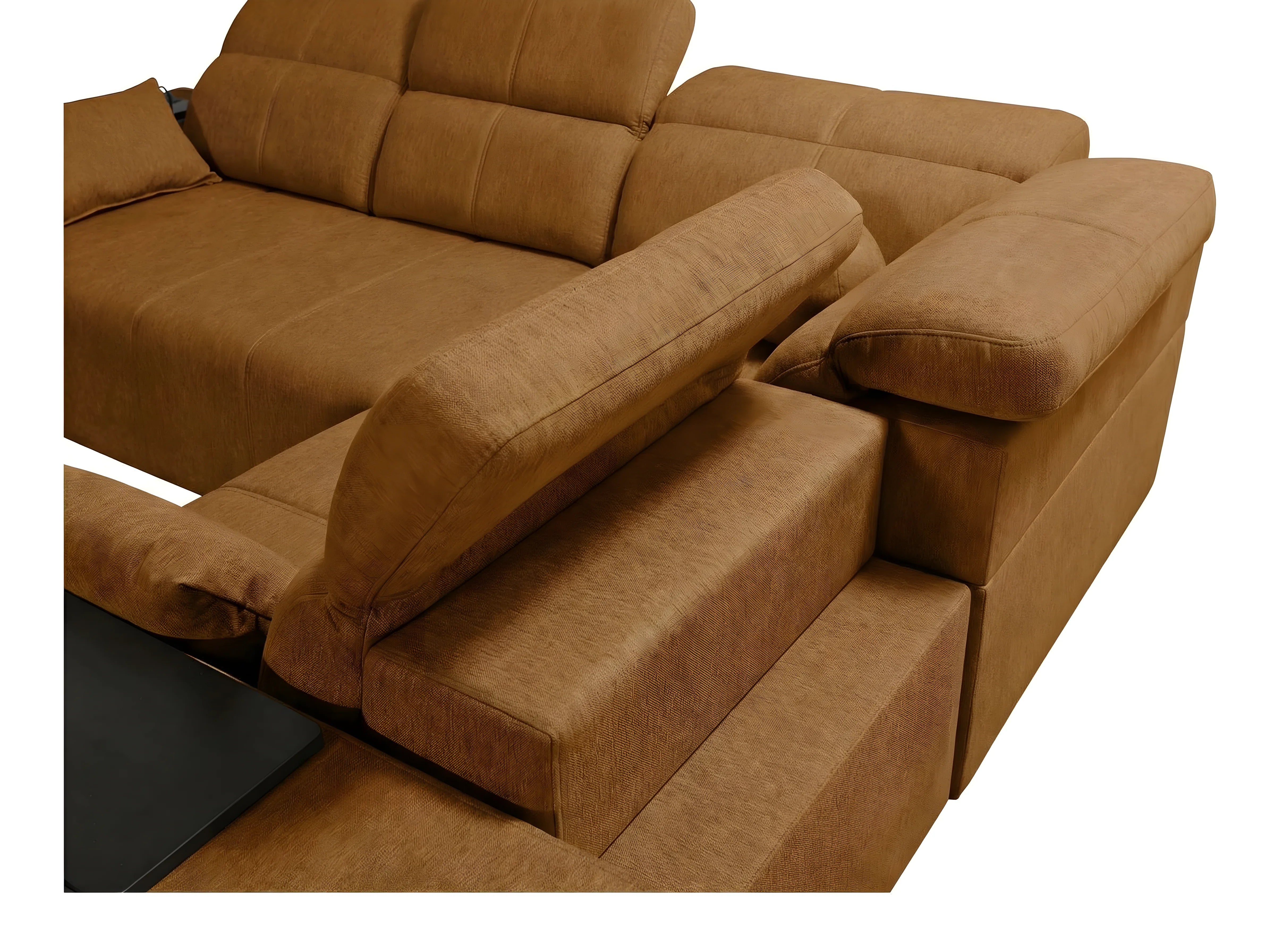
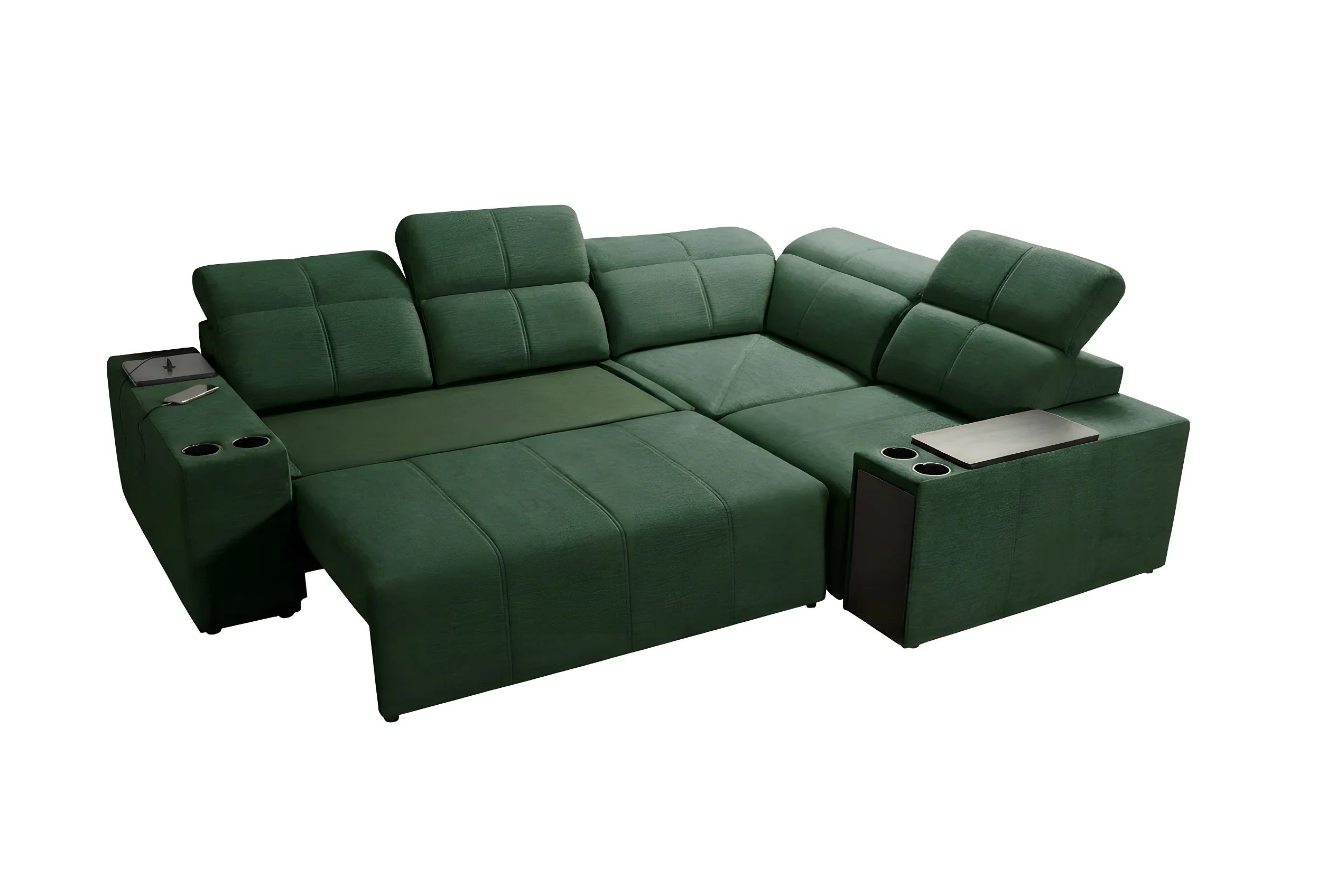
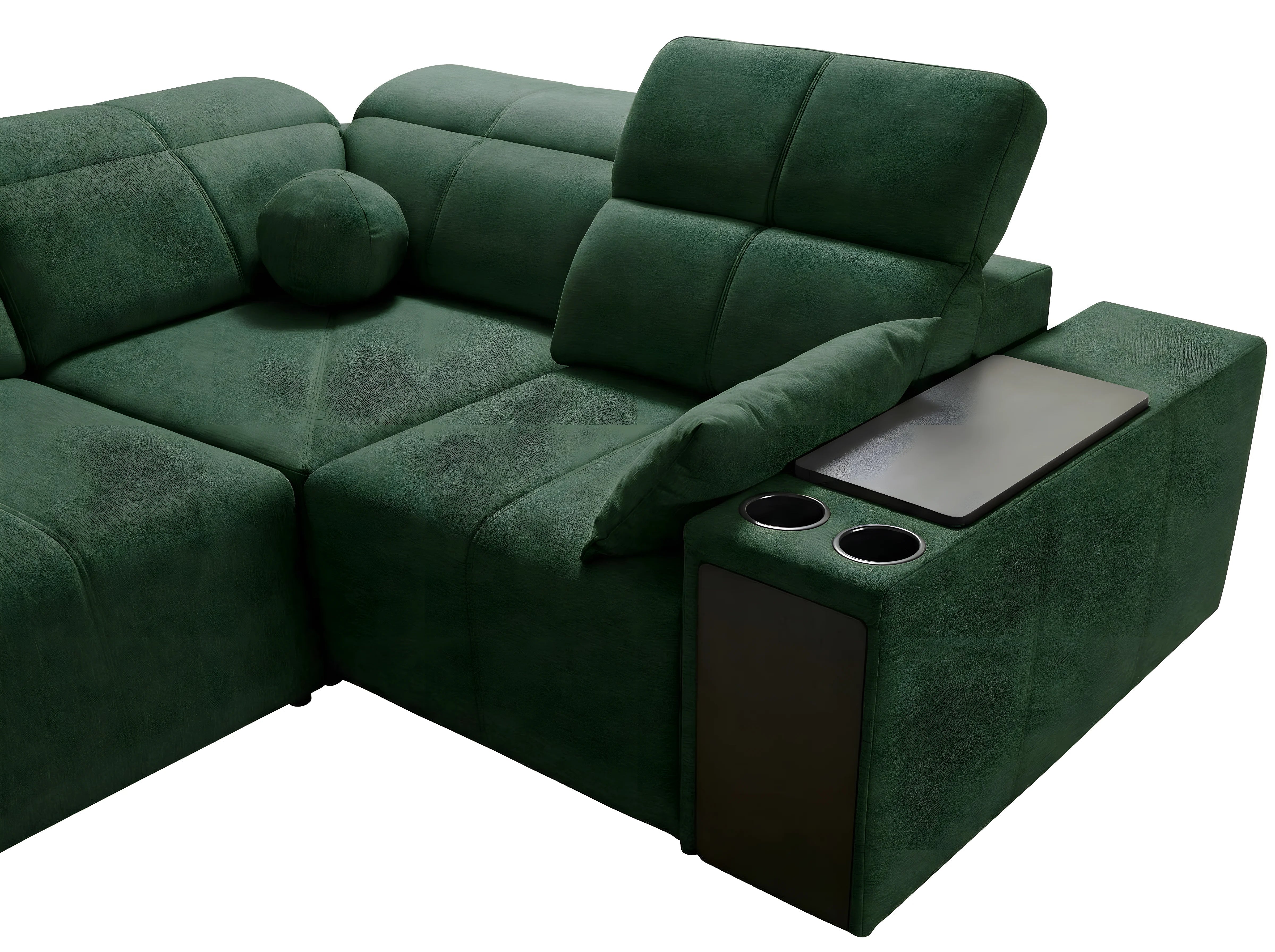
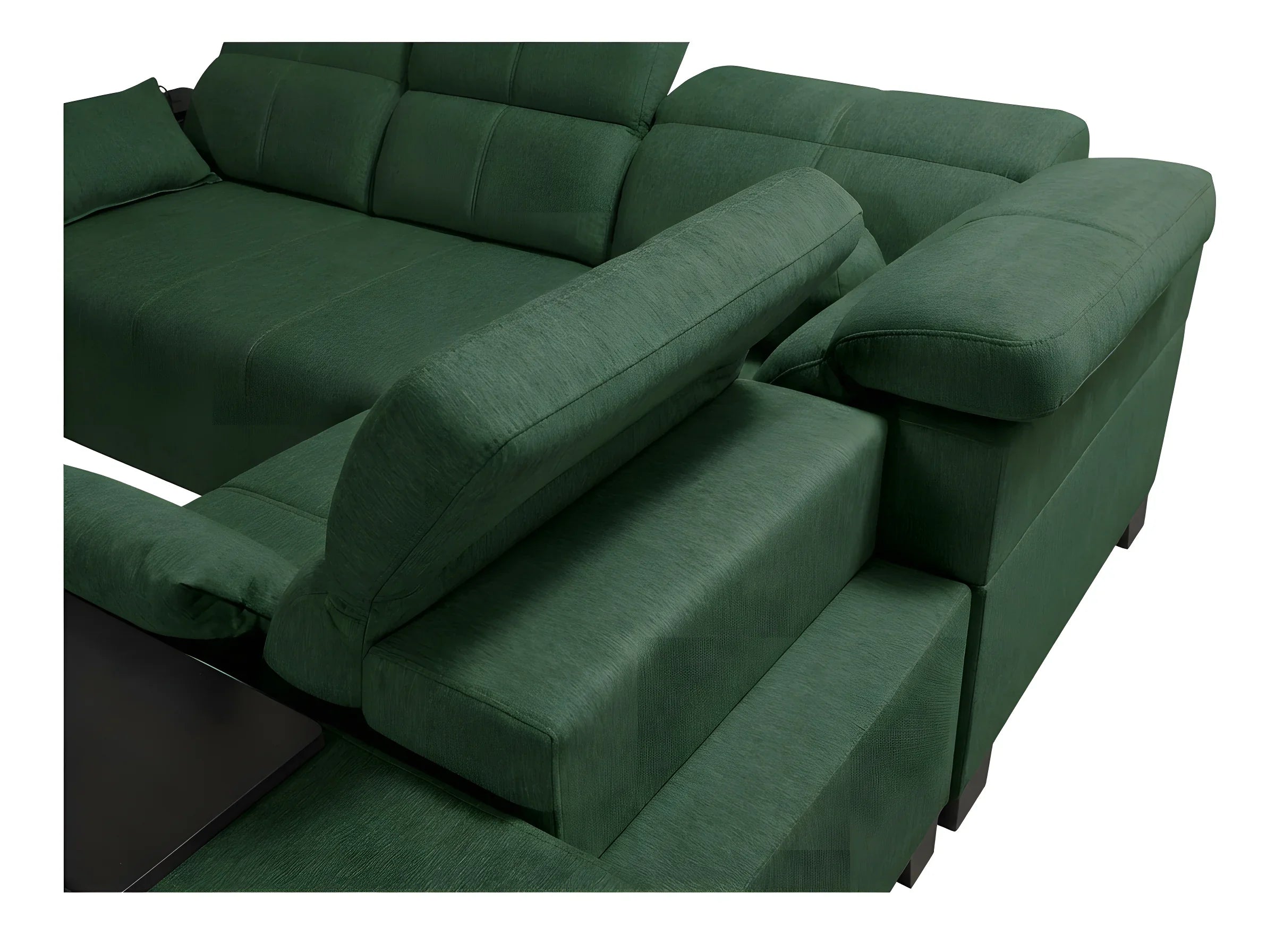
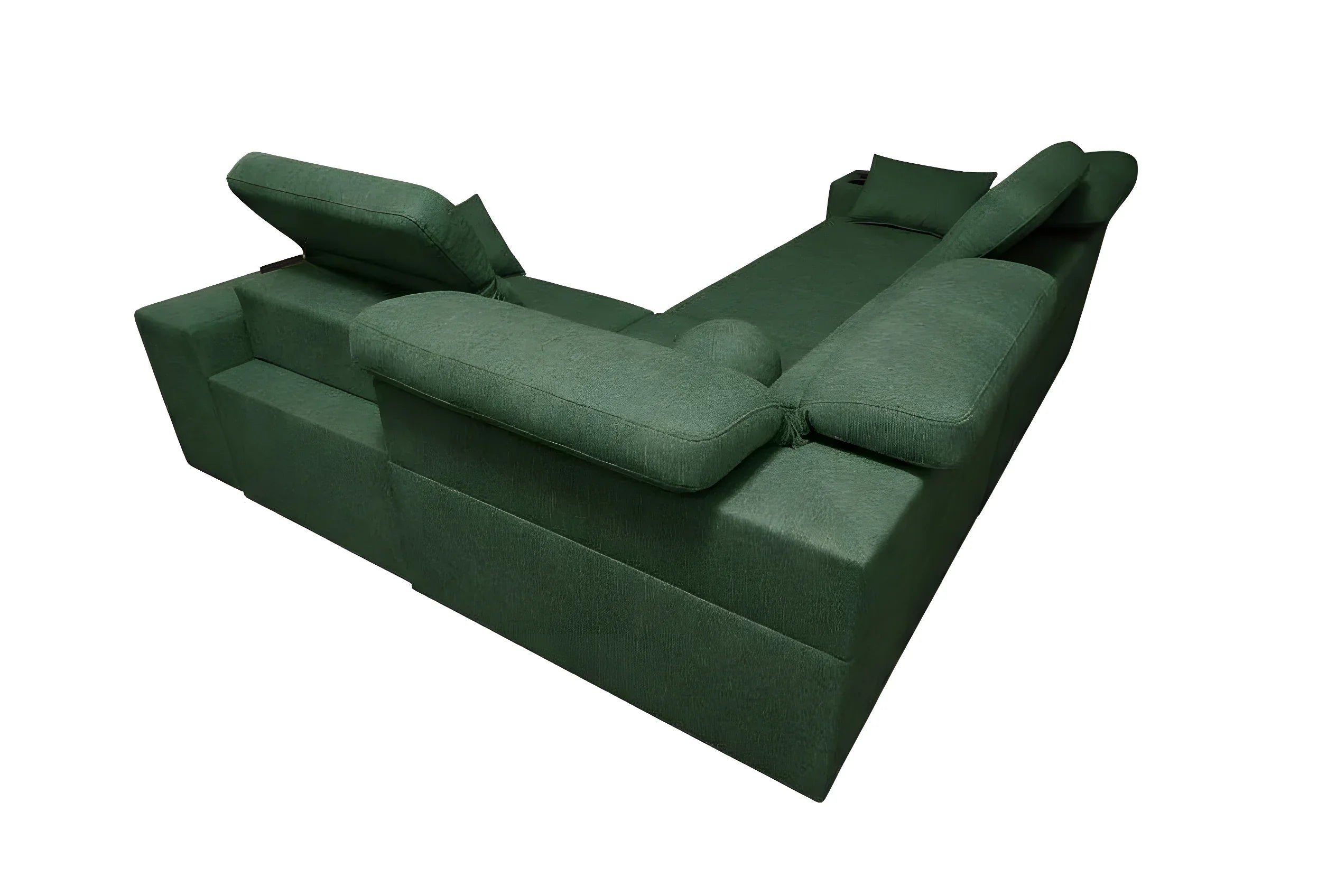
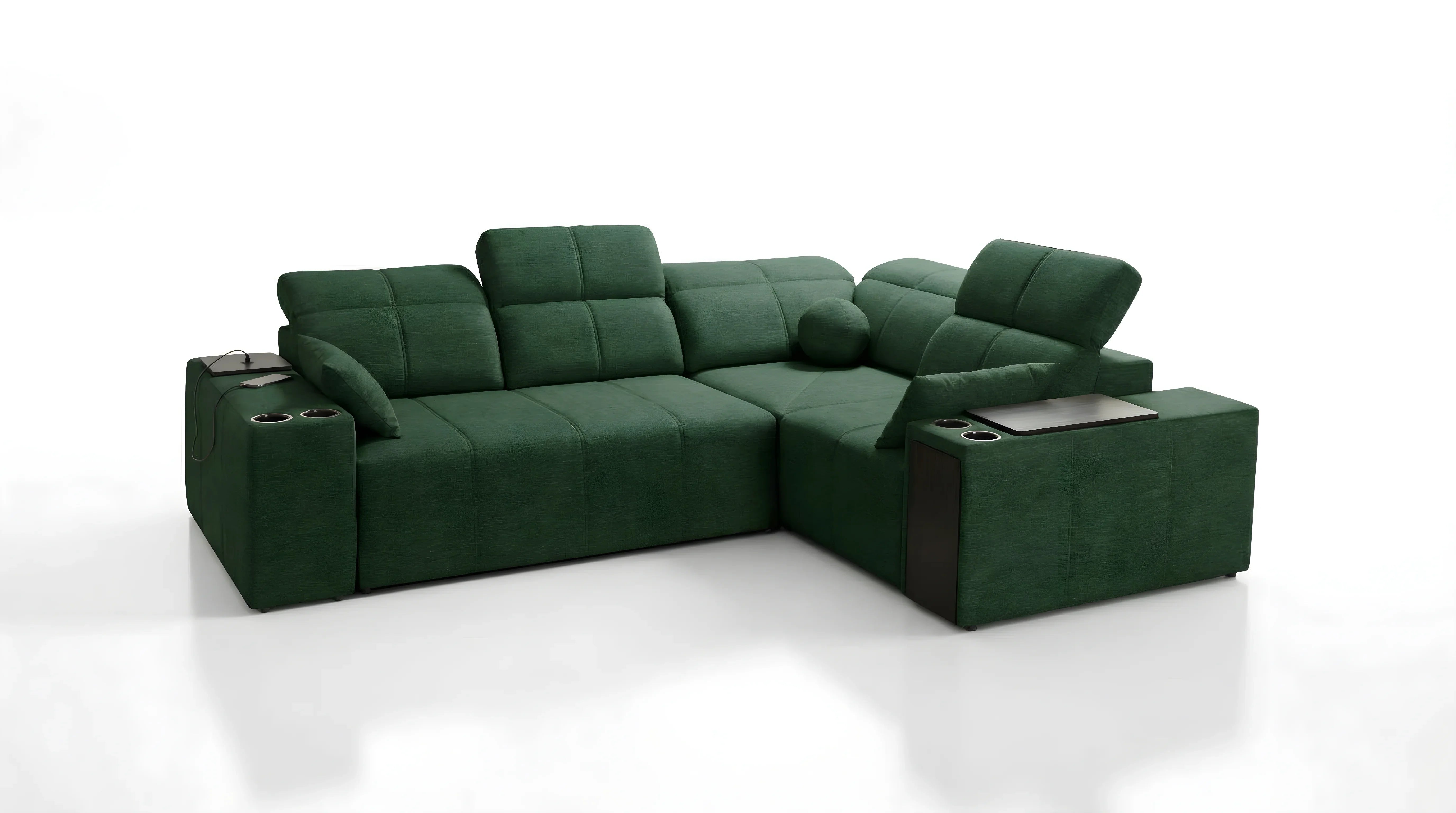
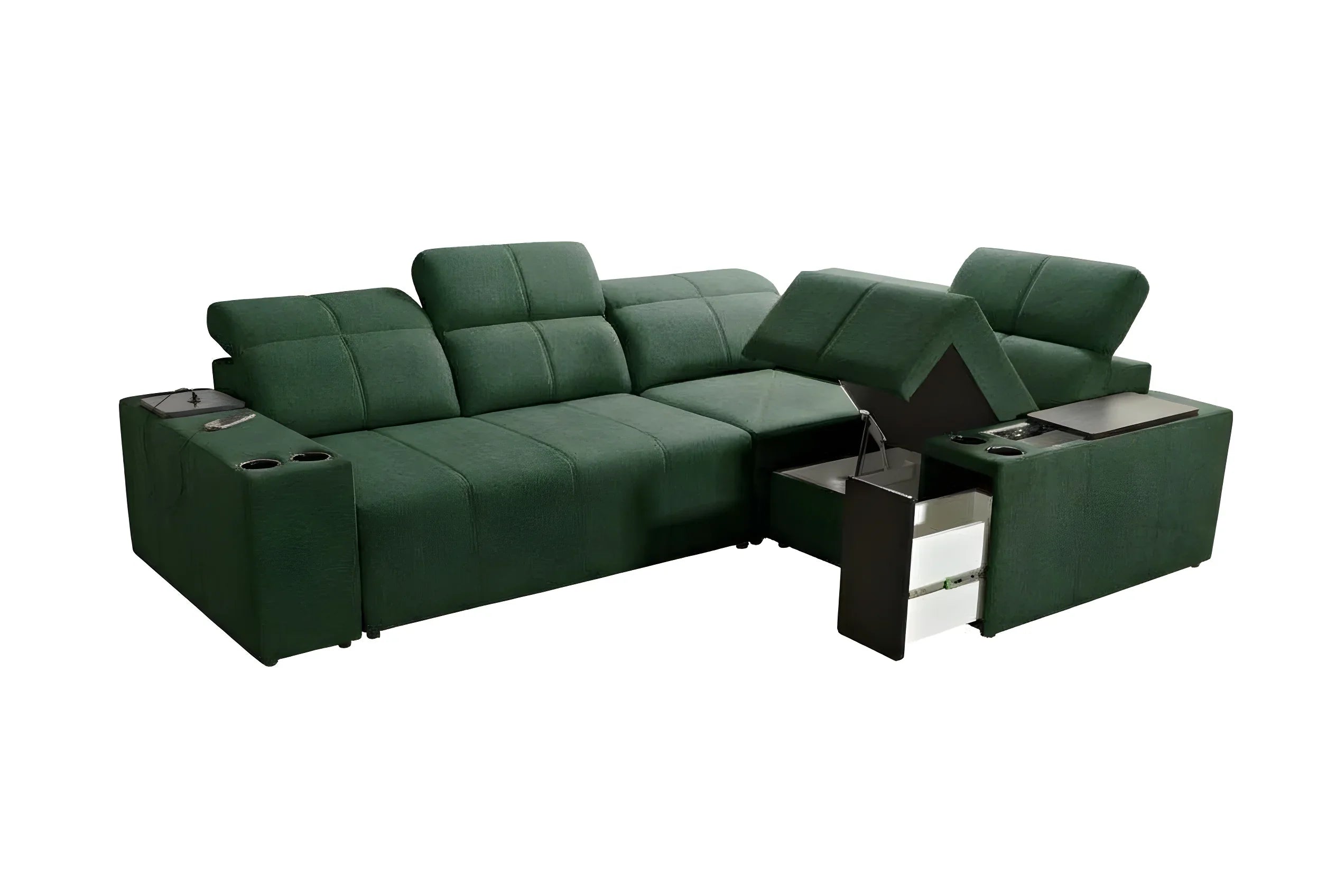
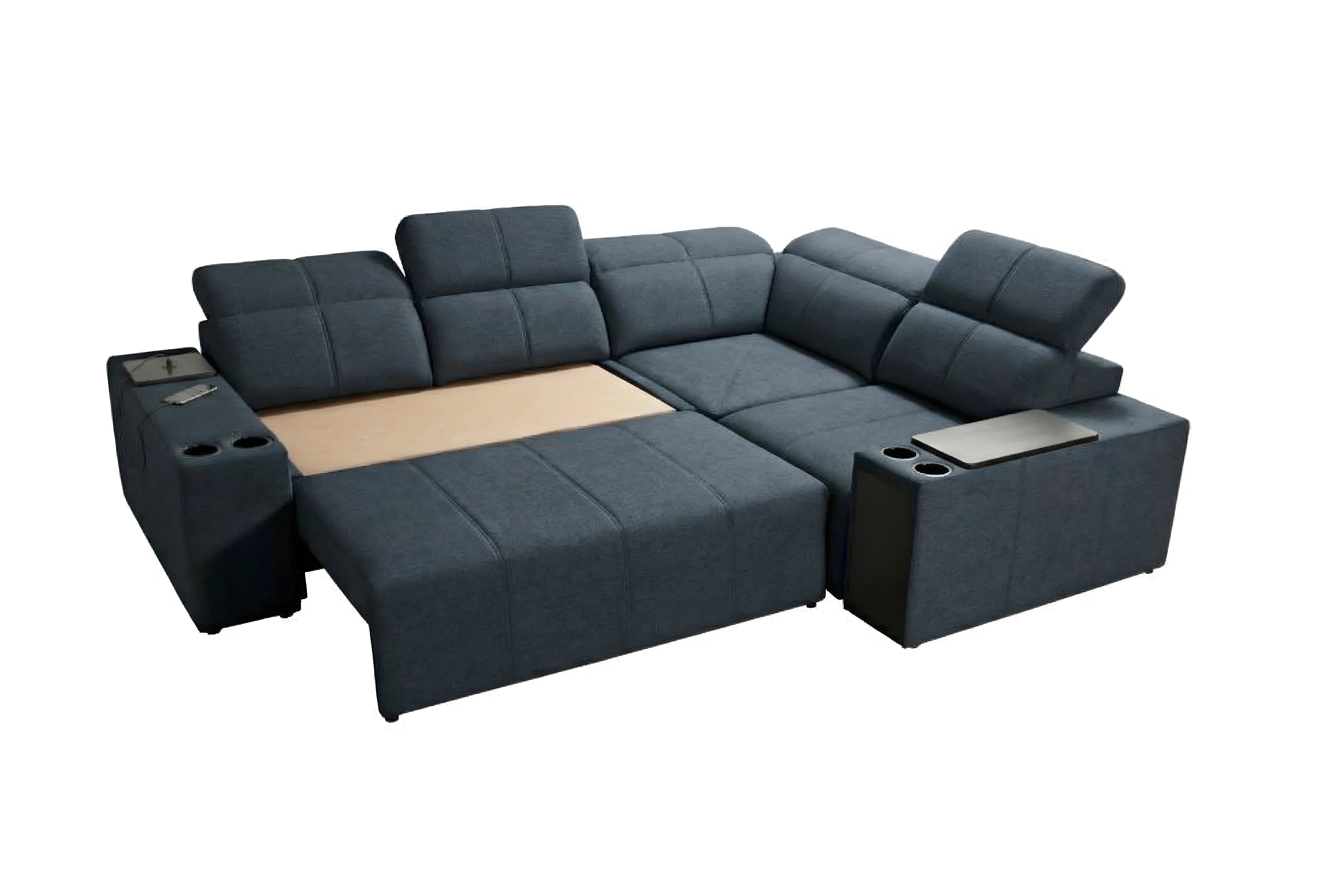
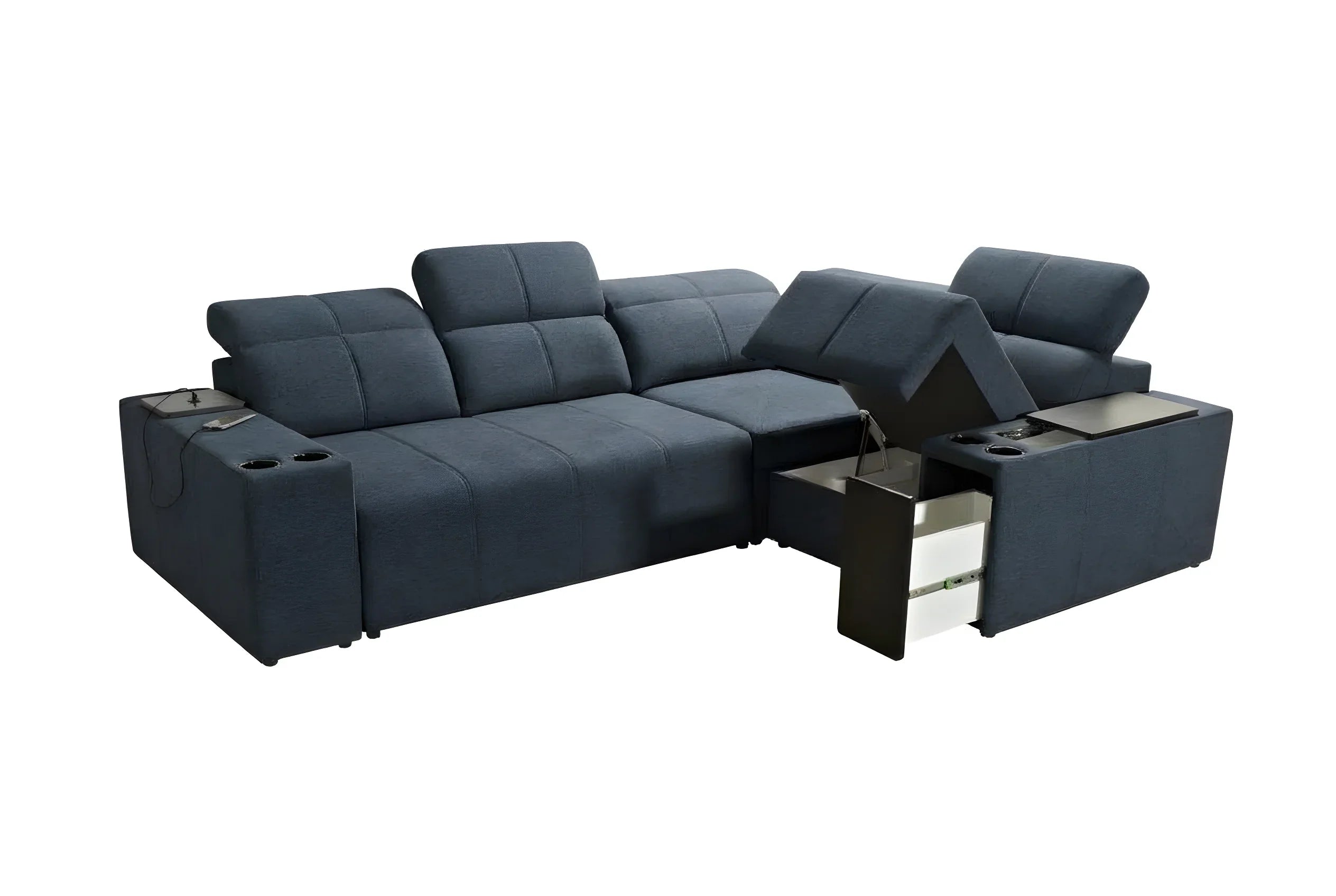
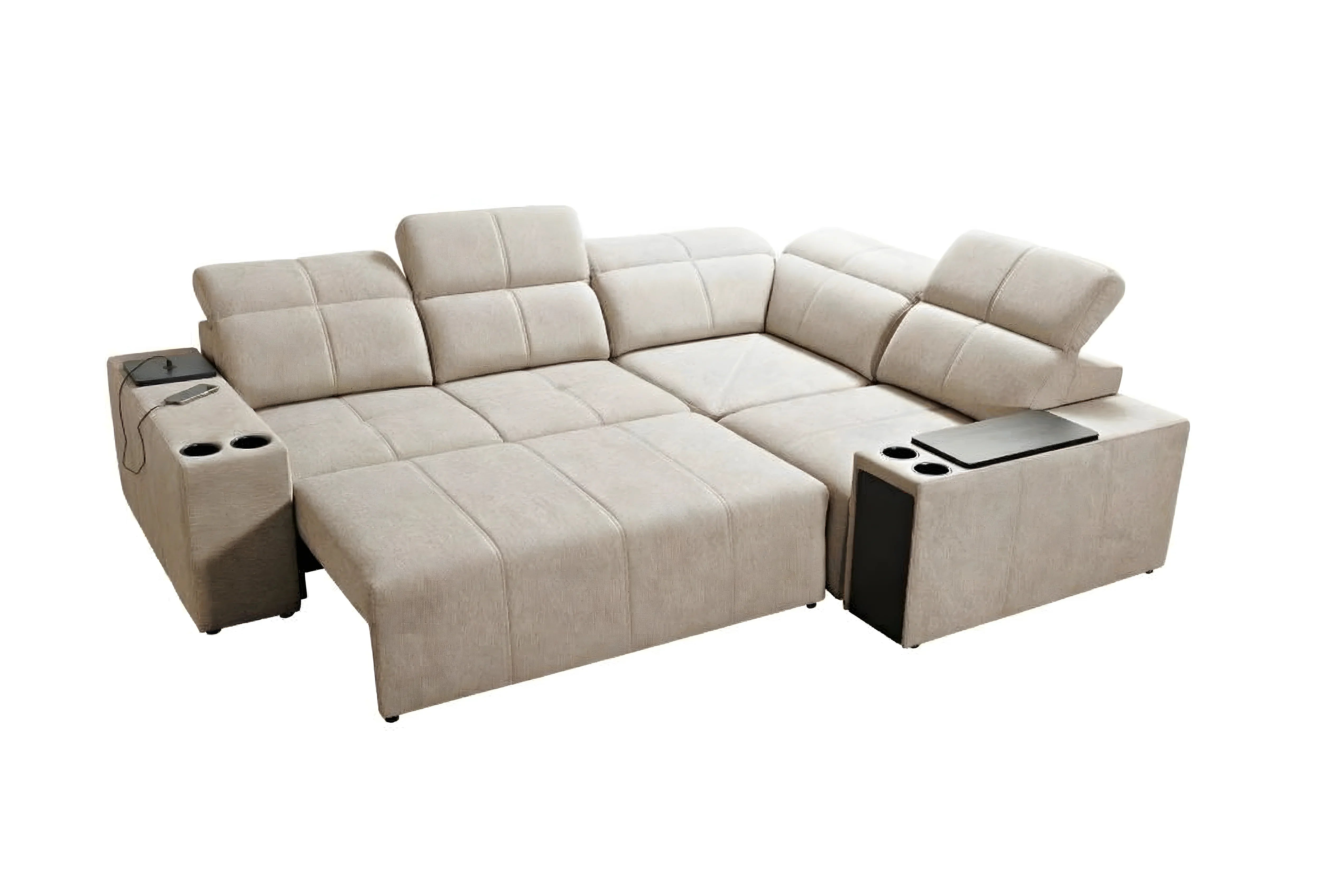
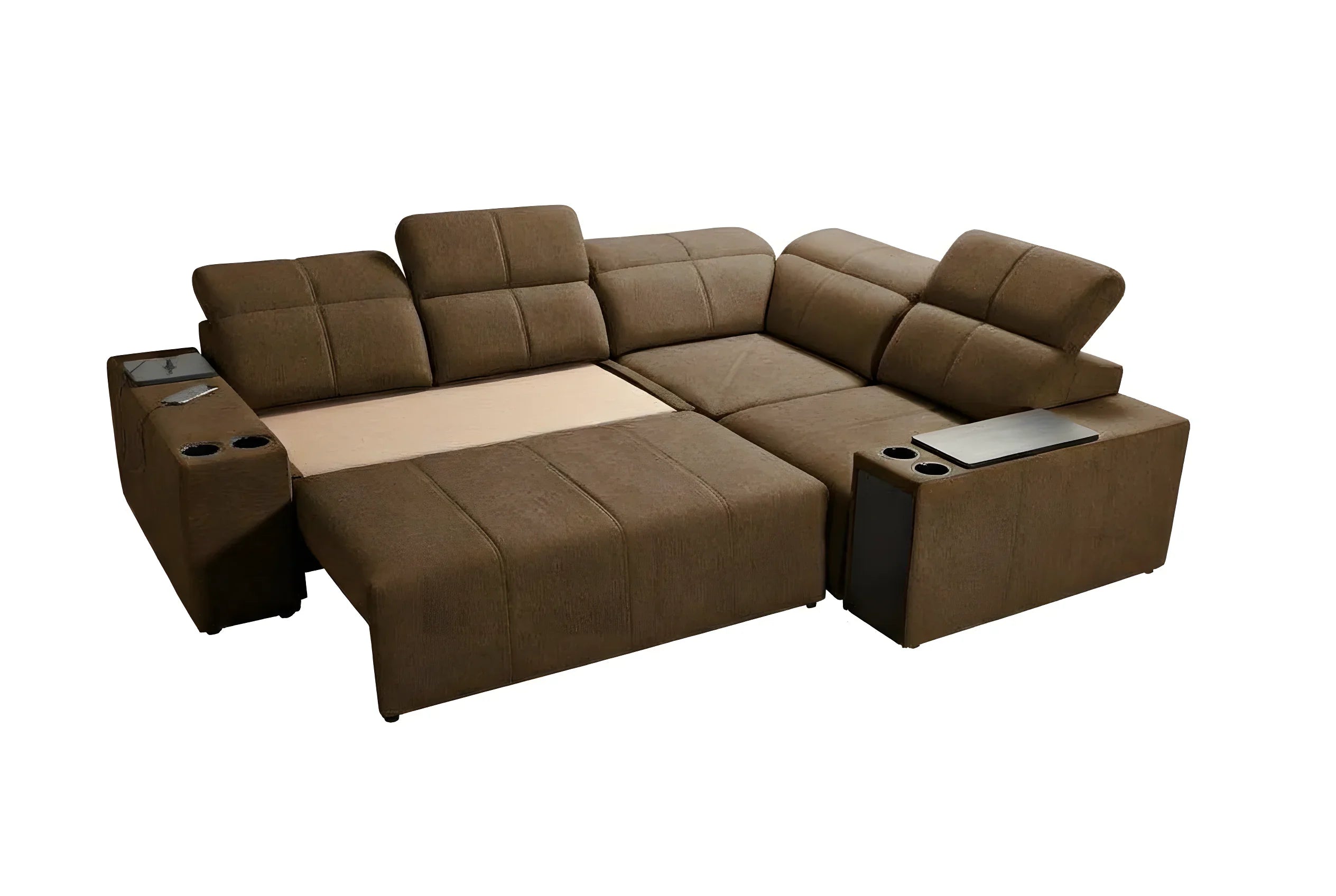
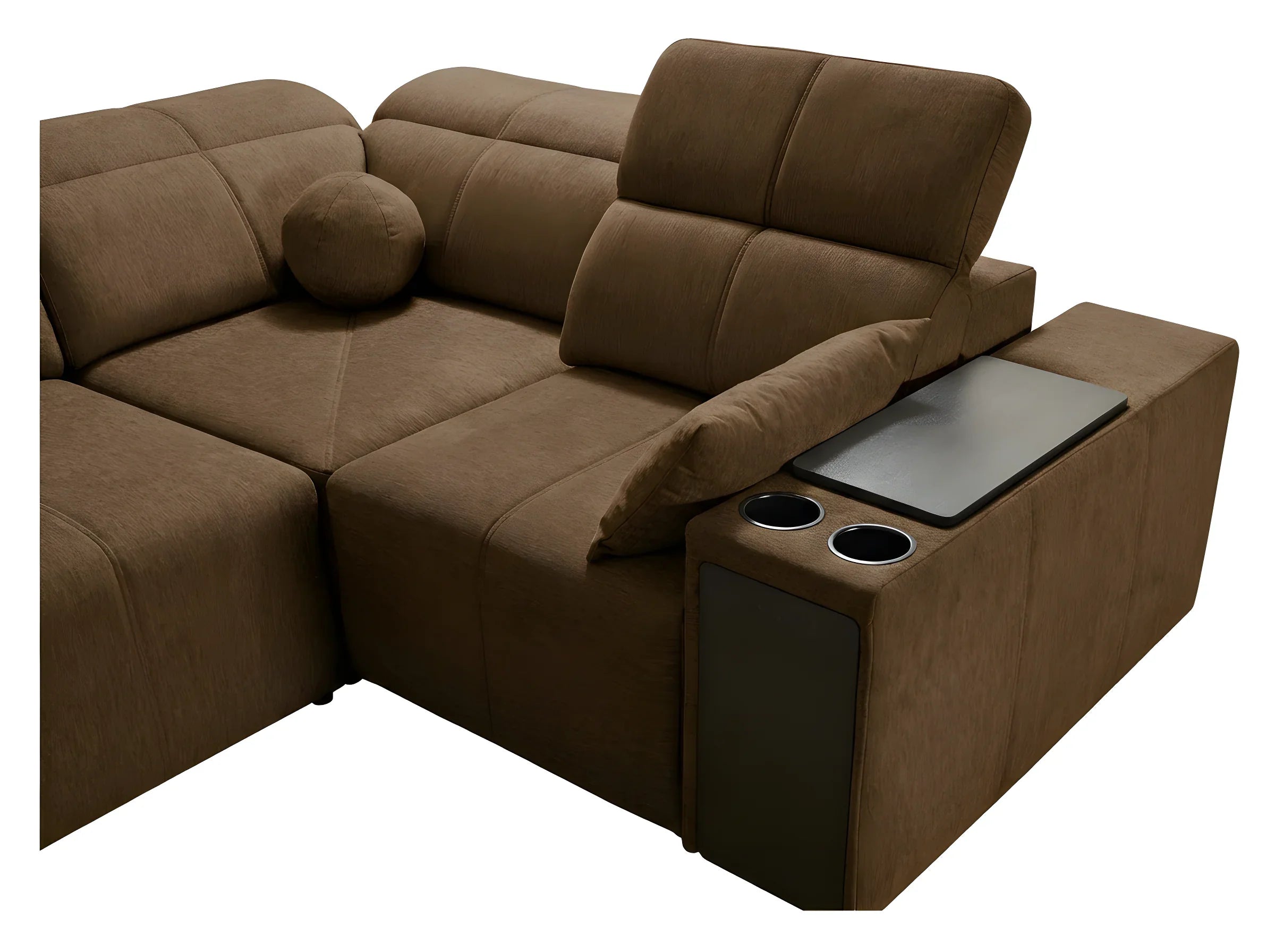
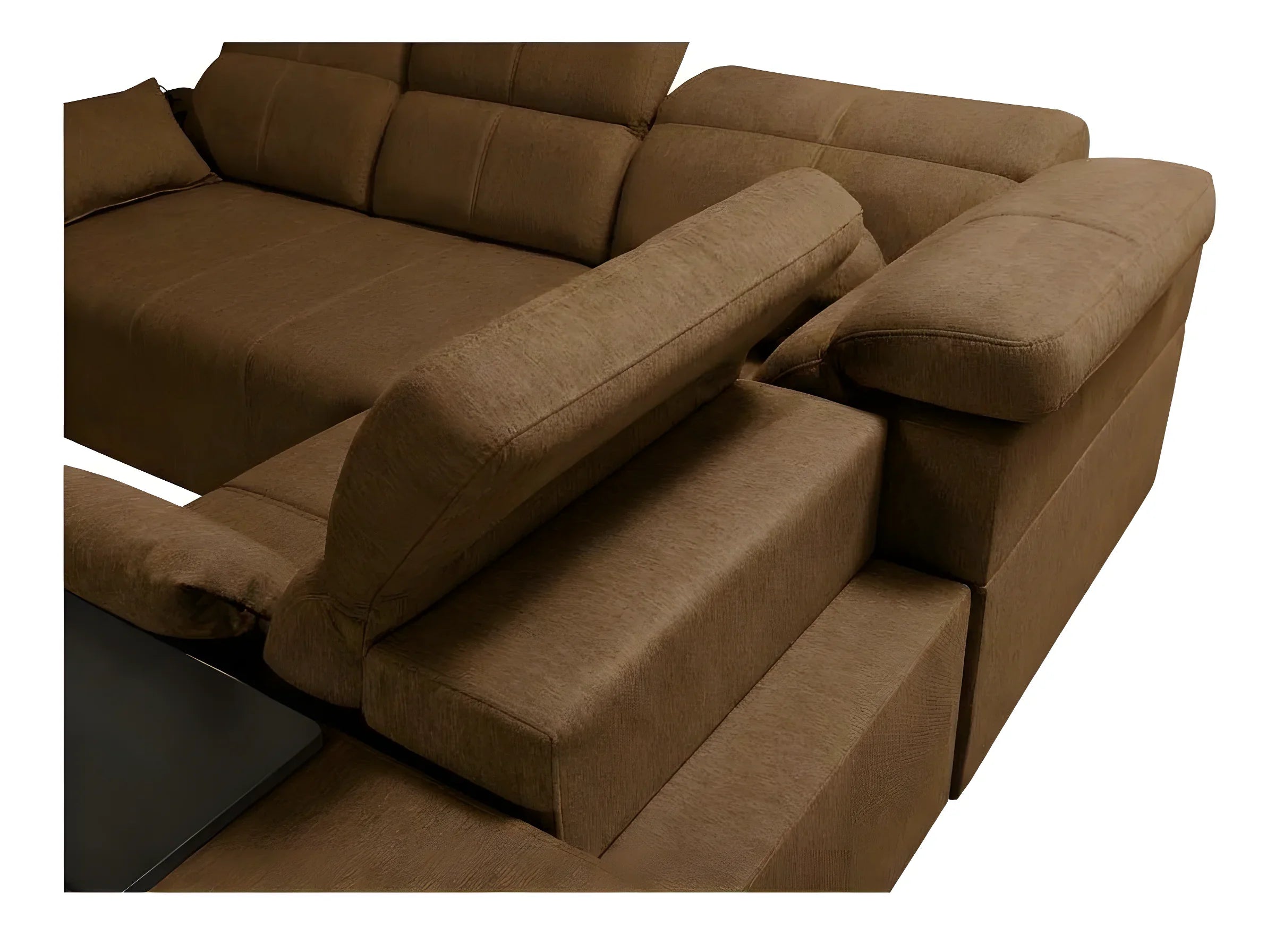
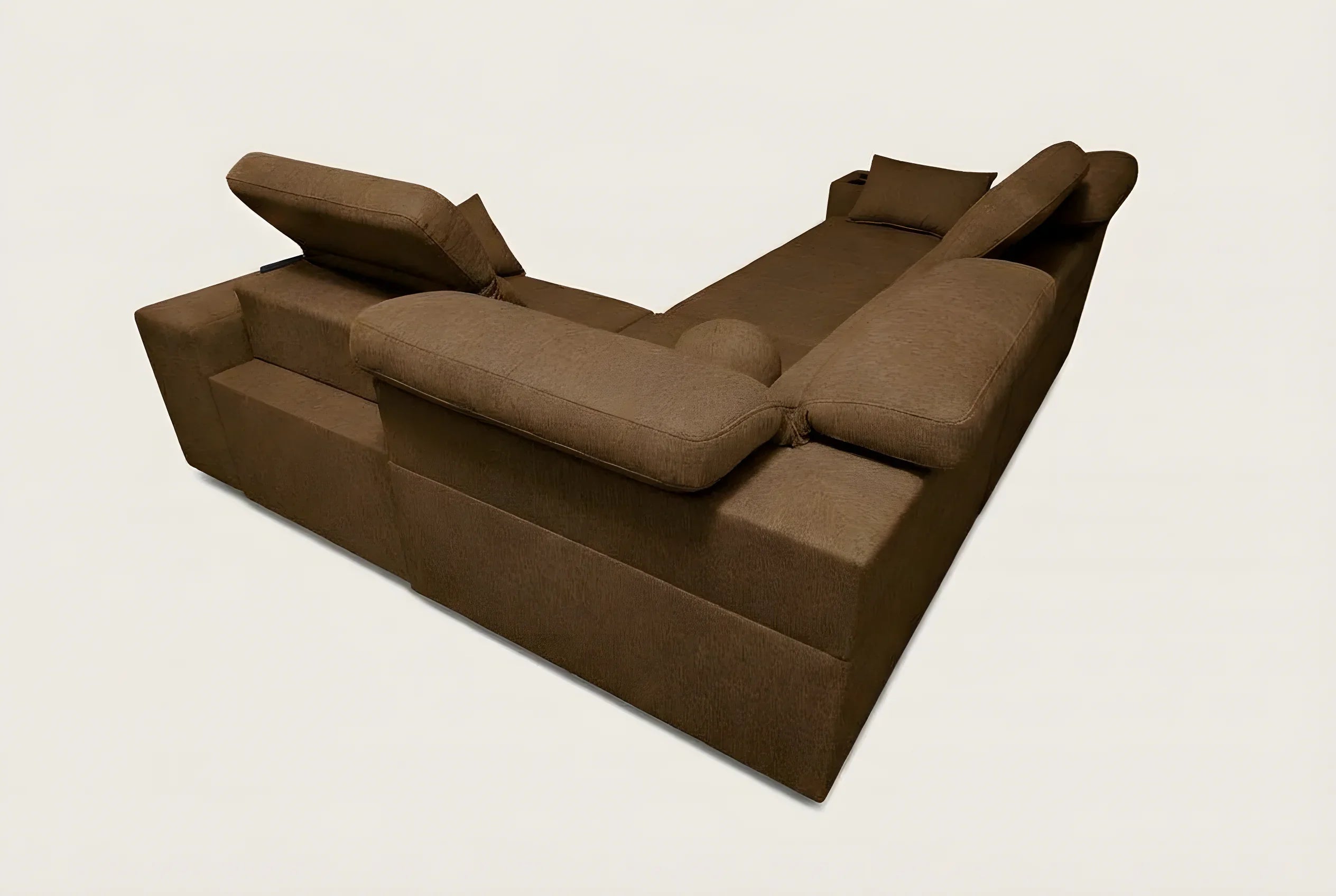
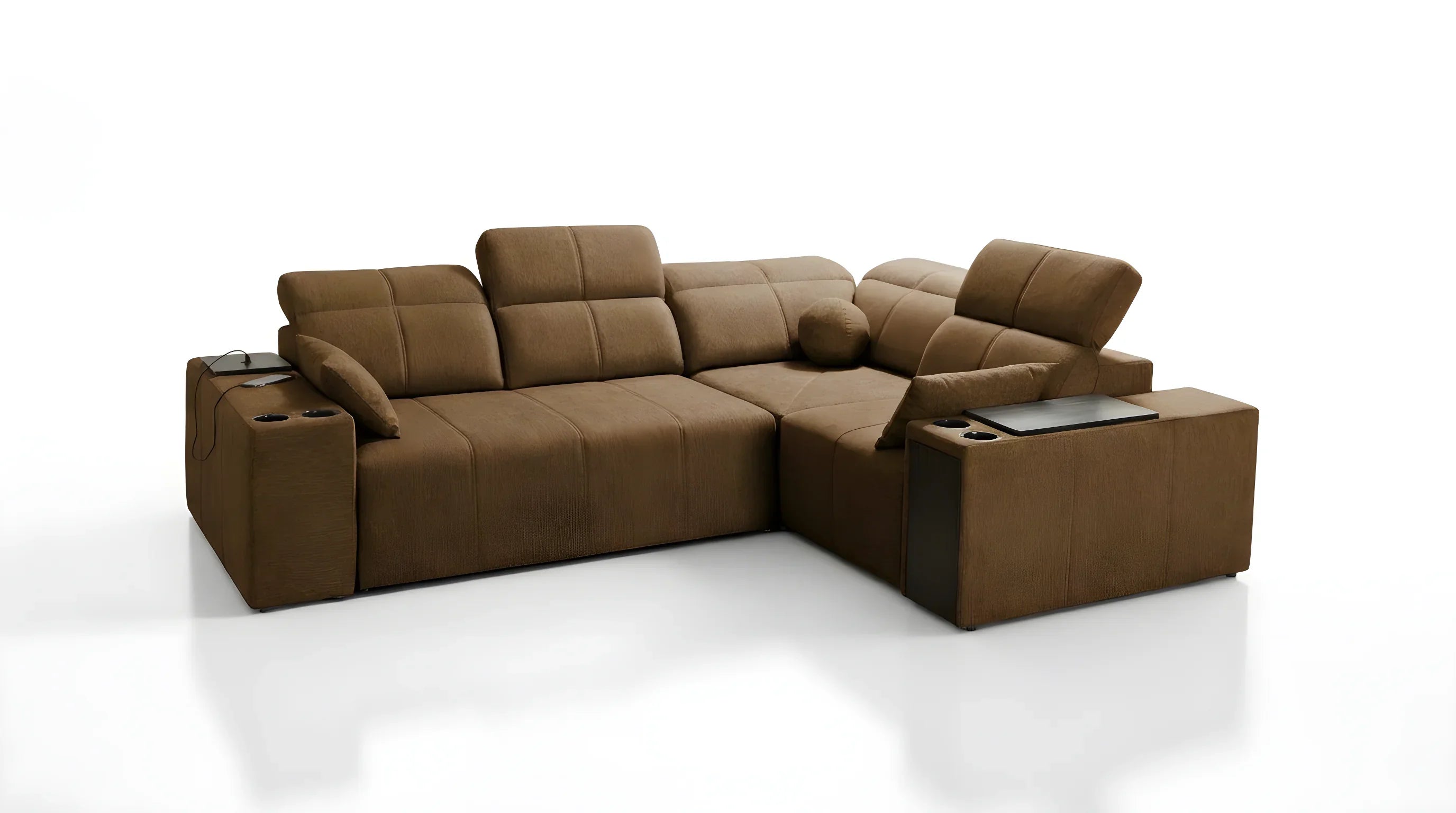
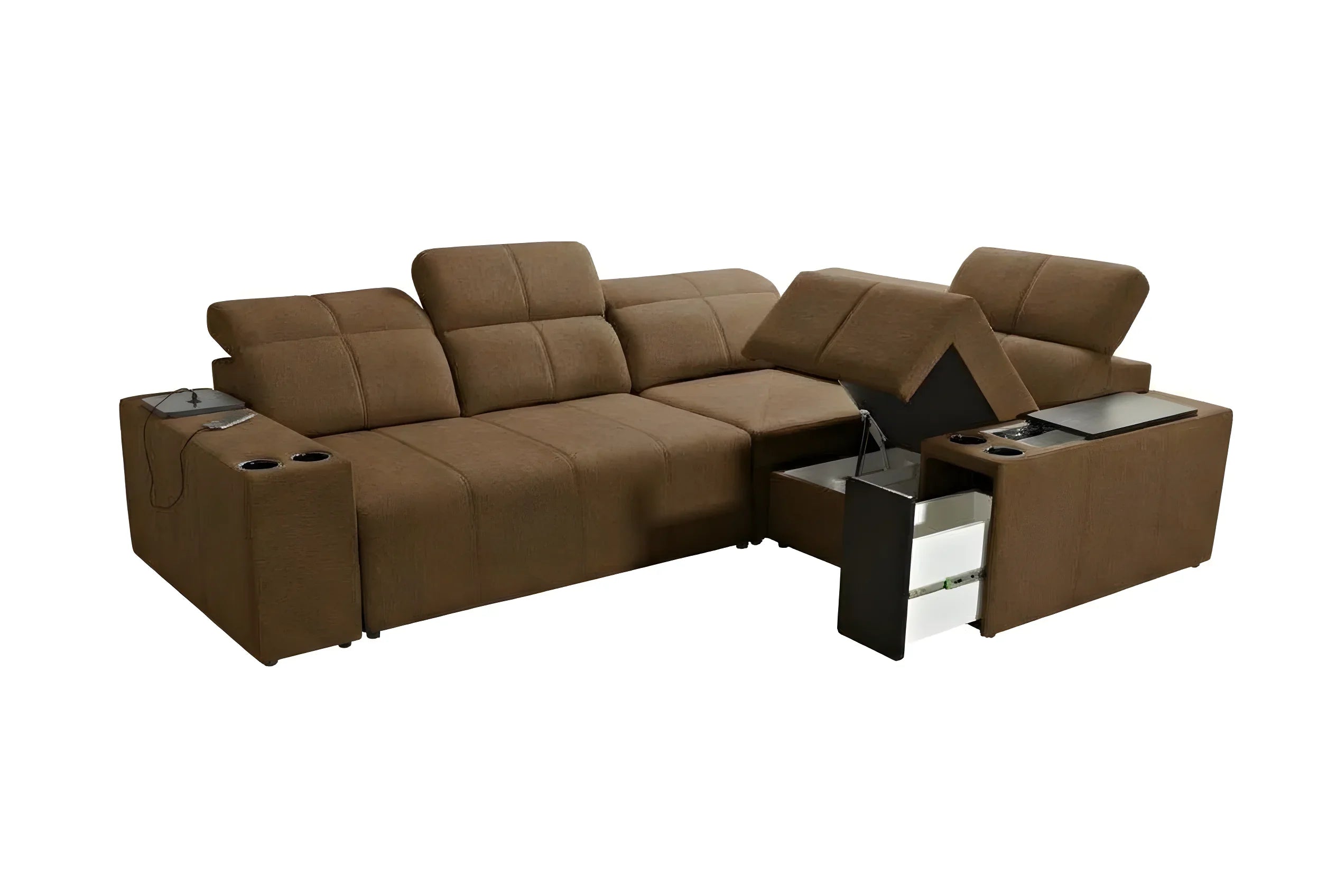
The trend is for very deep sofas, inviting the semi-reclined position. However, for the back, this is a risk. If the seat is too deep, you cannot place your back against the backrest without your feet leaving the floor, cutting off circulation under the knees. To overcome this, the option of a sofa with advance-recede (adjustable depth backrest) is a major innovation. It allows you to adjust the useful depth depending on whether you are in "reception" mode (back straight) or "relaxation" mode (legs raised).
If you are tall, a sofa with a wide seat is necessary to support the entire thigh, but be sure to always use lumbar support cushions if the backrest is too far away.
Supporting the cervical spine and upper back
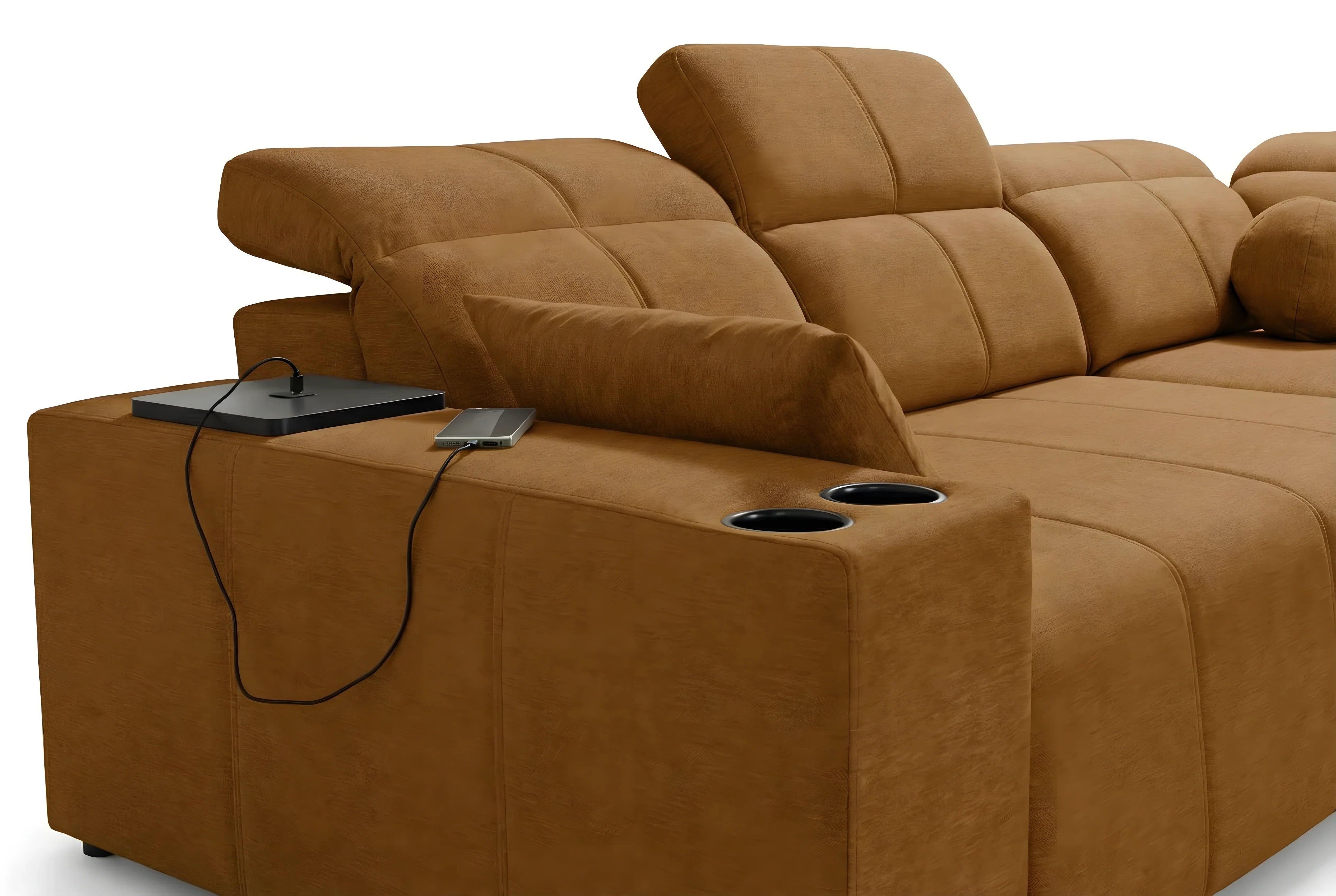
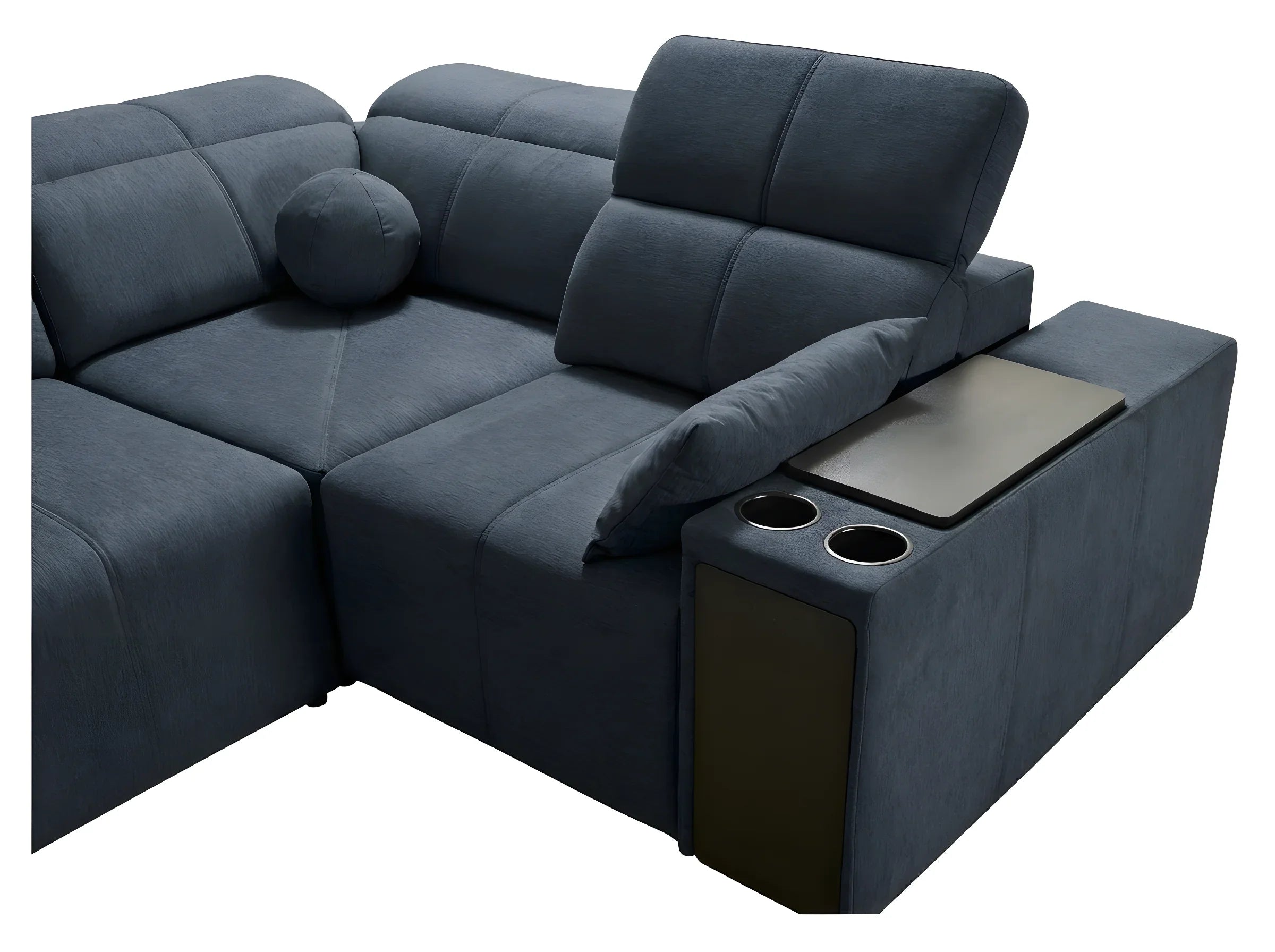
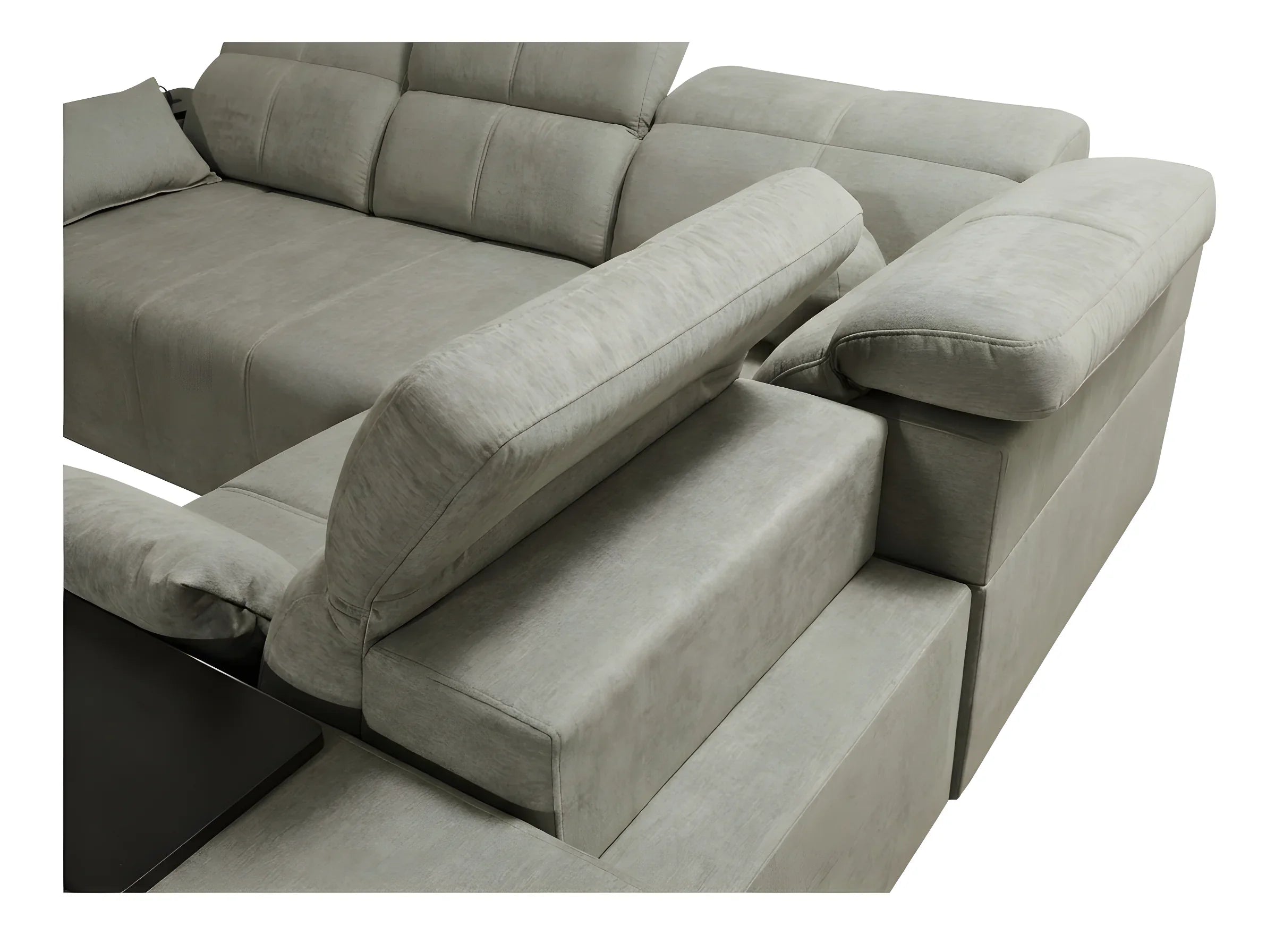
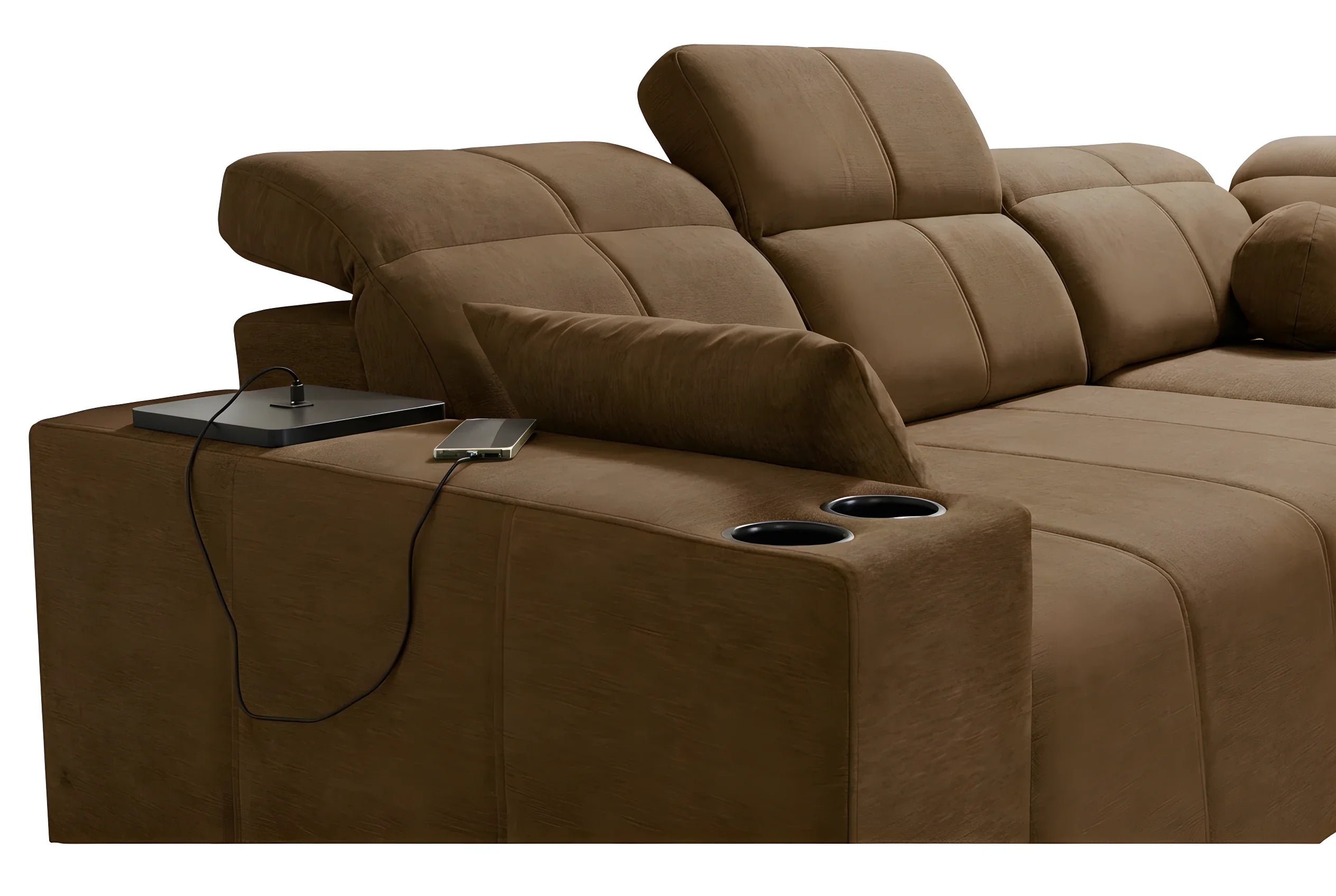
Back pain is not limited to the lumbar region; it often radiates to the trapezius and neck. Modern "low" sofas are aesthetic but catastrophic for cervical support. For complete orthopaedic comfort, opt for a sofa with a high backrest that supports the shoulders.
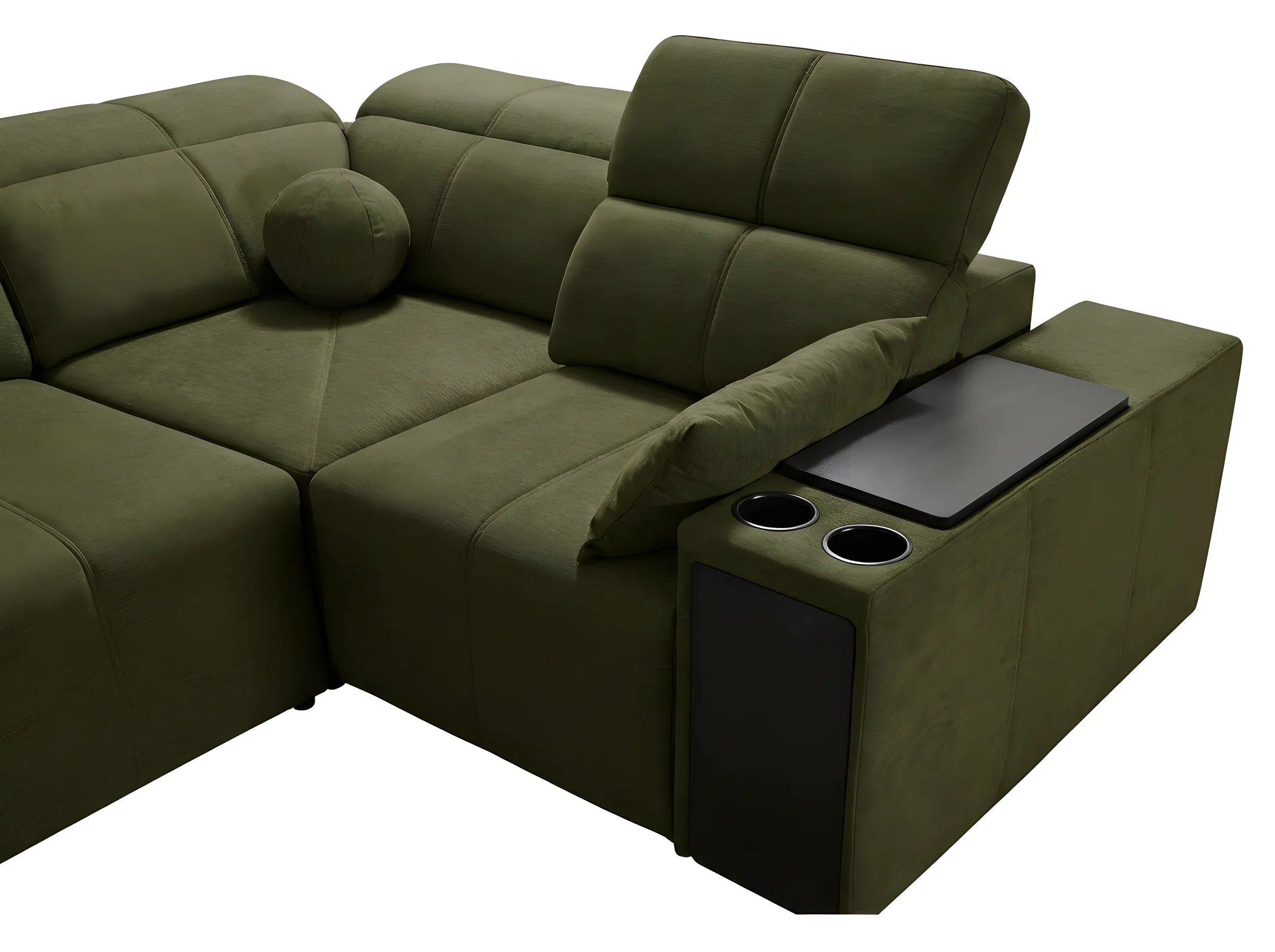
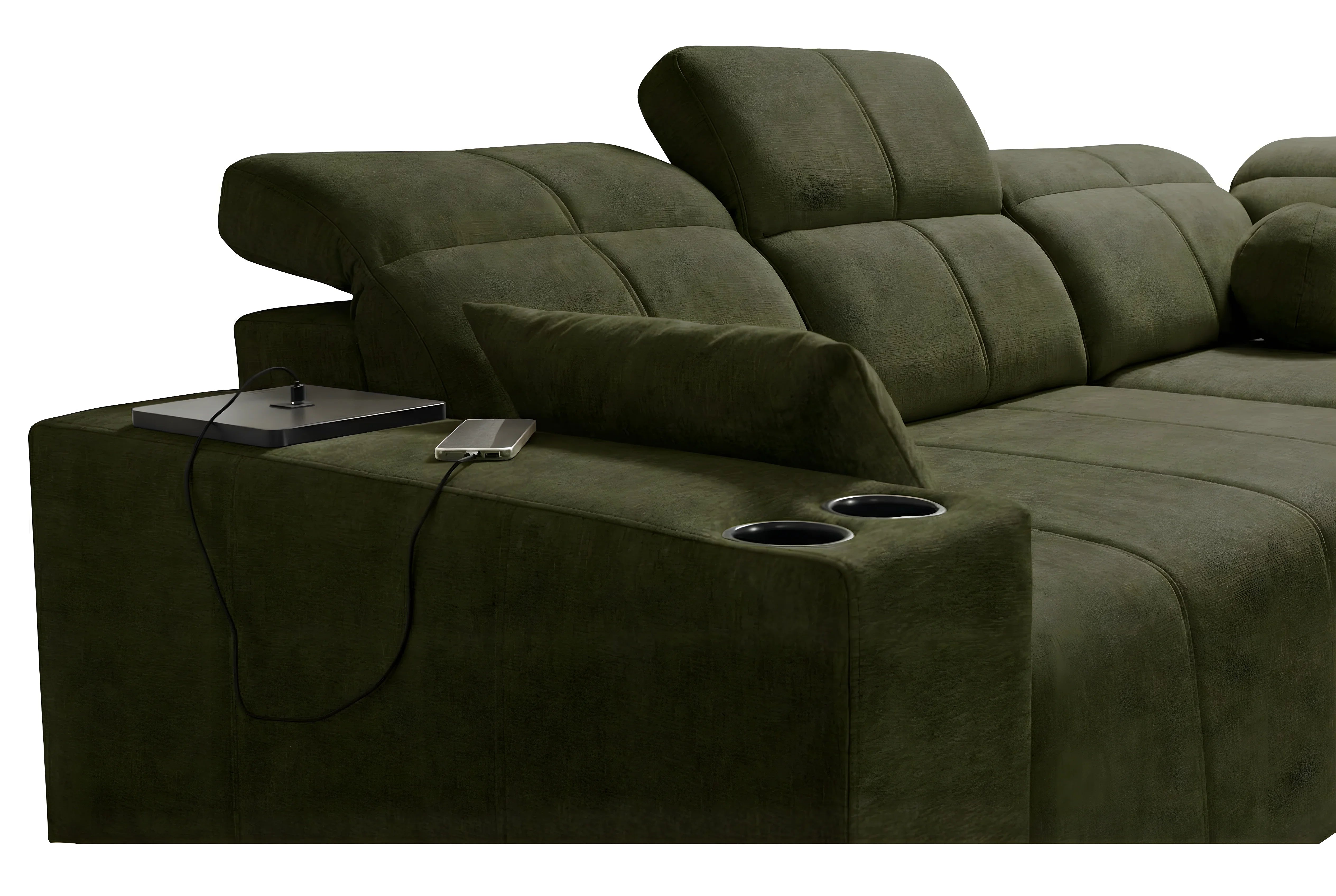
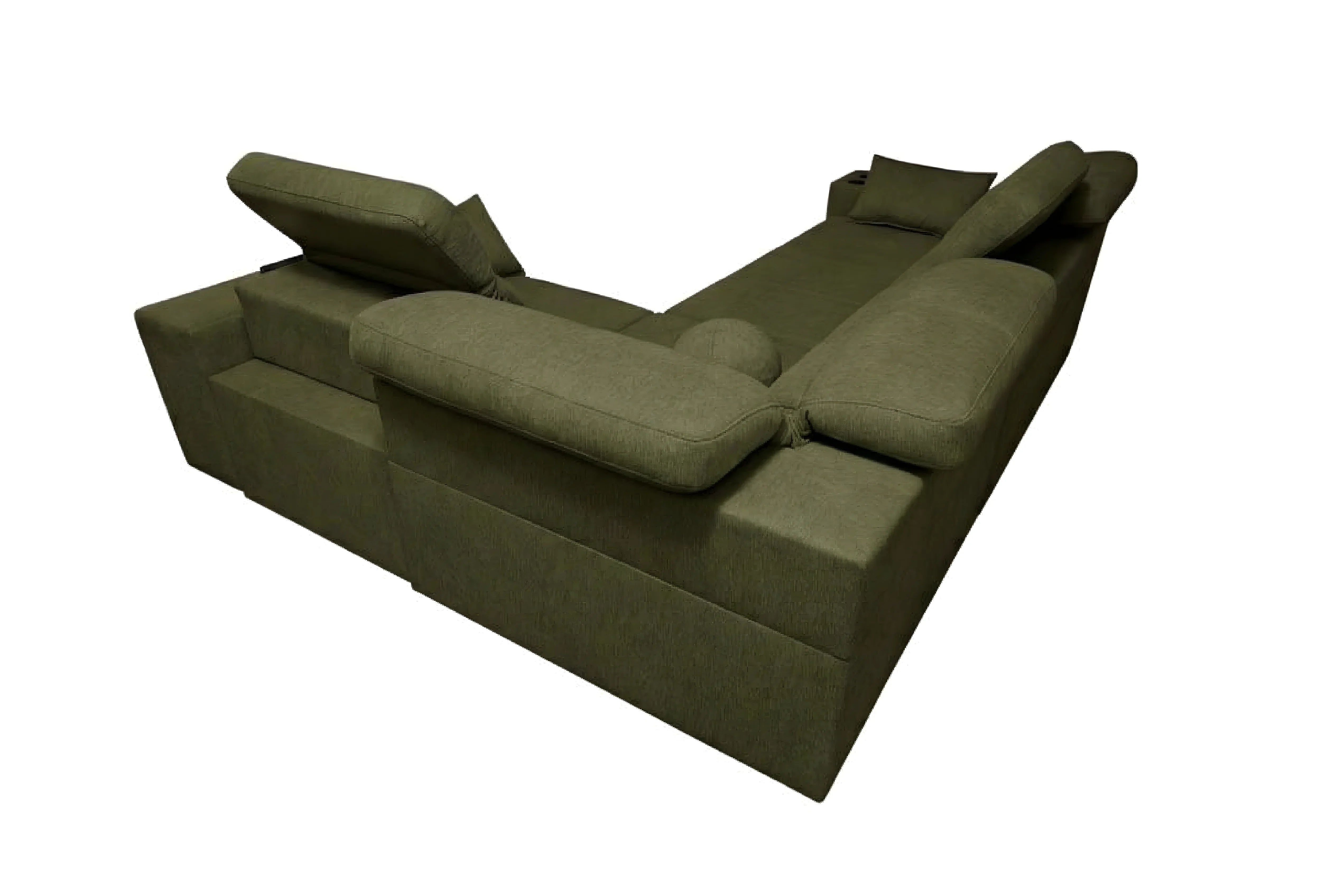
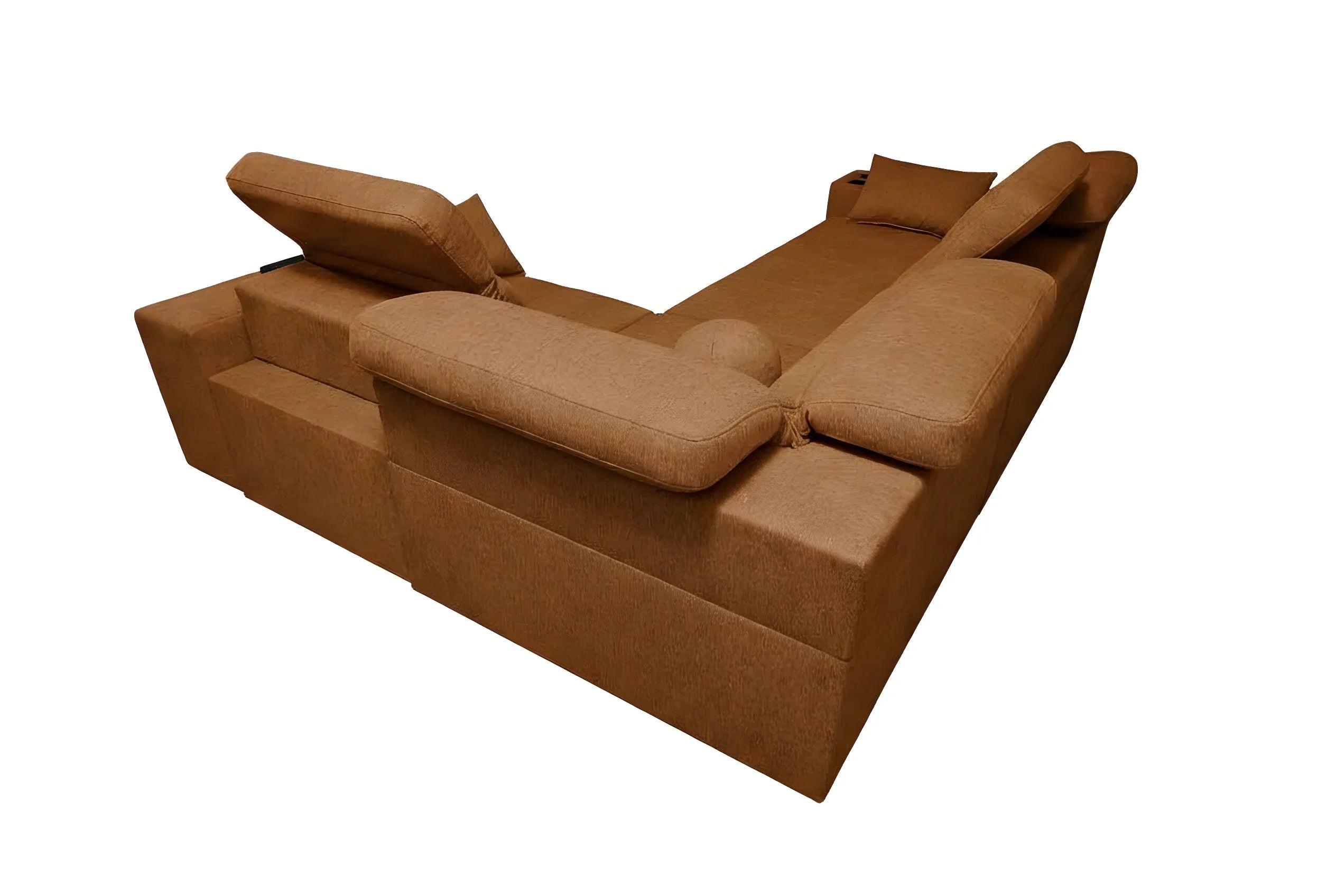
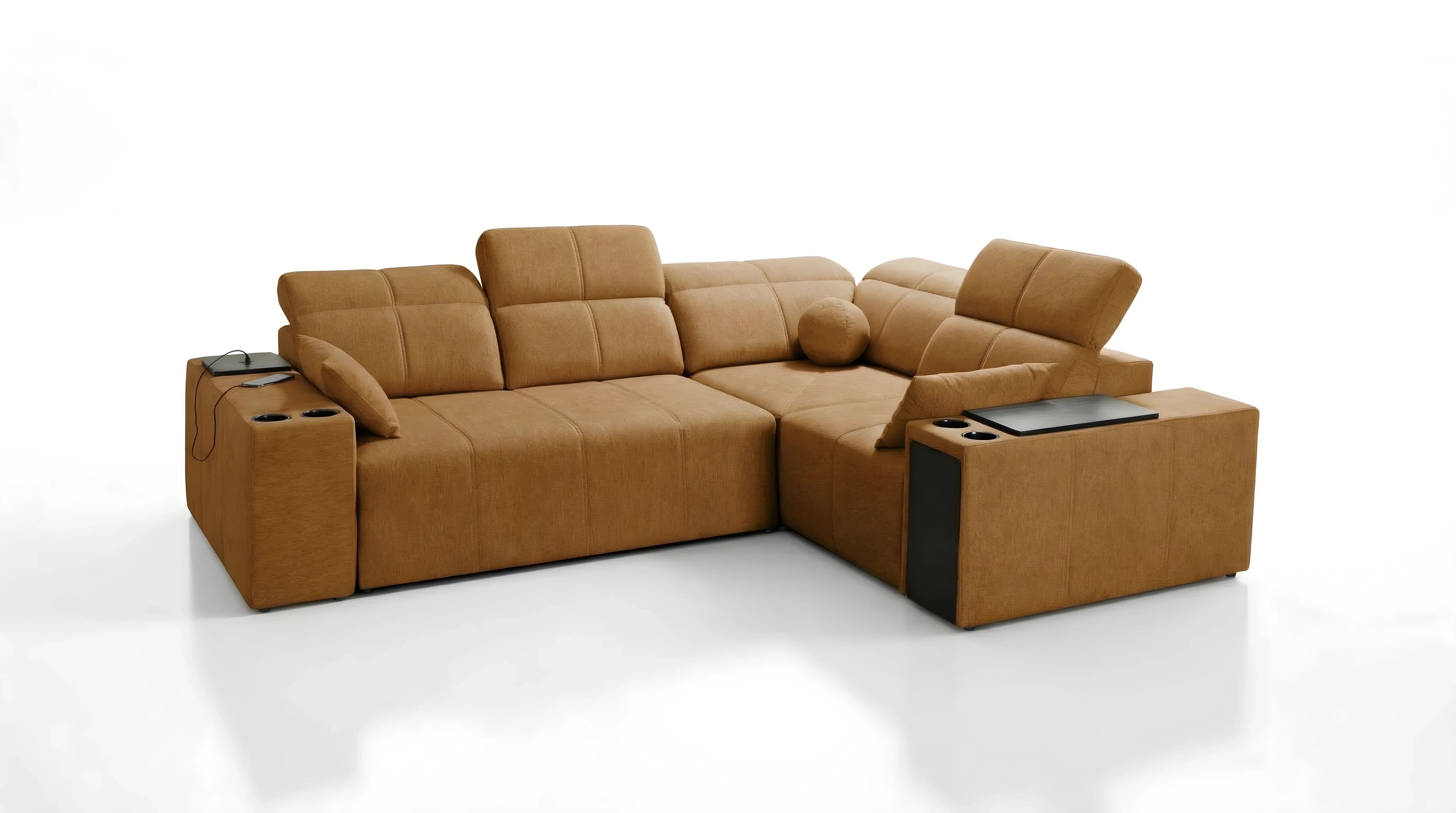
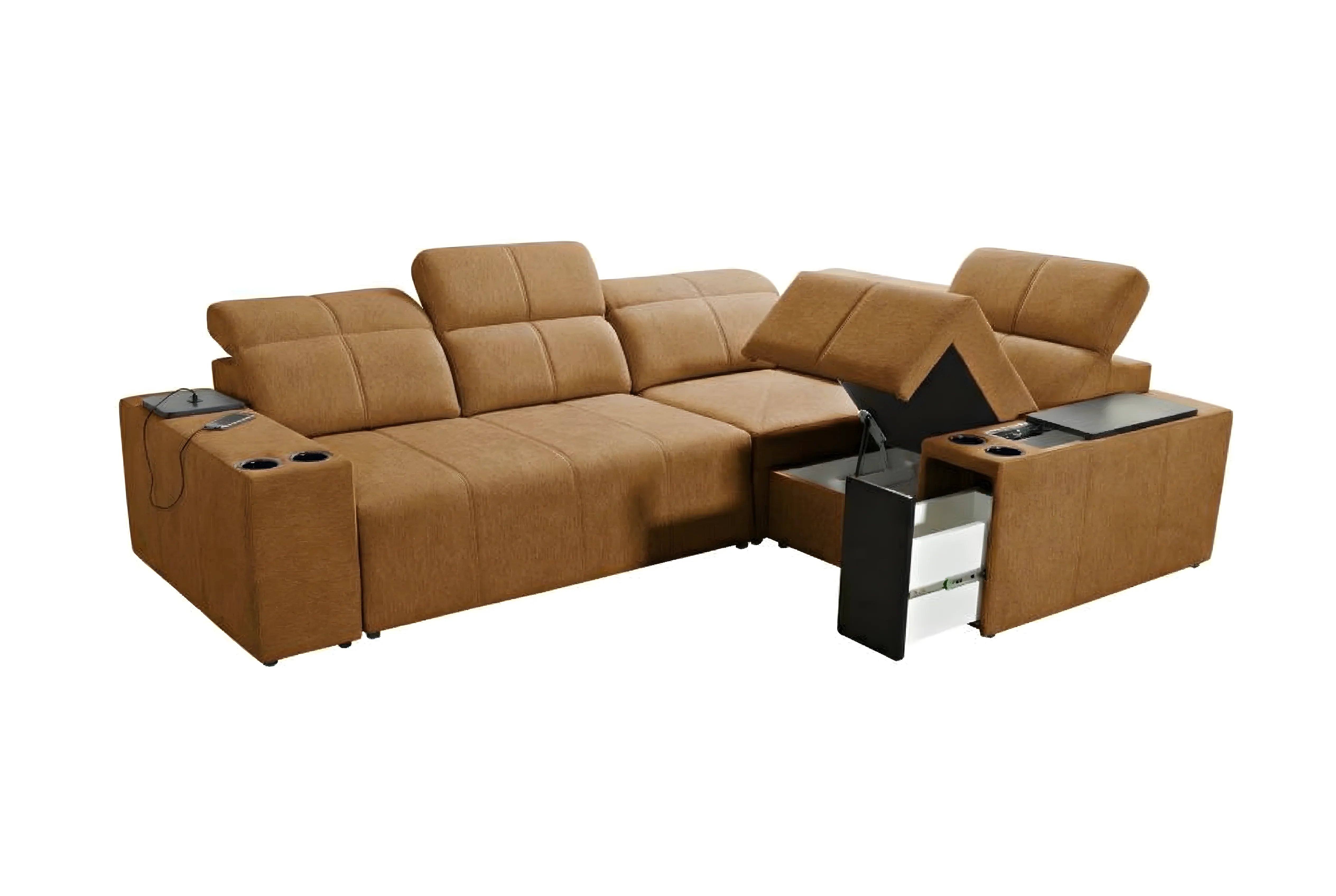
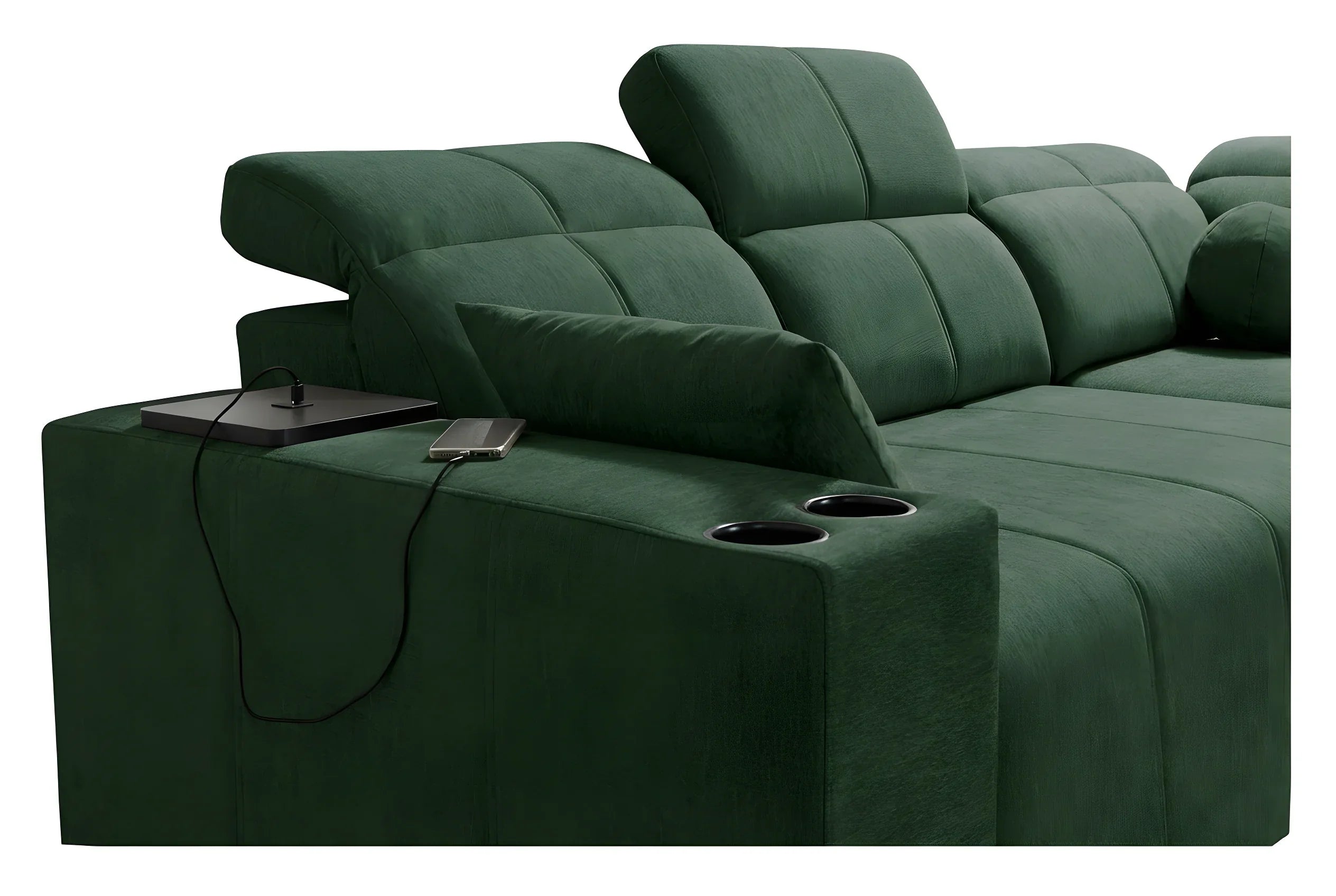
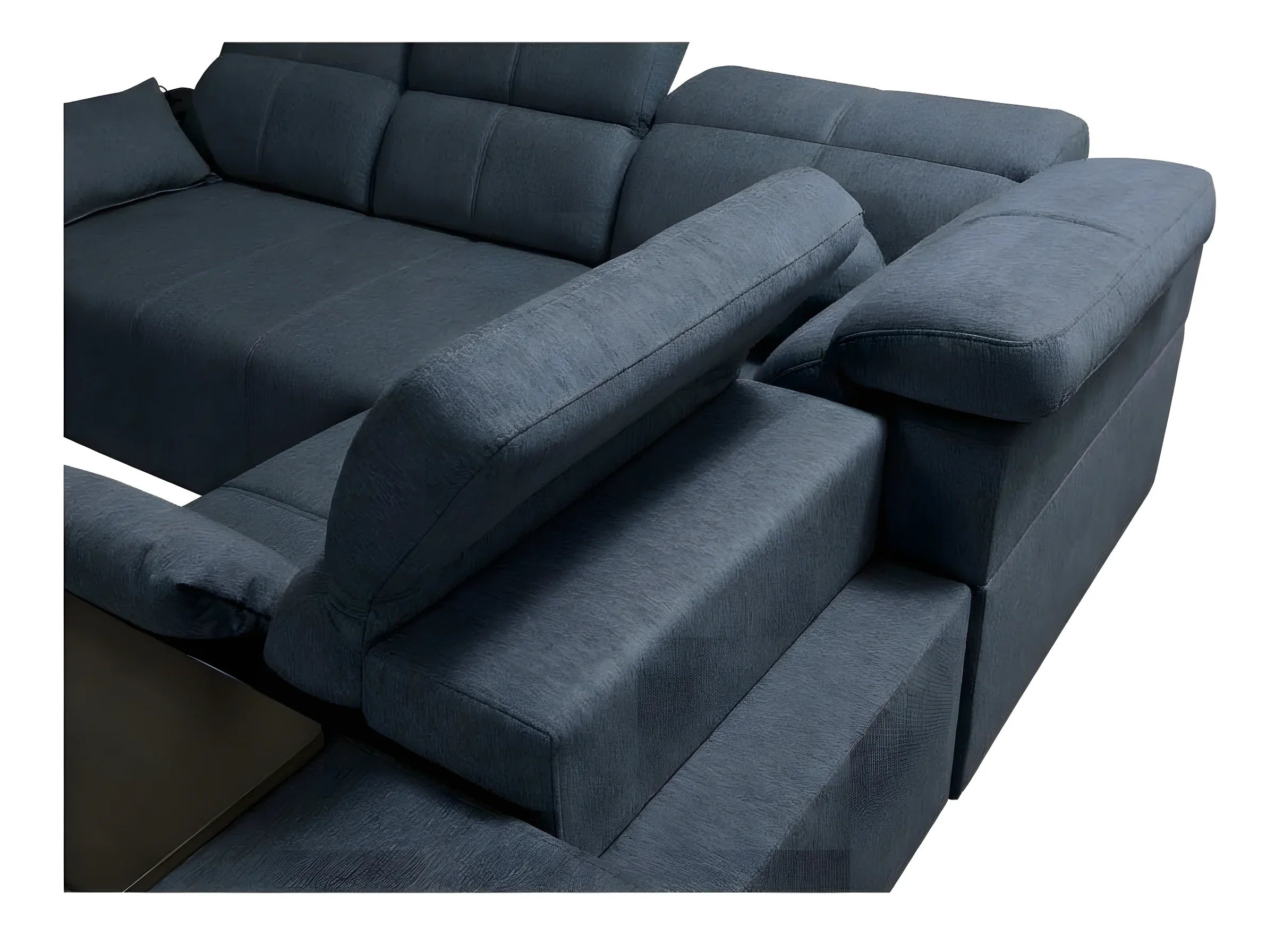
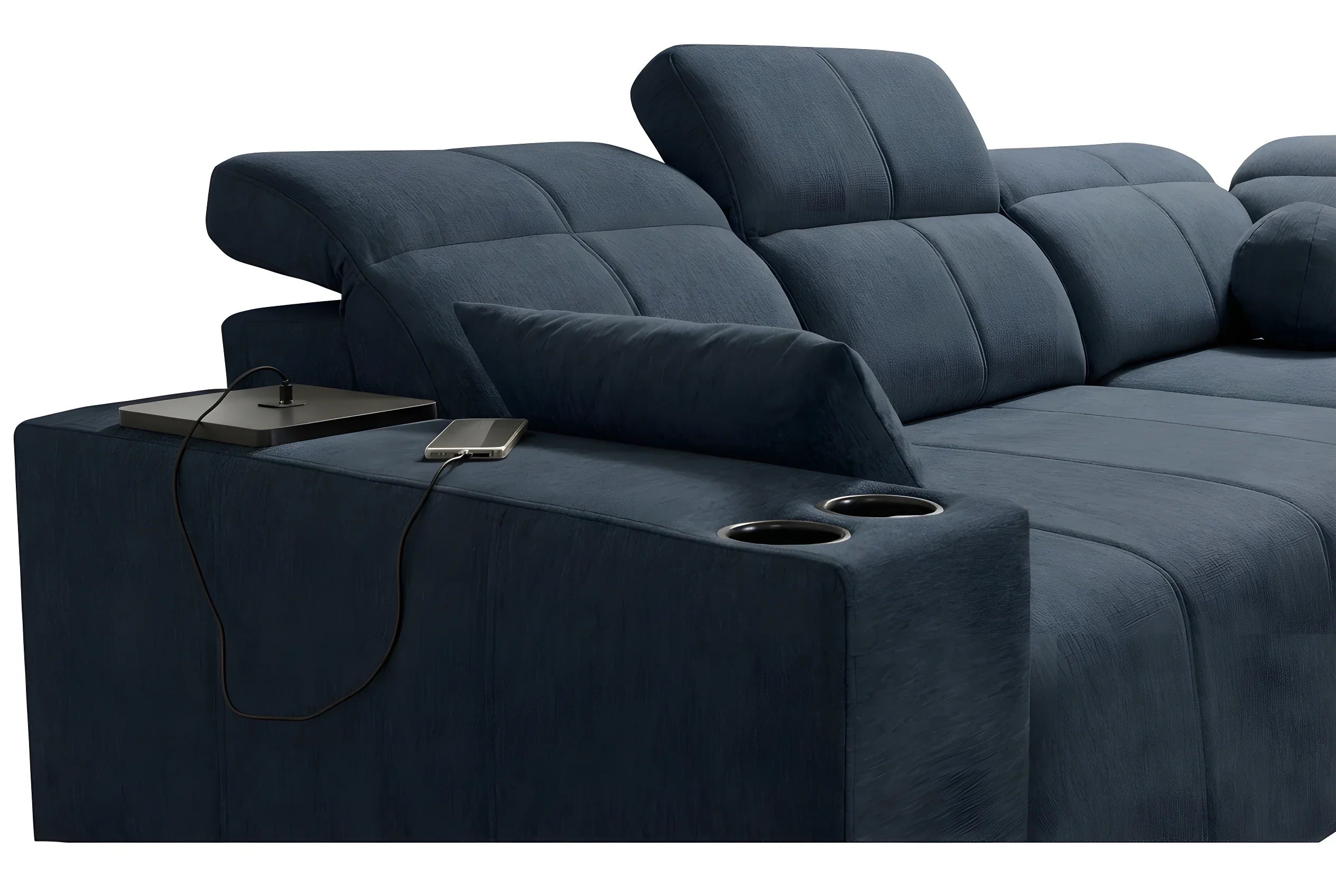
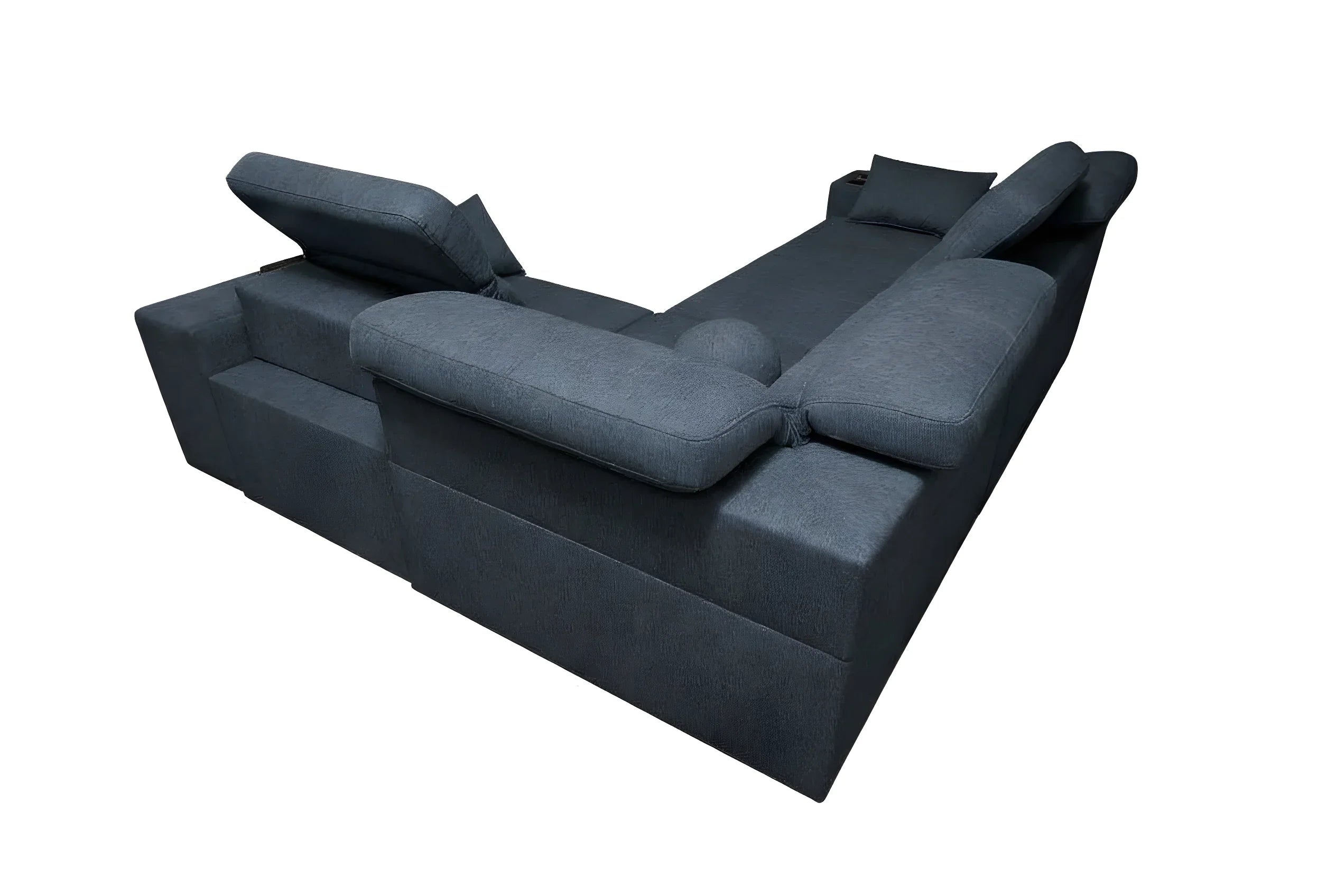
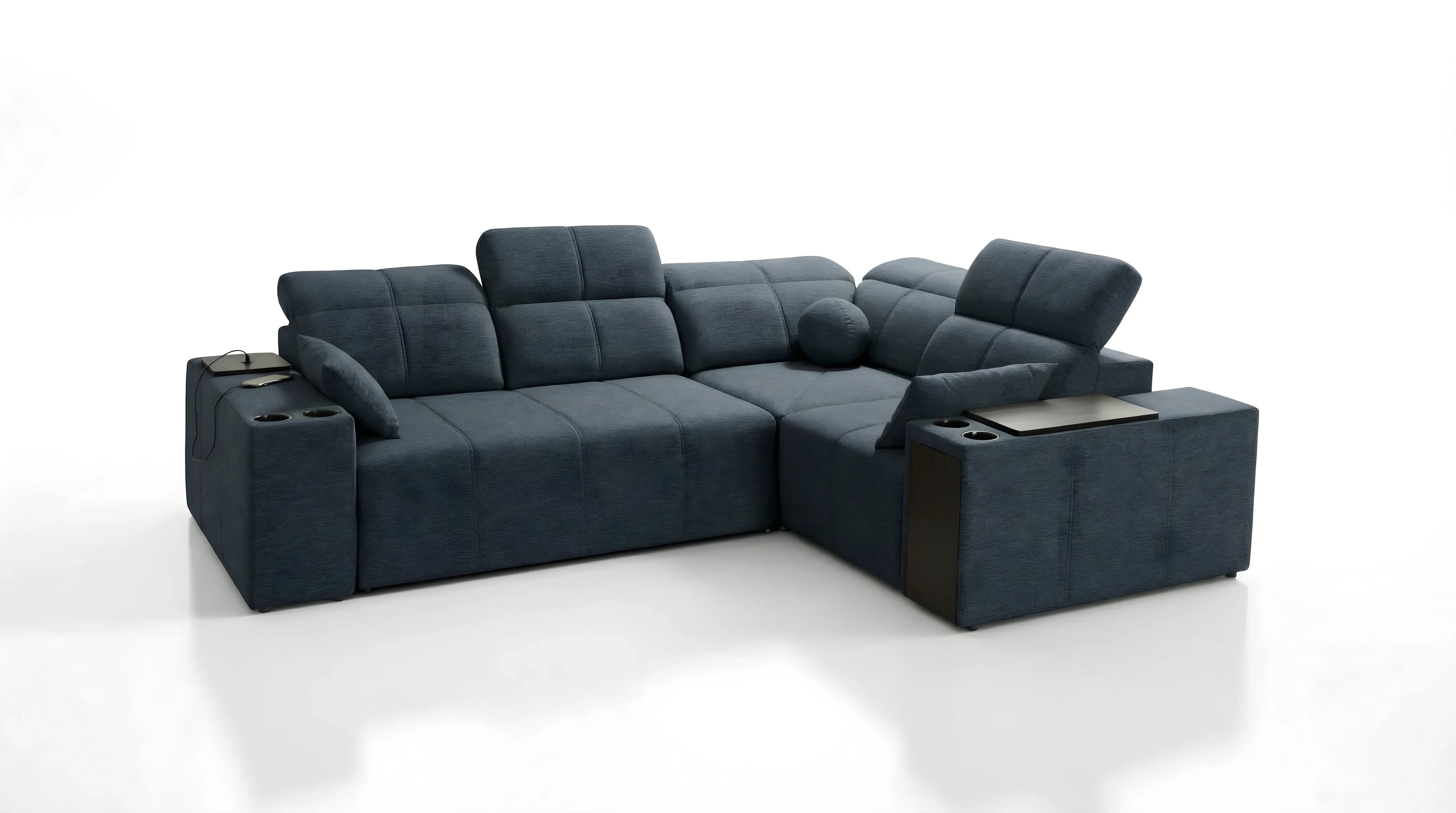
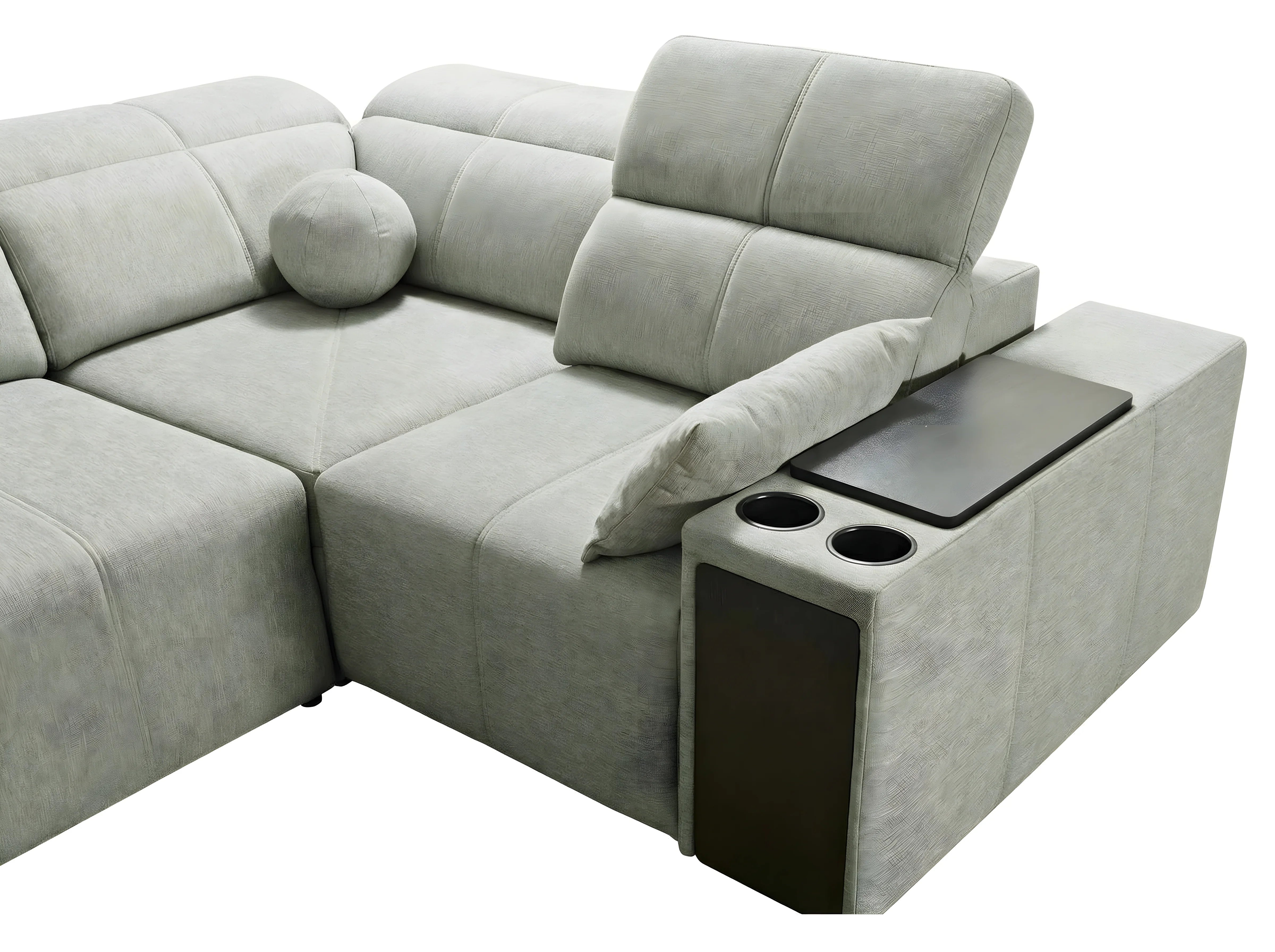
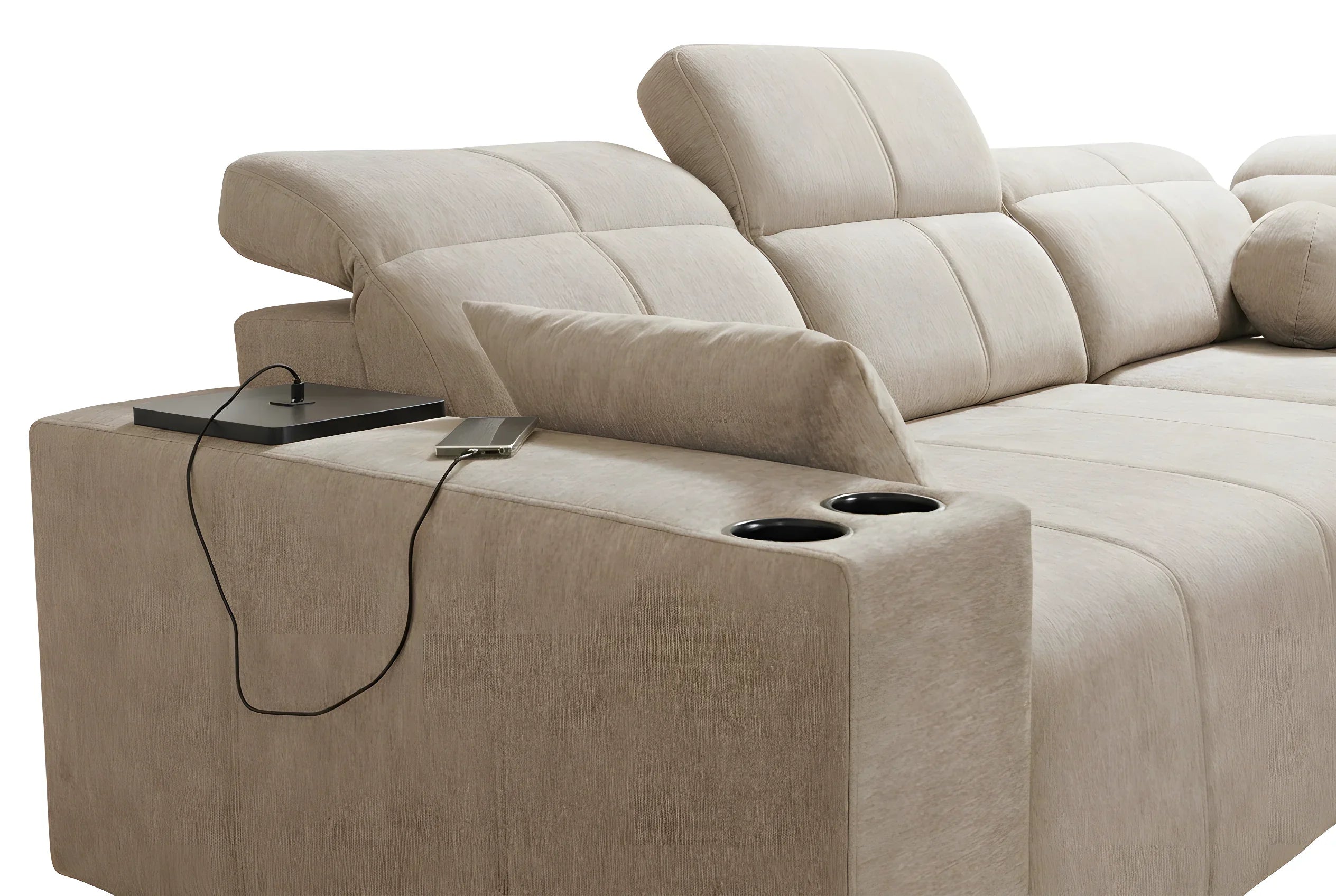
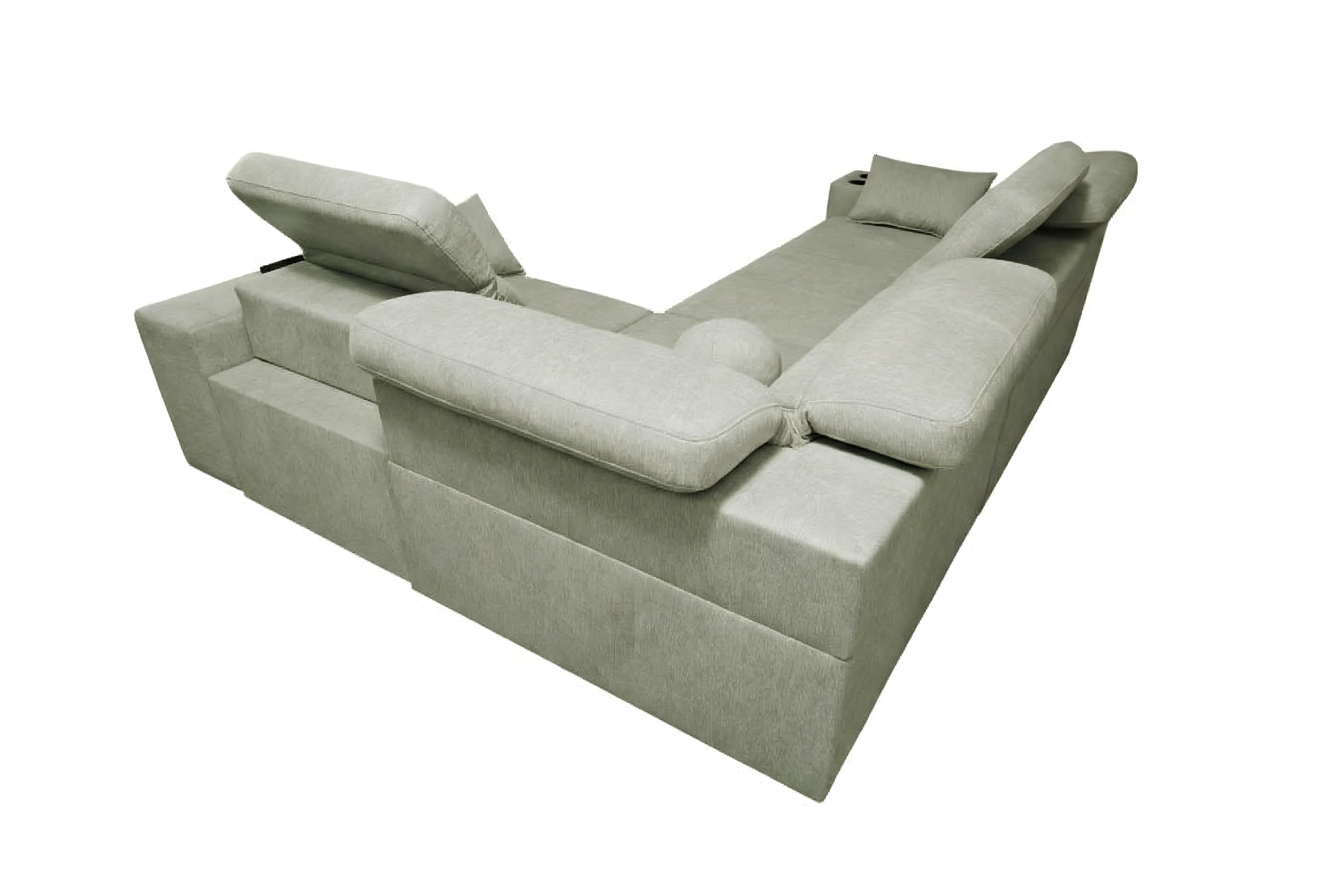
Even better, technology has made it possible to democratise the sofa with adjustable headrest. These articulated headrests allow you to support the neck regardless of your inclination, instantly relieving the spinal tension accumulated in front of screens.
Seat height and ease of movement
The ease with which you sit down and stand up determines the strain on your lower back. A sofa that is too low ("floor-hugging" type) forces excessive flexion of the hips. Prefer a sofa on legs or with high legs, which places the seat at a height close to that of a standard chair (about 45 cm), facilitating verticalisation without effort.
Technological Solutions: When the sofa heals back pain
Beyond foam and dimensions, certain features transform the sofa into a true wellness tool.
Electric relaxation: The "Zero Gravity"
This is undoubtedly the most relevant investment for people suffering from chronic pain. A electric relaxation sofa allows you to raise the legs and tilt the backrest to the millimetre. The ideal position? Legs slightly higher than the heart. This posture immediately relieves pressure on the lumbar area and promotes venous return.
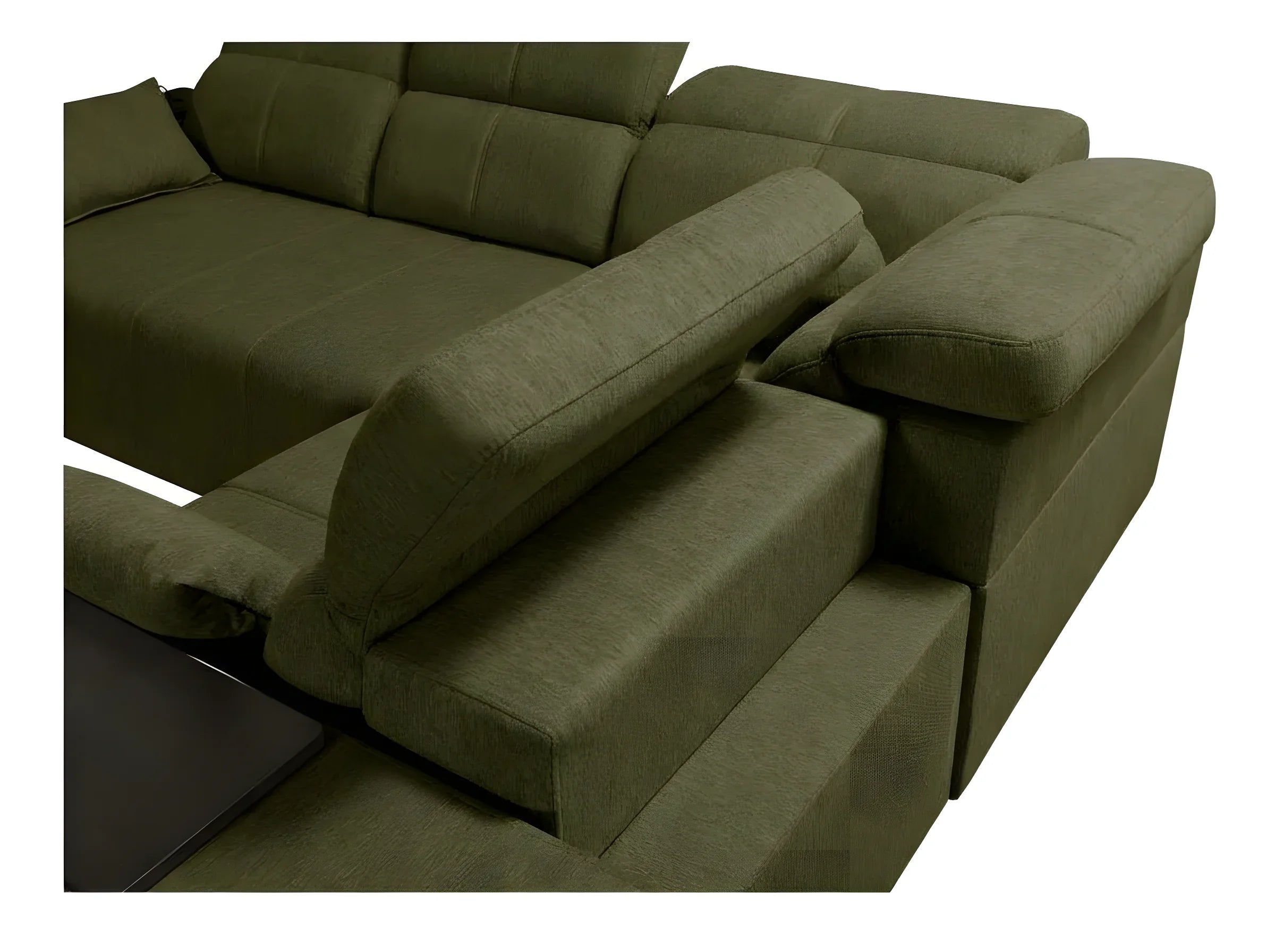
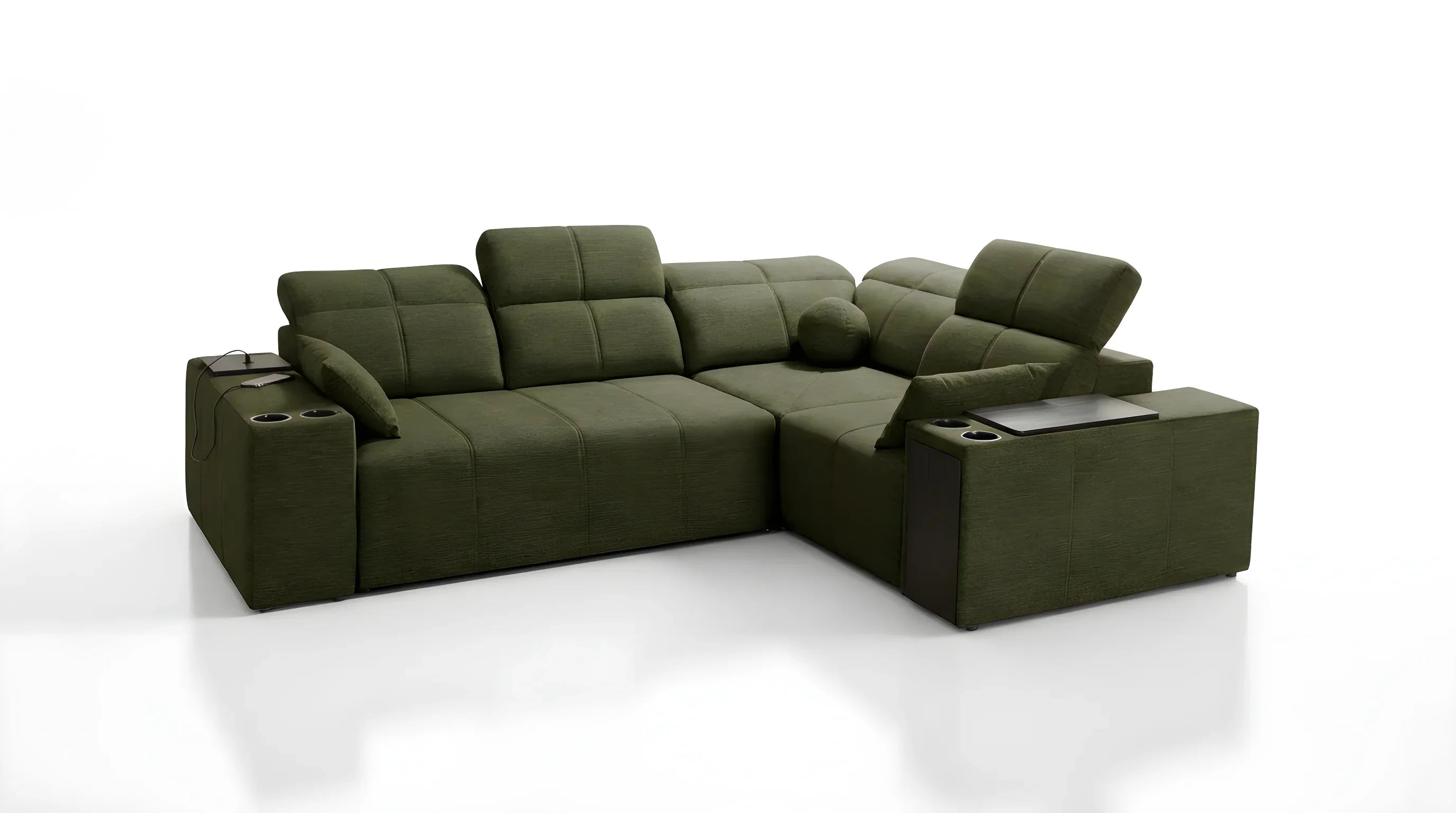
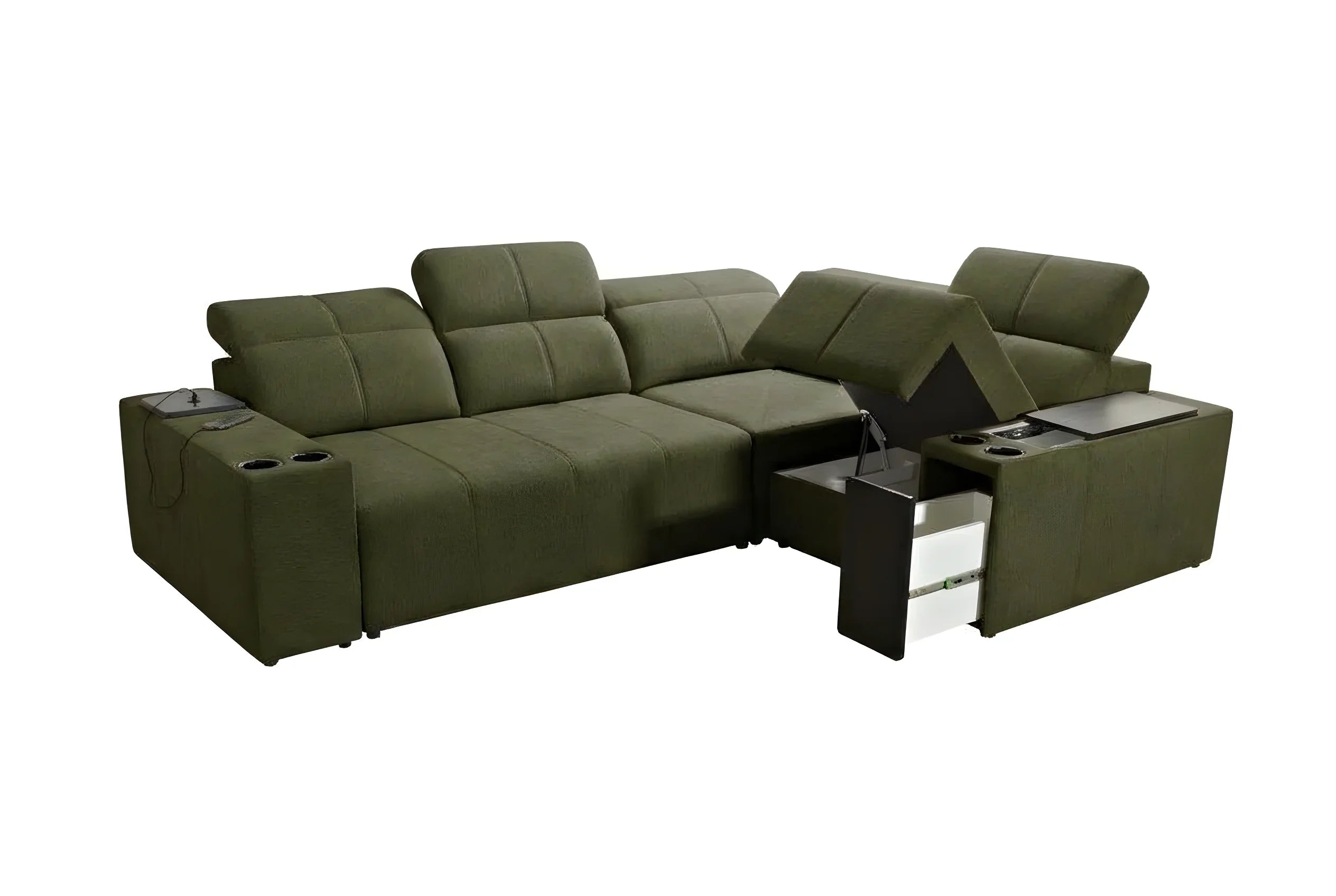
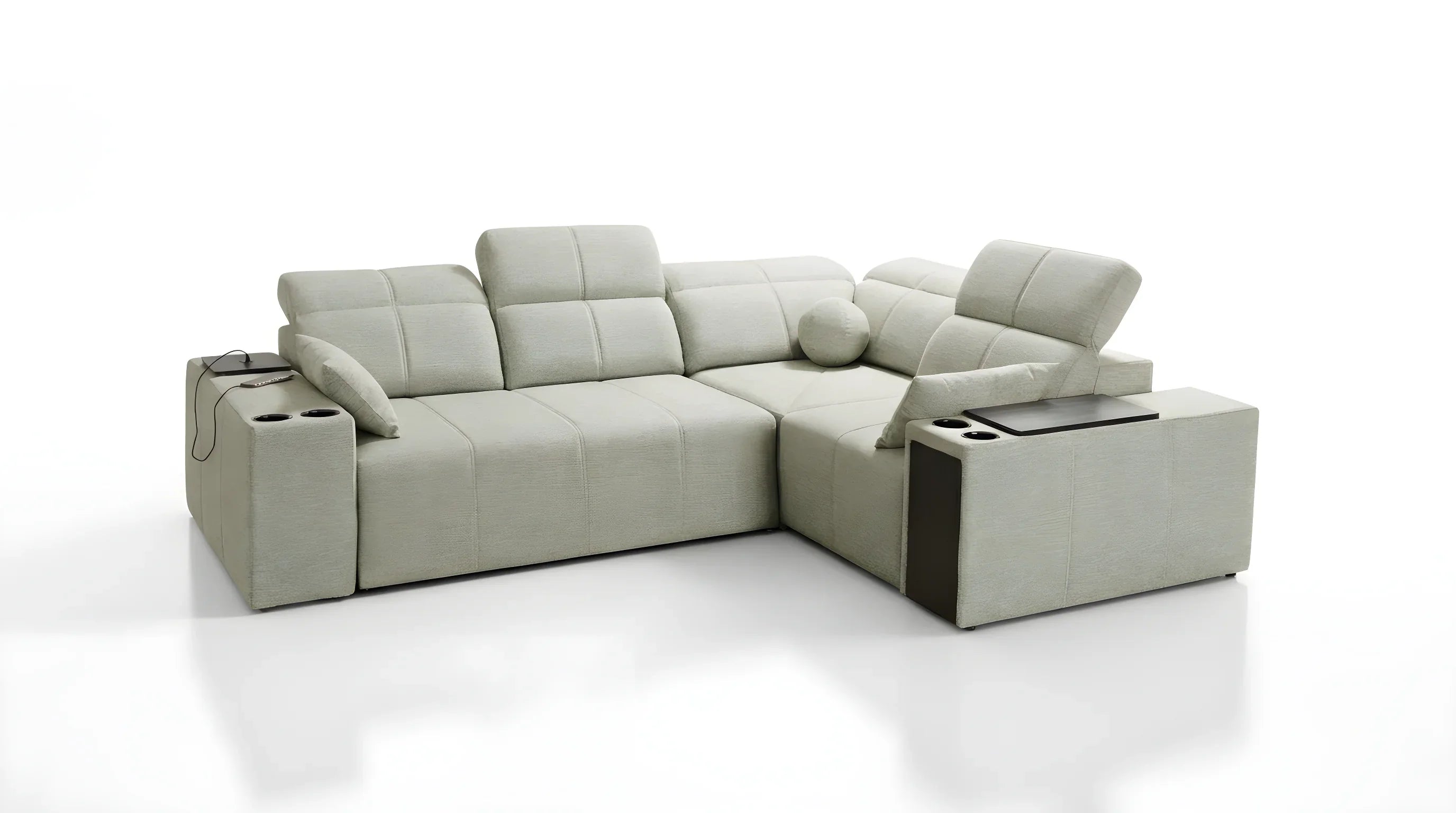
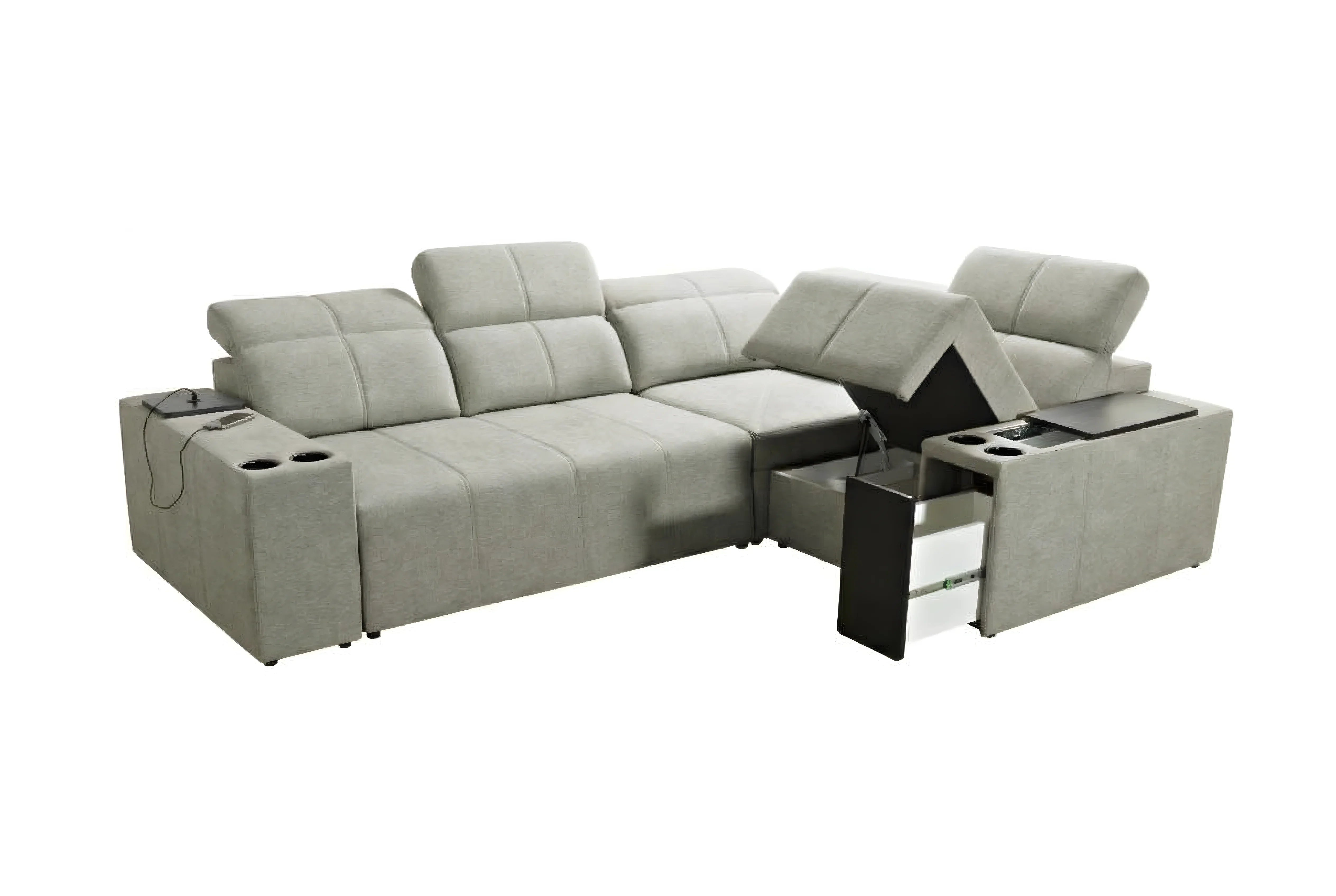
For families or large living rooms, there are now electric relaxation corner sofas that combine conviviality and back care, without sacrificing aesthetics. Do not forget the importance of a sofa with footrest integrated or separate to relieve tension in the lower limbs.
The structure: The spine of your sofa
For a sofa to take care of your back, it must itself have a solid "back". Quality foam placed on a fragile structure sags. Make sure you choose a model with robust suspension (Nosag springs or interlaced high-density straps) mounted on a sofa with a solid wood frame. This structural rigidity is the guarantee that the ergonomics of the seat will not degrade over the months.
The choice of made-to-measure for lasting health
Why continue to buy standardised products when every back is unique? The ultimate solution to prevent unsuitable foam density sofa back pain is customisation. Opting for a made-to-measure sofa allows you to define the exact configuration that suits your space and your body.
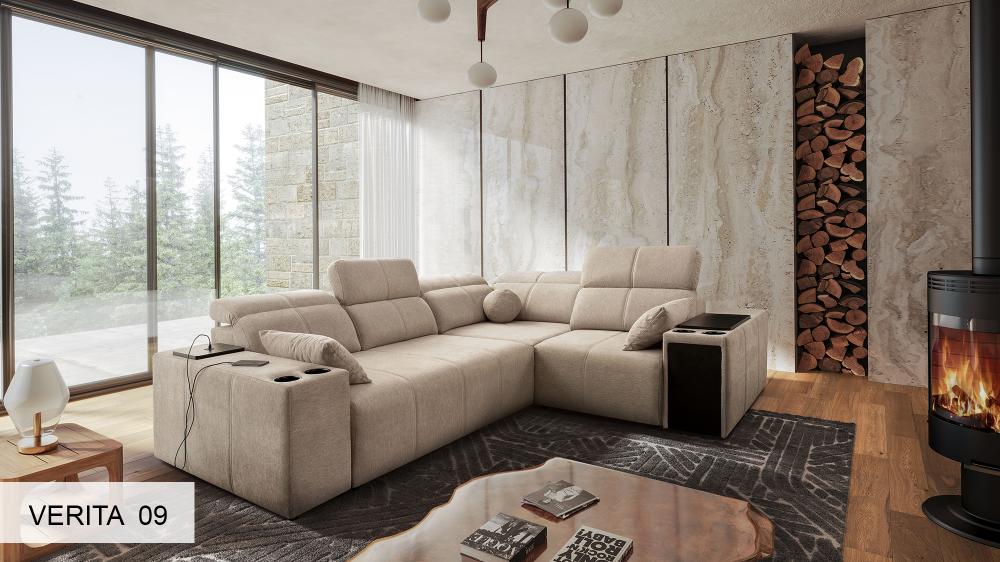
At Kings Canape, modularity is at the heart of the design. You can compose your set piece by piece. Need a wider seat on the right for Mr who is tall, and a relaxation module on the left for Madam? It is possible. This approach makes it possible to no longer compromise between the style of an ultra-comfortable sofa and the medical necessities of firm support.
Finally, do not neglect the covering. A fabric sofa of quality offers grip that prevents you from "sliding" on the seat (a frequent phenomenon with low-quality leather), which saves you from having to constantly correct your posture with your lower back muscles.
FAQ: Expert answers for your back
What is the best foam density to avoid back pain?
To prevent pain, aim for a High Resilience (HR) foam of a minimum density of 35 kg/m3. Below (25-30 kg/m3), the support may be insufficient in the long term. For people weighing more than 90 kg, a density above 40 kg/m3 is recommended to ensure lasting orthopaedic support.
Does an orthopaedic sofa have to be hard?
No, this is a misconception. A "hard" sofa can create painful pressure points. The ideal is a "firm sofa with a soft welcome". It must support your spine without sagging, while gently hugging your curves to distribute body weight. Firmness lies in the structure and the heart of the foam, softness in the contact layer.
How to know if my old sofa is causing my back pain?
If you feel stiffness in the lumbar area when you get up after 30 minutes of sitting, or if you have trouble finding a comfortable position without additional cushions, your sofa is suspect. Check the seat: if the imprint of your buttocks remains visible for several seconds after you get up, the foam has lost its resilience and no longer supports you.
Are adjustable headrests really useful for the back?
Absolutely. Neck support is crucial for the alignment of the entire spine. Adjustable headrests keep the head in line with the body, whether you are sitting straight or slightly reclined, thus avoiding trapezoid tensions that often end up radiating throughout the back.
Conclusion: Investing in your comfort is investing in your health
The answer to the question "Back pain: is your sofa too soft or too firm?" is often more nuanced than it seems. The enemy is maladaptation. A sofa that hurts you is one that has lost its technical properties or does not match your morphology. The key to orthopaedic comfort lies in the triptych: High Resilience foam density, solid structure, and customisable ergonomics (depth, height, headrests).
No longer sacrifice your spine on the altar of cheap design. At Kings Canape, we understand that well-being begins in the living room. Thanks to our modular collections, our high-density foams, and our advanced relaxation options, we offer you the possibility to configure the seat that will take care of your back, year after year, without ever compromising the elegance of your interior.




Leave a comment
This site is protected by hCaptcha and the hCaptcha Privacy Policy and Terms of Service apply.